Content link building sounds simple until you actually try it. “Create great content and people will link to it,” they said. Wonderful. That is about as helpful as telling someone to “open a restaurant and serve food people like.” Technically true. Tragically incomplete.
In reality, content link building works when a useful asset, a specific audience, a clear promotion plan, and a disciplined outreach process all show up to the same party. Miss one of those guests, and your “link building campaign” becomes a very expensive blog post sitting in the corner eating chips by itself.
The good news is that link building does not require magic, spam, or begging strangers on the internet like a raccoon in a trench coat. It requires a repeatable system. The goal is to create content that deserves links, place it in front of people who actually cite resources, and make it easy for them to reference your work naturally.
This guide breaks down the exact steps to take for content link building to work, from research and asset creation to outreach, follow-up, measurement, and long-term improvement.
What Content Link Building Really Means
Content link building is the process of earning backlinks by creating useful, credible, link-worthy content and promoting it to relevant publishers, bloggers, journalists, industry websites, resource pages, and creators.
Unlike old-school link building, which often relied on directories, link swaps, low-quality guest posts, or “Dear webmaster” emails that sounded like they were written by a toaster, modern content link building is built around value. A website links to your page because your content helps its readers, supports a claim, explains a concept, offers data, or improves an existing article.
Why Links Still Matter
Search engines use links to discover pages and understand relationships between websites. A backlink from a trusted, relevant website can act like a public vote of confidence. It does not guarantee rankings by itself, but it can strengthen authority, improve discovery, drive referral traffic, and help your content compete in crowded search results.
However, quality matters more than quantity. Ten natural links from respected niche websites are usually more valuable than 500 suspicious links from websites that look like they were built during a power outage. The best links are editorial, relevant, placed in context, and useful to real readers.
Step 1: Start With a Linkable Goal, Not Just a Keyword
Most failed link building campaigns begin with the wrong question: “What keyword should we rank for?” That matters, but for link building, the better first question is: “Why would anyone link to this?”
A commercial page about your product may be important, but it is rarely link-worthy on its own. People do not usually wake up excited to link to your “affordable cloud accounting software” page unless they are your employee, your investor, or your very supportive aunt.
Instead, build content that supports your commercial pages indirectly. For example, an accounting software company could create:
- A data report on how small businesses handle tax season
- A calculator for estimating quarterly tax payments
- A state-by-state guide to business filing deadlines
- A visual explanation of cash flow mistakes
- A survey of freelancer invoicing habits
These assets attract links because they help writers, business owners, educators, and journalists explain something. Once the linkable asset earns authority, internal links can pass value to relevant service pages, category pages, or conversion-focused content.
Step 2: Choose the Right Type of Link-Worthy Content
Not every article deserves a link. A basic “what is SEO?” post may be useful, but it competes with thousands of similar pages. Link building works better when the content has a reason to be cited.
Original Research
Original research is one of the strongest formats for content link building. This can include surveys, industry benchmarks, internal data studies, trend reports, or analysis of public datasets. Writers love fresh statistics because numbers make articles feel grounded. Readers love them because they look official. Marketers love them because, well, backlinks.
For example, a cybersecurity company might survey 500 small businesses about password habits. A fitness brand might analyze workout trends by state. A hiring platform might publish salary data by role and region. The key is to answer a question people in your industry already care about but cannot easily answer themselves.
Tools and Calculators
Interactive tools attract links because they solve a problem instantly. Mortgage calculators, ROI calculators, calorie estimators, headline analyzers, checklist generators, and cost comparison tools can all become evergreen link magnets.
The tool does not need to be complicated. A simple calculator that saves someone five minutes can earn more links than a 4,000-word article that spends the first 800 words defining “success.”
Definitive Guides
A definitive guide works when it is genuinely better than what already exists. That means clearer structure, better examples, updated advice, original visuals, expert quotes, templates, and practical takeaways. A long article is not automatically a definitive guide. Sometimes it is just a regular article wearing platform shoes.
Visual Assets
Infographics, diagrams, maps, charts, and comparison tables can earn links when they simplify complex ideas. Visual assets are especially useful in industries like finance, health, software, education, real estate, logistics, and legal services.
Resource Hubs
A resource hub collects useful information in one place. Examples include scholarship lists, safety checklists, industry glossaries, local guides, statistics pages, or curated tool directories. Resource hubs work well because they are easy for other websites to recommend.
Step 3: Study Who Already Links to Similar Content
Before creating anything, research the link landscape. Find pages in your niche that have already earned backlinks. Then ask: Who linked to them? Why did they link? What type of content attracted those links? What is missing?
This step prevents you from guessing. If competitor statistics pages consistently earn links from journalists, a stronger and fresher statistics page might work. If industry blogs link to calculators, a better tool may have a chance. If resource pages link to beginner guides, your asset should be beginner-friendly and easy to cite.
What to Look For
- Common linking domains in your niche
- Types of pages that attract links
- Topics with outdated sources
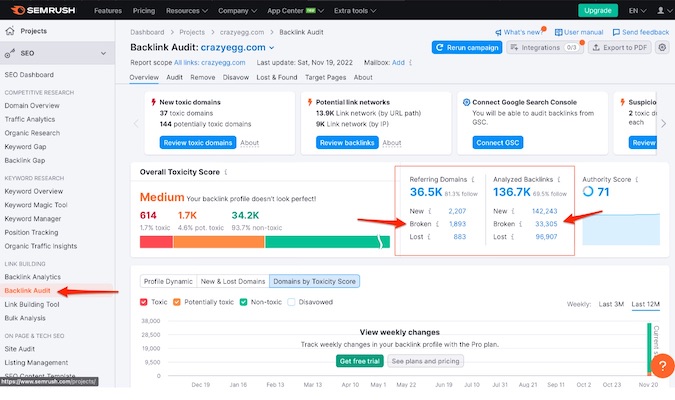
- Broken links on relevant resource pages
- Unlinked brand mentions
- Journalists who repeatedly cover your topic
- Pages that cite old statistics or weak examples
The point is not to copy competitors. The point is to identify proven demand and create something more useful, more current, or more specific.
Step 4: Build the Asset Before You Build the Outreach List
Outreach without a strong asset is just interruption with a subject line. Before asking anyone for attention, make sure the content is worth that attention.
A strong linkable asset should have a clear promise, a fast-loading page, trustworthy information, readable formatting, and obvious citation value. It should also include internal links to relevant pages on your site. That internal linking structure helps your linkable content support the rest of your SEO strategy.
Content Quality Checklist
- Does the page answer a specific question?
- Does it provide information not easily found elsewhere?
- Is the headline clear and compelling?
- Are statistics, examples, and definitions easy to quote?
- Are charts or visuals labeled clearly?
- Is the page mobile-friendly?
- Does it load quickly?
- Does it include author credibility or expert input?
- Does it avoid exaggerated claims?
- Is there a logical internal link path to related pages?
If the page feels thin, rushed, or generic, fix it before outreach. You only get one first impression. Do not send people to a half-baked page and hope they enjoy the dough.
Step 5: Create a Prospect List With Real Relevance
The best outreach list is not the biggest list. It is the most relevant list. Sending 2,000 generic emails may look productive in a spreadsheet, but it often produces low response rates, spam complaints, and the quiet sadness of an inbox full of nothing.
Build your prospect list around people and websites that have a genuine reason to care about your asset. If you created a report about remote work productivity, good prospects might include HR blogs, business publications, workplace consultants, productivity newsletters, software companies, journalists covering labor trends, and university career centers.
Good Link Prospects Include
- Websites that have linked to similar resources
- Authors who cover your topic regularly
- Resource pages that list helpful tools or guides
- Blog posts with outdated statistics
- Articles with broken or weak external references
- Industry newsletters that share useful resources
- Partners, associations, and community organizations
A smaller list of 100 highly relevant prospects often beats a sloppy list of 5,000 strangers. Relevance is the difference between “Thanks, this is useful” and “Why are you emailing me about forklift insurance? I review cookbooks.”
Step 6: Find the Right Contact
Great content sent to the wrong person is like delivering pizza to a dentist. Someone may notice, but the odds are not great.
Look for the author of the specific article, the editor of the section, the content manager, the webmaster for resource pages, or the journalist who covers that beat. Avoid generic inboxes when possible, but do not ignore them entirely for smaller organizations.
When collecting contacts, keep your data clean. Track the website, contact name, email address, role, article URL, reason for outreach, date contacted, follow-up date, response, and link status. A clean spreadsheet or outreach tool prevents chaos from dressing up as “campaign management.”
Step 7: Write Outreach That Sounds Human
Outreach is where many campaigns collapse. The problem is not always the content. Sometimes the email is so robotic it makes the recipient wonder whether a printer became self-aware.
A good outreach email is short, specific, and useful. It explains why you are reaching out, why the asset is relevant, and how it can help the recipient’s audience. It does not flatter excessively, demand a backlink, or pretend you have been “following their work for years” when you clearly found them 11 minutes ago.
A Simple Outreach Structure
- Personal opening: Mention the relevant article, resource page, or topic.
- Reason: Explain why your content is useful for that page or audience.
- Asset: Share the content in one clear sentence.
- Soft ask: Suggest it as a helpful reference, not a command.
- Polite close: Keep it friendly and easy to ignore.
Example:
Hi Jordan, I saw your guide on small business tax planning and noticed you included several resources for freelancers. We recently published a state-by-state quarterly tax deadline guide with a simple estimator for self-employed workers. It may be a useful addition for readers who need deadline reminders and payment planning help. Either way, great resource.
That is enough. No novel. No “synergistic collaboration.” No five-paragraph biography of your company’s journey.
Step 8: Follow Up Without Becoming a Villain
Follow-up matters because people are busy. Editors, bloggers, and journalists receive piles of pitches. A polite follow-up can rescue a good opportunity from inbox quicksand.
Send one follow-up after several days. In some campaigns, a second follow-up may be reasonable, but only if the prospect is highly relevant. After that, move on. The goal is to build relationships, not become the person whose name triggers an eye twitch.
Good Follow-Up Example
Hi Jordan, just checking whether this resource might be useful for your tax planning guide. No worries if it is not a fit. I thought the deadline table and estimator could help readers who need a quick reference.
Notice the tone: helpful, calm, and not emotionally dependent on the backlink. This is outreach, not a hostage negotiation.
Step 9: Use Digital PR When the Story Is Newsworthy
Digital PR is content link building with a news angle. It works best when your asset contains a story journalists can use. Original data, surprising trends, regional comparisons, expert commentary, and timely reports can all become pitchable stories.
For example, “We published a guide to home energy savings” is fine. But “Our analysis found that homeowners in five states could save the most by improving insulation before winter” gives a journalist a clearer angle.
Digital PR pitches should highlight the story, not just the link. Journalists do not exist to improve your domain authority. They need useful, accurate, timely information for their readers. Help them do their job, and links often follow naturally.
Step 10: Support Outreach With Smart Internal Linking
Many teams earn links to a great asset and then forget to connect that asset to the rest of the website. That is like filling a water tower and refusing to connect the pipes.
Add internal links from the linkable asset to related commercial or educational pages. Use descriptive anchor text that helps users and search engines understand the destination. Avoid stuffing exact-match anchors like a nervous magician stuffing scarves into a hat.
For example, if your “Small Business Tax Deadlines by State” page earns links, it could internally link to your guide on bookkeeping software, quarterly tax planning, freelancer deductions, and business expense tracking.
Step 11: Measure What Actually Matters
Counting backlinks is useful, but it is not the whole story. A link building campaign should be judged by quality, relevance, visibility, referral traffic, rankings, assisted conversions, and relationship growth.
Track These Metrics
- Number of earned referring domains
- Relevance of linking websites
- Authority and trust signals of linking pages
- Anchor text diversity
- Referral traffic from links
- Keyword movement for target pages
- Organic traffic to the linkable asset
- Internal pages receiving value from the asset
- Response rate by outreach angle
- Relationships created with publishers or editors
Do not panic if results take time. Content link building often compounds. One data report may earn links during outreach, then more links later as writers discover it through search, newsletters, or social media.
Step 12: Refresh and Re-Promote Winning Assets
A successful linkable asset should not be abandoned after launch. Update it regularly, especially if it contains data, deadlines, statistics, pricing, regulations, or annual trends. Freshness gives you a reason to re-promote the page.
For example, a “2026 Industry Salary Report” can become an annual series. Each update creates a new outreach opportunity and strengthens the page’s long-term value. Over time, the asset becomes known as a reliable reference.
Refreshing content also helps you reclaim lost momentum. Add new charts, improve formatting, quote experts, answer new questions, and fix broken external references. A strong update can turn yesterday’s quiet page into tomorrow’s link magnet.
Common Content Link Building Mistakes
Mistake 1: Creating Content Nobody Would Cite
Many teams publish articles that are useful for readers but not link-worthy for publishers. A basic how-to article can bring search traffic, but it may not attract backlinks unless it includes original insight, data, tools, templates, or strong visuals.
Mistake 2: Targeting Irrelevant Websites
A backlink from an unrelated website is rarely worth the effort. Relevance should guide prospecting. If your content is about dental software, a link from a respected dental association or practice management blog is more valuable than a random lifestyle site with no topical connection.
Mistake 3: Over-Optimizing Anchor Text
Natural backlink profiles include branded anchors, URL anchors, partial-match phrases, and varied descriptive text. Trying to control every anchor text can look manipulative and unnatural. Let publishers link in the way that makes sense for their readers.
Mistake 4: Treating Outreach Like a Bulk Email Blast
Personalization does not mean inserting someone’s first name into a template. Real personalization explains why the asset fits that specific page, author, or audience. If your pitch could be sent unchanged to 1,000 people, it is probably too generic.
Mistake 5: Ignoring Relationship Building
The best link builders do not only collect links; they build trust. Editors remember people who send useful material, respect their time, and avoid pushy behavior. A good relationship can lead to future mentions, quotes, collaborations, and coverage.
A Practical 30-Day Content Link Building Plan
Days 1-5: Research
Choose one topic with proven link demand. Analyze competing pages, backlink profiles, search intent, and publisher interest. Decide whether your asset should be research, a guide, a tool, a visual resource, or a curated hub.
Days 6-12: Create the Asset
Write, design, edit, fact-check, and optimize the page. Add useful visuals, examples, expert input, and internal links. Make sure the content is strong enough to deserve attention before promotion begins.
Days 13-16: Build the Prospect List
Collect relevant websites, authors, editors, journalists, newsletters, and resource pages. Add notes about why each prospect might care. Remove weak or unrelated sites.
Days 17-24: Outreach
Send personalized emails in small batches. Test different angles. Track opens, replies, links, and feedback. Adjust messaging if people are confused or uninterested.
Days 25-30: Follow Up and Improve
Send polite follow-ups, update your tracking sheet, record lessons, and make quick improvements to the content if prospects reveal objections. If several people say the data is useful but the chart is hard to read, fix the chart. The market just gave you free consulting. Take it.
Experience-Based Lessons From Real Content Link Building Work
After working with content campaigns across competitive niches, one lesson becomes obvious: the best link building campaigns are rarely the flashiest. They are the clearest. A practical, well-packaged resource often beats a giant “ultimate guide” that tries to swallow the internet whole.
The first experience worth remembering is that outreach success usually depends on the asset before it depends on the email. A clever pitch cannot rescue weak content for long. People may click, but they will not link if the page does not help them. Before sending outreach, I like to ask a brutally simple question: “Would I link to this if I had no connection to the brand?” If the honest answer is no, the campaign is not ready.
The second lesson is that specificity wins. A broad topic like “marketing statistics” is hard to promote because everyone has seen it before. But a focused report like “Email response benchmarks for small law firms” has a sharper audience. It may reach fewer people, but the right people care more. In link building, a small group of highly interested publishers is better than a massive crowd of bored strangers.
The third lesson is that link building often works best when content serves more than one purpose. A strong research report can earn backlinks, support sales conversations, become social media graphics, fuel newsletter content, provide quotes for executives, and improve topical authority. When planning an asset, think beyond the backlink. Ask how the content can support brand trust, lead generation, internal linking, and future updates.
The fourth lesson is that follow-up messages should be helpful, not needy. Many link builders accidentally sound desperate, which is understandable but not attractive. A good follow-up simply restates the value and gives the recipient an easy way out. Confidence matters. If the asset is useful, present it calmly. If it is not useful, improve it instead of chasing people harder.
The fifth lesson is that the best opportunities often come from updating existing conversations. If someone linked to your old report last year, tell them when the new version is live. If a journalist covered a related trend six months ago, send them fresh data when the topic becomes relevant again. Warm context beats cold outreach. It is much easier to reopen a door than to kick down a new one while shouting “backlink opportunity!”
The sixth lesson is that not every successful campaign looks successful immediately. Some assets earn only a few links during the first outreach push, then continue attracting natural links months later because they rank, get shared, or become a known reference. This is especially true for statistics pages, calculators, glossaries, and annual reports. Patience is part of the strategy.
The seventh lesson is that link quality protects you from regret. A link from a respected, relevant website may take more work, but it usually ages well. Low-quality links can create cleanup headaches later. If a website looks suspicious, has thin content, publishes everything under the sun, or charges for do-follow links like a vending machine with a blog, walk away.
The final lesson is simple: content link building works when it respects the reader. Every backlink is supposed to help someone move from one useful place to another. When your asset genuinely improves that journey, outreach feels less like asking for a favor and more like sharing something worth knowing. That is where good link building becomes good marketing.
Conclusion
Content link building works when it is treated as a system, not a stunt. Start with a linkable goal, choose the right asset format, study what already earns links, create something genuinely useful, build a relevant prospect list, write human outreach, follow up politely, and measure results beyond raw link counts.
The strongest campaigns combine SEO research, content strategy, digital PR, relationship building, and patient improvement. They do not chase shortcuts. They earn attention by making something worth referencing.
So yes, “create great content” is still part of the answer. But now you know the missing half: create great content for a specific linking audience, promote it with care, and keep improving it until it becomes the resource people wish they had found sooner.