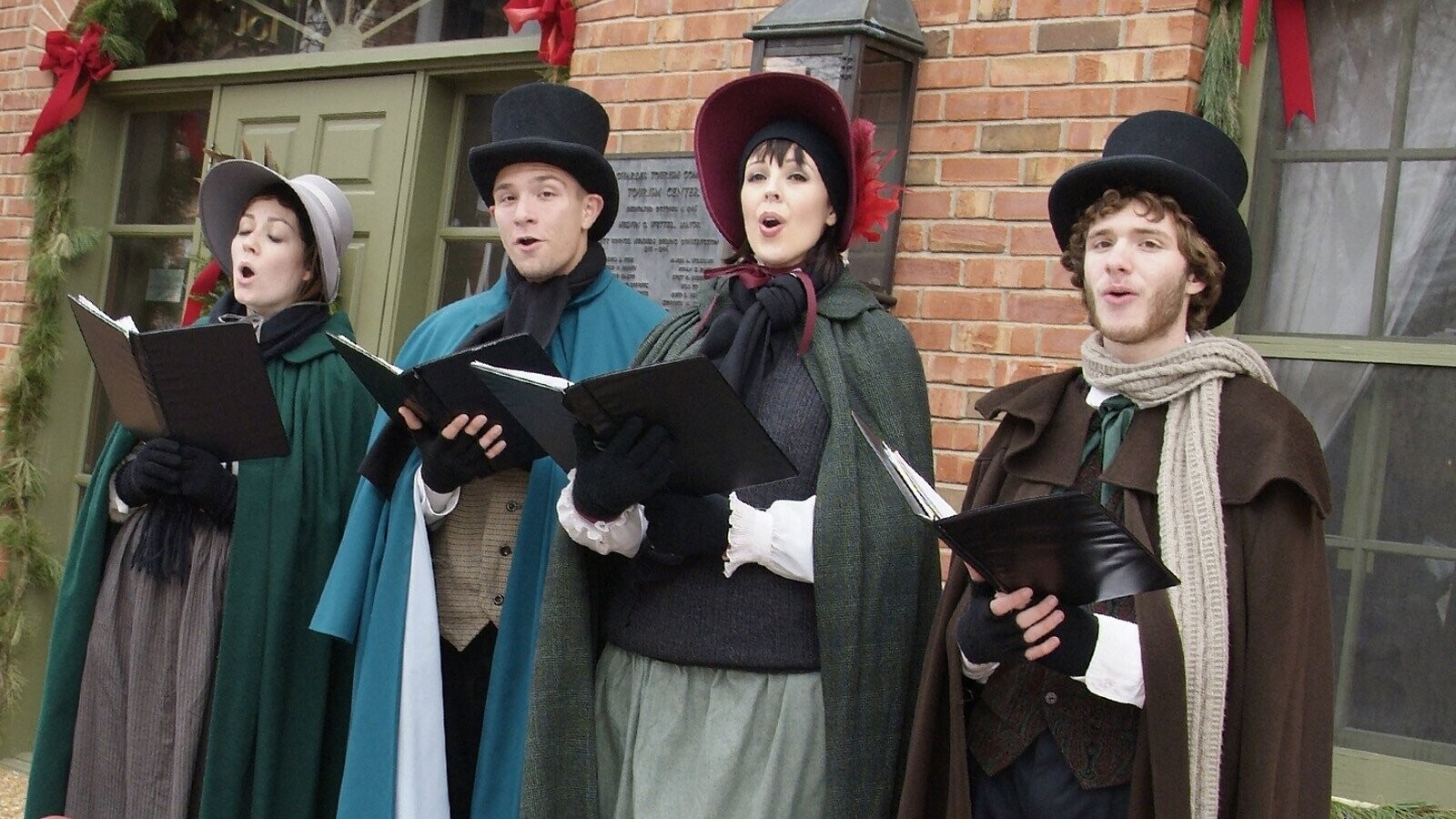
Every November, the same cheerful trivia grenade gets tossed onto the internet: “Did you know ‘Jingle Bells’ was originally a Thanksgiving song?” Yes. America knows. The fact has done more laps around social media than a turkey on a treadmill. But here is the better twist, the one that deserves a little more pie and a lot more attention: the other Christmas-coded song that is really a Thanksgiving song is “Over the River and Through the Wood” or “Woods,” if that is how your elementary school burned it into your brain forever.
This is not a case of vague winter vibes being retrofitted into a holiday argument. This song was explicitly written about Thanksgiving. In fact, its original title was so blunt it practically arrived wearing a pilgrim hat: “The New-England Boy’s Song about Thanksgiving Day.” That is not subtle branding. That is a legal confession.
So how did a song about racing to grandfather’s house for pumpkin pie end up sounding like something that belongs between a tree lot and a department store speaker? That is where the story gets fun. It involves 19th-century family travel, Lydia Maria Child, American holiday mashups, school performances, shortened lyrics, and the suspiciously powerful ability of sleigh bells to make everyone think it is automatically Christmas.
The Real Thanksgiving Song Hiding in Plain Sight
If you grew up in the United States, chances are you know at least one verse of this song by instinct. It lives in the same part of the brain as construction-paper turkeys, glue sticks, and the memory of being told to sing louder by a music teacher who absolutely meant business. The familiar opening is all snow, motion, and anticipation: a horse, a sleigh, a road, a trip to grandfather’s house. That setup sounds very December. But the original poem keeps dropping clues so obvious they might as well be neon signs.
Thanksgiving is named directly. More than once. Pumpkin pie shows up. So does pudding. The poem is not about Christmas Eve, Christmas morning, or Santa doing cardio on a roof. It is about getting to a family gathering on Thanksgiving Day in New England, when the landscape happened to be cold enough to turn the trip into a sleigh ride. In other words, the song sounds wintry because Thanksgiving in 19th-century New England was wintry. Mystery solved. Cue the pie.
That context matters. Modern Americans often imagine Thanksgiving as late-fall leaves, football, and a highway traffic jam with emotional undertones. But in the world that shaped this song, the holiday could feel much closer to winter. Snow on Thanksgiving was not some poetic exaggeration cooked up by a songwriter trying to earn extra adjective points. It was part of the lived atmosphere of the holiday in the Northeast.
Lydia Maria Child Wrote More Than a Cute Seasonal Tune
The author behind the poem was Lydia Maria Child, one of the most significant American writers of the 19th century. She was not just a creator of charming children’s verse. She was an editor, reformer, abolitionist, and public intellectual whose writing reached well beyond nursery-rhyme territory. That matters because this song did not come from nowhere. It came from a writer deeply engaged with American culture and with the idea that American literature should sound like America.
And what is more American than a holiday song about family, weather, food, impatience, cousins, barking dogs, and a horse that knows the route better than everyone else in the sleigh? Child understood that the ordinary rituals of home could carry enormous emotional weight. She was writing for children, yes, but not in a way that talked down to them. She gave them movement, place, anticipation, and reward. The poem feels alive because it is built around experience rather than decoration.
That is one reason the piece lasted. You can hear the wheels moving. You can feel the sting of the cold. You can picture kids bouncing in a sleigh, half joyful and half one sugar molecule away from chaos. The destination is not abstract gratitude. It is family. It is food. It is arrival. It is the long wait ending at the barnyard gate.
Why Everyone Thinks It Is a Christmas Song Anyway
1. Snow has terrible boundaries
Snow is the biggest accomplice in this entire misunderstanding. The moment a song mentions sleighs, bells, and drifted white landscapes, the modern brain stamps it Christmas and moves on. December has monopolized winter branding so thoroughly that November barely gets to borrow a mitten.
But the song’s wintry imagery is not inherently Christmas imagery. It is seasonal imagery. That distinction used to matter more than it does now. A snowy road to a family feast did not automatically mean Christmas in early American life. It just meant you lived somewhere cold and still had relatives to visit.
2. The shorter version erased the best evidence
The full poem is much longer than the version most Americans know. Popular sing-along versions trimmed it down, smoothing away some of the poem’s strongest Thanksgiving markers while keeping the catchiest winter visuals. Once you chop a long, specific poem into a few familiar stanzas, people start remembering the sleigh before they remember the holiday. That is how cultural confusion sneaks in wearing snow boots.
Even the title drifted. Instead of the wonderfully unmistakable “The New-England Boy’s Song about Thanksgiving Day,” later audiences mostly knew it by its opening line. And once a seasonal song loses a title with the word Thanksgiving in it, the odds of holiday misidentification rise dramatically.
3. School and pop culture bundled the holidays together
American school culture has long treated late November through December as one giant craft-supply season. Thanksgiving songs, winter songs, and Christmas songs often ended up sharing the same classrooms, piano benches, and photocopied lyric sheets. A song can stay true to its origins and still get culturally adopted by the wrong month if enough kids sing it near a paper snowflake.
That does not mean people were maliciously rewriting history. It just means culture is messy. Songs migrate. Traditions drift. One generation sings a Thanksgiving poem on the way to turkey; the next sings it in a winter concert between “Frosty” and “Rudolph.” Suddenly everybody feels sure it belongs next to stockings.
The “No, the Other One” Problem
This is where “Jingle Bells” enters the chat wearing sunglasses and stealing all the trivia attention. The better-known fun fact is that “Jingle Bells” was not originally a Christmas song either. It was published in 1857 as “One Horse Open Sleigh,” and historical accounts have long linked it to Thanksgiving-season performance and winter social life rather than to Christmas itself.
That history is real, and it is interesting. But it has become so famous that it crowds out a more straightforward example. “Jingle Bells” is a winter song that later became a Christmas song. “Over the River and Through the Wood” is, in a way, even more delightfully specific: it is a song explicitly about Thanksgiving Day that later picked up Christmas-adjacent vibes because America hears sleigh bells and immediately starts decorating.
So if you want the cleanest answer to the question, “What Christmas-sounding song is actually about Thanksgiving?” the strongest candidate is not the one everybody already posts every November. It is the one with the pie. Always trust the pie.
What the Original Poem Is Really About
Strip away the cultural static, and the poem itself is wonderfully concrete. It is a travel song. A family song. A weather song. A food song. A childhood impatience song. It captures that universal holiday sensation of being almost there and feeling like the final mile lasts six business days.
The children are not meditating on abstract seasonal meaning. They are hurrying. They are cold. They are excited. They are looking for cousins, grandparental affection, and dessert. The horse is hustling, the dogs are barking, and grandmother is about to put pie into circulation. The poem understands something basic and enduring: holiday emotion often arrives through logistics. Long before the meal starts, the holiday lives in the trip.
That may be why the piece still feels warm even when it is set in the snow. The warmth is not in the weather. It is in expectation. The whole poem is powered by that delicious family-holiday countdown: almost there, almost there, almost there, is the pudding done?
Frankly, that is Thanksgiving in one sentence.
How a Thanksgiving Song Became a Winter Standard
Holiday songs survive when they are easy to remember, easy to perform, and emotionally reusable. This one checks all three boxes. Its rhythm is catchy. Its imagery is vivid. Its emotional core traveling through the cold toward family and comfort is broad enough to fit more than one holiday season.
That is why the song never really stopped being a Thanksgiving song, even as it drifted into the wider winter playlist. It simply became bilingual in the language of American holidays. Thanksgiving claims the feast. Christmas claims the snow. The song itself shrugs and takes both invitations.
There is also something deeply American about this crossover. U.S. holiday culture has always been less tidy than people pretend. Traditions overlap. Meals become symbols. School songs turn into nostalgia artifacts. A poem written in the mid-19th century for children can survive into the streaming era because it still speaks the dialect of family anticipation. That is no small achievement.
Why This Song Still Matters
Calling this piece a Thanksgiving song is not just a cute seasonal correction. It is a reminder that American holiday music did not spring fully formed from a department store speaker in 1958. It came from poems, schoolbooks, regional traditions, family travel, and ordinary domestic life. It came from writers who paid attention to how people actually moved through the year.
It also rescues Thanksgiving from one of its modern disadvantages: a suspiciously weak soundtrack. Christmas has an absurdly stacked musical roster. Thanksgiving, by comparison, often gets one parade theme, some football theme music, and whatever is playing in the kitchen while somebody argues about gravy. “Over the River and Through the Wood” deserves a promotion. It has been doing Thanksgiving work while getting Christmas credit for generations.
In a fairer world, the song would sit at the top of every Thanksgiving playlist, right between “pass the rolls” and “who burned the onions.” Until that day comes, at least we can give it its history back.
The Experience of the Song: Why It Feels So Familiar, Even When We Misfile It
Part of what makes this song so sticky in American memory is that it does not just describe a holiday; it recreates an experience many people recognize, even if the details have changed. Most families are not taking a sleigh through New England snow anymore unless their Thanksgiving budget is wildly more cinematic than average. But the emotional mechanics are the same. There is still the trip. There is still the build-up. There is still the feeling of moving toward a house full of relatives, noise, warmth, and food that starts living in your imagination long before it reaches your plate.
For some people, the song brings back school memories first. It is the sound of standing on risers in a paper pilgrim hat that did not fit correctly, trying to remember whether the line was “woods” or “wood” while a piano in the corner attempted to keep 24 children moving in one musical direction. For others, it is tied to family travel: looking out a car window in late November, watching bare trees slide past, knowing the grown-ups up front were pretending not to be stressed while somebody in the back seat kept asking when dinner would happen.
The genius of the song is that it understands anticipation as part of the feast. Thanksgiving is not only the meal; it is also the approach to the meal. It is the coat half-zipped at the door. It is the smell that hits before the greeting does. It is the relative who opens the door already laughing. It is the old family dog, or the memory of one, acting like your arrival is the biggest diplomatic event of the year. The poem gets that. It knows holidays begin before the table does.
That may be why the piece survives so well in family memory. Even in homes where nobody sings it anymore, its logic remains familiar. The song belongs to all those tiny pre-dinner moments that never make the official holiday photo: the nervous energy, the weather talk, the trays on counters, the cousins disappearing into another room, the grandparents pretending not to be emotional while being very emotional. It captures motion turning into belonging.
And because modern life blurs the line between Thanksgiving and Christmas almost immediately, the song keeps getting emotionally re-used. Once people start dragging storage boxes out of closets and hanging lights before the leftover pie is gone, a snow-filled family-travel song naturally gets drafted into both holidays. That does not erase its roots. If anything, it proves how accurately Child understood the emotional overlap between winter gatherings. Family, distance, cold, food, reunion, relief those are durable ingredients.
So the song’s endurance is not really about trivia. It is about recognition. People hear it and remember what it feels like to be on the way to something warm. They remember the wait, the weather, the crowd, the table, the grandparents, the food, the little burst of joy that comes with finally arriving. That is why the song keeps living, even under the wrong label. It still knows the road home.
Conclusion
“Over the River and Through the Wood” is not just a winter song that accidentally wandered into Thanksgiving. It is a genuine Thanksgiving song that later got wrapped in Christmas-colored assumptions. Lydia Maria Child wrote a vivid, specific poem about Thanksgiving travel, family reunion, and holiday appetite, and American culture later heard the snow, saw the sleigh, and filed it under December anyway.
That is the whole joke and the whole lesson. Sometimes holiday history is less about what a song says than what later generations hear. In this case, what the song says is gloriously clear: hurry up, grandmother is waiting, and there had better be pumpkin pie.