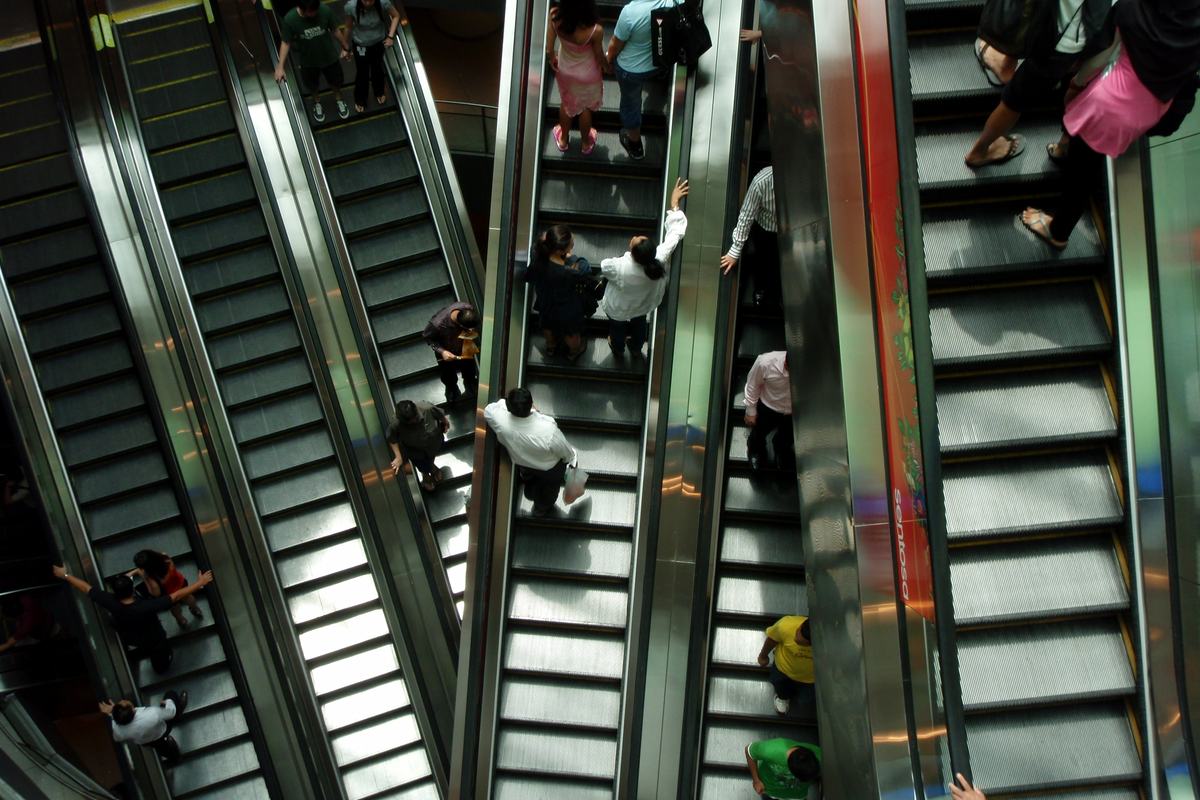
Escalators are the kind of technology we trust so completely that we barely look at them. We step on, hold the rail if we are being responsible adults, pretend not to panic at the top, and glide to another floor as if a moving staircase is the most normal thing in the world. But pause for a second: an escalator is a giant loop of metal stairs, powered by a motor, synchronized with a rubber handrail, packed with sensors, guarded by safety devices, and designed to move crowds all day without asking anyone to press a button. That is not ordinary. That is engineering wearing mall shoes.
This article looks at the everyday genius behind escalators: how they work, why they became essential in shopping centers, airports, train stations, stadiums, and public buildings, and how modern escalator safety technology quietly protects millions of riders. Escalators are “tech in plain sight” because they are both familiar and astonishing. They are public transportation in miniature, crowd-control machines disguised as stairs, and one of the few inventions that can make people feel lazy and efficient at the same time.
What Is an Escalator, Really?
An escalator is a power-driven moving staircase that carries people between levels of a building or structure. Unlike an elevator, which works in trips, an escalator works continuously. You do not wait for it to arrive. It is already there, endlessly circulating, like a very polite conveyor belt that went to architecture school.
The basic idea is simple: a chain of linked steps moves around a track. The steps flatten at the landing, form a staircase along the inclined section, flatten again at the other end, and then loop back underneath. The user sees only the graceful upper half of the journey. Below the visible stairs, those same steps are returning upside down through the truss, ready to reappear for the next passenger. It is a loop, a rhythm, and a lesson in mechanical patience.
A Brief History of Moving Stairs
The escalator did not appear fully formed in a department store, although that would have been very on-brand. Early inventors imagined moving stairways long before modern commercial escalators became common. Nathan Ames patented a concept for “revolving stairs” in the United States in 1859, but his design was never built as a working public machine. Jesse W. Reno later created a working “inclined elevator,” which was installed at Coney Island in New York in the 1890s. It was not quite the escalator we know today, but it proved that people could be moved upward on a powered incline without the drama of climbing stairs.
Charles Seeberger, working with Otis, helped shape the more recognizable commercial escalator. The name “escalator” itself began as a trademark, but over time the word became generic, much like “thermos” or “yo-yo.” That linguistic fate is almost poetic: the machine became so common that its brand name turned into the name of the thing itself. When technology disappears into daily language, you know it has won.
How Escalators Work: The Hidden Choreography
The Truss: The Escalator’s Backbone
The truss is the large structural frame hidden beneath the escalator. It bridges the lower and upper floors and supports the tracks, steps, drive machinery, and balustrades. Think of it as the escalator’s skeleton. Without it, the escalator would be less “smooth ride to the mezzanine” and more “industrial spaghetti.”
The Step Chain: A Parade of Metal Steps
Each escalator step is connected to a chain. The motor drives this chain, pulling the steps along a carefully shaped track. Each step has wheels that run on different rails, and the spacing of those rails controls the step’s position. Where the tracks are close together, the steps flatten. Where the tracks separate, the steps rise into stair formation. This is why escalator steps look like magic at the landing: they are not changing shape; they are changing angle.
The Motor and Gear System
At the top or bottom of the escalator, depending on the design, an electric motor and gearbox drive the system. The motor does not simply spin the steps around for fun. It must handle the weight of passengers, maintain a steady speed, and operate for long periods under heavy use. In busy transit stations, escalators may run nearly all day, carrying commuters, tourists, children, luggage, and the occasional person sprinting as if the escalator personally challenged them.
The Handrail: Not Just a Rubber Decoration
The moving handrail is synchronized with the steps so passengers can steady themselves. It has its own drive system and track, yet it must match the speed of the staircase closely. When the handrail creeps slightly faster or slower than the steps, riders notice immediately. That tiny mismatch creates the strange feeling that your arm is slowly leaving your body to start a new life. Modern systems include handrail speed monitoring and safety devices to detect problems.
Comb Plates and Grooved Steps
At the entrance and exit of an escalator, the comb plate is the toothed metal edge that meshes with the grooves in the steps. It helps guide the moving steps under the landing plate while reducing the risk of objects being pulled into the mechanism. The grooves on escalator steps are not decorative. They improve traction, channel small debris, and help the steps mesh with the comb plate. In other words, the escalator’s “striped shoes” have a job.
Why Escalators Matter in Modern Buildings
Escalators are excellent at moving large numbers of people across short vertical distances. Elevators are better for tall buildings and accessibility needs, but escalators shine where traffic is constant: shopping malls, metro stations, airports, convention centers, hotels, arenas, and department stores. They keep people flowing without buttons, waiting rooms, or awkward elevator silence.
In retail design, escalators are also psychological tools. A well-placed escalator encourages visitors to move through multiple floors, passing displays, storefronts, food courts, and sale signs that whisper, “You came for socks, but what about a blender?” In transit stations, escalators reduce bottlenecks and help passengers move between platforms, exits, and concourses quickly. In airports, they connect ticketing, security, gates, baggage claim, and parking with minimal confusion.
The Safety Tech You Probably Never Notice
Escalators are powerful machines, so safety is built into nearly every visible and invisible part. Modern escalators may include emergency stop buttons, handrail speed sensors, skirt brushes, step-chain monitoring, overspeed protection, missing-step detection, comb-plate switches, braking systems, and lighting at the landings. That is a lot of safety engineering for something most people treat as a moving sidewalk with ambition.
Skirt Brushes: Not Shoe Polishers
The brushes along the side of many escalators are often mistaken for shoe cleaners. They are actually skirt deflectors. Their purpose is to discourage shoes, clothing, bags, and dangling items from getting too close to the narrow gap between the moving steps and the side panel. They are gentle, bristly reminders that the edge is not your friend.
Yellow Lines and Step Edges
Many escalator steps have yellow boundary lines. These guide riders toward the center of the step and away from the sides and landing transitions. The message is simple: stand here, not there. The color may be bright, but the design thinking behind it is serious.
Emergency Stop Buttons
Emergency stop buttons are placed near escalator landings so staff or passengers can stop the machine if something goes wrong. They should not be used casually. Pressing one because your friend is taking too long to finish a pretzel is not public service; it is escalator vandalism with snack-related motives.
Escalator Etiquette: The Great Stand-or-Walk Debate
In many U.S. cities, the informal rule is to stand on the right and walk on the left. Anyone who has used a busy train station has seen this social contract enforced with silent commuter pressure. However, from a safety perspective, walking or running on escalators increases the risk of falls. Transit agencies often recommend standing, facing forward, holding the handrail, keeping feet away from edges, and supervising children carefully.
The stand-or-walk debate reveals a funny truth about public technology: machines are designed by engineers, but used by humans. Humans are impatient. Humans carry coffee. Humans look at phones. Humans decide that a moving staircase is the perfect place to reorganize luggage. Escalator design has to account for all of that, which is why safety signs sometimes sound like they were written by someone who has seen too much.
Accessibility and Escalators: Useful, But Not Universal
Escalators are convenient, but they are not a substitute for elevators. People using wheelchairs, walkers, strollers, large luggage, service animals, or mobility aids generally need elevators or ramps. This is especially important in transit stations and public buildings. A building that relies only on escalators is not truly accessible, no matter how shiny the escalators are.
That said, escalators can support accessibility indirectly by reducing crowding around elevators. When most riders use escalators, elevators remain more available for people who need them. Good building design uses both systems intelligently: escalators for steady pedestrian flow, elevators for vertical access, and stairs as the dependable backup that never needs a motor, only knees.
Maintenance: The Unseen Hero of Every Smooth Ride
Escalators operate under stress. They carry changing loads, run for long hours, collect dust and debris, and endure weather in outdoor or semi-outdoor locations. Maintenance teams inspect steps, chains, brakes, motors, handrails, comb plates, sensors, lubrication systems, and safety switches. In high-traffic places like airports and rail stations, escalator downtime can create serious congestion, so reliability is not a luxury. It is part of public circulation.
Modern escalator maintenance increasingly uses sensors, diagnostics, and connected monitoring. Instead of waiting for a failure, building managers can track performance trends and schedule service before a small issue becomes a metal-staircase tantrum. Predictive maintenance is not glamorous, but neither is standing in a crowd beside a sign that says “Out of Service.”
Energy Efficiency and Smarter Escalators
Older escalators often ran continuously at full speed, whether they were carrying a crowd or one lonely shopper searching for the food court. Newer systems may include energy-saving modes, efficient motors, LED lighting, and passenger-sensing operation. Some escalators slow down or enter sleep mode when not in use, then return to normal speed when riders approach.
This matters because escalators are common in large buildings where energy costs add up. A single machine may seem modest, but a transit hub or shopping complex can have dozens. Over years of operation, better motors, smarter controls, and efficient lighting can reduce waste while keeping people moving.
Design Details That Shape Human Behavior
Escalator placement affects how people move. A crisscross layout in a department store encourages shoppers to walk through each floor before reaching the next escalator. Parallel escalators in a transit station move crowds quickly in both directions. Long escalators in deep subway systems create a dramatic feeling of entering or leaving the underground world. In airports, escalators often pair with moving walkways, signs, and glass railings to create a sense of forward motion.
Even the angle matters. Escalators commonly use inclines around 30 degrees, balancing passenger comfort, safety, and space. Too shallow, and the escalator takes up too much room. Too steep, and riders feel as if they are being delivered to the second floor by a mechanical mountain goat.
Common Escalator Safety Tips
The safest escalator ride is boring, and boring is underrated. Face forward. Hold the handrail. Step on and off carefully. Keep loose clothing, shoelaces, and bags away from the sides. Hold children by the hand. Do not use an escalator with a stroller; use the elevator instead. Avoid sitting, running, jumping, leaning on the side panels, or treating the handrail like a theme-park ride. The escalator is transportation, not a dare.
Footwear also matters. Soft-sided shoes, untied laces, dangling straps, and long garments can increase the risk of entrapment near the sides or comb plates. That does not mean escalators are scary monsters lurking in shopping centers. It means they are machines, and machines prefer when people respect boundaries.
Everyday Experiences With Escalators: The Moving Stairs We Share
Escalators create small public moments that are surprisingly memorable. There is the airport escalator experience, where everyone is half awake, rolling a suitcase, and trying to remember whether Gate C17 is before or after the coffee shop. The escalator becomes a quiet transition zone: from curbside chaos to security lines, from arrival fatigue to baggage-claim hope. People stand still for thirty seconds and suddenly look like travelers in a movie, except with more neck pillows.
Then there is the mall escalator experience. You step on at the ground floor, glance over the side, and get a slow-motion preview of stores, kiosks, banners, and people holding pretzels the size of steering wheels. For children, escalators can feel like amusement park technology accidentally installed next to a shoe store. For adults, they are a relief: a way to move up a level without negotiating stairs while carrying bags, drinks, and the emotional weight of comparing prices.
Transit escalators have a different personality. They are longer, busier, and more serious. People know where to stand, where to walk, and how quickly the crowd wants to move. In a subway station, a long escalator can feel like a conveyor belt between two worlds. At the bottom: trains, tiles, echoing announcements, and a mild smell no one wants to identify. At the top: daylight, traffic, weather, and the reminder that civilization has many layers.
Office-building escalators are calmer. They often sit in lobbies with polished floors, glass walls, and lighting that says, “Important emails are being written nearby.” Riding one feels efficient and slightly ceremonial. You are not just going upstairs; you are ascending into productivity, or at least into a meeting where someone will say “circle back.”
Escalators also reveal human habits. Some riders grip the handrail like they are crossing a rope bridge. Others balance without touching anything, trusting physics with heroic optimism. Some people stop immediately after stepping off, creating a tiny traffic jam and reminding everyone that escalator exits are not scenic overlooks. Parents coach children through the timing: “Step now.” Friends continue conversations across levels. Strangers briefly share a machine, a direction, and an unspoken agreement not to make eye contact for too long.
The most interesting thing about escalators is that they turn vertical movement into a social experience. Elevators enclose people; stairs separate people by speed; escalators arrange people in a moving line. They make crowds legible. They show urgency, patience, confidence, confusion, and the universal little hop at the landing when someone misjudges the exit. In that sense, escalators are not just mechanical devices. They are stages for everyday public life, quietly carrying us through routines we rarely stop to appreciate.
Conclusion: The Everyday Machine That Keeps Us Moving
Escalators are easy to overlook because they work so well. Their genius is not flashy. It is hidden in grooved steps, synchronized rails, safety switches, motors, chains, sensors, trusses, and careful building design. They help cities, stores, airports, and stations move people continuously, turning vertical travel into a smooth, familiar gesture.
The next time you step onto an escalator, notice the choreography: the steps flatten, rise, carry, flatten again, and vanish beneath the landing. Notice the handrail keeping pace. Notice the comb plate, the yellow lines, the side brushes, and the steady hum of machinery doing its job. Escalators are not just moving stairs. They are public infrastructure, mechanical theater, crowd-control technology, and one of the best examples of tech hiding in plain sight.
Note: This article synthesizes real-world information from reputable safety, engineering, transit, historical, and escalator manufacturer resources. Direct source links are omitted as requested for a clean publishing format.