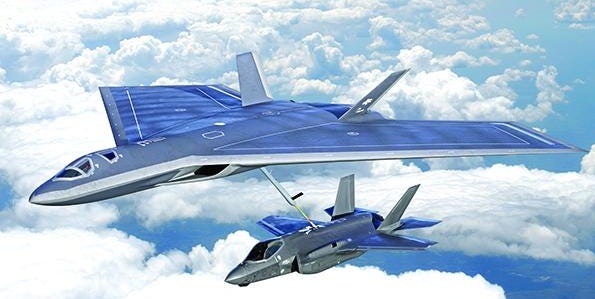
Note: This article discusses publicly reported concept art and program direction, not a confirmed production aircraft. In plain English: Skunk Works has not rolled a secret tanker out of a hangar under dramatic blue lightingat least not publicly. What it has shown is a serious, low-observable tanker concept aimed at one of the U.S. Air Force’s hardest future problems: how to refuel stealth aircraft when the enemy is actively hunting the gas station.
Why a Stealth Tanker Suddenly Matters
Aerial refueling is one of the least glamorous miracles in modern airpower. Fighter jets get the movie posters. Bombers get the thunderous music. Tankers get the job of showing up, carrying enormous amounts of fuel, and making sure everyone else can keep flying. They are the flying equivalent of the friend who brings snacks, chargers, and a full tank of gas on a road trip.
But in a high-end conflict against a peer adversary, tankers become giant, valuable targets. Traditional refueling aircraft such as the KC-135 Stratotanker and KC-46A Pegasus are powerful and essential, but they are not designed to sneak into heavily defended airspace. They are big, radar-visible aircraft that usually operate far enough from the fight to stay alive. That distance creates a problem: stealth fighters and bombers may need fuel closer to contested areas, especially across the vast geography of the Indo-Pacific.
That is the gap Lockheed Martin’s Skunk Works is trying to address with its stealthy aerial refueling concept. The idea is not simply to build a “cool-looking black airplane,” although, yes, it does look like something a Batman defense contractor would keep in a private hangar. The real mission is practical: give fifth- and sixth-generation combat aircraft more reach without forcing vulnerable support aircraft to loiter near enemy missiles.
What Skunk Works Revealed
The recent Skunk Works imagery shows a notional stealth tanker concept connected to the U.S. Air Force’s broader Next Generation Air-refueling System, commonly known as NGAS. Depending on the rendering, the aircraft appears as either a broad, blended, lambda-wing-style design or a flatter, optionally crewed or autonomous platform with low-observable shaping. Several images show the tanker refueling F-35s, a clue to the mission: support stealth aircraft while preserving the element of surprise.
The design language is familiar to anyone who follows stealth aviation. Canted vertical tails, sawtooth panel lines, blended surfaces, buried or shielded engine inlets, and carefully shaped exhaust areas all point toward reduced radar visibility. The broad wings are not just for drama; they provide internal volume for fuel, the entire reason tankers exist in the first place. A stealth tanker that cannot carry meaningful fuel would be like a refrigerator that only holds one yogurt.
Some concepts show wing-mounted refueling pods or twin booms, raising the possibility of servicing more than one receiver at a time. Others show a tail boom arrangement more familiar to current U.S. Air Force tanking operations. These details should be treated as clues, not final specifications. Concept art in the defense world is often part engineering preview, part strategic messaging, and part “please remember we are very good at designing intimidating silhouettes.”
NGAS: More Than One Airplane
The most important thing to understand is that NGAS is not necessarily one magic aircraft. Air Force leaders have described future refueling as a “system of systems,” meaning multiple platforms, mission systems, communications tools, defensive technologies, and possibly autonomous aircraft could work together. A stealth tanker may be one piece of that puzzle, but it is unlikely to replace every conventional tanker.
That makes sense. Not every refueling mission needs a stealth aircraft. Many tanking operations happen in permissive airspace, during training, deployments, humanitarian support, or routine global operations. Sending a stealth tanker to do every job would be like using a Formula 1 car to pick up groceries. Impressive? Sure. Economically sane? Probably not.
A future tanker force could include conventional aircraft such as the KC-46 for safer areas, more survivable tankers closer to contested regions, autonomous refueling drones for specialized missions, and advanced defensive systems that make existing support aircraft harder to kill. In that model, Skunk Works’ stealth tanker would act as the forward gas stationthe one brave enough to set up shop near the bad neighborhood.
How Covert Refueling Changes the Airpower Equation
Modern combat aircraft are limited by fuel. Stealth fighters such as the F-35 are extremely capable, but they cannot ignore physics. Long distances, heavy weapons loads, high-speed maneuvering, and combat patrols all burn fuel quickly. Bombers such as the B-21 Raider are designed for long-range missions, but even they benefit from aerial refueling when planners need flexibility.
A stealth tanker could allow combat aircraft to stay on station longer, strike deeper, or approach from less predictable directions. That last point matters. If an adversary knows where non-stealthy tankers must orbit, it can infer where U.S. aircraft are likely operating. Tanker tracks can reveal strategy. Protecting the tanker means protecting the mission plan.
Covert refueling also supports distributed operations. Instead of relying on large, predictable airbases and obvious tanker corridors, the Air Force could use smaller airfields, dispersed formations, autonomous systems, and mobile refueling nodes. The stealth tanker becomes less of a single aircraft and more of a moving piece in a giant airborne chess match.
The Design Challenge: Hiding a Flying Fuel Truck
Making a stealth tanker is harder than making a stealth fighter. A fighter can be small, sleek, and optimized for speed, weapons, and sensors. A tanker must carry a lot of fuel, manage refueling hardware, operate safely near receiver aircraft, and remain efficient over long distances. It is not enough to be stealthy; it has to be useful.
Fuel volume drives size. Size usually increases radar signature. Refueling booms and drogues create their own signature and aerodynamic challenges. Engines need air, exhaust needs management, and the aircraft must still take off, land, maintain, and survive real-world operations. In short, engineers are being asked to hide an airborne gas station while keeping the pumps open. That is a very Skunk Works problem.
There is also the question of crew. Some renderings suggest an optionally crewed or autonomous platform. Removing pilots can reduce risk to personnel and potentially change aircraft design, but autonomous refueling is not simple. The aircraft must safely rendezvous with receivers, manage fuel transfer, react to emergencies, communicate securely, and operate in contested electromagnetic environments. That is a lot to ask from software, even very fancy software.
Why Current Tankers Are Still Crucial
The excitement around a stealth tanker should not make anyone forget the current fleet. The KC-135 remains a core aerial refueling aircraft, with decades of service behind it and continued upgrades keeping it relevant. The KC-46A represents the first phase of tanker recapitalization, offering refueling, cargo, passenger, aeromedical evacuation, and defensive capabilities. These aircraft are the backbone of U.S. global reach.
In recent years, the Air Force has continued buying KC-46A tankers while debating what comes next. That is not indecision for fun; it reflects the reality that tanker modernization is expensive, complex, and tied to every other major airpower program. The Air Force is also funding fighters, bombers, drones, satellites, cyber systems, nuclear modernization, and command-and-control upgrades. Even the Pentagon has a budget version of “I can’t buy everything in my online cart.”
That is why recent budget discussions have shifted attention from a single stealth tanker airframe toward broader “advanced tanker systems.” These could include self-protection tools, resilient communications, onboard and offboard defenses, and mission systems that make refueling safer in contested environments. The stealth tanker concept still matters, but it may compete with cheaper or faster ways to improve survivability.
Skunk Works and the Art of Strategic Teasing
Skunk Works has a long history of pushing aircraft design into strange and effective places. The organization is associated with legendary aircraft and advanced development programs that turned ambitious ideas into flying hardware. That legacy gives any new concept immediate attention. When Skunk Works releases an image, defense watchers do not simply say, “Nice drawing.” They zoom in, inspect the tail, argue over the inlet geometry, and ruin their lunch break in the best possible way.
The stealth tanker artwork may serve several purposes. It signals that Lockheed Martin is interested in the future refueling competition. It shows the Air Force what industry might build if requirements and funding align. It also shapes the public conversation around survivable tanking, which is often less exciting than fighters but just as important.
In modern warfare, support aircraft are not background characters. Tankers, cargo aircraft, airborne command platforms, and intelligence aircraft create the conditions that allow fighters and bombers to perform. If those support aircraft are pushed too far back, combat aircraft lose reach. If they move too close without protection, they become targets. A stealth tanker is one answer to that dilemma.
Could a Stealth Tanker Actually Enter Service?
The honest answer is: maybe, but not quickly. A clean-sheet stealth tanker would cost billions to develop and take years to mature. It would need requirements, competitions, testing, production capacity, training pipelines, maintenance concepts, and secure communications architecture. It would also need political support through multiple budget cycles. In defense acquisition, that is less a sprint and more a marathon wearing ankle weights.
There is also competition from alternative solutions. The Air Force could buy more KC-46s, upgrade existing tankers, pursue autonomous tanker drones, explore blended-wing-body aircraft, or focus on defensive systems that allow conventional tankers to survive better. A stealth tanker may still be the premium solution for the most dangerous missions, but premium solutions are expensive.
Still, the concept is strategically logical. If stealth aircraft are expected to operate in contested zones, the refueling system that supports them must evolve. Otherwise, the United States risks building exquisite aircraft that cannot stay in the fight long enough to matter. Nobody wants a stealth fighter to become a very expensive airplane constantly checking its fuel gauge.
What This Means for Future Air Combat
The Skunk Works stealth tanker concept points toward a future where the dividing line between combat aircraft and support aircraft becomes blurry. Tankers may carry sensors. Cargo aircraft may launch drones. Refueling platforms may use defensive weapons or coordinate with autonomous escorts. Aircraft that once stayed far behind the front line may become active participants in the battle network.
This is not about making every tanker a fighter. It is about acknowledging that enemies will target the support chain. In a high-end fight, the question is not only “Who has the best jet?” It is also “Who can keep that jet fueled, connected, protected, and moving?” A stealth tanker answers the fuel part while contributing to the larger network of survivability.
For readers, the big takeaway is simple: the stealth tanker is not glamorous because it shoots missiles or breaks speed records. It is glamorous because it enables everything else. It lets fighters patrol longer, bombers reach farther, and commanders build more flexible plans. It is the quiet enablerthe one that may never appear in the recruitment poster but could decide whether the mission succeeds.
Experience-Based Perspective: What a Stealth Tanker Feels Like in the Real World
To understand why this idea matters, imagine standing on a flight line before dawn. The air smells like jet fuel, cold metal, and coffee strong enough to qualify as structural support. Crews move with practiced calm, checking panels, hoses, radios, lights, seals, and fuel systems. A tanker mission looks routine from the outside, but everyone involved knows the choreography has to be exact. Receiver aircraft will arrive at speed, often in poor weather, sometimes after long flights, and always with limited patience for mistakes.
Now imagine adding stealth, contested airspace, and autonomous systems to that picture. The tanker is no longer simply orbiting in a relatively safe track while fighters cycle in and out. It may be operating closer to threat zones, communicating through jammed networks, managing its own signature, and coordinating with aircraft that do not want to reveal their position. The experience shifts from “airborne service station” to “silent logistics node inside a chessboard where the opponent owns missiles.”
From an operator’s perspective, that changes everything. Mission planners would have to think about tanker survivability as carefully as they think about strike routing. Maintenance teams would need to protect stealth coatings, inspect complex edges and panels, and keep mission systems ready. Boom operatorsor autonomous boom-control systemswould need reliable visual, sensor, and data tools to connect with receivers while minimizing exposure. Even small delays could matter because fuel windows are unforgiving. In aerial refueling, “close enough” is not a strategy; it is a warning label.
The human experience would also change. Traditional tanker crews often take pride in being dependable, steady, and unflashy. A stealth tanker community would still need that culture, but with an added layer of secrecy and tactical pressure. Pilots, maintainers, mission commanders, software specialists, and intelligence teams would work more closely together. The tanker would no longer be just the aircraft that shows up after the briefing slides; it would be built into the entire combat plan from the beginning.
For allies, the experience could be equally important. U.S. airpower rarely operates alone. NATO partners, Pacific allies, and coalition forces depend on refueling networks during major exercises and real deployments. A survivable tanker system could expand coalition options, but it would also raise questions about compatibility. Can allied aircraft receive fuel from the new system? Can communications remain secure across different platforms? Can training keep up with the technology? These are not small details. They are the difference between a brilliant concept and a useful aircraft.
There is also a psychological dimension. A stealth tanker changes how adversaries must plan. Instead of assuming tankers are easy-to-spot targets far behind the line, they would have to consider that refueling could happen in less obvious places, at less predictable times, with aircraft that are harder to detect. That uncertainty has value. In military planning, forcing the other side to guess is often as important as having the biggest weapon.
For aviation enthusiasts, the Skunk Works concept is thrilling because it looks futuristic. For defense planners, it is compelling because it addresses a real operational headache. For crews, it would mean a new kind of tanker missionmore technical, more tactical, and probably more demanding. And for everyone who enjoys aviation history, it is another reminder that the most important aircraft are not always the ones that make the loudest entrance. Sometimes the future arrives quietly, carrying fuel.
Conclusion
Skunk Works’ stealth tanker concept is more than a dramatic rendering. It is a response to a real problem facing the U.S. Air Force: how to keep advanced aircraft fueled when future battlefields are filled with long-range sensors, missiles, drones, and electronic attacks. The concept may evolve, shrink, merge into a broader system, or lose budget priority to nearer-term upgrades. But the need behind it will not disappear.
Future airpower depends on range, persistence, and survivability. Fighters and bombers may grab the spotlight, but tankers decide how long they can stay in the show. A stealthy, survivable refueling aircraft could become one of the quiet foundations of next-generation air combat. It may not roar into headlines like a new fighter, but if it works, it could be the reason those fighters make it home.