Deer are graceful, quiet, and charming right up until they turn your garden into an all-you-can-eat salad bar. One evening, your hostas are broad, green, and magnificent. The next morning, they look as though someone attacked them with a weed trimmer and a serious grudge.
Among the many homemade deer deterrents passed between gardeners, hanging bars of Irish Spring soap is one of the easiest and most affordable. The theory is simple: deer have a highly developed sense of smell, and the strong fragrance of deodorant soap may make a protected area seem unfamiliar, unpleasant, or potentially unsafe.
But does Irish Spring soap actually repel deer, or does it merely leave the garden smelling like a freshly scrubbed locker room? This article examines how to test the method, what results gardeners can reasonably expect, why it sometimes works, and why a hungry deer may eventually ignore your fragrant little security system.
Note: The test described below is a repeatable home-garden experiment based on wildlife-management research and common field observations. It is not presented as a controlled university study, and results will vary according to deer pressure, weather, plant selection, and local conditions.
Why Gardeners Use Irish Spring Soap as a Deer Repellent
Irish Spring Original Clean is a strongly scented deodorant bar soap. That noticeable fragrance is the main reason gardeners choose it over lightly scented or unscented soaps. The method does not depend on the soap poisoning, injuring, or physically blocking deer. Instead, it functions as an area repellent: an unfamiliar odor is placed near vulnerable plants in the hope that deer will avoid the entire space.
Deer rely heavily on scent to evaluate their surroundings. A new odor can make a cautious animal pause, change direction, or choose an easier feeding location. Soap may also create a visible object that deer do not recognize, especially when bars are hung in mesh bags or left partly inside their wrappers.
That does not mean Irish Spring is a magical force field. Deer regularly encounter strange smells in suburban landscapes, including laundry products, lawn treatments, vehicle exhaust, pets, grills, compost, and that mysterious casserole your neighbor cooks every Thursday. Given enough time, they may learn that the green bar swinging beside a hydrangea is annoying but harmless.
What the Soap Is Supposed to Do
A scented soap bar may reduce browsing through one or more of the following effects:
- It introduces a strong and unfamiliar odor near desirable plants.
- It temporarily interrupts a deer’s normal feeding route.
- It makes an individual shrub or garden bed less inviting than nearby alternatives.
- Its movement, wrapper, or mesh container creates an additional visual cue.
The keyword is temporarily. Scent-based deer repellents usually perform best before animals establish a strong feeding habit. Once deer have learned that your tulips are delicious, convincing them otherwise becomes considerably harder. It is similar to placing a scented candle beside a pizza and expecting guests to forget the pizza exists.
How to Test Irish Spring Soap Fairly
A casual test often produces a misleading conclusion. A gardener hangs one soap bar somewhere near the property line, loses three hostas, and announces that soap is useless. Another gardener hangs six bars during a week when no deer visit and declares complete victory.
A more useful test compares similar plants in treated and untreated areas while recording visible browsing damage. You do not need a laboratory, but you do need consistency.
Materials for the Test
- Four to eight bars of Irish Spring Original Clean soap
- Small mesh produce bags, nylon stockings, or breathable fabric pouches
- Twine, garden wire, or reusable cable ties
- Wooden stakes if no branches or trellises are available
- A notebook or phone for recording observations
- A camera or trail camera, if available
- Two similar garden areas or groups of plants
Creating a Treated and Untreated Area
Choose two sections containing plants that deer commonly browse. Good candidates include hostas, daylilies, hydrangeas, young fruit trees, beans, peas, lettuce, and tender landscape shrubs. The groups should be reasonably similar in size, accessibility, sun exposure, and distance from cover.
| Test Area | Treatment | Purpose |
|---|---|---|
| Area A | Irish Spring bars hung nearby | Measures browsing where soap scent is present |
| Area B | No soap or additional repellent | Provides a comparison group |
Do not place the untreated plants so close that they receive the same fragrance as the protected plants. Depending on wind and garden layout, separating the areas by at least 20 to 30 feet can make the comparison more meaningful.
Preparing and Hanging the Soap
Place each bar in a breathable pouch. The covering keeps pieces from dropping into the soil while allowing fragrance to escape. Leaving part of the wrapper on the bar may slow its deterioration during wet weather, although too much packaging can reduce scent release.
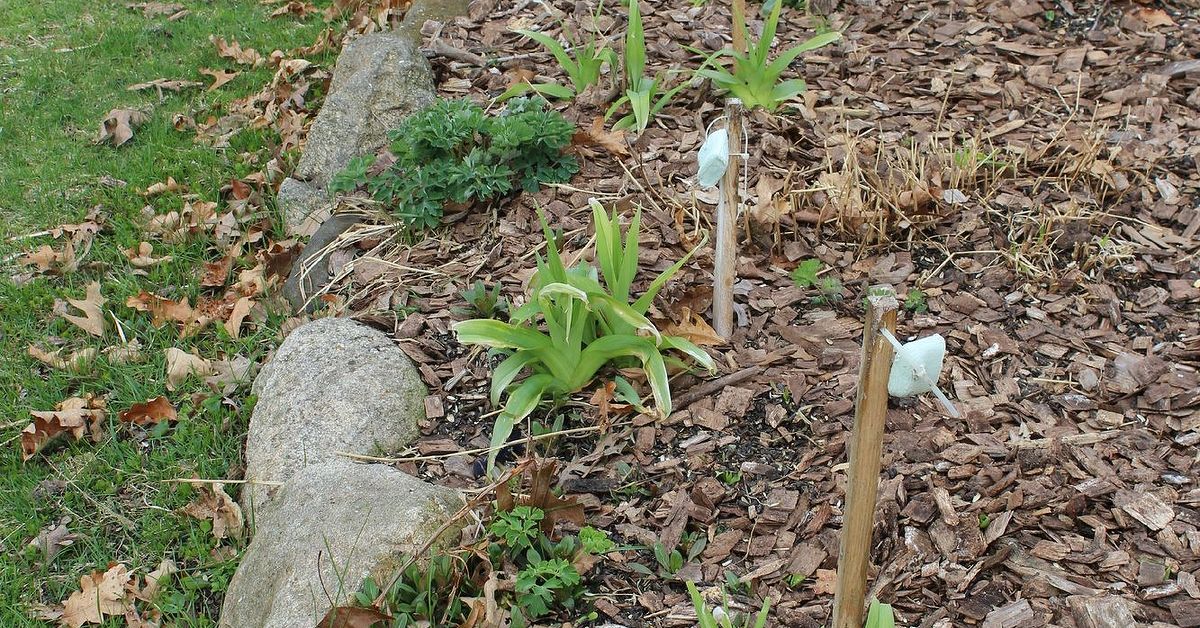
Hang the soap approximately three to four feet above the ground, close to the height at which deer browse many shrubs and garden plants. Position bars around the outer edge of the protected bed and near known entry routes. For small, valuable shrubs, place a bar within a few feet of each plant. For a larger border, space bars roughly three to six feet apart.
The soap should be close enough to matter but should not rest directly against leaves, stems, fruit, or vegetables. Household bar soap is not formulated as a plant treatment. Rubbing it onto foliage or making a concentrated homemade spray may damage sensitive leaves.
How Long the Test Should Run
Run the test for at least three to four weeks. Record the condition of each plant before beginning, then inspect both areas every morning or every few days.
Look for:
- Missing buds, leaves, flowers, or tender shoots
- Ragged or torn plant tissue
- Deer tracks, droppings, or bedding areas
- Changes after rainfall
- Whether deer approach the soap and turn away
- Whether browsing increases as the scent becomes weaker
Photographs taken from the same angle are particularly useful. Memory is unreliable, especially after discovering that a deer has eaten a plant you spent three years nurturing.
The Likely Test Result: Helpful, but Not Dependable Alone
A practical Irish Spring soap test often produces a mixed result. Treated plants may experience less damage during the first several days or weeks, particularly when deer pressure is light or moderate. The soap may interrupt an established travel path, causing deer to feed elsewhere.
However, the difference frequently becomes smaller over time. Rain dissolves the outside of the soap, repeated exposure weakens the novelty of the odor, and determined deer may discover that nothing unpleasant happens when they walk past it.
The most realistic verdict is this: Irish Spring soap may discourage deer temporarily, but it should not be trusted as the only protection for valuable plants.
Conditions in Which Soap Is Most Likely to Help
- Deer visit only occasionally.
- Alternative food is readily available nearby.
- The soap is installed before browsing begins.
- Bars are placed close to vulnerable plants.
- The fragrance remains strong and is refreshed after wet weather.
- The method is combined with fencing, netting, or another repellent.
Conditions in Which Soap Is Most Likely to Fail
- A large deer population visits every night.
- The protected plants are especially attractive or nutritious.
- Natural food is scarce because of drought, snow, or seasonal changes.
- Only one or two bars are used around a large property.
- The same bars remain outside until they have little fragrance left.
- Deer have already developed a strong feeding habit.
Why Results Differ From One Garden to Another
One gardener may report that Irish Spring protected every hosta on the property, while another finds hoofprints beside a half-eaten bar. Both reports may be honest. Deer behavior changes with habitat, population density, weather, hunger, previous experience, and the availability of alternative food.
Food Pressure Matters
A deer choosing between your roses and a field full of tender vegetation may avoid the strange-smelling roses. A deer facing limited food after a harsh winter may treat the same soap as a minor inconvenience.
Rain Reduces Fragrance
Although a solid bar lasts longer than many homemade liquid sprays, repeated rain gradually dissolves it and washes fragrance away. Inspect bars after storms and replace those that have become soft, cracked, tiny, or nearly odorless.
Deer Can Become Habituated
Repellents work partly because they create uncertainty. If deer repeatedly encounter a smell without experiencing danger or discomfort, they can become accustomed to it. Rotating deterrents or changing their locations may help preserve the surprise factor.
Placement Determines Coverage
A soap bar hanging 20 feet from the plants it is meant to protect may not create a meaningful odor barrier. Likewise, protecting one side of a bed does little if deer can approach from three other directions. Identify trails, gaps in hedges, property corners, and sheltered entry points before placing the bars.
How to Improve the Irish Spring Deer-Repellent Method
- Start early. Install the soap before seedlings emerge or flower buds develop.
- Use enough bars. A single bar is not designed to defend an entire backyard.
- Place bars at browsing height. Three to four feet above the ground is a practical starting point.
- Protect the bar from direct contact with plants. Use mesh bags and nearby stakes.
- Check after rain. Replace damaged bars and move surviving bars to new positions.
- Rotate odors. Alternate soap with a properly labeled deer repellent when appropriate.
- Combine methods. Use soap as one layer rather than the entire defense plan.
Common Mistakes to Avoid
Grating Soap Across the Soil
Scattering soap shavings sounds efficient, but the pieces dissolve quickly and may be washed into the root zone. It also makes cleanup difficult and provides less control over where the product travels. Hanging intact bars is cleaner and allows them to be removed when necessary.
Spraying Dissolved Household Soap on Leaves
Household deodorant soap is not the same as a labeled horticultural product. A concentrated mixture can injure foliage, leave residues, or interfere with the protective surface of tender leaves. Keep the product near plants rather than on them.
Protecting Only the Plants Already Damaged
Once deer enter a garden, they often sample neighboring plants. Protect the route and surrounding bed, not merely the shrub that received last night’s haircut.
Expecting Permanent Protection
Soap is a maintenance-based deterrent. It must be inspected, replaced, repositioned, and supported by other methods. Hanging it once in April and expecting it to guard the garden until October is an ambitious job description for a bathroom product.
More Reliable Ways to Keep Deer Out of a Garden
Install Physical Barriers
Fencing and netting provide the most consistent protection because they prevent access rather than trying to change an animal’s opinion. A properly installed deer fence is often about eight feet tall, although alternative designs may use angled fencing, electric wires, solid visual barriers, or two shorter fences spaced several feet apart.
For individual plants, cylinders made from welded wire or sturdy mesh can protect young trees and shrubs. Temporary netting may be sufficient for a small vegetable bed, provided it is supported securely and does not create a hazard for wildlife.
Use Labeled Commercial Repellents
Commercial deer repellents may contain ingredients that produce unpleasant odors or tastes, including egg solids, capsaicin, blood-based materials, garlic, or fatty-acid salts. Follow the product label carefully, especially around edible crops. Reapplication may be necessary after rain or new plant growth.
Choose Less-Preferred Plants
No plant is completely deer-proof. Nevertheless, deer often avoid plants with strongly aromatic foliage, coarse textures, thorns, toxic compounds, or fuzzy leaves. Regional extension services publish deer-resistance ratings that can help homeowners select better candidates for local conditions.
Examples commonly described as less attractive include lavender, catmint, Russian sage, ornamental grasses, daffodils, boxwood, and certain ferns. Local deer may still conduct their own taste test, because apparently they do not read plant lists.
Add Motion-Activated Deterrents
Motion-activated sprinklers can startle approaching deer while delivering a harmless burst of water. Moving the device periodically may reduce habituation. Lights and noise makers can also help temporarily, but stationary scare devices often lose effectiveness once deer realize that no actual threat follows.
Safety and Environmental Considerations
Keep soap bars and loose pieces away from pets and children who might chew or swallow them. Position hanging pouches so that wildlife cannot become tangled in string or netting. Use short, secure fasteners rather than large loops.
Do not hang soap directly over ponds, streams, drainage channels, or vegetable harvest surfaces. Avoid placing it where dissolved material will repeatedly wash into the same small patch of soil. Remove old wrappers, fragments, strings, and mesh at the end of the season.
Most importantly, confirm that deer caused the damage before choosing a control method. Rabbits, groundhogs, squirrels, voles, and insects may produce similar symptoms. Deer typically tear vegetation rather than leaving the neat, angled cuts associated with rodents.
Extended Experience Notes: What a Four-Week Soap Test May Reveal
The following account is a realistic composite of home-garden experiences rather than a claim that every yard will produce identical results. Imagine two groups of hostas planted along the edge of a suburban property. Both groups have been browsed several times, and a narrow trail through the lawn suggests that deer enter from a wooded strip behind the house.
At the beginning of the test, four Irish Spring bars are placed around the first hosta bed. Each bar is tucked into a mesh produce bag and attached to a short stake approximately three feet above the ground. The comparison bed, about 30 feet away, receives no soap. Photographs are taken, and the number of intact leaves is recorded.
During the first week, the treated bed remains almost untouched. The untreated hostas lose several outer leaves, and fresh tracks appear in the soft soil nearby. This looks like a spectacular victory for soap. The garden smells unusually fresh, the hostas are upright, and confidence rises to a level normally reserved for people who have just successfully assembled furniture without reading the instructions.
During the second week, a trail camera records a doe approaching the treated bed. She stops several feet from one bar, raises her head, and moves toward the untreated area. This behavior supports the idea that the unfamiliar odor can interrupt browsing. However, the camera also shows that she does not flee the property. She simply chooses a different item from the menu.
A heavy rain arrives during the third week. The soap surfaces become soft, and the fragrance is weaker. Two nights later, one treated hosta loses several leaves. The damage is still lighter than in the comparison bed, but the invisible force field has clearly developed a hole. Fresh bars are installed in slightly different positions, and browsing slows again.
By the fourth week, the outcome is no longer a simple yes or no. The soap-treated bed has retained more foliage than the untreated bed, suggesting that the method provided some protection. At the same time, it did not completely stop browsing. Deer eventually approached the bars, particularly after rain and after repeatedly visiting the yard without experiencing a meaningful threat.
The most useful lesson from this experience is not that Irish Spring always works or never works. The lesson is that scent can influence deer behavior when the animals have other choices, but the effect is conditional. The soap performs best as an early-warning layer around a small number of plants. It performs poorly as the sole defense for an unfenced vegetable garden containing lettuce, beans, peas, and other high-value food.
Maintenance also matters more than expected. Bars must be checked after storms, pouches must remain securely attached, and the protected area must be large enough to cover likely approaches. When soap is combined with temporary netting around the most vulnerable plants, the results improve substantially. The scent encourages hesitation, while the barrier prevents a curious deer from discovering that dinner is still available behind the air freshener.
There is also a practical limit to the method. Protecting two shrubs with several bars is easy. Protecting an acre with soap becomes expensive, visually cluttered, and rather absurd. At that scale, fencing, crop protection, or a professionally planned deer-management strategy makes more sense.
After four weeks, a reasonable gardener would probably continue using soap around a few ornamental plants but would not rely on it for irreplaceable trees or an entire food garden. It earns a place in the toolboxnot the keys to the whole shed.
Final Verdict: Does Irish Spring Soap Repel Deer?
Irish Spring soap can help repel deer in some gardens, especially when browsing pressure is modest and the bars are fresh, plentiful, and positioned near vulnerable plants. Its strong scent may make deer hesitate or redirect them toward another feeding area.
Nevertheless, the method is temporary and inconsistent. Weather weakens the fragrance, deer can become familiar with it, and hunger may outweigh caution. Irish Spring should therefore be treated as a low-cost experiment or supporting deterrent, not a guaranteed deer-control solution.
For dependable protection, combine scented soap with netting, fencing, motion-activated sprinklers, rotating repellents, and regionally appropriate deer-resistant plants. The soap may persuade a deer to reconsider dinner. A good fence makes the restaurant physically unavailable.