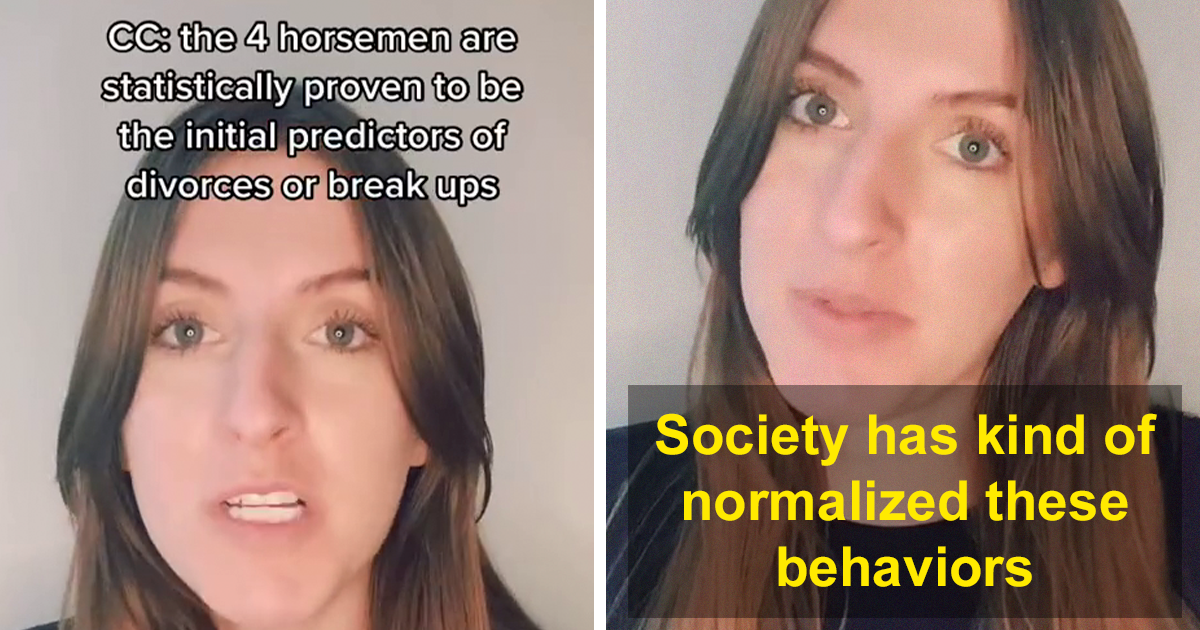
Some relationship red flags do not arrive wearing villain capes. They show up as “just being honest,” “needing space,” “joking around,” or “not wanting drama.” Society has normalized these behaviors so thoroughly that many couples treat them like background noiseannoying, maybe, but harmless. Then one day, the relationship is less romance and more emotional group project nobody wants to manage.
Here is the uncomfortable truth: many break-ups are not caused by one dramatic betrayal. They are built slowly through repeated patterns of disrespect, disconnection, emotional avoidance, and unresolved resentment. Relationship researchers have long pointed to four especially destructive communication patterns: criticism, contempt, defensiveness, and stonewalling. These behaviors can predict break-ups because they attack the emotional safety that love needs in order to survive.
A relationship coach might describe them this way: the problem is not that couples argue. Healthy couples argue too. The problem is how they argue, repair, apologize, listen, and return to each other after conflict. When a relationship becomes a place where one person feels judged, mocked, dismissed, or shut out, love may still existbut trust starts packing a suitcase.
Why Normalized Relationship Red Flags Are So Dangerous
Red flag behaviors are easy to ignore when everyone around you laughs them off. Sarcastic insults become “our love language.” Silent treatment becomes “I just needed time.” Blame-shifting becomes “I was defending myself.” Constant correction becomes “I’m helping you improve.” But when these habits become a couple’s default communication style, they create emotional distance.
Break-ups often happen when one or both partners stop believing the relationship can feel safe again. That does not usually happen overnight. It happens after months or years of small moments: the eye roll during dinner, the joke that stings, the apology that never arrives, the conversation that turns into a courtroom drama, the text left unanswered as punishment.
The good news? These patterns can change when both people are willing to notice them, own them, and replace them with healthier habits. The bad news? If only one partner wants change while the other insists “you are too sensitive,” the relationship may continue moving toward emotional shutdown.
Red Flag Behavior #1: Criticism Disguised as “Just Being Honest”
Honesty is essential in a healthy relationship. Criticism is not honesty. It is honesty with boxing gloves on.
Criticism attacks a partner’s character instead of addressing a specific behavior. There is a huge difference between saying, “I felt overwhelmed when the dishes were left in the sink,” and saying, “You are so lazy. You never help with anything.” One invites a conversation. The other invites a defense attorney.
Why Society Normalizes Criticism
Many people grow up believing love means constant correction. Movies, sitcoms, and social media jokes often portray partners as annoying projects to be fixed. One person is “the responsible one,” and the other is “the disaster.” Everyone laughs, the audience claps, and nobody asks why two adults are living in a permanent performance review.
Criticism also hides behind productivity culture. Some partners say they are “pushing you to be better,” but the message underneath is, “You are not acceptable as you are.” Over time, that message can damage self-esteem and emotional intimacy.
What Criticism Sounds Like
Criticism often begins with words like “you always” or “you never.” For example:
- “You never think about anyone but yourself.”
- “You always ruin everything.”
- “You are impossible to talk to.”
- “You are just like your mother.”
These statements do not focus on the actual issue. They turn a moment of conflict into a verdict on the person’s identity.
The Healthier Replacement: A Specific Complaint
A complaint is not the enemy. In fact, clear complaints can save relationships because they tell your partner what needs attention. The key is to focus on the behavior, your feeling, and your request.
Instead of: “You are so inconsiderate.”
Try: “When plans change and I do not hear from you, I feel unimportant. Could you text me next time?”
That sentence may not win a poetry award, but it has a much better chance of creating repair than a character attack.
Red Flag Behavior #2: Contempt Disguised as Humor
Contempt is one of the most damaging relationship red flags because it communicates superiority. It says, “I am above you.” Unlike frustration or anger, contempt carries disgust, mockery, and disrespect. It can appear as sarcasm, name-calling, eye-rolling, sneering, cruel jokes, public embarrassment, or talking down to a partner.
Contempt is especially dangerous because it does not just criticize what someone did. It attacks who they are. It turns the relationship from “us against the problem” into “me against you.” Once contempt becomes common, emotional closeness tends to shrink fast.
Why Society Normalizes Contempt
Modern culture loves “roasting.” Friends roast each other. Couples roast each other. Online comment sections roast complete strangers before breakfast. A little playful teasing can be harmless when both people genuinely enjoy it. But contempt is not playful. It has a sharp edge. One person laughs while the other quietly absorbs the hit.
Some couples even brag about being “brutally honest,” as if brutality is a charming relationship feature. It is not. Brutal honesty is often just poor emotional regulation wearing a tiny hat that says “truth.”
What Contempt Looks Like
Contempt may sound like:
- “Wow, brilliant idea. Did you think of that all by yourself?”
- “You are such a child.”
- “I make the money, so maybe listen to me.”
- “Everyone knows you are dramatic.”
- “I was joking. Can you relax?”
The last one is especially sneaky. When someone hurts you and then blames you for being hurt, the issue becomes your reaction instead of their behavior.
The Healthier Replacement: Respect Plus Appreciation
The antidote to contempt is respect, and respect is strengthened by appreciation. This does not mean pretending your partner is perfect. Nobody is perfect. Some people load the dishwasher like they are hiding evidence. Still, appreciation helps couples remember they are on the same team.
Instead of mocking your partner, name the issue without degrading them. Instead of saying, “You are useless with money,” try, “I am worried about our spending. Can we look at the budget together this weekend?”
That approach protects dignity. Relationships need dignity the way phones need chargers. Without it, everything slowly dies.
Red Flag Behavior #3: Defensiveness Disguised as “Explaining Yourself”
Defensiveness happens when a partner responds to concern with denial, excuses, counterattacks, or blame. Sometimes defensiveness is subtle. It may sound calm and reasonable, but the goal is still to avoid responsibility.
For example, one partner says, “I felt hurt when you ignored me at the party.” The defensive response is, “I did not ignore you. You were being weird. Besides, you know I was tired.” Suddenly the hurt partner is defending their perception instead of discussing the original issue.
Why Society Normalizes Defensiveness
Many people confuse accountability with defeat. They think admitting fault means losing power. So they treat every complaint like a personal lawsuit. Their partner brings up a feeling, and they respond like they are cross-examining a witness on a legal drama.
Defensiveness is also normalized because people are stressed. Work stress, family pressure, financial worries, and old wounds can make even gentle feedback feel like an attack. But while defensiveness may be understandable, it is still damaging when it blocks repair.
What Defensiveness Sounds Like
- “I only did that because you did this first.”
- “You are too sensitive.”
- “That is not what happened.”
- “I guess I am just the worst person ever.”
- “Why are you bringing this up now?”
Notice that defensiveness often shifts the conversation away from the hurt and toward the accused partner’s discomfort. The result? The original issue remains unresolved, and resentment gets a fresh coat of paint.
The Healthier Replacement: Take One Piece of Responsibility
You do not have to accept blame for things you did not do. But in most conflicts, there is at least one piece of responsibility you can own. That small act can soften the entire conversation.
Instead of: “You are overreacting.”
Try: “I can see why that hurt. I should have checked in with you sooner.”
This does not erase your perspective. It simply tells your partner, “Your feelings matter more to me than winning this argument.” That sentence, practiced consistently, can change the emotional climate of a relationship.
Red Flag Behavior #4: Stonewalling Disguised as “Needing Space”
Taking space can be healthy. Stonewalling is different. Stonewalling happens when one partner shuts down, withdraws, refuses to respond, gives the silent treatment, walks away without agreement, or emotionally disappears during conflict.
Sometimes stonewalling is intentional punishment. Other times, it happens because a person feels flooded and does not know how to regulate their emotions. Either way, the partner on the receiving end often feels abandoned, confused, and powerless.
Why Society Normalizes Stonewalling
We often praise emotional detachment as maturity. “Do not react.” “Stay unbothered.” “Protect your peace.” These ideas can be useful when dealing with harmful people or unsafe situations. But inside a committed relationship, disappearing every time things get uncomfortable can become emotional neglect.
Needing a break is reasonable. Refusing to return to the conversation is the problem. A healthy pause says, “I need 30 minutes to calm down, and then I want to keep talking.” Stonewalling says nothingor worse, says everything through silence.
What Stonewalling Looks Like
- Leaving the room during every difficult conversation.
- Ignoring texts for hours or days after conflict.
- Responding with “fine,” “whatever,” or blank silence.
- Changing the subject whenever emotions appear.
- Using sleep, work, gaming, scrolling, or errands to avoid repair.
The partner who stonewalls may think they are preventing a fight. But the other partner may experience the silence as rejection. Over time, this can create a pursuer-distancer cycle: one partner pushes harder for connection, while the other retreats further away.
The Healthier Replacement: A Time-Out With a Return Time
The healthy version of taking space includes reassurance and a plan. For example: “I am getting overwhelmed and do not want to say something hurtful. I need 30 minutes. I promise I will come back and talk at 8:00.”
This protects both people. One partner gets time to calm down. The other does not feel abandoned in emotional limbo, which is basically the waiting room of relationship anxiety.
How These Four Red Flags Predict Break-Ups
Criticism, contempt, defensiveness, and stonewalling predict break-ups because they damage the basic ingredients of a healthy relationship: respect, trust, safety, emotional responsiveness, and repair.
Criticism makes a partner feel attacked. Contempt makes them feel small. Defensiveness makes them feel unheard. Stonewalling makes them feel alone. When these patterns repeat, even loving partners may begin to protect themselves by caring less. That emotional withdrawal can be the beginning of the end.
Many couples do not break up because they stopped loving each other. They break up because love became too exhausting to maintain. The relationship starts requiring more emotional labor than emotional nourishment.
Are These Behaviors Always a Sign You Should Break Up?
Not always. Every couple slips into unhealthy communication from time to time. A tired parent may snap. A stressed partner may get defensive. Someone overwhelmed may shut down. The key question is not, “Has this ever happened?” The better question is, “What happens after it happens?”
Healthy couples repair. They apologize. They revisit the conversation. They make changes. They care about the impact of their behavior, not just their intent.
A relationship becomes more concerning when one or both partners refuse accountability, repeat the same harmful pattern, minimize the other person’s pain, or use fear, control, humiliation, or isolation. If a relationship feels emotionally unsafe, support from a licensed therapist, trusted professional, or domestic violence resource may be necessary.
How to Replace Red Flags With Green Flags
Use Soft Start-Ups
A soft start-up begins a difficult conversation without blame. Try: “I feel disconnected lately, and I miss us. Can we talk tonight?” That lands very differently than, “You never care about this relationship.”
Practice Repair Attempts
A repair attempt is any action that lowers tension and brings the conversation back to safety. It may be a sincere apology, a gentle joke, a hand on the shoulder, or saying, “Can we restart? I came in too hot.”
Validate Before You Explain
Validation does not mean agreement. It means acknowledging that your partner’s feelings make sense from their perspective. Try: “I understand why that felt dismissive.” After validation, your explanation will be easier to hear.
Build a Culture of Appreciation
Couples who only discuss problems can begin to feel like coworkers at a failing startup. Appreciation keeps warmth alive. Say thank you. Notice effort. Compliment character. Celebrate small wins. No, your partner should not need a parade for taking out the trashbut a little gratitude is cheaper than couples therapy.
Create Conflict Rules Before Conflict Happens
Do not wait until both people are upset to invent communication rules. Agree in advance: no name-calling, no threats of breaking up during fights, no silent treatment, no public humiliation, and no bringing up ancient history unless you are archaeologists.
Specific Examples: Normalized Red Flags vs. Healthy Responses
Example 1: The Messy Apartment Fight
Normalized red flag: “You are disgusting. I cannot believe I live with someone like you.”
Healthy response: “I feel stressed when the apartment is messy. Can we divide chores more clearly?”
Example 2: The Late Reply Argument
Normalized red flag: ignoring your partner for the rest of the day to “teach them a lesson.”
Healthy response: “I felt anxious when I did not hear back. Can we talk about what is realistic during your workday?”
Example 3: The Sarcastic Dinner Comment
Normalized red flag: “Wow, you finally cooked something edible.”
Healthy response: “Thank you for making dinner. Next time, can we add a little more seasoning?”
Example 4: The Defensive Money Talk
Normalized red flag: “You spend money too, so do not start with me.”
Healthy response: “You are right that we both spend. I can see why my purchase worried you. Let’s look at the budget together.”
Experience-Based Reflection: What These Red Flags Feel Like in Real Life
In real relationships, these four red flags rarely appear as obvious disasters at first. They feel ordinary. That is what makes them so powerful. A couple may start with playful teasing, but over time the teasing becomes sharper. One partner laughs in public and cries in private. The other partner says, “That is just how I joke,” and the wound gets filed under “overreaction.”
Criticism often feels like living with a tiny judge on your shoulder. You start second-guessing simple choices: how you fold towels, how you tell a story, how you drive, how you dress, how you breathe near the refrigerator. At first, you may try harder to please your partner. Later, you may stop trying because nothing seems good enough. That is when emotional distance grows. People do not feel passionate toward someone who makes them feel permanently inadequate.
Contempt feels even worse because it carries humiliation. A partner who uses contempt may not scream. They may smirk, roll their eyes, mimic your voice, or make you the punchline. The confusing part is that everyone else may laugh. You wonder whether you are too sensitive. But your body usually knows. If a “joke” makes your stomach drop, your face burn, or your confidence shrink, it is worth paying attention.
Defensiveness creates a different kind of loneliness. You bring up a hurt, hoping for closeness, and suddenly you are in a debate you never meant to start. You say, “I felt ignored,” and the conversation becomes about your timing, your tone, your memory, your flaws, your past mistakes, and possibly something you said during a vacation three years ago. By the end, you feel guilty for having feelings at all. That is how defensiveness trains people into silence.
Stonewalling can feel like emotional abandonment. The person you love is physically present but unreachable. They may stare at their phone, walk away, sleep on the couch, or refuse to answer. The silence becomes louder than yelling. Many people on the receiving end start chasing: sending long texts, asking repeated questions, apologizing just to end the distance. Eventually, they may stop chasingnot because they no longer care, but because caring has become too painful.
The most important lesson from these experiences is that love is not only measured by big romantic moments. It is measured by what happens during stress. Can two people disagree without degrading each other? Can they pause without disappearing? Can they apologize without adding a “but”? Can they hear pain without turning it into a competition?
Relationships do not need perfect communication. Perfect communication is for robots, and even they crash after updates. Real couples need repairable communication. They need enough humility to say, “I handled that badly.” They need enough courage to say, “That hurt me.” They need enough care to say, “Let’s try again.”
If these four red flags are present in your relationship, do not panicbut do not ignore them either. Patterns become futures when nobody interrupts them. The earlier a couple names criticism, contempt, defensiveness, and stonewalling, the better chance they have of building something healthier. And if the relationship cannot become safe, respectful, and mutual, recognizing these signs may help someone leave before they lose too much of themselves trying to be loved correctly.
Conclusion
The four red flag behaviors that predict break-ups are not always dramatic. They often hide in everyday conversations, jokes, silences, and arguments. Criticism attacks character. Contempt attacks dignity. Defensiveness blocks accountability. Stonewalling blocks connection. Society may normalize these habits, but normalization does not make them healthy.
A strong relationship is not one where partners never fight. It is one where both people feel safe enough to be honest, humble enough to take responsibility, and committed enough to repair after conflict. When couples replace these red flags with respectful complaints, appreciation, accountability, and healthy time-outs, they give love room to breathe again.
Note: This article is for educational and informational purposes only. If a relationship includes fear, threats, control, isolation, or emotional abuse, consider reaching out to a qualified professional or a trusted support organization for help.