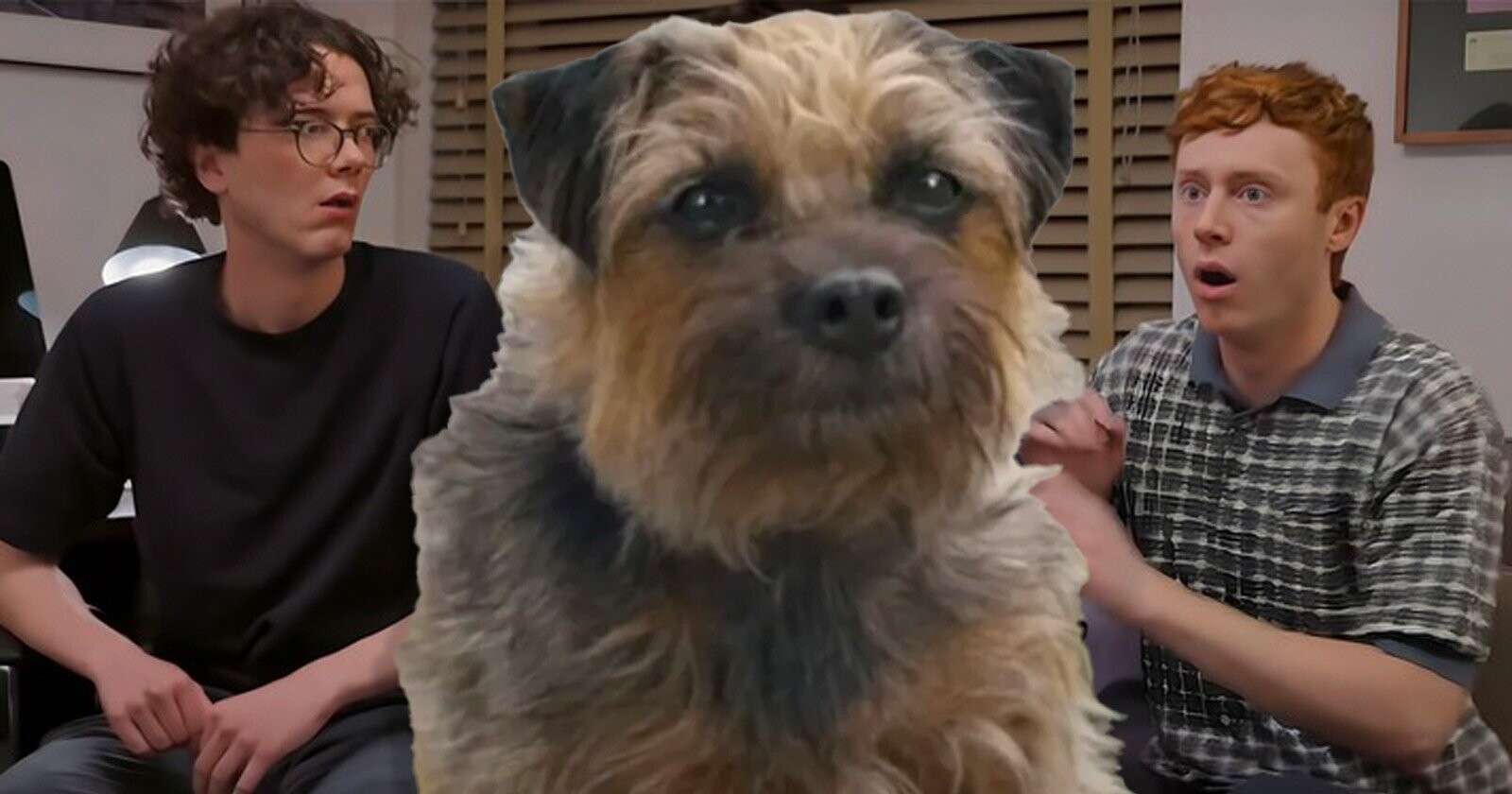
Hollywood release calendars are usually treated like delicate chessboards, except the pieces are multimillion-dollar comedies, streaming strategies, nervous executives, and occasionally a dog with a revenge fantasy. That is how we arrive at the wonderfully strange headline: Please Don’t Destroy to Be Replaced by Drunken, Dirty-Talking Dogs. It sounds like a rejected sketch from the very trio it describes, but the story is real: Universal shifted the Please Don’t Destroy feature film away from its planned theatrical date and moved the R-rated dog comedy Strays into that slot.
At the center of the shuffle were two very different comedy bets. On one side: Ben Marshall, John Higgins, and Martin Herlihy, the Please Don’t Destroy trio best known for fast, anxious, absurd digital shorts on Saturday Night Live. On the other side: Strays, a foul-mouthed talking-dog movie with Will Ferrell, Jamie Foxx, Isla Fisher, Randall Park, and a level of canine profanity that would get any golden retriever banned from obedience school.
The result was more than a funny industry footnote. It became a tiny case study in modern comedy distribution, where theatrical confidence is scarce, streaming platforms are hungry for exclusive content, and even a promising SNL-backed comedy can be told to roll over while the dirty-talking dogs take the big screen.
What Actually Happened?
Please Don’t Destroy’s first feature, later titled Please Don’t Destroy: The Treasure of Foggy Mountain, was originally positioned for a theatrical release on August 18, 2023. Universal had a recognizable comedy brand, a Judd Apatow production connection, and a trio that had already built a loyal fan base through viral SNL sketches. On paper, it looked like a natural step: internet-to-SNL-to-movie, the comedy career ladder wearing sneakers.
Then the plan changed. Universal moved the Please Don’t Destroy movie to Peacock, where it premiered on November 17, 2023. The August 18 theatrical date was taken by Strays, an R-rated comedy about an abandoned dog named Reggie, voiced by Will Ferrell, who joins a pack of streetwise dogs and sets out to get revenge on his terrible owner, played by Will Forte.
In simple terms, the SNL comedy trio lost its theatrical release date to a movie about dogs swearing, drinking, insulting humans, and discussing body parts with the confidence of a bachelor party that learned how to bark. In less simple terms, Universal made a strategic call about which comedy seemed more likely to cut through the crowded late-summer marketplace.
Who Are Please Don’t Destroy?
Please Don’t Destroy is made up of Ben Marshall, John Higgins, and Martin Herlihy. The group began building its audience online before becoming a major part of Saturday Night Live’s digital comedy identity. Their shorts often feature the three as exaggerated versions of themselves: insecure, panicked, socially clumsy, and trapped in escalating situations that begin with casual conversation and end somewhere near emotional demolition.
Their breakout SNL appeal came from a specific rhythm. A Please Don’t Destroy sketch rarely strolls. It sprints, trips, screams, apologizes, and somehow ends up wearing a costume. Their videos turned ordinary spacesan office, a bedroom, a backstage hallwayinto tiny pressure cookers. The comedy came from watching three supposedly normal young men collapse under the weight of very dumb problems.
That style made The Treasure of Foggy Mountain a logical feature debut. The film follows three childhood friends working at an outdoor store who set off to find a legendary treasure. Along the way, they encounter park rangers, cultish weirdness, wildlife trouble, and the terrifying emotional reality of growing up. In other words, it is a buddy adventure comedy filtered through the PDD machine: friendship, failure, panic, and jokes that feel like they were written during a group text meltdown.
Why Would Universal Move It to Streaming?
The easiest answer is risk. Theatrical comedy has become a tougher business than it was during the golden age of big-screen studio comedies. For years, a mid-budget comedy could open on star power, a good trailer, and the promise that audiences wanted to laugh together in a room full of strangers eating nachos too loudly. Today, that equation is shakier.
Audiences have become selective about what deserves a theater trip. Superhero films, horror movies, animation, and major franchise spectacles still have built-in theatrical advantages. Comedies face a harder question: why not watch at home? That question is especially sharp for a film built around performers whose fan base already knows them from short-form digital comedy and television clips.
Moving The Treasure of Foggy Mountain to Peacock gave Universal a different kind of value. Instead of spending heavily to sell a theatrical opening, the studio could use the movie as a streaming exclusive, appealing directly to SNL fans and comedy viewers already comfortable watching Please Don’t Destroy on small screens. It may not have carried the glamour of a theatrical debut, but it likely made business sense in a marketplace where “funny” is no longer an automatic box-office category.
Why Did Strays Get the Theatrical Slot?
Strays had something Please Don’t Destroy did not: an instantly marketable, high-concept hook. It was not merely “a comedy.” It was “an R-rated talking-dog revenge comedy with Will Ferrell and Jamie Foxx.” That is the kind of pitch that can fit on a billboard, a TikTok caption, or the side of a bus. It also makes people ask, “Wait, what?” which is still one of Hollywood’s favorite marketing strategies.
The film was directed by Josh Greenbaum and written by Dan Perrault. Its voice cast included Will Ferrell as Reggie, Jamie Foxx as Bug, Isla Fisher as Maggie, and Randall Park as Hunter. Will Forte played Doug, the awful human whose mistreatment of Reggie sparks the plot. The movie mixed live-action dog performances, adult language, gross-out humor, and a surprisingly sincere found-family story.
From a studio perspective, Strays had a clearer theatrical identity. It was crude, visual, easy to explain, and built around familiar stars. The contrast was almost comically sharp: Please Don’t Destroy offered neurotic young men searching for treasure; Strays offered dogs planning revenge while saying things no dog should say unless it has been listening to too many podcasts.
The Comedy Marketplace Has Changed
The release-date swap says a lot about where mainstream comedy stands. The old model rewarded theatrical comedies that could become communal events. Think of the era when audiences packed theaters for Anchorman, Wedding Crashers, Superbad, Bridesmaids, or The Hangover. Those movies did not need dragons, multiverses, or collectible popcorn buckets shaped like a spaceship. They just needed jokes, stars, and word-of-mouth.
Now, the path is more complicated. A comedy must either feel like an event or belong comfortably on streaming. Please Don’t Destroy’s humor is extremely online, fast, and repeatable. That is a strength, but it also makes the group feel native to phones, laptops, and late-night YouTube clips. Strays, meanwhile, sold itself as a theatrical novelty: cute dogs behaving very badly. It was not necessarily safer artistically, but it was louder commercially.
That does not mean Universal saw Please Don’t Destroy as weak. It means the studio likely saw Peacock as the better home for that particular film. The streaming release allowed The Treasure of Foggy Mountain to meet viewers where the trio’s fan base already lived, while Strays took its shot as a big-screen summer comedy.
How Did the Two Movies Perform?
Please Don’t Destroy: The Treasure of Foggy Mountain premiered on Peacock and received mixed-to-positive reactions depending on the critic. Some reviewers praised its goofy charm, fast jokes, and affection for friendship comedy. Others felt that the group’s sketch energy stretched unevenly across a feature-length runtime. That criticism is common when sketch performers move into movies. A five-minute comedy rocket is one thing; a 90-minute rocket needs seats, snacks, and structural engineering.
Strays reached theaters but did not become the breakout comedy smash Universal may have hoped for. It opened modestly and grossed about $36 million worldwide. Reviews were mixed, with many critics noting the same tension: the dirty jokes were very dirty, sometimes funny, sometimes repetitive, while the movie’s emotional dog-pack story gave it more heart than expected.
In hindsight, the irony is delicious. The drunken, dirty-talking dogs won the theatrical slot, but they did not exactly chew through the box office like a Labrador left alone with a couch cushion. Please Don’t Destroy lost the big-screen debut, but the film still reached its natural audience on Peacock. Nobody fully “won” in the old-fashioned Hollywood sense. The real winner may have been the headline itself.
Why the Headline Works So Well
“Please Don’t Destroy to Be Replaced by Drunken, Dirty-Talking Dogs” is funny because it sounds personal, even though it is really about scheduling. The phrase makes it seem as if three human comedians were physically removed from a stage and replaced by dogs wearing sunglasses and asking for tequila. It turns a business decision into a cartoon humiliation.
That is also why the story became so shareable. Entertainment news often depends on framing. “Universal Moves Please Don’t Destroy Film to Peacock” is accurate, but it has the emotional voltage of a printer manual. “Please Don’t Destroy Replaced by Drunken, Dirty-Talking Dogs” has bite. It contains conflict, absurdity, and one very important question: how drunk are the dogs?
The headline also captures a deeper anxiety among comedians. In a crowded media world, originality is not always enough. A clever comedy trio with a loyal fan base can still be pushed aside by a concept that is easier to sell in one sentence. That is not necessarily fair, but Hollywood has never been a fairness machine. It is more like a vending machine that sometimes eats $80 million.
Please Don’t Destroy and the SNL-to-Film Tradition
Please Don’t Destroy’s move into film follows a long tradition of SNL talent trying to expand sketches, characters, or comic identities into movies. Some attempts become classics. Others become cautionary tales whispered in writers’ rooms. The challenge is always the same: what works in a short burst must grow into a story with momentum, stakes, and characters who can survive more than one joke.
The Treasure of Foggy Mountain did not simply adapt one sketch. Instead, it translated the trio’s broader comic personality into a buddy-adventure format. That was a smart choice. Rather than asking audiences to watch one premise inflate like a pool toy, the movie gave the group a quest, supporting characters, and a world big enough for their panic to roam freely.
The film’s cast helped widen that world. Conan O’Brien, Bowen Yang, Meg Stalter, X Mayo, and others added extra comic flavors, turning the movie into a playground for absurd supporting turns. Even when critics disagreed about the film’s overall success, the project showed that Please Don’t Destroy had ambitions beyond the office-sketch format that made them famous.
Strays: A Dog Movie That Definitely Was Not for Children
Part of the Strays marketing joke was misdirection. Talking-animal movies usually belong to family entertainment. Audiences are trained to expect life lessons, gentle slapstick, and maybe a squirrel with a celebrity voice. Strays took that familiar package and filled it with R-rated chaos. It was like finding out your childhood teddy bear has a burner phone and strong opinions about revenge.
The film’s humor relied on the gap between adorable dog behavior and filthy human dialogue. Dogs sniff things. Dogs chase balls. Dogs misread human behavior. Now imagine those same dogs narrating their world with the vocabulary of comedians who have been locked in a garage with too much beer. That contrast was the whole engine.
But the movie also needed heart. Without emotional grounding, Strays would have been only a string of profanity and poop jokes. Its story about an abused dog finding a new pack gave the film a surprisingly sincere backbone. The best adult comedies often work that way: they let the jokes misbehave, but they keep the emotional center clean enough for audiences to care.
What This Says About Streaming vs. Theaters
The Please Don’t Destroy and Strays switch shows how studios now sort comedies into different lanes. A movie that might once have received a modest theatrical push can now become a streaming premiere. A movie with a louder hook may get the theatrical chance, even if its long-term prospects are uncertain.
This does not mean streaming is a downgrade in every case. For comedy, streaming can be a comfortable home. Viewers can discover a movie at their own pace, replay favorite jokes, recommend it instantly, and avoid the awkward experience of sitting in a quiet theater during a joke that only three people enjoy. Comedy is social, but it is also personal. What makes one viewer howl may make another stare into the middle distance like they just remembered a tax bill.
Theaters still matter, especially for comedies that become events. A packed room can make laughter contagious. But the bar is higher now. Studios want a hook that justifies the trip. In 2023, Universal apparently decided that dogs behaving badly had a clearer theatrical bark than three anxious SNL writers hunting treasure.
The Experience: Watching Comedy Get Replaced by Dogs
There is a strange, funny experience in following a story like this as a comedy fan. At first, the news sounds like a joke someone invented to parody Hollywood decision-making. Three rising comedians finally get a feature film, and then their theatrical date is handed to foul-mouthed dogs. It feels less like a release strategy and more like a sketch premise where a studio executive says, “We love your movie, but have you considered being a terrier?”
For fans of Please Don’t Destroy, the shift may have felt disappointing. A theatrical debut carries symbolic weight. It says, “These guys made it to the movies.” Seeing the film moved to Peacock could feel like watching a graduation ceremony relocated to a group chat. The work still exists, the audience can still enjoy it, but the milestone looks different. Comedy fans understand that feeling. So much modern comedy lives online that a theater release can feel like rare proof that strange little internet voices can still grow into something bigger.
At the same time, the experience of watching Strays take the slot is hard to resent completely because the concept is so ridiculous. A raunchy dog comedy is exactly the kind of gamble people claim Hollywood no longer makes. It is original, weird, risky, and proudly immature. You may not love every joke, but you cannot accuse it of being another masked superhero sequel where the sky opens and a laser attacks a city for the 900th time.
The funniest part is that both movies represent different survival strategies for comedy. Please Don’t Destroy represents the internet-age comedy pipeline: build a voice online, sharpen it on television, then convert that audience into a longer project. Strays represents the old-school high-concept studio comedy: take a simple idea, attach stars, push the outrageous premise, and hope curiosity sells tickets. One whispers, “You know these guys.” The other barks, “This dog is about to say something illegal.”
As a viewer, the lesson is not that one strategy is better. The lesson is that comedy is still searching for stable ground. Sometimes the smartest jokes go to streaming. Sometimes the dumbest-sounding idea gets the multiplex. Sometimes the dogs win the date and still struggle at the box office. Sometimes the streaming movie becomes a cult favorite because fans find it later, quote it, and pass it around like contraband candy.
That experience makes the whole saga oddly comforting. Comedy has always been messy. It depends on timing, taste, mood, platform, and whether the audience is willing to follow you into nonsense. Please Don’t Destroy did not disappear because dogs took their release date. Strays did not save theatrical comedy just because it had a pack of profane pets. Both projects became part of the same bigger story: funny people, strange premises, cautious studios, and audiences deciding what deserves their time. In other words, Hollywood remains a dog park. Some fetch trophies. Some chase their tails. Everyone is pretending they meant to do that.
Final Thoughts
The story behind Please Don’t Destroy to Be Replaced by Drunken, Dirty-Talking Dogs is funny on the surface and revealing underneath. Universal’s release-date shuffle turned a normal distribution decision into a miniature comedy-business fable. Please Don’t Destroy’s The Treasure of Foggy Mountain found a home on Peacock, where its built-in audience could stream the trio’s feature debut. Strays got the theatrical runway, powered by a louder hook, famous voices, and the irresistible marketing chaos of R-rated talking dogs.
Neither movie single-handedly changed the future of comedy, but together they show where the genre stands. Studios still want funny movies. Audiences still want to laugh. The challenge is matching the right comedy to the right platform at the right moment. Sometimes that means three SNL favorites go to streaming. Sometimes it means a pack of filthy dogs gets the theater. Comedy may be unpredictable, but at least it still knows how to make the release calendar look completely unhinged.
Note: This article is written in original editorial language for web publishing and is based on real entertainment-industry reporting, official film information, critic coverage, and box-office data.