Food feeds the guests, music moves the guests, but party lights tell everyone what kind of night they are about to have. A bare overhead bulb says, “Please finish your paperwork.” A warm canopy of glowing string lights says, “Stay awhile, have another taco, and pretend tomorrow is not Monday.”
Whether you are planning a backyard birthday, wedding reception, holiday gathering, graduation party, game-night marathon, or spontaneous Friday celebration, lighting can transform an ordinary space without requiring a celebrity event planner or a truckload of decorations. The secret is not simply adding more bulbs. It is choosing the right light, positioning it deliberately, and balancing atmosphere with visibility and safety.
Why Party Lights Make Such a Big Difference
Lighting affects how guests perceive the size, warmth, color, and energy of a space. Soft pools of light make a large yard feel intimate. Vertical uplighting can emphasize walls, plants, columns, and architectural details. A curtain of fairy lights can turn a forgettable corner into a photo backdrop that suddenly attracts more people than the buffet.
Good party lighting also provides subtle visual instructions. Illuminated paths show guests where to walk. A bright bar area draws attention to drinks. Focused light over a dining table signals where the meal will happen, while colorful moving lights identify the dance floor before Uncle Mike begins demonstrating moves nobody requested.
Design professionals commonly recommend layering several types of lighting instead of relying on one harsh source. String lights, lanterns, table lights, pathway fixtures, and carefully aimed accent lights can work together to create depth while keeping important areas usable after dark.
The Main Types of Party Lights
String and Bistro Lights
String lights are the Swiss Army knife of party lighting. They can zigzag above a patio, follow the edge of a fence, wrap around tree trunks, hang beneath a pergola, or form a luminous ceiling inside a tent. Globe-style bistro bulbs create a café atmosphere, while tiny fairy lights feel more delicate and whimsical.
For a polished installation, measure the area before buying anything. Decide whether the strands will run around the perimeter, radiate from a center point, or cross the space in parallel lines. Leave enough extra length for natural draping, connections, and the route to the power source. Manufacturers specify how many strands can be safely connected, so the correct number is found on the product labelnot through optimism and creative mathematics.
Uplights
Uplights sit near the floor and direct light upward. Event planners use them to wash walls, columns, curtains, trees, and textured surfaces with color. A plain white wall can become a dramatic blue, amber, pink, or purple feature in seconds.
Spacing matters. Too few fixtures may create awkward bright patches, while too many can make the room look like it is being interrogated. Begin with wider spacing, view the effect from the guest entrance, and adjust until the color appears balanced. Warm amber is flattering for dinners and weddings. Saturated colors work well for birthdays, concerts, school events, and dance parties.
Fairy Lights and Light Curtains
Fairy lights are ideal for centerpieces, shelves, plants, jars, railings, and fabric backdrops. Their small points of light add sparkle without overwhelming the room. A vertical light curtain can define a stage, frame a cake table, hide an unattractive wall, or create an easy photography zone.
Clear or warm-white strands are versatile, while colored versions can support a holiday or themed event. Avoid mixing too many unrelated colors unless your chosen theme is “the electronics aisle during a thunderstorm.”
Lanterns and Flameless Candles
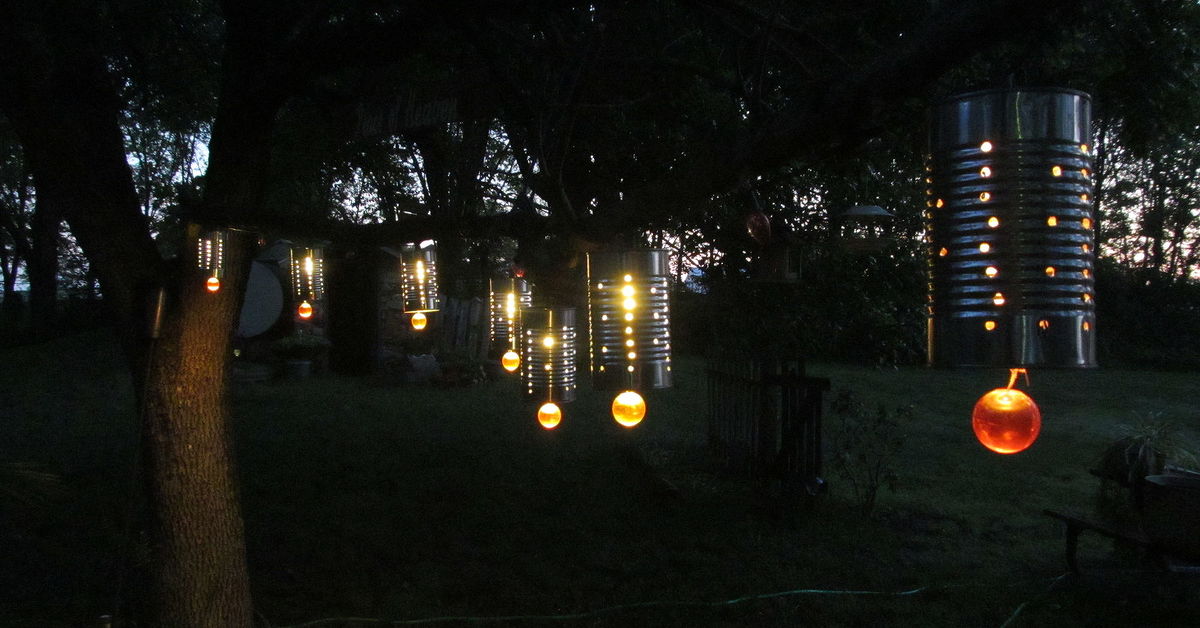
Lanterns add light at eye level and below, filling the dark space left beneath overhead strings. Place them beside seating groups, on steps, around a buffet, or along a garden path. Mixing several sizes often looks more natural than arranging identical lanterns in a rigid line.
Flameless LED candles are especially useful around children, pets, fabric, dried decorations, and crowded tables. Modern versions can imitate a gentle flicker while avoiding hot wax and open flames. Real candles can still be used where permitted, but they require stable holders, clearance from combustible materials, and continuous supervision.
LED Strips and Neon-Style Signs
Flexible LED strips can illuminate the underside of a bar, the edge of a stage, shelving, stairs, or a DJ booth. Diffusing channels help conceal individual diodes and produce a cleaner line of light. Battery-powered neon-style signs can provide a focal point with phrases, symbols, initials, or event-specific graphics.
These lights are most effective as accents. Covering every edge with animated LEDs may be exciting for five minutes, after which the room begins to resemble a gaming computer that has developed strong opinions.
Projectors, Disco Lights, and Moving Effects
Pattern projectors, mirror balls, lasers, and sound-reactive fixtures can energize a dance floor. Keep moving effects focused on the activity zone rather than sending them across dining tables or directly into guests’ eyes. Slow movement and limited colors generally look more sophisticated; rapid flashing is better reserved for high-energy moments and should be avoided when it could create accessibility or health concerns.
Choose the Right Color Temperature
White light is not all the same color. Correlated color temperature is measured in kelvins. Lower values appear warmer and more golden, while higher values look cooler and bluer. For relaxed parties, dinners, weddings, and patios, light in the neighborhood of 2500K to 3000K usually produces a comfortable, inviting glow. Cooler white may be useful in work zones, kitchens, or setup areas, but it can feel clinical when used throughout a social space.
Consistency is important. Five different versions of “warm white” can produce noticeably different tones. When possible, buy matching strands or test the lights together before installation. High color-rendering performance is also helpful around food, flowers, clothing, and faces because it allows colors to appear more natural. The U.S. Department of Energy notes that a color rendering index of at least 80 is commonly recommended for interior lighting.
How to Build a Layered Party-Lighting Plan
Start With Functional Light
Before chasing atmosphere, identify the places where guests need to see clearly: entrances, stairs, walkways, serving tables, restrooms, cooking areas, and parking routes. Functional light should be steady, shielded from direct view, and bright enough to prevent accidents.
Add Ambient Light
Ambient lighting creates the general glow. Overhead string lights, dimmed lamps, pendants, lanterns, and indirect wall lighting are good choices. The goal is comfortable visibility without flattening the room under one powerful fixture.
Create Focal Points
Choose two or three areas that deserve extra attention. This might be the entrance, cake table, floral installation, fireplace, dance floor, or a beautiful tree. Use uplights, spotlights, fairy lights, or illuminated signs to make these features stand out.
Finish With Decorative Sparkle
Add smaller details only after the main lighting works. Place micro-lights inside glass vessels, wrap a strand around greenery, or add flameless candles to tables. This final layer creates visual richness without making guests navigate through a glowing obstacle course.
Party-Lighting Ideas for Different Events
Backyard Birthday Party
Hang warm bistro lights over the main seating area, place solar or low-voltage lights along paths, and add a few colorful smart bulbs near the music. Battery lanterns on tables make the yard feel cozy after sunset. For children’s parties, use shatter-resistant bulbs and keep cords outside play areas.
Elegant Dinner Party
Dim the room’s overhead fixtures and use warm lamps, taper-style flameless candles, and focused light over the table. Keep the food visible without blasting guests from above. A small pool of light on flowers or artwork can give the room a sophisticated restaurant-like finish.
Wedding Reception
Combine a canopy of string lights with soft wall uplighting and candle-style table lighting. Highlight the sweetheart table, cake, floral installations, and dance floor separately. Wedding-lighting guides frequently use bistro canopies, chandeliers, vertical light curtains, and uplighting to define zones and change the mood as the reception progresses.
Holiday Gathering
Choose two or three coordinated colors instead of deploying every strand discovered in the garage. Warm white with red, blue with silver, or amber with green can create a clear visual theme. Timers make it easier to switch lights off after the celebration.
Dance Party
Keep steady ambient light around seating, drinks, doors, and walkways. Reserve moving colors and sound-reactive effects for the dance zone. This contrast makes the energetic lighting more effective and gives guests somewhere visually calm to rest.
Smart Party Lights and Easy Controls
Smart bulbs, wireless LED fixtures, and app-controlled light strips allow hosts to adjust brightness, color, and timing without crawling behind furniture during the party. A saved scene can provide warm white light during dinner, richer color during dancing, and brighter illumination during cleanup.
Dimming is more useful than many novelty effects. Lighting that looks subtle in an empty room may feel much brighter once guests’ eyes adjust after sunset. Smart and tunable LEDs can provide flexible control over intensity and color temperature, while programmed schedules help prevent lights from remaining on all night.
Test the controls before guests arrive. Confirm that the app is updated, the remote has batteries, and the fixtures still operate without internet access when possible. Nobody wants the entire dance floor frozen in lime green because the router decided it needed personal space.
Energy Efficiency and Operating Cost
LED party lights are generally the practical choice for long events and repeated use. ENERGY STAR reports that LED lighting can produce light far more efficiently than incandescent technology, and certified decorative light strings can consume dramatically less electricity than conventional incandescent strands. LEDs also produce less heat at the light source, making them more comfortable around decorations and guests when used correctly.
Solar lights can be useful in sunny locations where running power is inconvenient. Their brightness and operating time depend on panel placement, battery capacity, weather, and hours of direct sunlight. Use them for decorative accents or pathways, but keep a backup option available for events where dependable illumination is essential.
Essential Electrical and Fire Safety
Party lighting should be memorable because it looked wonderfulnot because it caused an emergency. Inspect every strand before installation. Retire lights with cracked sockets, exposed conductors, loose connections, damaged plugs, or frayed cords. Use products evaluated by a recognized testing organization and follow the manufacturer’s installation and connection limits.
For outdoor parties, use lights and extension cords specifically rated for outdoor conditions. Plug exterior decorations into GFCI-protected receptacles, keep connections away from standing water, and protect plugs from rain according to product instructions. Indoor-only lights do not become outdoor lights simply because the weather forecast looks friendly.
Do not overload receptacles, power strips, or extension cords. Never defeat grounding features, run cords through doorways where they can be crushed, or cover energized cords with rugs. Keep wires out of walking routes and secure them without piercing the insulation. Turn decorative lighting off before leaving the property or going to sleep.
Year-round installations require equipment designed for long-term outdoor use rather than temporary seasonal strands. UL’s requirements distinguish string-light systems intended for extended use and address cord construction, voltage, lamp holders, and hanging provisions. Permanent wiring or difficult installations should be handled by a qualified electrician.
Common Party-Lighting Mistakes
The first mistake is using only one bright ceiling light. It illuminates everything equally, which means nothing feels special. The second is choosing fixtures based on appearance without checking their rating, power requirements, or safe connection limits.
Another mistake is hanging lights too low. Guests should not have to duck beneath bulbs, and tall visitors should not become accidental voltage testers. Outdoor strands also need proper support so their electrical cables are not carrying excessive mechanical tension.
Too many colors can weaken a design. Select a dominant color, one supporting color, and perhaps a neutral warm white. Similarly, avoid excessive brightness. Party lighting should reveal faces, food, and pathways while preserving shadows and depth.
Finally, do not postpone testing until ten minutes before the event. Install the lights early enough to view them after dark, because a setup that looks perfectly balanced at noon may resemble an airport runway at night.
Practical Experiences and Lessons From Realistic Party Setups
Experience note: The following is a composite of recurring situations encountered by hosts, decorators, and event crews rather than a claim of personal attendance.
One of the most common hosting experiences begins with a box of tangled string lights and unreasonable confidence. The host estimates the patio by sight, buys two strands, and discovers that the second strand ends four feet before the final post. Measuring first feels boring, but it prevents late-night trips to a store while guests are already arriving. A simple sketch showing outlets, support points, tables, walkways, and approximate distances can save an astonishing amount of frustration.
Another recurring lesson is that fewer lights often look better. At one backyard dinner, the imagined plan might include overhead strings, illuminated planters, colored uplights, lanterns, table candles, glowing signs, and a projector. Once everything is switched on, the plants are pink, the food is blue, and every guest looks like a suspect in a futuristic detective show. Turning off half the equipment usually improves the setting immediately. Warm overhead light, low lanterns, and one restrained accent color are often enough.
Hosts also learn that party lighting should follow the evening’s rhythm. Brightness is useful while guests arrive, read place cards, find drinks, and examine the buffet. Later, lowering the ambient light makes conversation feel more relaxed and gives decorative bulbs greater impact. When dancing begins, color and movement can increase. Cleanup needs another change because romantic candlelight is not especially helpful when searching for a missing serving spoon under a chair.
Outdoor events teach their own lessons. Wind turns unsecured paper lanterns into ambitious aircraft. Rain reaches outlets that appeared protected. Tree branches move more than expected, and lightweight poles lean when long strands pull against them. Successful setups use outdoor-rated components, stable supports, weather-aware planning, and attachment methods designed for the surface. They also include a simple backup plan: battery lanterns, a covered gathering area, or lights that can be disconnected quickly.
Photography is another practical test. Colored uplighting may look dramatic to the eye but can tint faces in pictures. Keeping neutral or warm-white light near the main photo area helps skin tones and clothing appear more natural. Strong lights should be positioned above or slightly to the side rather than directly behind guests, unless silhouettes are intentional.
The final lesson is operational. Assign one person to understand the switches, remotes, timers, and power connections. Labeling controls can prevent a well-meaning helper from turning off the entire patio while attempting to illuminate the restroom sign. Test every scene, charge every battery, store spare batteries together, and keep extension-cord connections accessible.
The best party-lighting experience is not the one with the most equipment. It is the one where guests can see where they are going, recognize what they are eating, take flattering photographs, and relax without noticing the technical work behind the glow. When lighting feels effortless, it has usually been planned carefully.
Conclusion: Let the Celebration Glow
Party lights are more than decorative accessories. They organize a space, support safety, highlight important features, improve photographs, and establish the emotional tone of an event. Start with practical illumination, add a comfortable ambient layer, emphasize a few focal points, and finish with restrained decorative sparkle.
Choose efficient LED fixtures, coordinate color temperature, verify indoor or outdoor ratings, and respect electrical limits. Most importantly, test the complete arrangement after sunset. With a thoughtful plan, even a modest collection of string lights, lanterns, and smart bulbs can turn a plain room or backyard into a celebration guests will remember long after the final bulb is switched off.