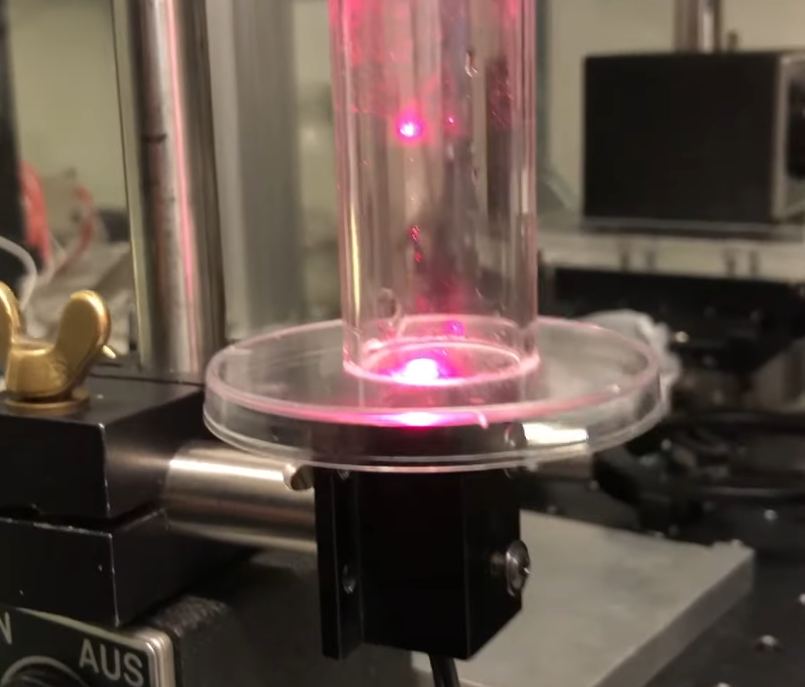
Note: This article is written for web publication and synthesizes information from reputable scientific, government, university, and research sources without inserting source links into the article body.
Introduction: When Light Becomes a Pair of Hands
Optical tweezers sound like something a tiny jeweler might keep in a microscopic toolbox. In reality, they are one of the most elegant scientific tools ever invented: a way to hold, move, stretch, and measure tiny particles using nothing but focused laser light. No metal tips, no sticky probes, no awkward poking. Just light doing the kind of delicate work that would make a Swiss watchmaker nervously polish their glasses.
The basic idea is simple enough to picture: a laser beam is focused through a microscope lens until it forms a highly concentrated spot. When a microscopic object such as a bead, cell, bacterium, strand of DNA, or nanoparticle enters that spot, the light can create forces strong enough to trap it in place. These forces are incredibly small, often measured in piconewtons, but at the scale of molecules and cells, small forces are big news.
Optical tweezers help scientists investigate tiny particles by manipulating them with extraordinary precision. Researchers use them to study how DNA stretches, how proteins fold, how bacteria swim, how cells respond to mechanical stress, and how nanoparticles behave in fluids. The tool has transformed biophysics, nanotechnology, soft matter research, medical science, and even quantum experiments. In short, optical tweezers let scientists ask tiny things very serious questionsand occasionally pull on them until they answer.
What Are Optical Tweezers?
Optical tweezers are scientific instruments that use tightly focused laser beams to trap and manipulate microscopic objects. The trapped object is usually transparent or semi-transparent, such as a glass or polystyrene bead, a biological cell, or a small dielectric particle. The laser does not grab the object in the everyday sense. Instead, it creates a force field caused by the interaction between light and matter.
When light passes through or reflects from a particle, it transfers momentum. A highly focused beam produces a gradient force that pulls the particle toward the brightest region of the beam. If the optical force is balanced correctly against other effects, the particle remains trapped near the focus. This stable trap acts like a tiny spring made of light.
That “spring” is what makes optical tweezers so useful. Scientists can move the laser focus to move the particle. They can measure how far the particle shifts from the center of the trap and calculate the force acting on it. They can attach beads to molecules and pull on those molecules with astonishing accuracy. The result is a tool that can manipulate the microscopic world without physically touching it.
A Brief History of Optical Tweezers
The modern story of optical tweezers is closely connected to Arthur Ashkin, a physicist who explored how laser light could push and trap tiny objects. His work showed that light was not just something we use to see the world; it could also be used to move the world, at least the very small parts of it. Ashkin’s pioneering research led to the development of single-beam optical traps, now widely known as optical tweezers.
The importance of this invention was recognized with the 2018 Nobel Prize in Physics. Ashkin received half of the prize for optical tweezers and their application to biological systems. The recognition was well deserved. Optical tweezers gave researchers a way to hold living bacteria, manipulate cells, and study molecules in ways that had once seemed closer to science fiction than laboratory practice.
Since those early breakthroughs, optical tweezers have become far more advanced. Modern systems may include multiple traps, computer-controlled beam steering, fluorescence microscopy, high-speed cameras, force calibration software, and environmental controls. Some systems can measure force and position at nanometer and piconewton resolution, allowing scientists to watch individual molecular events instead of averaging the behavior of millions of molecules at once.
How Optical Tweezers Work
The Power of a Focused Laser Beam
The heart of an optical tweezer system is a laser beam focused by a high numerical aperture microscope objective. This lens compresses the beam into a tiny focal spot. The sharper and more intense the focus, the stronger the trapping effect. The laser wavelength is often chosen to reduce damage to biological samples, especially when working with cells, proteins, or DNA.
Inside the trap, the particle experiences several forces. The most important is the gradient force, which pulls the particle toward the region of highest light intensity. There is also a scattering force, which tends to push the particle in the direction of light propagation. For stable trapping, the gradient force must overcome the scattering force and hold the particle near the focus.
A Tiny Spring Made of Light
One useful way to understand an optical trap is to imagine a bead resting in a spring. If the bead moves away from the center, the trap pulls it back. The farther the bead is displaced, within a certain range, the stronger the restoring force becomes. This spring-like behavior lets scientists measure tiny forces by tracking bead movement.
For example, if a bead attached to a DNA molecule is pulled away from the trap center, researchers can calculate how much force the DNA is experiencing. This is how optical tweezers reveal the mechanical properties of molecules. Instead of guessing how a molecule behaves under stress, scientists can tug on it directly and record the response.
Why Optical Tweezers Are So Important
Before optical tweezers, many molecular and cellular experiments relied on bulk measurements. Researchers mixed huge numbers of molecules together and measured the average result. That approach is valuable, but it can hide important details. A crowd average does not tell you what each individual molecule is doingjust as knowing the average mood in a stadium does not tell you who is quietly eating nachos and who is shouting at the referee.
Optical tweezers changed that by enabling single-particle and single-molecule experiments. Scientists can now observe one molecule at a time, apply force, measure movement, and study dynamic behavior in real time. This matters because biological systems are full of rare events, temporary states, and mechanical changes that may disappear in bulk measurements.
In physics, optical tweezers help explore Brownian motion, colloidal interactions, thermodynamics, and soft matter mechanics. In biology, they help investigate DNA, RNA, proteins, molecular motors, membranes, and cells. In nanotechnology, they offer a way to position nanoparticles, assemble structures, and test materials. In medicine, they support research into disease mechanisms, diagnostics, and cell mechanics.
Optical Tweezers in Biology
Studying DNA Like a Molecular Rope
One of the most famous uses of optical tweezers is DNA stretching. In many experiments, researchers attach the ends of a DNA molecule to microscopic beads. One bead may be held in an optical trap while another is fixed or held in a second trap. By moving the traps apart, scientists stretch the DNA and measure how it responds.
This type of experiment reveals how DNA bends, coils, unwinds, and interacts with proteins. It helps researchers understand replication, transcription, repair, and packaging. DNA is not just a static instruction manual tucked inside cells. It is a flexible, twisting, mechanically active molecule that constantly interacts with proteins. Optical tweezers let scientists study that motion one molecule at a time.
Watching Proteins Fold and Unfold
Proteins must fold into specific shapes to function properly. When folding goes wrong, the result can contribute to serious diseases. Optical tweezers allow researchers to pull on individual protein molecules and observe folding and unfolding events. This makes it possible to study the energy landscape of proteinsthe pathways they follow as they search for their correct shape.
Imagine trying to understand how a complicated umbrella opens and closes, except the umbrella is smaller than a virus and has no instruction label. Optical tweezers give scientists a way to apply controlled force and watch the process unfold, sometimes literally.
Investigating Molecular Motors
Cells contain molecular motors that walk along internal tracks, transport cargo, copy genetic material, and generate movement. These motors are not metaphorical; they convert chemical energy into mechanical work. Optical tweezers can measure the tiny steps and forces produced by these biological machines.
Researchers have used optical trapping to study motors such as kinesin, dynein, myosin, and RNA polymerase. By attaching beads to molecular components, scientists can measure how far a motor moves, how much force it produces, and what happens when it encounters obstacles. These measurements help explain how cells organize themselves and how life performs mechanical work at the nanoscale.
Optical Tweezers and Tiny Particles in Physics
Optical tweezers are not limited to biology. They are also powerful tools for particle physics at small scales, colloidal science, and soft matter research. Colloids are tiny particles suspended in a fluid, such as beads in water. Their movement is influenced by thermal fluctuations, fluid viscosity, surface interactions, and external forces.
By trapping colloidal particles, scientists can measure how they move, how they interact, and how surrounding fluids behave. This is especially useful in microrheology, the study of material flow and deformation at microscopic length scales. A trapped bead can act like a tiny probe inside a complex fluid, revealing whether the material behaves more like a liquid, a gel, or something in between.
Optical tweezers also help investigate Brownian motion, the random movement caused by collisions with surrounding molecules. At human scale, Brownian motion is invisible background noise. At microscopic scale, it is the weather forecast, traffic report, and local gossip all at once. Optical tweezers allow scientists to trap particles while still observing these fluctuations with high precision.
Applications in Nanotechnology
As nanotechnology grows, scientists need tools that can position, sort, and manipulate objects too small for mechanical instruments. Optical tweezers offer one route to this kind of control. They can move nanoparticles, organize microstructures, and assist in assembling materials.
Traditional optical tweezers work best on particles roughly comparable to or larger than the wavelength of light. Very small nanoparticles are more difficult to trap because they interact weakly with the laser field. However, newer approaches such as plasmonic optical tweezers, near-field trapping, and nanostructured surfaces can concentrate light more tightly and improve trapping of nanoscale objects.
These advances could support better sensors, lab-on-a-chip devices, targeted drug research, and nanoscale manufacturing. The challenge is to create strong trapping forces without overheating or damaging the sample. At the nanoscale, even light must learn manners.
Optical Tweezers in Medical and Cell Research
Cells are not only chemical systems; they are mechanical systems too. Their stiffness, elasticity, adhesion, and response to force can reveal important information about health and disease. Optical tweezers allow researchers to press, pull, stretch, and move cells or cell components gently and precisely.
In medical research, optical tweezers have been used to study red blood cell deformability, immune cell behavior, cancer cell mechanics, bacterial motion, and interactions between pathogens and host cells. Changes in cell stiffness may provide clues about disease progression, infection, inflammation, or treatment response.
Optical tweezers are also valuable because they can manipulate living cells without direct mechanical contact. While lasers must be used carefully to avoid heating or photodamage, properly designed experiments can keep cells alive and functioning. That makes optical tweezers a rare tool: delicate enough for biology, precise enough for physics, and dramatic enough to sound like a spaceship accessory.
Force Measurement: The Hidden Superpower
The ability to move tiny particles is impressive, but the ability to measure tiny forces may be even more important. Optical tweezers can detect forces in the piconewton range. One piconewton is one trillionth of a newton. That is not much force in daily life, but it is exactly the kind of force molecules use to do business.
Biological processes such as DNA replication, protein unfolding, and motor protein movement often occur within this force range. Optical tweezers allow researchers to measure these forces directly. With careful calibration, the displacement of a bead in the trap becomes a force readout. The bead is not just a handle; it is a measuring device.
Calibration is crucial. Scientists must know how stiff the optical trap is, how the detector responds, and how the surrounding fluid affects motion. Poor calibration can turn beautiful data into scientific soup. Good calibration transforms a laser trap into a quantitative instrument capable of revealing real mechanical properties.
Common Types of Optical Tweezer Systems
Single-Beam Optical Tweezers
A single-beam optical tweezer uses one focused laser beam to trap a particle. This is the classic design and remains widely used. It is especially useful for holding beads, cells, and particles in place while observing or manipulating them.
Dual-Trap Optical Tweezers
Dual-trap systems use two optical traps. These are common in single-molecule experiments because they allow researchers to hold two beads connected by a molecule. By moving one trap relative to the other, scientists can stretch the molecule and measure force-extension behavior.
Holographic Optical Tweezers
Holographic optical tweezers use spatial light modulators to split and shape laser beams into multiple traps. This allows researchers to manipulate many particles at once, create patterns, or assemble microscopic structures. It is like upgrading from one invisible hand to a whole invisible committee.
Optical Tweezers with Fluorescence Microscopy
Some advanced systems combine force manipulation with fluorescence imaging. This lets scientists pull on a molecule while simultaneously observing labeled regions. The combination provides both mechanical and visual information, making it especially powerful for studying complex biomolecular interactions.
Limitations and Challenges
Optical tweezers are powerful, but they are not magic. They have limitations. Samples may heat up if the laser power is too high. Biological molecules may be damaged if the wavelength or exposure conditions are not chosen carefully. Very small nanoparticles can be difficult to trap with conventional methods. Strong fluid flows can disrupt trapping. Experimental setups can be expensive, complex, and sensitive to vibration.
Another challenge is interpretation. At small scales, everything jiggles. Thermal motion, detector noise, drift, and surface effects can complicate measurements. Researchers must design experiments carefully and analyze data with strong statistical methods. Optical tweezers can reveal astonishing detail, but they also demand patience. The instrument may be made of light, but the troubleshooting is very real.
Future of Optical Tweezers
The future of optical tweezers is bright in every possible sense. Researchers are improving trap stability, spatial resolution, force sensitivity, automation, and integration with other technologies. Machine learning is increasingly used to analyze particle trajectories and detect subtle patterns. Microfluidics allows optical tweezers to operate in small, controlled liquid environments. Plasmonic and nanophotonic designs may extend trapping to smaller particles and lower laser powers.
In quantum science, optical tweezer arrays are being used to arrange atoms for quantum simulation and quantum computing research. In biology, combined force-and-fluorescence systems are helping researchers study complex molecular machines in real time. In medicine, optical manipulation may support better diagnostics, cell sorting, and studies of disease-related mechanics.
The broader trend is clear: scientists want not only to observe tiny systems but also to interact with them gently and precisely. Optical tweezers provide that interaction. They let researchers hold the microscopic world still long enough to ask better questions.
Real-World Examples of What Optical Tweezers Can Investigate
DNA Packaging
Viruses and cells often pack DNA into extremely small spaces. Optical tweezers can help researchers measure the forces involved in packing and unpacking genetic material. This sheds light on viral infection, chromosome organization, and gene regulation.
Bacterial Swimming
Bacteria move through fluids using tiny appendages such as flagella. Optical tweezers can hold bacteria in place or measure their swimming forces. This helps scientists understand microbial motion, infection behavior, and biological propulsion.
Cell Membrane Mechanics
Cells rely on flexible membranes that stretch, bend, and respond to stress. Optical tweezers can pull membrane tethers or manipulate attached beads to measure membrane tension and elasticity. These measurements are useful in cell biology and disease research.
Soft Materials
Gels, polymers, mucus, and biological fluids can behave in complicated ways. Optical tweezers can use probe particles to measure local viscosity and elasticity. This helps researchers understand materials that are too small or delicate for traditional mechanical testing.
Experience-Based Insights: What Working With Optical Tweezers Teaches You
Spending time around optical tweezers research teaches a lesson that is easy to forget in science writing: small does not mean simple. A tiny bead in water may look boring through a microscope, but the moment a laser trap catches it, the bead becomes a messenger. Its motion reports on invisible forces, fluid behavior, molecular tension, and thermal fluctuations. It is like watching a dust speck turn into a physics professor.
One practical experience researchers often describe is the importance of patience. Optical tweezer experiments require alignment, calibration, clean samples, stable temperature, and careful observation. A laser beam that is slightly misaligned can ruin the trap. A dirty slide can create unwanted sticking. A bead that looks perfectly innocent may refuse to behave. At this scale, the laboratory has a sense of humor, and it is sometimes sarcastic.
Another important experience is learning to respect noise. In everyday life, noise is something we try to ignore. In optical trapping, noise contains information. Brownian motion may look random, but analyzing it can reveal trap stiffness, viscosity, and force response. The tiny jitter of a trapped bead is not a flaw in the experiment; it is part of the data. Researchers learn to separate meaningful motion from instrumental drift, vibration, and detector error.
Working with optical tweezers also changes how people think about force. Human-scale force often means pushing a door or lifting a box. Molecular-scale force means piconewtonsforces so small they are nearly impossible to imagine. Yet these forces determine whether proteins unfold, whether molecular motors stall, and whether DNA-binding proteins remain attached. Optical tweezers make these invisible forces measurable, which can feel like discovering a new sense.
There is also a strong lesson in experimental humility. Optical tweezers can manipulate tiny particles with amazing precision, but the sample always has a vote. Biological molecules may break, beads may stick, cells may change behavior under stress, and lasers may heat sensitive materials. Good researchers do not simply trust the instrument; they validate, repeat, control, and calibrate. The best optical tweezer experiments are not flashy because the laser is bright. They are powerful because the data are carefully earned.
For students, optical tweezers can be a gateway into interdisciplinary science. A single experiment may require optics, thermodynamics, molecular biology, programming, statistics, and mechanical modeling. One minute you are adjusting a microscope objective; the next you are fitting a force-extension curve; the next you are wondering why a protein behaved beautifully yesterday and dramatically today. It is the scientific equivalent of owning a cat with a PhD.
From a broader perspective, the most exciting experience related to optical tweezers is seeing how they make the invisible feel almost tangible. They do not merely produce pretty microscope images. They let scientists touch without touching, pull without hooks, and measure without crushing the sample. That is why optical tweezers remain such a beloved tool in modern science. They show that light is not only for illumination. Under the right conditions, light can become a ruler, a handle, a spring, and a remarkably gentle pair of hands.
Conclusion
Optical tweezers investigate tiny particles by using focused laser light to trap, move, and measure microscopic objects with extraordinary precision. From DNA and proteins to cells, bacteria, colloids, and nanoparticles, they give researchers a hands-on way to explore a world that cannot be handled by ordinary tools.
Their real value lies not only in manipulation but in measurement. Optical tweezers reveal the forces, motions, and mechanical behaviors that shape life and matter at small scales. They help scientists understand how molecules fold, how cells respond to stress, how particles move through fluids, and how nanoscale systems can be controlled.
As optical systems become more advanced and more closely integrated with imaging, microfluidics, nanophotonics, automation, and machine learning, optical tweezers will continue to expand what researchers can see and do. The future of tiny-particle investigation may be built not with metal tools, but with beams of lightand possibly a very patient graduate student nearby.