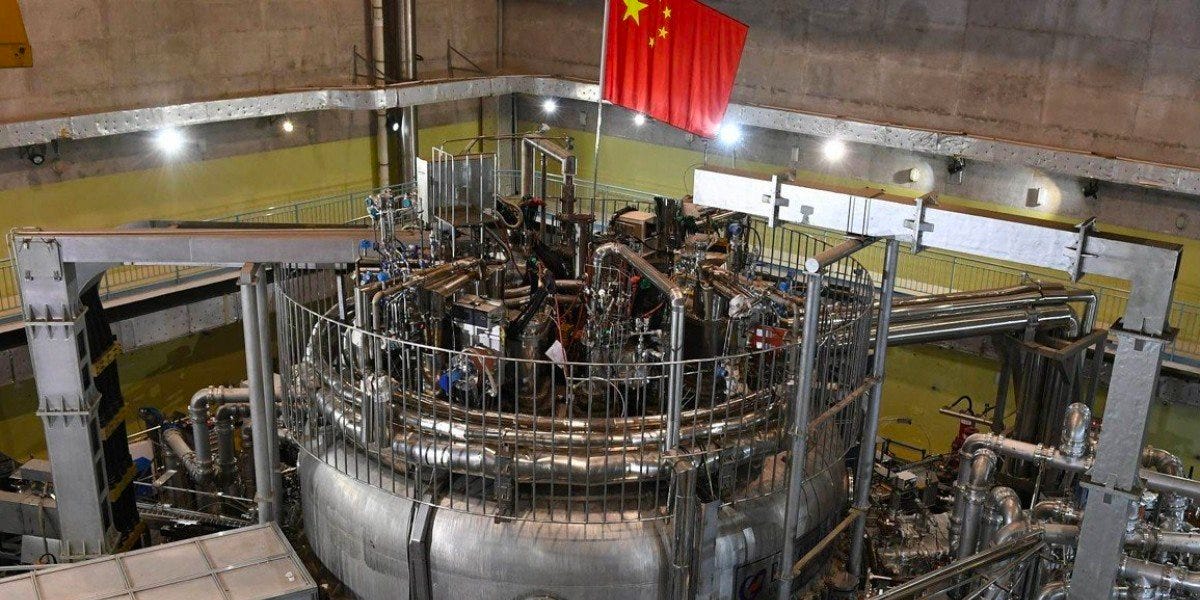
Say the words nuclear reactor, and many people picture a giant cooling tower, a control room full of blinking lights, and maybe one very nervous scientist holding a clipboard. Say Chinese nuclear reactor, and the conversation quickly turns to China’s fast-growing nuclear energy program. Add artificial sun, and suddenly we are in the world of fusion, plasma, tokamaks, and temperatures so hot they make lava look like leftover soup.
But here is the important part: not every nuclear reactor is the same. Traditional nuclear power plants use fission, which splits atoms to release heat. The “artificial sun” refers to experimental fusion machines such as China’s EAST and HL-3 tokamaks, which try to copy the same basic energy process that powers the Sun. One technology is already producing electricity around the world; the other is still being developed as a possible future source of clean, abundant energy.
This article breaks down what nuclear reactors do, why China is investing so aggressively in nuclear technology, how the Chinese “artificial sun” works, and why fusion is exciting without being magic. Spoiler: it is not a tiny Sun in a basement. It is more like an extremely disciplined magnetic doughnut trying to hold superhot plasma without throwing a cosmic tantrum.
What Is a Nuclear Reactor?
A nuclear reactor is a system designed to control nuclear reactions and use the heat they produce. In today’s commercial nuclear power plants, reactors rely on nuclear fission. During fission, the nucleus of a heavy atom such as uranium-235 splits after absorbing a neutron. That split releases heat, more neutrons, and radiation. The heat boils water or produces steam, and the steam turns a turbine connected to a generator. In plain English: atoms split, water gets hot, turbines spin, lights turn on.
Fission reactors are valued because they can produce large amounts of electricity without releasing carbon dioxide during operation. Unlike solar and wind, nuclear plants can run day and night, rain or shine, which makes them a steady source of baseload power. However, fission also brings major responsibilities: radioactive waste management, strict safety systems, fuel supply, high construction costs, and public trust.
Fission vs. Fusion: The Big Difference
Fission splits heavy atoms. Fusion joins light atoms, usually hydrogen isotopes such as deuterium and tritium, to form helium. Fusion is the process that powers stars. When people talk about an “artificial sun,” they usually mean a fusion experiment that tries to recreate star-like conditions on Earth.
The challenge is that stars have gravity doing the heavy lifting. Earth does not have a Sun-sized gravity field available for rent, so scientists must use extreme temperature, magnetic confinement, laser compression, or other advanced methods to force atomic nuclei close enough to fuse. That is why fusion machines need plasma temperatures above 100 million degrees Celsius. Yes, you read that correctly. The plasma can be hotter than the core of the Sun, because Earth-based fusion devices must compensate for the lack of stellar gravity.
China’s Nuclear Reactor Strategy
China has become one of the world’s most active builders of nuclear power. Its motivation is practical: the country needs huge amounts of electricity, wants to reduce air pollution from coal, improve energy security, and compete in advanced energy technology. Nuclear power offers a way to produce large-scale electricity with low operational carbon emissions.
China’s commercial nuclear sector includes pressurized water reactors and domestically developed designs such as the Hualong One, a third-generation reactor technology. Unlike the fusion “artificial sun,” Hualong One is a fission reactor designed for real-world electricity production. It represents China’s effort to become more self-sufficient in nuclear design, construction, fuel-cycle services, and reactor exports.
This matters because nuclear energy is not only about science. It is also about manufacturing, supply chains, construction discipline, regulation, skilled labor, and long-term policy. China’s nuclear push shows how energy strategy can become industrial strategy. A country that can build reactors reliably can strengthen its power grid, reduce dependence on imported fossil fuels, and potentially sell nuclear technology abroad.
What Is China’s “Artificial Sun”?
The phrase Chinese artificial sun most often refers to China’s experimental fusion reactors, especially EAST, the Experimental Advanced Superconducting Tokamak in Hefei, and HL-3, also known as Huanliu-3, in Chengdu. These machines are not power plants. They are research devices built to solve the physics and engineering problems standing between today’s experiments and tomorrow’s possible fusion power stations.
A tokamak is a doughnut-shaped fusion device that uses powerful magnetic fields to hold plasma. Plasma is often called the fourth state of matter: a superhot gas where electrons are separated from atomic nuclei. Because no physical wall can simply “hold” plasma at over 100 million degrees Celsius, magnets do the job. Think of it as trying to keep lightning inside an invisible magnetic bottle. Easy? Not even slightly. Important? Absolutely.
EAST: The Long-Pulse Fusion Champion
China’s EAST tokamak has gained global attention because of its long-duration plasma achievements. In January 2025, EAST maintained high-confinement plasma operation for 1,066 seconds, beating its previous 403-second record set in 2023. That record was significant because future fusion power plants will need not only high temperatures but also stable, controllable, long-duration plasma operation.
Why does duration matter? A fusion power plant cannot be useful if it only works for a brief scientific “ta-da” moment. Commercial electricity requires sustained operation. Keeping plasma stable for longer periods helps scientists understand heating, current drive, turbulence, plasma-wall interaction, magnetic control, and materials performance. In other words, EAST is not just chasing a stopwatch record; it is testing whether fusion can behave like a power technology rather than a laboratory firework.
HL-3: China’s New-Generation Fusion Platform
China’s HL-3 tokamak is another major part of the country’s fusion program. In 2025, Chinese nuclear authorities reported that HL-3 reached ion temperatures of about 117 million degrees Celsius and electron temperatures of about 160 million degrees Celsius. These numbers are not just spicy trivia for science fans. High ion temperature, electron temperature, density, and confinement time are all part of the fusion performance puzzle.
Fusion researchers often talk about the “triple product,” which combines plasma density, temperature, and confinement time. The higher the triple product, the closer a fusion device gets to conditions needed for practical energy production. HL-3’s progress suggests China is working not only on record-setting heat but also on the deeper challenge: creating plasma conditions that are hot, dense, stable, and useful.
How Does an Artificial Sun Work?
The “artificial sun” idea sounds poetic, but the engineering is extremely specific. Most fusion reactor concepts aim to fuse deuterium and tritium. Deuterium can be extracted from water, while tritium is rare and must be bred from lithium inside the reactor system. When deuterium and tritium fuse, they produce helium, a neutron, and a large amount of energy.
In a future fusion power plant, the energetic neutrons would transfer heat to a surrounding blanket. That heat would be used to produce steam, spin turbines, and generate electricity. This sounds similar to a fission plant at the power-conversion stage. The major difference is the nuclear reaction at the core: fusion joins light nuclei, while fission splits heavy ones.
The Magnetic Doughnut Problem
Tokamaks use magnetic fields to confine plasma in a torus shape. The magnetic field must keep charged particles moving in controlled paths while the plasma is heated by external systems such as neutral beams, radiofrequency waves, and electric current. If the plasma becomes unstable, it can lose confinement or damage internal components. Fusion scientists spend a lot of time persuading plasma to behave, which is a bit like asking a hurricane to sit politely in a teacup.
Modern tokamaks use superconducting magnets because they can create strong magnetic fields efficiently. Superconducting technology is one reason EAST is so important: it was designed as a fully superconducting tokamak, giving researchers experience with long-pulse operation and steady-state control.
Why China’s Artificial Sun Matters
China’s artificial sun matters for three main reasons: energy security, climate strategy, and scientific leadership.
First, fusion could someday provide a powerful energy source using widely available fuel materials. Second, fusion would produce no carbon emissions during operation, making it attractive in a world trying to reduce greenhouse gases. Third, leadership in fusion research could give countries major advantages in advanced magnets, plasma control, materials science, robotics, high-performance computing, and nuclear engineering.
China is not working alone in fusion. The global race includes the United States, Europe, Japan, South Korea, and private fusion companies. ITER, the major international fusion project in France, is designed to demonstrate large-scale burning plasma science. In the United States, national laboratories and companies are pursuing both magnetic confinement and laser-driven fusion. Lawrence Livermore National Laboratory’s National Ignition Facility has repeatedly demonstrated fusion ignition in laser experiments, while MIT-linked research has advanced high-temperature superconducting magnets for compact tokamaks.
Is the Artificial Sun Already Producing Electricity?
No. This is one of the most important points for readers to understand. China’s artificial sun is a scientific breakthrough machine, not a commercial power plant. EAST and HL-3 help researchers learn how to create, heat, confine, and control plasma. They do not yet send fusion electricity to homes, factories, or your phone charger.
The road from fusion experiment to fusion power plant is long because several difficult problems remain. Scientists must achieve sustained net energy gain at the full system level, develop materials that can survive neutron bombardment, breed enough tritium fuel, remove heat safely, maintain reactor components, and operate economically. The physics is hard; the engineering is harder; the business model is standing in the corner asking uncomfortable questions.
Benefits of Fusion Energy
If fusion becomes commercially practical, the benefits could be enormous. Fusion fuel is energy-dense and potentially widely available. Fusion does not create the same long-lived high-level waste as conventional fission reactors. It also does not rely on a runaway chain reaction, so the meltdown risk profile is different from fission power plants.
Fusion could support a clean power grid by providing steady electricity alongside renewables. Solar and wind are excellent but variable; fusion could theoretically provide reliable power when the Sun is not shining and the wind is taking a coffee break. For energy-hungry industries such as steel, chemicals, desalination, data centers, and advanced manufacturing, firm clean power could be transformative.
Challenges Facing Fusion Reactors
Fusion’s promise is huge, but so are the challenges. The first challenge is plasma stability. Hot plasma is not naturally calm. It twists, moves, cools, leaks, and sometimes misbehaves in ways that require advanced control systems.
The second challenge is materials. Fusion reactors must handle heat, radiation, magnetic stress, and neutron damage. Internal surfaces need to survive brutal conditions for long periods without constant replacement.
The third challenge is tritium. Deuterium is abundant, but tritium is scarce. A working fusion economy would likely need reactors that breed tritium from lithium efficiently. That is not a minor side quest; it is central to commercial fusion.
The fourth challenge is economics. A fusion plant must not only work; it must compete. If a reactor is too expensive, too complex, or too slow to build, utilities may choose cheaper alternatives. Fusion must win in the real world, not just in a beautiful physics diagram.
Chinese Nuclear Reactor vs. Artificial Sun: Do Not Confuse Them
The phrase Chinese nuclear reactor can refer to two very different categories. China’s commercial fission reactors, such as Hualong One units, are built to generate electricity today. China’s “artificial sun” fusion machines, such as EAST and HL-3, are built to develop the science and technology for possible future fusion power.
Both are nuclear technologies, but they are not interchangeable. Fission is mature and commercially deployed. Fusion is experimental and still fighting its way toward practical energy production. Fission is like a powerful cargo ship already moving goods across the ocean. Fusion is like a next-generation spacecraft being tested in a hangar: exciting, expensive, and not ready for daily commuting.
What the Artificial Sun Means for the Future
The artificial sun does not mean free electricity tomorrow. It does mean the world is making measurable progress toward one of the hardest goals in energy science. China’s EAST record showed impressive long-pulse plasma control. HL-3’s high-temperature results show advances in next-generation fusion performance. Together, these achievements signal that China is serious about becoming a leader in fusion research.
Still, the future of fusion will likely be international. No single country has all the answers. Fusion requires physics expertise, advanced manufacturing, superconductors, precision diagnostics, robotics, radiation-resistant materials, nuclear licensing, and massive investment. The country or company that eventually builds a commercial fusion plant will stand on decades of global research.
Experiences and Real-World Reflections on Nuclear Reactor – Chinese Nuclear Reactor – Artificial Sun
For many people, the first experience with the topic of nuclear reactors is emotional rather than technical. The word “nuclear” carries history, fear, curiosity, and hope all at once. Some people think of clean electricity. Others think of accidents, waste, or weapons. That mixed reaction is understandable. Nuclear technology asks society to trust complex systems that most people cannot see with their own eyes. You can look at a solar panel and understand the basic idea in five seconds. A tokamak, by contrast, looks like a machine designed by a committee of physicists, electricians, and very ambitious science-fiction writers.
Reading about China’s artificial sun can feel almost unreal at first. A reactor reaching more than 100 million degrees Celsius sounds impossible because our everyday experience gives us no useful comparison. A kitchen oven at 450 degrees Fahrenheit feels hot. Molten lava is terrifying. The core of a fusion plasma is on a different scale entirely. The key lesson is that fusion research forces us to expand our imagination while staying grounded in engineering reality. The plasma is extremely hot, but it is also very thin and carefully confined by magnets. The machine is not simply “holding a Sun”; it is controlling a tiny amount of superheated plasma under extraordinary conditions.
Another experience that stands out is how easy it is to confuse progress with completion. Headlines about an “artificial sun” can make it sound as if China has already solved the energy crisis. The real story is more nuanced and more interesting. A long-pulse plasma record is a major achievement, but it is one step in a long staircase. A high-temperature milestone is impressive, but a commercial reactor must combine temperature, density, confinement, fuel breeding, materials durability, safety, maintenance, and cost control. Fusion is not delayed because scientists lack enthusiasm. It is delayed because nature set the difficulty level to “legendary.”
From a practical point of view, the Chinese artificial sun also shows why patient investment matters. Major energy technologies do not appear overnight. They require laboratories, trained experts, manufacturing networks, government support, international collaboration, and repeated experiments. EAST and HL-3 are not isolated machines; they are part of a national strategy to master advanced energy technology. Whether one views that through the lens of climate policy, industrial competition, or scientific discovery, it is a major development worth watching.
The most useful personal takeaway is balanced optimism. Fusion deserves excitement, but not hype. It could become one of the most important clean energy breakthroughs in history, but it will not replace today’s energy systems next week. Fission reactors, renewables, batteries, grid upgrades, efficiency, and storage all remain important now. The artificial sun is a glimpse of a possible future: bright, powerful, and still under construction. In the meantime, every record set by EAST, every HL-3 experiment, and every fusion breakthrough around the world adds another brick to the bridge between scientific dream and practical power.
Conclusion
The story of Nuclear Reactor – Chinese Nuclear Reactor – Artificial Sun is really the story of two nuclear eras meeting each other. Fission reactors are already part of the global energy system, and China is expanding its role with commercial reactor designs and large-scale construction. Fusion reactors, including China’s EAST and HL-3, represent the next frontier: a quest to recreate the energy process of the stars in a controlled machine on Earth.
The artificial sun is not a finished power plant, and it should not be treated like a miracle button for the climate crisis. Yet it is one of the most exciting areas in modern energy research. China’s fusion records show serious progress in plasma control, high-temperature operation, and long-pulse performance. If fusion eventually becomes commercial, it could reshape electricity, industry, and global energy security. Until then, the smartest approach is curiosity with discipline: celebrate the breakthroughs, understand the limits, and keep watching the magnetic doughnut.