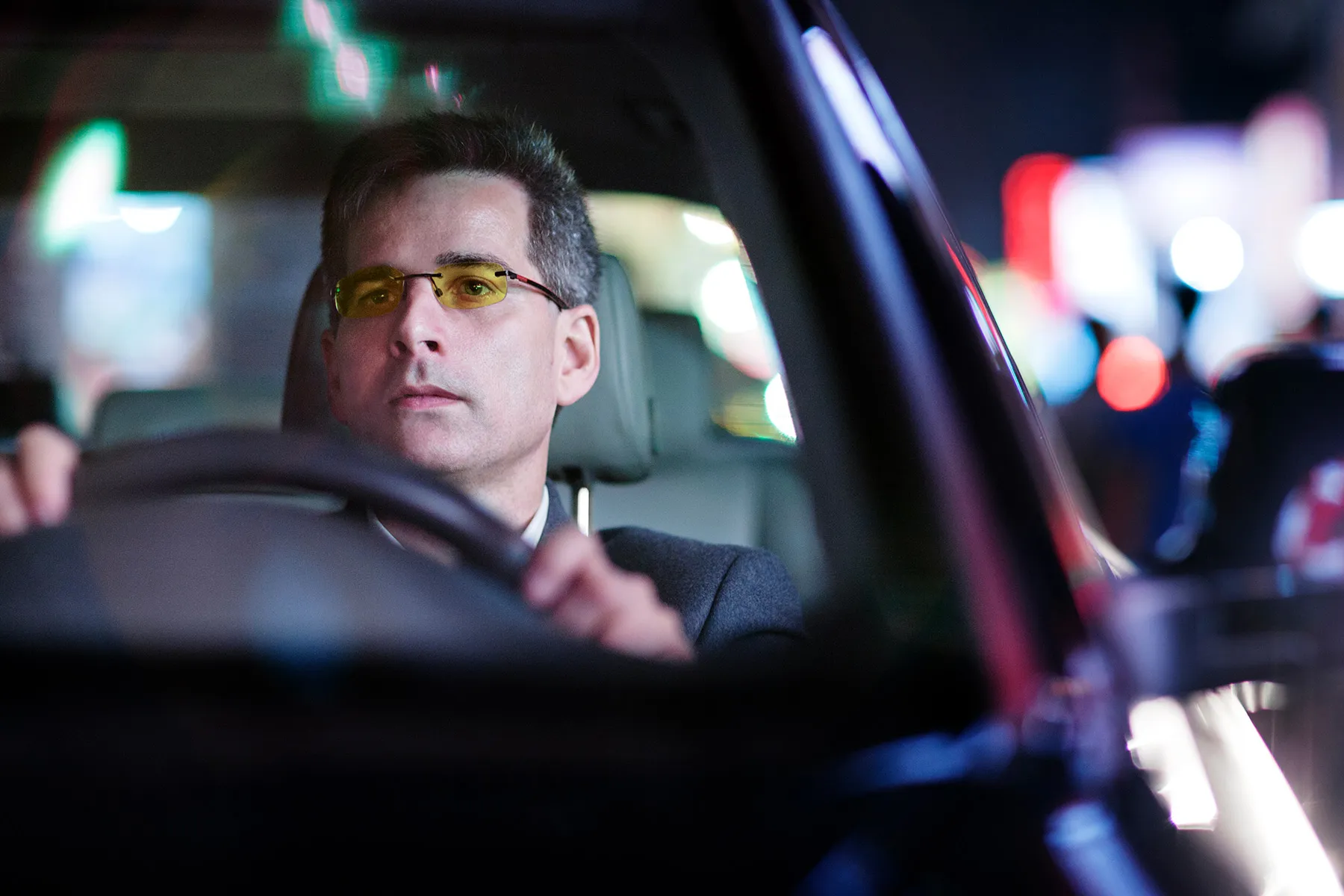
Night driving has a special talent for turning ordinary roads into dramatic movie sets. Streetlights glow, headlights explode into starbursts, rain turns every lane into a shiny mirror, and suddenly a five-minute drive to pick up snacks feels like an audition for a survival documentary. If that sounds familiar, you may have wondered whether night driving glasses could save the day.
Maybe. But probably not in the way advertisements promise.
Here is the truth: some people really do need vision help for driving after dark, but the solution is not always a pair of yellow-tinted “anti-glare” glasses bought online at 11:47 p.m. after being personally attacked by a lifted truck’s headlights. In many cases, the better answer is a proper eye exam, an updated prescription, or treatment for an underlying issue such as cataracts, dry eye, or astigmatism.
This guide explains what night driving glasses are, who might benefit from them, who probably will not, and how to tell whether your eyes are asking for help or just begging you to clean your windshield.
What Are Night Driving Glasses, Exactly?
The phrase night driving glasses gets used for two very different products, and that is where confusion begins.
1. Over-the-counter yellow-tinted glasses
These are the most heavily marketed version. They are often sold as anti-glare glasses for night driving, night vision glasses, or yellow night driving lenses. The pitch usually sounds magical: they claim to reduce glare, improve contrast, sharpen vision, and make night roads feel brighter and clearer.
That sounds fantastic. It also sounds a little too fantastic. Yellow-tinted lenses reduce the amount of light entering your eyes, which is not ideal when you are already driving in low light. In plain English: if the world is dark, wearing a tint that blocks light is a bold strategy.
2. Prescription driving glasses optimized for nighttime use
This is the more legitimate version. These glasses are prescribed by an eye care professional and may include:
- An updated distance prescription
- Astigmatism correction
- Anti-reflective coating
- Lenses designed to reduce distracting reflections from dashboards, headlights, and streetlights
These are not miracle glasses. They are simply glasses that correct your actual vision needs more precisely, which can make nighttime driving easier and more comfortable.
Do Night Driving Glasses Really Work?
If you are talking about yellow-tinted nonprescription glasses, the answer is usually not in a reliable, proven way. That is the awkward part many ads skip.
What often helps more is correcting the real reason night driving feels harder. If your prescription is outdated, your eyes are dry, your lenses are scratched, or you are developing cataracts, no trendy amber tint is going to transform you into a nocturnal eagle.
On the other hand, if you are talking about properly fitted prescription glasses with anti-reflective coating, then yes, those may help. Not because they are “night vision” glasses, but because they improve how clearly your eyes focus and reduce some distracting reflections.
So the smart question is not, “Do night driving glasses work?” It is, “What problem am I actually trying to solve?”
Signs You May Need Help With Night Driving
Plenty of people dislike driving at night, but certain symptoms suggest you may need more than a pep talk and a less dirty windshield.
Headlights look like fireworks
If oncoming headlights create huge halos, starbursts, or streaks of light, your vision may need attention. Some glare is normal, especially in rain, but severe glare is not something to ignore.
You struggle to read road signs until you are too close
If street signs seem fuzzy or appear at the last possible second, your distance prescription may be off. Even a small uncorrected refractive error can feel much worse at night.
You squint a lot after dark
Squinting is your eyes’ low-budget attempt to sharpen focus. If you do it frequently at night, your vision may not be properly corrected.
You avoid driving at night whenever possible
If you have quietly reorganized your life so every errand happens before sunset, that is a clue. Avoidance is sometimes your brain’s way of saying, “I do not trust what my eyes are doing out there.”
Your eyes feel tired, dry, or strained after short nighttime drives
Night driving demands more effort from the visual system. If your eyes burn, water, blur, or fluctuate in focus, dry eye or eye strain may be contributing to the problem.
You notice halos, ghost images, or blur in one or both eyes
This can happen with cataracts, uncorrected astigmatism, corneal issues, or other eye conditions. It is a good reason to schedule an exam instead of buying random glasses based on a social media ad with suspiciously enthusiastic fonts.
What Might Actually Be Causing the Problem?
Nighttime vision issues are not one-size-fits-all. Here are some common reasons night driving gets harder.
Outdated prescription
This is one of the most common causes. You may function fine during the day, but night driving is less forgiving. Lower contrast, glare, and distance judgment all expose tiny vision problems that daylight lets you hide.
Astigmatism
Astigmatism can make lights look smeared, streaky, or haloed. At night, those distortions become much more obvious. A proper prescription can make a noticeable difference here.
Cataracts
Cataracts often show up as cloudy vision, glare, halos around lights, and poor night vision. Many people first realize something is wrong when night driving suddenly feels much harder than it used to.
Dry eye
Dry eye does more than create irritation. It can make vision fluctuate, increase glare, and reduce sharpness, especially at night. If your sight seems clear one minute and smeary the next, dry eye may be part of the story.
Aging and reduced contrast sensitivity
As we age, it often becomes harder to adapt to darkness and recover from glare. That does not automatically mean something is seriously wrong, but it does mean night driving can become more visually demanding over time.
Night blindness or other eye conditions
If you have unusual difficulty seeing in dim light, or you struggle to adjust when moving from bright areas to dark ones, it may be more than ordinary glare. Night blindness, retinal issues, keratoconus, glaucoma, or other conditions may need professional evaluation.
Post-surgery or lens-related visual effects
Some people notice more halos or glare after certain eye procedures or lens changes. If night driving became noticeably worse after surgery, it is worth discussing with your eye doctor rather than guessing your way through it.
Who Might Benefit From Glasses for Night Driving?
You may benefit from prescription glasses for night driving if:
- Your current prescription is outdated
- You have astigmatism that is not fully corrected
- You see better with a dedicated distance prescription than with multifocal lenses in the car
- You are bothered by reflections and may benefit from anti-reflective coating
- Your doctor recommends a specific lens setup for your driving needs
You are less likely to benefit from generic yellow-tinted glasses if your real problem is cataracts, dry eye, retinal disease, glare from scratched lenses, or a prescription that has simply gone stale.
In short, you may need driving glasses, but not necessarily the kind marketed as magical night-vision gear.
How to Know if You Need Them
If you are trying to decide whether night driving glasses are worth it, ask yourself these practical questions:
Do I see poorly only at night, or all the time?
If the problem is mostly nighttime glare, halos, or poor sign recognition, that points toward a night-specific vision issue. If things are blurry day and night, your prescription or eye health may need broader attention.
When was my last eye exam?
If it has been a while, start there. A new pair of glasses cannot fix a prescription that was never updated or a condition that was never diagnosed.
Are my current lenses scratched, dirty, or coated with mystery smudges?
Scratches and film on lenses can absolutely worsen glare. So can a dirty windshield. Before declaring your eyes broken, give the obvious suspects a fair trial.
Do I wear the right glasses for driving?
Some people drive in old glasses, readers, or progressive lenses that are not ideal for nighttime distance vision. A dedicated pair for driving may help more than a trendy tinted pair ever could.
Are there other symptoms?
Watch for double vision, sudden changes, eye pain, worsening halos, one eye seeing much worse than the other, or trouble adapting to darkness. Those are not “just glare.” They deserve medical attention.
What to Try Before Buying “Anti-Glare” Glasses Online
Before you spend money on glasses that promise superhero night vision, try these smarter steps:
Get an eye exam
This is the best first move. It tells you whether your issue is simple, fixable, or something that should not be ignored.
Ask about anti-reflective coating
An anti-reflective coating can reduce annoying reflections bouncing off your lenses. It does not eliminate all glare from the world, but it can reduce some of the visual clutter.
Update your prescription
Even a minor prescription change can feel major at night, especially when road signs, lane markings, and pedestrians are lower in contrast.
Treat dry eye
If your eyes feel gritty, watery, tired, or blur on and off, dry eye treatment may improve the quality of your vision more than any pair of tinted glasses.
Clean everything
Yes, everything. Eyeglasses, windshield, mirrors, dashboard glass, and headlights. It is not glamorous advice, but it works better than most “one weird trick” internet ads.
Avoid dark or heavily tinted lenses at night
At night, more light is your friend. Blocking extra light is usually not the winning move.
When to See an Eye Doctor Soon
Schedule an exam promptly if:
- Night driving has become suddenly harder
- You see halos, streaks, or glare that are getting worse
- Your vision is cloudy, dim, or uneven between the eyes
- You have double vision
- You struggle to adapt to darkness
- You recently had eye surgery and nighttime symptoms bother you
- You no longer feel safe driving after dark
That last point matters. If you do not feel safe, listen to that instinct. Vision problems are not a personality flaw, and squinting harder is not a treatment plan.
The Bottom Line
So, do you need night driving glasses?
If by that you mean yellow-tinted over-the-counter glasses, probably not. They are heavily marketed, but they are not a proven solution for safer or clearer night driving.
If by that you mean a properly updated prescription with anti-reflective coating or a driving-specific lens setup, then maybe yes. Those can help when they match a real vision problem.
The bigger lesson is this: trouble with night driving is often a clue, not just an inconvenience. It may point to cataracts, dry eye, astigmatism, an outdated prescription, or another vision issue worth checking. The best way to know what you need is not to guess. It is to get your eyes evaluated and solve the actual problem.
Because when it comes to driving at night, the goal is not to look cool in amber lenses. The goal is to see the road, trust your eyes, and arrive with both your nerves and your snack bag intact.
Night Driving Experiences People Commonly Describe
The experiences below are composite examples based on common complaints people report about nighttime vision. They are useful because they show how different the problem can feel from one person to the next.
The “I thought everyone saw this way” driver
One common experience comes from the person who has driven at night for years assuming all headlights are supposed to look like exploding dandelions. They can still drive, technically, but they lean forward, grip the wheel harder, and feel strangely tired after even short trips. Eventually, an eye exam reveals uncorrected astigmatism. With an updated prescription and anti-reflective coating, they are shocked that road signs suddenly look crisp again. Their reaction is usually some version of, “Wait, this is what the road has looked like to everyone else?”
The “online glasses will fix it” shopper
Another familiar story is the person who buys yellow anti-glare glasses after seeing glowing reviews online. The first time they try them, things may seem a little different, and that can create the impression that vision is better. But after a few drives, they realize the road does not actually look sharper. In some cases it looks dimmer. They still hate the glare, still struggle in rain, and still avoid highways after sunset. The glasses did not solve the issue because the issue was not “lack of yellow tint.” It was a mild cataract, dry eye, or an old prescription quietly causing trouble.
The “my daytime vision is fine” commuter
Many people are confused because they see perfectly well during the day. They can read, work, and function normally, so they assume their eyes are fine. Then nighttime comes, and suddenly lane markings feel faint, signs appear late, and bright lights seem aggressive. This experience often happens when contrast sensitivity has dropped or when even a small focusing error becomes more noticeable in low light. These drivers may not need a dramatic intervention, but they often do benefit from a refined prescription or a discussion with an eye doctor about lens design for driving.
The dry-eye surprise
Some drivers describe a very specific pattern: the first few minutes of the drive are fine, but then the blur starts to come and go. Lights smear. Their eyes feel tired or watery. They blink hard at red lights and temporarily clear their vision, only for the haze to return. Many of these people assume the problem is purely “bad night vision,” when in reality the tear film on the surface of the eye is unstable. Once dry eye is treated, the improvement can feel surprisingly dramatic.
The older driver who lost confidence gradually
Another common experience is slower and more emotional. An older driver may not notice one big change. Instead, they start avoiding unfamiliar roads at night. Then highways. Then rainy evenings. Then all driving after dusk. They may blame modern headlights, and to be fair, bright headlights do not help. But sometimes the deeper issue is cataracts, reduced glare recovery, or less contrast sensitivity. What makes this experience important is that people often adapt quietly for months or years without realizing how much their vision has changed.
The relief of finding the real answer
The encouraging part is that many people feel genuine relief once they identify the true cause. Sometimes the fix is simple, like updated glasses or better lens coatings. Sometimes it is treating dry eye. Sometimes it is discussing cataracts. The point is that clarity usually improves when the solution matches the problem. And that is the real lesson behind the night driving glasses debate: the best results rarely come from guessing. They come from understanding why the road got harder to see in the first place.