Note: This article is based on real mission data and current public reporting from NASA, NASA Science, NASA JPL, Johns Hopkins Applied Physics Laboratory, the University of Maryland, ESA, AP News, and peer-reviewed planetary science research.
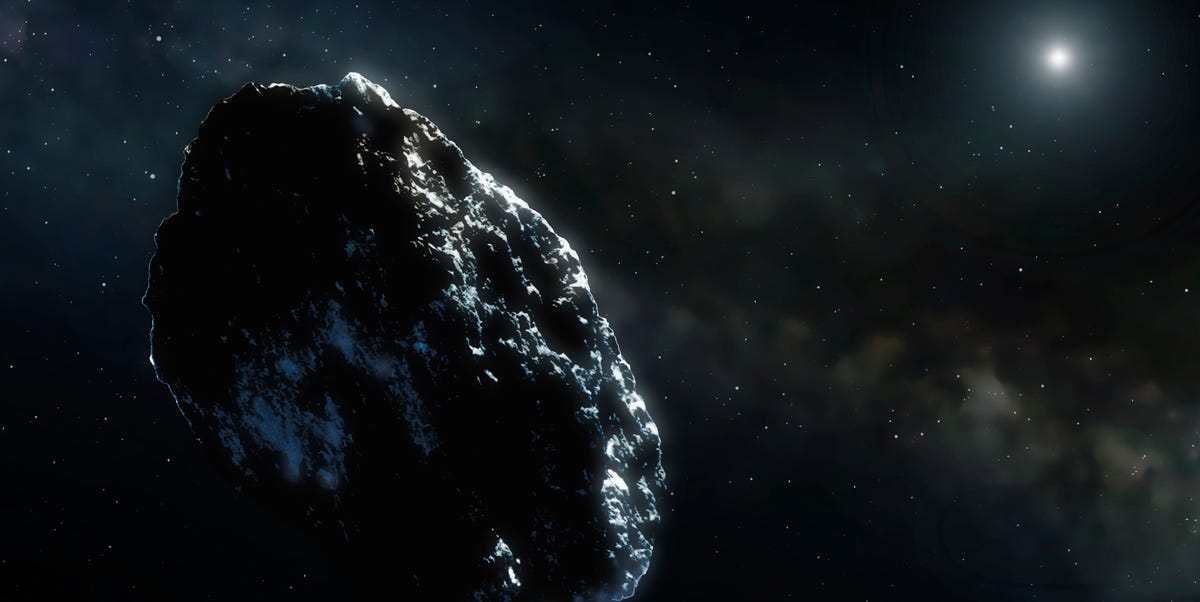
NASA once looked at an asteroid, looked at a spacecraft, and decided: “Let’s introduce these two at 14,000 miles per hour.” That was not a movie pitch. It was the Double Asteroid Redirection Test, better known as DART, the first full-scale demonstration that humans can intentionally change the motion of a celestial object. The target was Dimorphos, a small moonlet orbiting the larger asteroid Didymos. Neither asteroid threatened Earth, which is exactly why NASA chose them. When you are practicing planetary defense, it is generally considered polite not to practice on something already headed toward your house.
The crash worked. In September 2022, DART slammed into Dimorphos and changed its orbit around Didymos by far more than the minimum success requirement. That was the headline. But science has a habit of turning headlines into homework. Since the impact, researchers have found that the consequences were more complicated than a simple “spacecraft hits rock, rock moves.” The collision blasted dust, rocks, and boulders into space, reshaped the asteroid, changed the motion of the binary asteroid system around the Sun, and raised fresh questions about how future asteroid deflection missions should be planned.
So yes, NASA crashed a spacecraft into an asteroid. And yes, there could be consequences. The good news is that these consequences are not “run around screaming” consequences. They are “rewrite the models, sharpen the math, and maybe don’t assume every asteroid behaves like a billiard ball” consequences.
What Was NASA’s DART Mission?
DART stands for Double Asteroid Redirection Test. The mission was built and managed by the Johns Hopkins Applied Physics Laboratory for NASA’s Planetary Defense Coordination Office. Its purpose was simple in concept and wildly difficult in execution: test whether a spacecraft could hit an asteroid hard enough to change its path.
The spacecraft launched in November 2021 and spent about 10 months traveling toward the Didymos-Dimorphos system. Dimorphos is roughly 530 feet wide, while Didymos is about half a mile across. Dimorphos orbits Didymos, making the pair a binary asteroid system. That setup gave scientists a convenient measuring stick. Instead of waiting years to see whether the asteroid’s path around the Sun had changed, astronomers could measure how Dimorphos’ orbit around Didymos changed after impact.
Before DART arrived, Dimorphos took about 11 hours and 55 minutes to complete one orbit around Didymos. After impact, that period shortened to roughly 11 hours and 23 minutes. NASA had set a minimum success threshold of 73 seconds. DART changed the orbit by about 32 minutes. In school terms, NASA did not merely pass the test; it turned in extra credit, brought snacks, and made the teacher question the grading curve.
Why NASA Hit an Asteroid on Purpose
The DART mission was not about destroying an asteroid. Hollywood loves the idea of blowing space rocks into confetti, preferably while someone gives a heroic speech. Real planetary defense is more elegant and less explosive. The goal is usually not to shatter a hazardous asteroid, but to nudge it.
If scientists discover a dangerous asteroid decades before a possible Earth impact, even a tiny change in velocity can become a major change in position over time. Think of it like slightly turning the steering wheel on a long highway trip. At first, the difference is tiny. A few miles later, you are in another lane. A few thousand miles later, you may be in another state, wondering why the gas station hot dog was a life choice.
DART tested the kinetic impactor method. That means using a spacecraft as a high-speed projectile. It transfers momentum to the asteroid, changing the asteroid’s motion just enough to avoid a future collision. This method is one of the most practical planetary defense strategies because it relies on technology humans already understand: navigation, propulsion, targeting, and the ancient art of hitting one thing with another thing.
The Impact Did More Than Move Dimorphos
At first glance, the story seems simple. DART hit Dimorphos. Dimorphos moved. Humanity celebrated. But the post-impact data revealed something more interesting: the asteroid did not respond like one solid rock. It behaved more like a loosely packed rubble pile.
Many small asteroids are not solid stone mountains. They may be collections of boulders, dust, gravel, and porous material held together by weak gravity and very little cohesion. Dimorphos appears to belong to this family. When DART hit it, the spacecraft did not just leave a neat crater. It launched a huge plume of ejecta, which is the scientific term for material thrown out by an impact. In plain English, NASA punched the asteroid and the asteroid sneezed rocks.
This ejecta mattered. When material blasted away from Dimorphos, it carried momentum in one direction, producing a recoil effect in the opposite direction. That recoil amplified DART’s push. In other words, the spacecraft did not do all the work by itself. The escaping debris acted like a natural booster rocket, giving Dimorphos an extra shove.
The “Oomph” Problem: Momentum Enhancement
Planetary defense scientists pay close attention to something called the momentum enhancement factor. It describes how much extra push comes from the material ejected during an impact. If an asteroid releases a large amount of debris, the deflection can be much stronger than the spacecraft’s direct impact alone. If it releases very little debris, the same spacecraft may produce a smaller change.
DART showed that ejecta can dramatically increase the effectiveness of a kinetic impactor. Some analyses found that the momentum transferred to Dimorphos was several times greater than the momentum delivered by the spacecraft alone. That is excellent news if you are trying to move an asteroid. It is also a warning label written in cosmic handwriting: asteroid composition matters.
A solid metallic asteroid, a loose rubble pile, a dusty carbon-rich object, and an icy body might all respond differently to impact. The same spacecraft could cause a clean crater on one object, a massive debris plume on another, and a bizarre sideways spray of boulders on a third. Future missions cannot rely on a one-size-fits-all formula. Space rocks, like people at airport security, can be surprisingly unpredictable.
Consequence #1: DART Changed the Binary System’s Path Around the Sun
One of the most fascinating later findings is that DART did not only change Dimorphos’ orbit around Didymos. It also slightly changed the orbit of the Didymos-Dimorphos pair around the Sun. The change was tiny, measured as a fraction of a second in the system’s roughly 770-day solar orbit. But tiny does not mean meaningless.
In planetary defense, small velocity changes become important when given enough time. A minuscule shift today can become a planet-saving miss distance years or decades later. The Didymos system was never a threat to Earth, and DART could not turn it into one. Still, the measurement proved something huge: a human-made spacecraft can measurably alter not only a moonlet’s local orbit, but also the path of an asteroid system through the solar system.
That is a milestone in the history of spaceflight. For most of human history, the sky was something we watched. With DART, the sky became something we gently edited.
Consequence #2: A Cloud of Debris Is Now Moving Through Space
After the impact, telescopes observed a long tail of dust and debris streaming away from Dimorphos. Images from Hubble, ground-based observatories, and the Italian Space Agency’s LICIACube showed material spreading outward from the asteroid. LICIACube, a small companion spacecraft, flew past minutes after the crash and captured close-up views of the ejecta plume.
Some of that material was fine dust. Some of it was larger rock. Hubble later detected dozens of boulders drifting away from Dimorphos, some estimated to be several feet across. Newer research using LICIACube imagery tracked more than 100 boulders, some moving at speeds up to dozens of meters per second. That is not fast compared with the DART spacecraft, but it is fast enough to matter when scientists are modeling the aftermath of an asteroid deflection attempt.
This does not mean Earth is in danger from DART debris. The particles are tiny compared with natural asteroid threats, and any small particles that eventually reach Earth’s atmosphere would likely burn up as meteors. But the debris field is scientifically important because it shows that asteroid deflection missions may create secondary objects, unusual ejecta patterns, and long-lasting dust trails.
Consequence #3: Possible Human-Made Meteor Activity
One of the more charming possibilities is that DART may eventually create the first human-made meteor shower. Some research has modeled whether small particles from the impact could reach the vicinity of Mars or the Earth-Moon system in the future. If tiny grains from Dimorphos ever enter Earth’s atmosphere, they would likely appear as harmless meteors.
This is not a disaster scenario. Nobody needs to reinforce the roof or cancel the barbecue. We are talking about very small particles, not city-smashing rocks. Still, the idea is remarkable. A mission designed to test planetary defense may one day produce visible streaks in the sky, a faint cosmic receipt from the day humanity gave an asteroid a shove.
The possibility also reminds scientists that impact debris does not simply vanish. It enters orbits, spreads out, interacts with sunlight, and may travel across interplanetary space. For future asteroid defense missions, understanding that debris could be important for spacecraft safety, mission planning, and long-term monitoring.
Consequence #4: Dimorphos May Have Been Reshaped
Before DART, scientists expected the impact might create a crater. After the impact, simulations and observations suggested something stranger: Dimorphos may have been globally deformed. Because the asteroid appears weak and loosely held together, the collision may have changed its overall shape rather than simply punching a bowl-shaped hole into its surface.
Some models suggest that Dimorphos may now look less like its pre-impact self and more like a reshaped rubble pile. That matters because the physical response of an asteroid affects how much deflection occurs. A strong asteroid may absorb an impact differently from a weak one. A rubble pile may shift, shed material, or redistribute mass in ways that change its spin and orbit.
This is one reason scientists are excited about ESA’s Hera mission. Hera is scheduled to arrive at the Didymos system in November 2026. Unlike DART, Hera is not going there to crash. It will survey the aftermath, study Dimorphos up close, measure the asteroid’s mass, inspect the impact site, and help scientists understand exactly what DART did.
Consequence #5: Future Asteroid Deflection Just Got More Complicated
DART proved that kinetic impact works. That is the big win. But it also proved that the details are messy. The direction of ejecta, the size of boulders, the structure of the asteroid, the impact angle, the asteroid’s spin, and the local arrangement of rocks can all influence the final result.
Recent analysis of high-speed boulders ejected from Dimorphos suggests that some debris carried momentum in unexpected directions. That could affect an asteroid’s orbital plane or rotation state. For a harmless test target, this is a scientific puzzle. For a real hazardous asteroid, it could become an operational challenge.
Imagine trying to move a dangerous asteroid by a precise amount, only to discover that the asteroid’s surface throws debris sideways and adds an unexpected twist. The mission might still succeed, but planners would need accurate models and possibly follow-up observations to confirm the result. DART did not make planetary defense look impossible. It made planetary defense look like engineering: powerful, promising, and allergic to oversimplification.
Why Asteroid Detection Matters More Than Last-Minute Heroics
The most important lesson from DART is not “we can smash asteroids.” It is “we need time.” A kinetic impactor works best when a dangerous asteroid is discovered many years before a possible collision. The earlier we know about a threat, the smaller the required nudge.
This is why asteroid detection is central to planetary defense. NASA’s NEO Surveyor mission is designed to find potentially hazardous asteroids and comets, especially dark objects that are difficult to spot with visible-light telescopes. A better asteroid catalog gives humanity more warning time. More warning time means more options. More options mean fewer desperate movie-style plans involving nuclear devices, dramatic countdowns, and people yelling in mission control.
DART was the hammer test. NEO Surveyor and other detection programs are the smoke alarms. You want both, but you really want the smoke alarm to work before the kitchen is on fire.
Did NASA Create a New Danger?
No. The Didymos-Dimorphos system was chosen because it posed no threat to Earth. The impact did not put the asteroid on a collision course with our planet. The debris produced by the impact is not considered dangerous to Earth. The possible future meteor activity would involve small particles burning up in the atmosphere.
The real “consequences” are scientific and strategic. DART gave researchers real-world data that cannot be obtained from computer simulations alone. It showed how a small asteroid responds to a hypervelocity impact at planetary defense scale. It revealed that ejecta can greatly amplify deflection. It also showed that boulders, dust, and rubble-pile behavior can complicate predictions.
That is exactly why testing matters. You do not want to discover these complications for the first time when a hazardous asteroid is already inbound. DART gave humanity a practice round with a safe target. It was the cosmic equivalent of testing the fire extinguisher before the birthday candles become a neighborhood incident.
What Hera Could Reveal Next
ESA’s Hera mission is the next major chapter. When Hera reaches the Didymos system, it should give scientists a close-up look at the post-impact environment. It may reveal whether DART left a crater, reshaped Dimorphos, changed its spin, or created a more complex debris field than expected.
Hera will help answer several key questions. How much mass did DART eject? What is Dimorphos made of? How porous is it? Did the impact alter the asteroid’s rotation? Are any boulders still near the system? How accurately did Earth-based observations estimate the asteroid’s response?
These answers will improve future deflection models. If humanity ever needs to redirect a real threat, mission planners will need to estimate how a specific asteroid will respond. Hera’s data will turn DART from a successful demonstration into a calibrated planetary defense experiment.
Experience and Reflection: What DART Teaches Us About Living With Cosmic Risk
There is something deeply human about the DART mission. For centuries, people looked at comets and asteroids as omens. A bright object in the sky could mean fear, prophecy, disaster, or at the very least someone in the village saying, “Well, that can’t be good.” Today, we still look up with awe, but we also build spacecraft, calculate trajectories, and test solutions. That shift from fear to preparation may be one of the most important consequences of DART.
The mission also teaches a useful everyday lesson: small changes made early can prevent large problems later. That principle applies to asteroid defense, but it also applies to health, money, relationships, engineering, and maintaining your car before it starts making that mysterious sound you pretend not to hear. DART did not need to blast Dimorphos into powder. It only needed to change its motion. In life, as in orbital mechanics, a small correction at the right time is often better than a heroic rescue after everything has gone sideways.
Another experience worth taking from DART is humility. Before the impact, scientists had excellent models. After the impact, the asteroid still surprised them. It released boulders. It produced a dramatic plume. It may have changed shape. Its debris behaved in ways that researchers are still studying. This does not mean the scientists failed. It means reality is richer than theory. Good science is not embarrassed by surprises; it collects them, labels them, and uses them to make the next model better.
DART also shows the value of international cooperation. NASA built and guided the impactor. The Italian Space Agency’s LICIACube captured close-up images. Telescopes around the world tracked the aftermath. ESA’s Hera mission will return to inspect the results. Planetary defense is not a solo sport. If an asteroid ever threatens Earth, it will not care about borders, flags, or time zones. The response will need to be global, coordinated, and grounded in shared data.
For the public, DART offers a rare kind of space story: one that is both dramatic and practical. It has the cinematic thrill of a spacecraft collision, but the real achievement is quieter. It is measured in minutes, millimeters per second, dust trails, and orbital models. That may sound less glamorous than science fiction, but it is far more useful. DART did not save Earth from an immediate threat. It gave Earth a tested tool for a future one.
And perhaps that is the best way to understand the consequences. DART changed an asteroid, but it also changed us. It moved planetary defense from theory into demonstration. It proved that humans are not helpless passengers in a solar system full of wandering rocks. We still have much to learn, but we have taken the first deliberate step toward protecting our planet from one of nature’s oldest hazards.
Conclusion
NASA’s DART mission was a historic success, but not a simple one. The spacecraft changed Dimorphos’ orbit, shifted the larger binary system’s path around the Sun, launched dust and boulders into space, and revealed how complicated asteroid deflection can be. These are not dangerous consequences for Earth, but they are important consequences for science.
The mission proved that a kinetic impactor can work as a planetary defense tool. It also proved that future missions must account for asteroid structure, ejecta behavior, momentum enhancement, and long-term debris movement. In short, DART gave humanity confidence, but not permission to be lazy.
If a hazardous asteroid is ever found heading toward Earth, the best defense will be early detection, careful modeling, international cooperation, and tested technology. DART was the first real shove. Hera, NEO Surveyor, and future missions will help turn that shove into a reliable planetary defense strategy. The universe still throws rocks. At least now, humanity has shown it can throw backwith math.