If a regular doormat is the jeans-and-T-shirt of the entryway, a Maine float-rope doormat is the salty fisherman’s sweater with better color options. It is practical, a little rugged, surprisingly attractive, and the kind of home item that makes visitors ask, “Wait, what is this made of?” That question is half the charm. The other half is the fact that these mats are built for real life: wet boots, muddy dogs, sandy flip-flops, leaf confetti, and whatever else the front porch drama department decides to stage that week.
Maine float-rope doormats have earned a loyal following because they sit at a sweet spot between story and utility. They feel rooted in coastal tradition, but they are not precious. They look handmade, but they are made to be used, not admired from a respectful distance like a museum rope. In a world full of flimsy mats that curl, shed, fade, or give up after one ugly winter, these rope mats have managed to build a reputation for being tough, tidy, and unexpectedly good-looking.
This is what makes them so interesting: they are not just a coastal décor trend. They are part design object, part hardworking household tool, and part Maine maritime legend under your shoes.
What Is a Maine Float-Rope Doormat?
At its simplest, a Maine float-rope doormat is a woven mat made from rope associated with Maine’s lobster-fishing culture. In the purest version, that means reclaimed float rope or lobster rope that once worked on the water. In broader retail use, the term also includes mats woven from new rope inspired by traditional lobster cordage, often using polypropylene or polysteel blends designed for outdoor durability.
That distinction matters. Some buyers want the real reclaimed-material story: rope that once connected buoy to trap and now gets a second life at the front door. Others care more about performance and color consistency, which newer engineered rope can provide. Neither approach is “wrong.” It is more like choosing between vintage denim and performance fabric. One leans harder into history and reuse; the other leans harder into uniformity and ruggedness. Both can look fantastic on a porch.
The Maine connection is not a marketing costume, either. These mats are closely tied to the state’s working waterfront culture. Lobstering is part of Maine’s identity, and rope has always been central to that world. Over time, makers found a way to transform rope associated with lobster gear into something useful for the home. The result is one of those rare products that feels both regional and broadly practical. Even if you live nowhere near the Atlantic, the appeal still lands. Mud is universal. So is wanting your front door to look less boring.
Why People Love Maine Float-Rope Doormats
They are built for ugly weather
A good rope mat has one job: deal with the mess before the mess enters your house and starts paying rent. Maine float-rope doormats do that well because the rope construction allows debris to fall through and moisture to drain rather than linger. That makes them a favorite for rainy porches, snowy steps, sandy doors near the beach, pool areas, mudrooms, and back entries that see heavy traffic.
Compared with some standard fiber mats, rope mats tend to dry faster and stay cleaner-looking between cleanings. You are not staring at a soggy rectangle thinking, “Well, that definitely used to be a color.” Instead, the material tends to keep its structure and remain useful even when the weather behaves like it has a personal grudge against your shoes.
They bring in color without looking silly
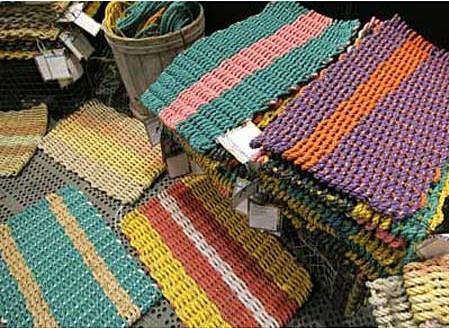
One of the secret superpowers of Maine float-rope doormats is color. Coastal décor can go wrong fast when everything starts shouting “nautical” like it is auditioning for a seafood shack. Rope mats usually avoid that problem. Because the colors are woven into the design rather than printed on top, they often feel richer, more textured, and more lived-in. Blues, seafoam greens, grays, sandy neutrals, burgundy, black, and multicolor stripe patterns all show up often.
That gives homeowners a lot of room to play. A blue-and-gray rope mat looks crisp and classic with white trim. Earthy brown and tan variations feel at home on farmhouse porches. Brighter mixes can wake up a plain entry without turning it into a beach-themed souvenir shop. In other words, the mat can have personality without needing a giant scripted “hello.” Sometimes the rope itself is the welcome.
They tell a better story than a basic box-store mat
People like products with a point of view. A Maine float-rope doormat gives you craftsmanship, regional identity, and often a sustainability angle in one piece. When reclaimed rope is involved, the mat becomes part of a broader reuse story. When new rope is used, the appeal often shifts toward clean weaving, consistent construction, and long-term durability. Either way, the product feels more intentional than a forgettable mass-market mat tossed into the cart next to discount batteries and paper towels.
How They Compare With Other Popular Doormats
Versus coir mats
Coir mats are classic dirt-scrapers, and they absolutely have their place. They look natural, they do a decent job grabbing grime, and they are often affordable. But they can shed, stay damp longer, and wear down in exposed locations. Maine float-rope doormats usually win on weather resistance, ease of rinsing, and longevity in wet conditions. Coir is the traditionalist. Rope is the all-weather realist.
Versus rubber mats
Rubber mats are practical, but let us be honest: they are usually the cargo shorts of entryway design. Functional? Sure. Charming? Rarely. Maine rope mats keep the utility while delivering a softer, more crafted look. They still handle outdoor use, but they do not make your porch feel like the entrance to an auto parts warehouse.
Versus absorbent indoor-outdoor mats
Absorbent mats, like heavy-duty indoor-outdoor styles, are excellent at trapping water and containing slush. They are especially useful inside the door. Rope mats, by contrast, excel outside because they shed water instead of storing it. That is why many smart households use a two-mat system: a rope mat outside to knock off dirt and drain away moisture, plus an indoor absorbent mat to catch whatever the outside mat did not arrest at the border.
How to Choose the Right Maine Float-Rope Doormat
1. Decide whether you want reclaimed rope or rope-inspired construction
If the environmental story matters most, look for a mat specifically described as reclaimed float rope or reclaimed lobster rope. These often have more one-of-a-kind character and a stronger connection to material reuse. If uniform appearance, stiffness, and tighter weave are your priority, newer polysteel or polypropylene rope versions may be the better fit.
2. Pick the right weave and thickness
A tighter weave can feel sturdier and slightly more refined. A chunkier weave can look more casual and sculptural. Double-weave styles often create a more substantial feel, which can be great for larger porches or doorways that need visual weight. Smaller single-weave mats work well when you want the texture without making the entry feel crowded.
3. Match the mat to your house, not just your fantasies
A seafoam-and-navy mat may be gorgeous, but if your home leans warm brick, cedar, or traditional brown tones, a sand, charcoal, tan, or burgundy mix may look more natural. The best Maine float-rope doormat does not scream for attention. It quietly makes the whole entry look more considered.
4. Think about where the mat will live
Covered porch? You have more freedom. Fully exposed stoop? Prioritize durability and drainage. Pool deck or outdoor shower? Rope mats are especially attractive there because they handle wet conditions well and bring texture without feeling fussy. Interior mudroom entry? They can work beautifully there too, especially on non-slip surfaces or with the right pad underneath.
How to Care for a Maine Float-Rope Doormat
Here is the good news: rope mats are not high-maintenance divas. Most of the time, care is refreshingly simple. Shake the mat out, hose it down, and let it dry. That is basically the beauty routine. No elaborate laundering instructions, no fragile fibers, no emotional negotiations.
That said, a few practical habits help them last and look better longer:
- Give the mat a quick shake or spray when dirt builds up.
- Use it on a stable, non-slip surface, especially if the weave is thick or the area gets slick.
- Rotate it occasionally if one section gets stronger sun exposure.
- Pair it with an indoor mat if your household tracks in a heroic amount of moisture.
- Do not expect zero fading forever; outdoor life leaves a mark on everything, including stylish rope.
In fact, a little mellowing over time is part of the appeal. Like good leather, old wood, or a favorite canvas jacket, a rope mat that has lived a little can look even better when it relaxes into its surroundings.
Why Maine Float-Rope Doormats Work So Well in Design
Part of their staying power comes from balance. These mats are textured but not shaggy, colorful but not cartoonish, nautical but not theme-park nautical. They sit comfortably in several design worlds at once: coastal, cottage, farmhouse, cabin, transitional, and even modern homes that need one grounded, tactile element near the entry.
They also solve a common decorating problem: how to make an entry feel warm without adding clutter. A rope mat adds pattern, craft, color, and function in a single move. That is efficient decorating, which is the best kind because it does not require six extra lanterns, a bench, three baskets, and a pillow that says “gather” to make the porch feel finished.
Are Maine Float-Rope Doormats Worth It?
Yes, especially if you want something that works hard and looks better than the average all-weather mat. They are not always the cheapest option upfront, but the value is in the mix of durability, craftsmanship, and style. Instead of buying a disposable mat every season, many shoppers would rather buy one that can handle serious use and still look like it belongs at a well-kept home.
The smartest way to think about them is not as a novelty product, but as a category that blends heritage, utility, and design. A good Maine float-rope doormat does what home essentials should do: it earns its keep every day while making the space feel more like you meant it to look that way all along.
Experience: Living With a Maine Float-Rope Doormat
The first thing most people notice when they actually live with a Maine float-rope doormat is that it changes the rhythm of the doorway in small but satisfying ways. You come home with damp shoes, step on it, and feel the sturdy give of the rope underfoot. It does not feel mushy or flimsy. It feels planted, like it knows exactly why it is there. On rainy days, it never seems to turn into a swampy sponge. On dry days, it still looks textured and interesting instead of flat and forgotten.
There is also something surprisingly pleasant about how it ages. A lot of home products start life looking perfect and then slide downhill the second weather enters the chat. Rope mats seem to take the opposite route. They begin attractive, then develop the relaxed, slightly weathered look that makes a porch feel real rather than staged. A few bits of fading, a softened edge here and there, and suddenly the mat looks like it belongs to the house instead of being a brand-new prop dropped there for a photo shoot.
Another real-life perk is how forgiving the mat is. Kids stomp on it. Dogs launch across it like fuzzy missiles. Guests drag in gravel, leaves, and whatever mystery substance is attached to the bottom of their sneakers. The mat does not collapse into self-pity. You shake it out, maybe hose it down, and it is ready for another round. That easy cleanup becomes a bigger deal than you expect. There is a genuine joy in owning something useful that does not ask for much in return.
Visually, it also has a way of upgrading the doorway without needing a full porch makeover. Even if the rest of the entry is simple, a good rope mat makes the area look layered and intentional. It says, “Someone lives here, and they have taste,” without saying it in a loud or try-hard way. That is probably why these mats work for so many people. They do not demand an entire coastal decorating scheme. They just bring in enough texture and color to make the threshold feel finished.
Perhaps the nicest part of the experience, though, is the connection to place. Even if you do not live in Maine, there is something appealing about using an object that carries a hint of the working waterfront with it. Not in an overly romantic way, but in a grounded, practical way. Rope, weather, labor, craft, reuse, durability: all of that is baked into the object. It is a small everyday reminder that the best home goods are often the ones born from real needs and real materials, then refined into something beautiful.
So yes, at the end of the day, it is “just” a doormat. But it is also the first thing that catches grit before it hits your floors, the detail that quietly sharpens your entryway, and the kind of product that proves functional things do not have to be dull. That is a pretty solid résumé for something that mostly spends its life getting stepped on.
Final Thoughts
Maine float-rope doormats have lasting appeal because they solve several problems at once. They look distinctive, handle weather well, clean up easily, and connect everyday home design to a real regional tradition. Whether you choose a mat made from reclaimed float rope or a newer lobster-rope-inspired version, the best ones combine toughness with texture and practicality with personality.
And honestly, that is a rare trick. Most doormats are lucky if they manage one of those things. Maine float-rope doormats manage all of them while looking like they have a good story to tell. That is why they continue to stand out on porches, in mudrooms, by beach houses, and at front doors all over the country. They welcome people in, keep the mess out, and make the threshold feel a little more interesting. Not bad for a rectangle made of rope.