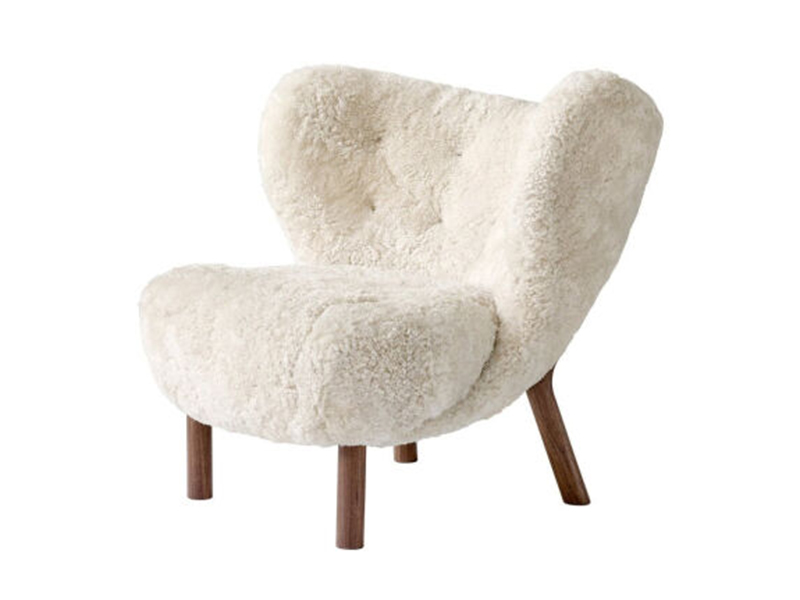
The Lounge Chair Ingeborg is what happens when a compact armchair develops the confidence of a much larger piece of furniture. Designed by Danish architect Flemming Lassen in 1940, it combines a rounded, welcoming silhouette with sculptural arms, short oak legs, and upholstery that ranges from tailored textiles to wonderfully fluffy sheepskin. It is petite, but nobody would accuse it of being shy.
Today, the chair is produced by Audo Copenhagen using archival drawings associated with Lassen’s original design. Its history, distinctive shape, premium construction, and unusually flexible footprint have made it attractive to collectors, interior designers, and homeowners searching for a genuine Scandinavian lounge chair rather than another vaguely Nordic seat wearing beige fabric and an optimistic product description.
What Is the Lounge Chair Ingeborg?
The Ingeborg Lounge Chair is a fully upholstered armchair designed for relaxed seating in living rooms, bedrooms, libraries, hotel lounges, and other indoor spaces. Its body forms a continuous, softly curved shell, while the arms rise outward in a gesture that feels almost welcoming. Exposed oak legs lift the upholstered volume just enough to prevent it from looking heavy.
At approximately 31.9 inches wide, 29.9 inches deep, and 29.9 inches high, Ingeborg is smaller than many contemporary statement chairs. Its size is one of its strongest practical advantages. It provides the visual impact of collectible furniture without requiring a ballroom, a design museum, or the removal of half your coffee table.
Depending on the configuration, buyers may choose natural or darker oak finishes and several upholstery types. Common versions include woven textiles, wool blends, mohair, and natural sheepskin. A matching ottoman is also available for people who believe their feet deserve designer furniture too.
The Story Behind the Ingeborg Chair
Designed by Flemming Lassen in 1940
Flemming Lassen was an influential Danish architect and furniture designer whose work helped shape Scandinavian modernism during the twentieth century. Rather than treating comfort and modern design as opposing forces, Lassen often created furniture with full, expressive forms. His seating designs could be clean and architectural without looking emotionally unavailable.
The Ingeborg chair dates to 1940. Master cabinetmaker Jakob Kjær produced the original chair for the annual furniture exhibition organized by Copenhagen’s cabinetmakers. These exhibitions were important showcases where architects and highly skilled craftspeople collaborated on experimental furniture, often producing pieces in limited quantities rather than for immediate mass production.
A Chair Named for an Artist
The chair was named after Ingeborg Winding, the mother of Flemming Lassen and his brother, architect Mogens Lassen. Winding was an artist, and the chair’s soft, embracing character is frequently interpreted as a tribute to her. That family connection adds warmth to the design story without turning the chair into a sentimental novelty.
The name also helps explain why the design feels more personal than strictly industrial. Its curving arms, rounded back, and compact proportions create the impression of a seat intended to protect and comfort its occupant. It does not simply provide somewhere to sit; it appears to be volunteering for the job.
Revived From Archival Drawings
Modern editions have been developed using archival material, allowing the chair to return to contemporary interiors while retaining its original design language. Updated upholstery selections and oak finishes make the chair easier to coordinate with current homes, but its fundamental identity remains tied to Lassen’s 1940 concept.
This combination of historical authenticity and modern production is important. Ingeborg is not merely a new chair dressed in vintage clothing. It belongs to an established design lineage, even though today’s manufacturing methods, foam systems, textiles, and ordering options reflect contemporary expectations.
Design Details That Make Ingeborg Distinctive
Sculptural, Open Armrests
The armrests are among the chair’s most recognizable features. They curve outward from the body instead of forming a rigid box around the seat. This creates an open visual gesture and gives the chair an appealing profile from the front, sides, and back.
Because the arms are fully upholstered, they soften the architectural shape. The result sits comfortably between a traditional club chair and a modern sculptural object. Ingeborg looks substantial without becoming bulky, and decorative without relying on unnecessary trim, exposed hardware, or dramatic geometry.
A Compact, Low-Slung Profile
The chair’s low height gives it a relaxed appearance, while its moderate width allows it to work in rooms where a conventional oversized lounge chair might dominate. It can occupy a reading corner, sit beside a fireplace, face a sofa, or complete a bedroom seating area without interrupting circulation.
Its compact scale does not mean the seat feels visually insignificant. Button detailing, a rounded back, and the generous upholstered shell give the chair plenty of character. In design terms, it is less of a whisper and more of a perfectly timed remark.
Attractive From Every Angle
Many armchairs are designed to be viewed from the front and forgiven from the back. Ingeborg is different. Its curved shell and carefully resolved proportions make it suitable for open placement, including positions away from walls.
This matters in contemporary open-plan homes, where furniture often acts as a visual divider between zones. An Ingeborg chair can define the edge of a conversation area without presenting an awkward backside to the dining room, entryway, or kitchen.
Materials and Upholstery Options
Sheepskin: The Most Dramatic Choice
The sheepskin Ingeborg is arguably the chair’s most recognizable modern expression. Natural texture emphasizes the rounded form, softens its edges, and creates a cozy appearance associated with Scandinavian interiors. Colors commonly offered through retailers include pale Moonlight, golden Honey, and warmer Sahara tones.
Sheepskin is visually rich and naturally varied. Each hide may differ slightly in texture or shading, which is part of the appeal. It also makes the chair feel more relaxed and tactile. The trade-off is maintenance: crumbs, dust, and pet hair can become unusually committed tenants, so gentle vacuuming and appropriate care are essential.
Woven Fabric, Wool, and Mohair
Textile versions create a cleaner and more tailored silhouette. Wool-blend upholstery works especially well in mid-century, contemporary, and transitional interiors, while mohair adds depth and a subtle sheen. Smooth or tightly woven fabrics also make the buttoned back easier to see than heavily textured sheepskin.
Fabric selection can change the chair’s personality considerably. A pale neutral feels quiet and architectural. Dark blue, charcoal, or earthy green can make it more formal. Mohair gives it a luxurious, slightly glamorous character, as though the chair has reservations somewhere expensive after dinner.
Natural or Dark-Stained Oak Legs
Natural oak highlights the chair’s Scandinavian character and coordinates easily with light wood floors, pale walls, and casual interiors. Dark-stained or smoked oak creates stronger contrast and works well with walnut furniture, dark millwork, vintage pieces, or more dramatic color schemes.
The legs are visually modest, which is intentional. They support the upholstered body without competing with it. Their short, angled placement also helps the chair appear grounded while maintaining enough clearance to keep the silhouette from becoming a solid block.
Dimensions, Weight, and Space Planning
Retail specifications commonly list the Ingeborg Lounge Chair at about 31.9 inches wide, 29.9 inches deep, and 29.9 inches high. Product weight is approximately 48.5 pounds for current versions listed by major retailers, although specifications can vary slightly by upholstery, market, or product update.
The matching ottoman measures roughly 20.1 inches wide, 16.1 inches deep, and 15 inches high. Together, the chair and ottoman form a compact lounging arrangement that still requires enough open floor space for comfortable movement.
Measure More Than the Chair
Before ordering, measure doorways, stair turns, elevators, hallways, and the final furniture layout. The chair itself may be compact, but packaging is larger. Freight delivery may also stop at the curb unless upgraded delivery services are selected.
For comfortable placement, leave breathing room around the arms rather than squeezing the chair tightly between a wall and a side table. Ingeborg benefits from negative space. A few extra inches allow its curves to remain visible and make the room feel intentional rather than overbooked.
Is the Ingeborg Lounge Chair Comfortable?
Comfort is influenced by body size, preferred posture, and expectations. Ingeborg uses an upholstered shell with foam, wadding, webbing or support belts, plywood, oak, and internal steel components. Its curved back and integrated arms create an enveloping sitting position rather than the upright posture of a dining or task chair.
The seat is best suited to reading, conversation, coffee, or moderate periods of relaxed sitting. Its approximately 15.7-inch seat height is lower than many standard armchairs, which contributes to the lounge-like feeling. However, people with limited mobility or anyone who strongly prefers a high, firm seat should try a floor model before purchasing.
The chair’s arms provide a sense of enclosure without closing off the front of the seat. That balance makes it feel cozy rather than restrictive for many users. Still, the compact dimensions mean it is not intended to replace an oversized recliner. There is no lever, motor, cup holder, USB port, or mysterious compartment for television remotes. It is refreshingly uninterested in becoming an appliance.
How to Style the Lounge Chair Ingeborg
In a Small Living Room
Place the chair at a slight angle opposite a compact sofa. Add a narrow side table and a floor lamp rather than crowding it with a large end table. A round or organic-shaped rug will echo the chair’s curves and soften a rectangular room.
In a Reading Nook
Pair Ingeborg with an adjustable reading lamp, a small table, and a textured throw. The chair already has a strong silhouette, so accessories should support it rather than compete for attention. One lamp is useful. Fourteen decorative pillows are a hostage situation.
In a Bedroom
The chair works especially well near a window, beside a dresser, or opposite the foot of a bed. Textile upholstery creates a calmer look, while sheepskin adds warmth to rooms with smooth bedding, plaster walls, or minimal architectural detail.
In a Contemporary Interior
Use a darker textile or warm sheepskin with stone, steel, glass, or concrete. Ingeborg’s rounded form can soften rooms dominated by straight lines and hard surfaces. It also pairs effectively with modern art because it has sculptural presence without looking like it is trying to join the exhibition.
In a Traditional Room
Choose mohair, wool, or a deeper neutral fabric and combine the chair with antique wood furniture, patterned rugs, and classic lighting. Its 1940 origin helps it coexist naturally with older pieces, while the simplified form prevents the room from feeling like a period set.
Who Should Buy the Ingeborg Chair?
The Ingeborg Lounge Chair is best suited to buyers who value authentic design history, distinctive form, and high-quality materials. It is particularly appealing when space is limited but visual impact still matters.
- Design enthusiasts seeking an authentic Flemming Lassen piece
- Apartment dwellers who need a compact designer lounge chair
- Homeowners creating a Scandinavian, mid-century, or eclectic interior
- Collectors who appreciate revived archival furniture
- Interior designers needing seating that looks finished from every angle
- Readers who want a cozy chair without buying an enormous recliner
Who May Prefer Something Else?
Ingeborg may not be ideal for buyers who need an adjustable headrest, deep reclining support, washable slipcovers, or a budget-friendly accent chair. It is also worth reconsidering natural sheepskin in homes with pets that shed heavily, children carrying grape juice, or adults who treat every chair as a dining table.
Price and Value
The Lounge Chair Ingeborg occupies the luxury furniture category. Current U.S. retailer listings commonly place textile editions above $4,000, while premium sheepskin versions may cost substantially more. Final pricing depends on upholstery, wood finish, retailer promotions, freight charges, and whether the matching ottoman is included.
Its value is therefore not based on low cost. Buyers are paying for a recognized historical design, licensed production, specialized upholstery, premium materials, and a piece intended to remain visually relevant for many years.
For someone who regularly replaces inexpensive accent chairs, investing in one durable, carefully selected design may make sense. For someone who changes color schemes every spring because a social media influencer discovered “butter yellow,” the commitment may feel less practical.
Buying Tips
- Request upholstery samples. Sheepskin, wool, mohair, and cotton-blend textiles behave very differently under natural and artificial light.
- Confirm the exact wood finish. Retailers may describe darker versions as smoked, dark-stained, or dark-oiled oak.
- Review the return policy. Customized and special-order furniture is often nonreturnable.
- Ask about delivery level. Curbside freight is not the same as placement inside your living room.
- Check lead times. Some configurations are made to order and may require several weeks.
- Sit in one when possible. A low lounge chair can feel different depending on height, mobility, and preferred posture.
- Verify authenticity. Buy through Audo Copenhagen or an established authorized retailer when purchasing a current production chair.
Care and Maintenance
Vacuum textile upholstery gently with a soft attachment and address spills promptly according to the fabric manufacturer’s instructions. Avoid aggressively rubbing stains, which can spread the mark or distort the fibers.
For sheepskin, occasional gentle vacuuming and careful brushing can help maintain its texture. Keep the chair away from prolonged direct sunlight and strong heat sources, since natural fibers and wood finishes may fade or dry over time.
Dust exposed oak legs with a soft cloth. Do not apply random household polish without checking the recommended care method for the selected finish. The chair may be Danish, but it cannot diplomatically decline a coating of oily supermarket furniture spray.
Final Verdict
The Lounge Chair Ingeborg succeeds because it balances opposites. It is compact yet expressive, historical yet usable, sculptural yet comfortable, and luxurious without becoming visually loud. Flemming Lassen’s rounded 1940 design feels remarkably compatible with contemporary interiors, especially as homeowners increasingly seek furniture with personality, provenance, and a manageable footprint.
It is undeniably expensive, and its low seat will not suit everyone. However, for buyers who appreciate Scandinavian design and want a chair capable of anchoring a room without swallowing it, Ingeborg offers a rare combination of warmth, craftsmanship, and architectural character.
Extended Experience: What Living With an Ingeborg Chair May Feel Like
Experience note: The following section is a scenario-based ownership assessment informed by the chair’s verified size, materials, construction, and placement requirements. It is not presented as a claim of personal long-term product testing.
The first noticeable experience is likely to be visual rather than physical. Ingeborg has enough personality to change how a corner of a room feels before anyone sits down. A previously forgettable space near a window can suddenly look intentional. The curved arms catch light differently throughout the day, while the short wooden legs create a small shadow line beneath the upholstered body. In sheepskin, that effect becomes even more pronounced because the surface responds softly to changing light.
Daily use would probably reveal how useful the chair’s compact footprint can be. It is wide enough to feel like a real lounge chair, yet it does not project dramatically into the room. In a small apartment, that may mean keeping a comfortable walking path between the chair and coffee table. In a larger home, it allows two Ingeborg chairs to form a conversation area without creating a furniture traffic jam.
Sitting down should feel lower and more enclosed than using a standard accent chair. The curved back and upholstered arms visually guide the body toward the center. A shorter person may find the proportions naturally cozy, while a taller user may prefer adding the matching ottoman for better leg support. Because the chair is low, getting up can require more effort than rising from a high, firm armchair. That is not a flaw so much as an important fit consideration.
The textile version would likely feel more tailored in everyday life. Its surface clearly displays the chair’s seams, buttons, and curves, making it suitable for formal living rooms or professional spaces. Sheepskin would create a more casual experience. It invites touch, adds warmth in cold seasons, and makes the chair resemble a particularly sophisticated cloud. It also demands slightly more attention. Loose debris may settle into the fibers, and the surface can develop natural variation with use.
One practical pleasure is that Ingeborg does not need to be hidden against a wall. It can float near the center of a room, face a sofa, or sit diagonally beside a fireplace. Moving it occasionally is realistic, although its roughly 48.5-pound weight means most people will lift it with help rather than casually carrying it under one arm while holding coffee in the other.
Guests are likely to notice the chair and ask about it. Its appearance is recognizable enough to start a conversation but not so eccentric that it overwhelms surrounding furniture. Some visitors may immediately identify it as Scandinavian design. Others may simply call it “the fluffy chair,” which is not academically precise but is difficult to argue with.
Over time, the strongest ownership experience may be the chair’s ability to remain interesting without becoming exhausting. Many statement pieces depend on extreme color, unusual geometry, or novelty. Ingeborg relies on proportion, texture, and a historically grounded silhouette. It can look different when moved from a minimalist room to a traditional one, yet it rarely appears out of place.
That adaptability is ultimately the chair’s greatest everyday strength. Ingeborg is not only an object to admire from a safe distance. Properly chosen for the user’s body, upholstery needs, and room dimensions, it can become the chair used for morning coffee, evening reading, quiet conversation, or the strategic avoidance of folding laundry. Few design classics offer a better combination of small scale, strong character, and genuine domestic usefulness.
Research synthesized from Audo Copenhagen, Lumens, Finnish Design Shop, 2Modern, 1stDibs, Incollect, Chaplins, Archiproducts, HORNE, Danish Design Store, Design Public, and Really Well Made.