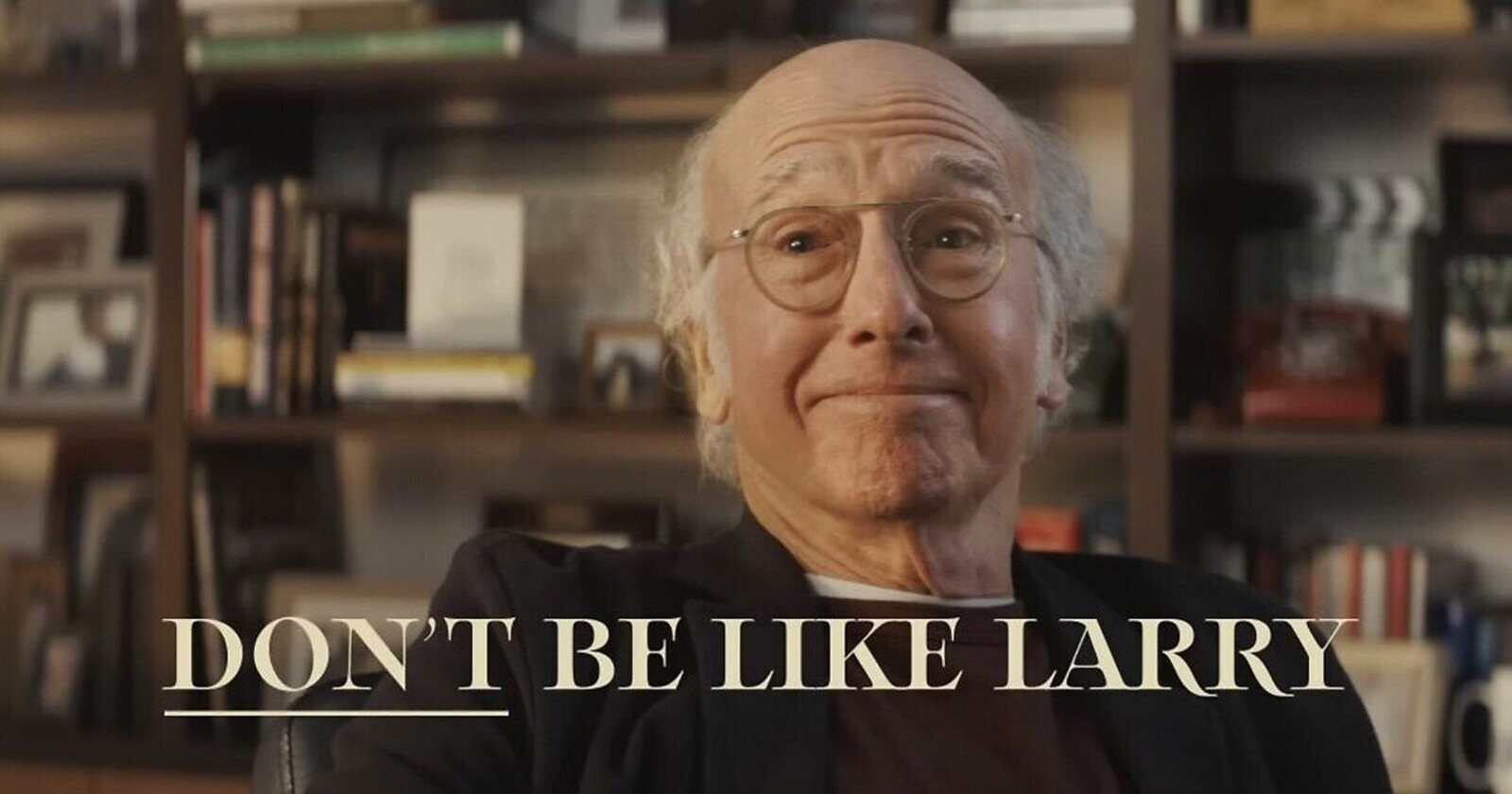
Larry David built a career out of saying the wrong thing at exactly the wrong time. In the case of FTX, however, the punchline landed after the commercial break. The comedian’s 2022 Super Bowl ad for the cryptocurrency exchange was designed around one very Larry David idea: throughout history, he plays the skeptic who rejects brilliant inventions, from the wheel to the light bulb, before finally dismissing FTX. The tagline warned viewers not to be like Larry.
Then FTX collapsed. Suddenly, being like Larry did not seem so terrible.
After the exchange imploded in November 2022, investors filed class-action litigation naming FTX founder Sam Bankman-Fried and a roster of celebrity promoters, including Larry David, Tom Brady, Gisele Bündchen, Stephen Curry, Shaquille O’Neal, Naomi Osaka, Kevin O’Leary, and others. The lawsuit argued that these high-profile figures helped market a platform that allegedly sold unregistered securities and attracted everyday customers who trusted familiar faces more than fine print.
The result was one of the strangest chapters in the overlap between celebrity advertising, cryptocurrency hype, and financial accountability. A comedian famous for skepticism became part of a legal debate about whether celebrities should be responsible when the products they promote turn disastrous.
What Happened With Larry David and FTX?
FTX was once one of the most recognizable cryptocurrency exchanges in the world. It had sports partnerships, arena branding, venture capital backing, and a marketing machine that seemed to be everywhere. During the crypto boom, FTX did not present itself as a fringe experiment. It looked polished, mainstream, and oddly unavoidable, like a tech company wearing a tuxedo to a casino.
Larry David entered the picture through FTX’s 2022 Super Bowl commercial. The ad was clever, expensive, and memorable. Instead of presenting David as a crypto expert, it used his well-known personality as the joke. He rejected major innovations across history, then rejected FTX too. The implication was simple: great ideas are often doubted at first, and you do not want to miss the next big thing.
That message aged about as gracefully as milk in a hot car. FTX filed for bankruptcy in November 2022, and Bankman-Fried later faced criminal charges connected to the misuse of customer funds. In March 2024, he was sentenced to 25 years in prison for orchestrating fraudulent schemes involving FTX and its related trading firm, Alameda Research.
For investors who lost money, the celebrity ads became more than embarrassing cultural artifacts. They became potential evidence that FTX used fame, trust, and humor to bring ordinary people into a risky financial ecosystem.
Why Was Larry David Named in the Lawsuit?
The class-action complaint argued that FTX relied on celebrity endorsers to increase credibility and attract retail customers. Larry David was not accused of running FTX, designing its financial structure, or personally managing customer funds. The claim was broader: celebrities allegedly helped promote a platform that investors say should not have been marketed the way it was.
In plain English, the lawsuit asked an uncomfortable question: when a celebrity helps sell a financial product, where does the joke end and legal responsibility begin?
That question matters because cryptocurrency promotions are not the same as sneaker ads or fast-food commercials. If an actor promotes a burger and the fries are soggy, nobody files a securities lawsuit. But when a celebrity promotes a platform where consumers can buy, sell, trade, or earn yield on digital assets, regulators and courts may look at whether investors were properly informed about risk, compensation, and the legal nature of the product.
The Bigger Legal Issue: Celebrity Endorsements and Crypto
The Larry David FTX lawsuit is part of a much larger reckoning over celebrity crypto promotions. During the boom years, digital asset companies paid famous athletes, actors, influencers, and business personalities to make crypto feel safe, trendy, and inevitable. The message was rarely “Please read a 90-page risk disclosure.” It was more like “Your favorite quarterback is in, so why are you still standing outside?”
That style of advertising works because celebrities transfer trust. Fans may not understand blockchain custody, yield-bearing accounts, liquidity risk, or whether a token might be considered a security. But they recognize Larry David. They recognize Tom Brady. They recognize a Super Bowl ad with a Hollywood budget. Recognition can become reassurance, even when reassurance is not deserved.
The Federal Trade Commission has long emphasized that endorsements must be truthful and that material connections between advertisers and endorsers should be clearly disclosed when they affect how consumers evaluate the message. The Securities and Exchange Commission has also taken action in crypto promotion cases where compensation was not properly disclosed. These standards are especially important when the product being promoted is financial, speculative, or difficult for the average consumer to evaluate.
Was Larry David Personally Responsible for FTX’s Collapse?
There is no public finding that Larry David knew FTX was misusing customer funds or that he intended to deceive investors. That distinction is important. Being in a bad advertisement is not the same thing as committing fraud. If it were, half of late-night infomercial history would be held in a secure facility.
In May 2025, a federal judge narrowed the FTX celebrity lawsuit. Most of the claims against celebrity promoters were dismissed because the plaintiffs had not shown that the endorsers knew FTX was fraudulent or that simply receiving payment proved a conspiracy. However, the court allowed some claims under Florida and Oklahoma securities laws to continue, especially theories related to helping sell unregistered securities.
That ruling changed the shape of the case. The most dramatic fraud-based claims became harder to pursue, but the broader question of promotional responsibility did not disappear. The legal debate moved from “Did celebrities knowingly join a fraud?” toward “Did they participate in the sale or promotion of financial products that were not properly registered?”
Why the Super Bowl Ad Became So Infamous
The FTX ad became infamous because it accidentally wrote its own parody. Larry David’s character doubted FTX, and the audience was told not to follow his example. After FTX collapsed, the ad looked less like a warning against skepticism and more like a public service announcement for skepticism.
That reversal is why the commercial remains such a fascinating case study in advertising risk. The creative concept was strong. The casting was perfect. The humor was sharp. But the product behind the ad failed spectacularly. No amount of clever copywriting can save a campaign when the company becomes a symbol of broken trust.
For brands, the lesson is brutal but useful: a brilliant ad can become a liability if the business cannot support the promise. For celebrities, the lesson is even clearer: when you attach your name to a financial product, you are not just selling attention. You may also be lending credibility, and credibility is much harder to refund.
What Larry David Said Afterward
Larry David later expressed regret about participating in the FTX commercial. He said he had asked people he trusted whether doing the ad was acceptable and was told it was. He also noted that part of his compensation was reportedly in crypto, meaning he lost money too. That detail gave the situation an almost absurd Larry David quality: he was sued by investors while also suggesting he had been financially burned by the same collapse.
Of course, losing money does not automatically remove legal exposure. But it does complicate the public narrative. David was not a crypto evangelist posting daily trading charts or promising moon-bound riches. He appeared in a mainstream advertisement built around his persona as a skeptic. Still, the lawsuit shows that courts and investors may view paid promotion through a wider lens than the performer intended.
How the FTX Collapse Changed Celebrity Crypto Marketing
Before FTX collapsed, celebrity crypto ads were everywhere. The industry wanted legitimacy, and celebrities provided it quickly. A familiar face could do what technical documentation could not: make crypto seem normal at the dinner table.
After the collapse, the mood changed. Crypto advertising became more cautious. Major brands thought harder about risk disclosures. Celebrities became more aware that paid promotions could follow them into court. And consumers became more skeptical of financial products wrapped in entertainment packaging.
The Larry David lawsuit helped reinforce a new rule of public life: if a celebrity says a financial platform is worth your attention, that is not research. It is advertising. Sometimes very funny advertising. Sometimes very expensive advertising. But still advertising.
What This Means for Investors
For everyday investors, the biggest takeaway is not that all celebrity endorsements are bad. The better takeaway is that celebrity endorsements are not evidence. A famous person may be paid, may not fully understand the product, or may rely on advisers who also failed to spot the risk.
Before using any cryptocurrency exchange or financial platform, consumers should ask practical questions: Who controls the assets? Is the company regulated? Are deposits protected? How does the business make money? Are returns promised or implied? What happens if withdrawals surge? If the answers are vague, complicated, or hidden behind celebrity sparkle, that is a red flag wearing sunglasses.
Crypto itself is not automatically fraudulent, but the industry has repeatedly shown that complexity can be used to confuse consumers. The FTX case stands as a reminder that a slick app, famous endorsers, and confident branding do not replace transparency, custody controls, and financial accountability.
What This Means for Celebrities and Influencers
For celebrities, the FTX fallout should become a permanent cautionary tale. Endorsement deals are no longer just reputation risks; in financial markets, they can become legal risks too. A celebrity does not need to understand every technical detail of a product, but they should understand enough to know what they are helping sell.
That means asking harder questions before signing the contract. Is the product regulated? Are users putting money at risk? Is compensation disclosed? Are claims in the ad accurate? Does the company have a history of complaints? Are lawyers reviewing the promotion only for the brand, or also for the endorser?
Influencers face the same issue on a smaller scale. A social media personality with a loyal audience can create real financial consequences by promoting a token, exchange, NFT project, or trading platform. “Not financial advice” in a caption is not magic legal armor. It is more like a paper umbrella in a thunderstorm: better than nothing, but not something you want to rely on.
Experiences and Lessons Related to the Larry David Crypto Lawsuit
One practical experience many viewers can relate to is the feeling of seeing a polished financial ad and assuming somebody responsible must have checked it. That assumption is powerful. When an ad appears during the Super Bowl, features a major celebrity, and looks professionally produced, people naturally imagine layers of lawyers, executives, auditors, and compliance experts standing behind it. The FTX story shows why that assumption can be dangerous. A commercial can be legally reviewed and still promote a business that later fails. An ad can be funny and still point viewers toward a risky decision.
Another experience is the social pressure created by hype. During the crypto boom, many people felt they were falling behind if they did not understand digital assets. Friends talked about coins. Influencers posted screenshots. Companies bought stadium naming rights. The mood was not just excitement; it was fear of missing out with a logo. Larry David’s FTX ad tapped directly into that psychology by suggesting that skeptics often miss history’s biggest innovations. That is effective marketing, but it can also push consumers to ignore their own uncertainty.
A third lesson comes from the difference between entertainment trust and financial trust. Fans trust Larry David to be funny. Sports fans trust Tom Brady to understand football. Viewers may trust Stephen Curry to make a jump shot under pressure. None of that means these celebrities are qualified to evaluate the internal risk controls of a crypto exchange. The brain, unfortunately, does not always separate those categories. Familiarity feels like credibility, and credibility can feel like safety.
There is also a lesson for writers, marketers, and publishers. The FTX campaign proves that clever messaging can become a long-term liability when it simplifies a complex product too aggressively. “Don’t miss out” may be a catchy slogan, but in finance it can sound like pressure. Good financial marketing should slow people down enough to understand risk, not speed them up until they click.
Finally, the Larry David situation teaches a useful habit: be suspicious when an investment opportunity is sold primarily through vibes. If the pitch depends on celebrity, urgency, humor, or cultural momentum more than clear explanations, step back. Ask boring questions. Boring questions are underrated. In fact, boring questions might be the real hero of the FTX saga. Larry David’s fictional skepticism was played as the joke. In hindsight, skepticism may have been the only character in the commercial with a decent investment strategy.
Conclusion
The lawsuit involving Larry David and FTX is not just a celebrity gossip story with a crypto wrapper. It is a modern case study in how fame, finance, humor, and legal responsibility collide. David’s role in the FTX Super Bowl commercial was memorable because it used skepticism as comedy. The collapse of FTX made that same skepticism look unexpectedly wise.
As the litigation evolved, courts narrowed many of the claims against celebrity promoters while allowing certain securities-law arguments to continue. That outcome reflects the complexity of the issue. Celebrities are not automatically responsible for every failure of a company they promote, but they also cannot assume that financial endorsements are risk-free.
For consumers, the lesson is simple: never outsource financial judgment to a famous face. For celebrities, the lesson is equally clear: before hawking cryptocurrency, understand what is being sold, how compensation is disclosed, and what could happen if the product collapses. In the world of crypto, the punchline can arrive years later, and sometimes it comes with a court filing.