The American consumer has been called many things: resilient, stubborn, overextended, optimistic, bargain-hunting, credit-card-wielding, and occasionally “the only thing holding the economy together with a latte in one hand and a buy-now-pay-later app in the other.” Yet the phrase that keeps showing up in economic conversations is much simpler: hard to slow down.
Despite higher prices, elevated borrowing costs, mixed confidence readings, and a household debt pile that looks like it has been eating its vegetables, consumer spending continues to move forward. Not always gracefully. Not always evenly. But forward. The big question is no longer whether shoppers feel pressure. They do. The better question is: what would finally make consumers pull back in a serious, economy-wide way?
The uncomfortable answer may be this: it might take a recession to slow down the consumer. Not a scary headline, not another gloomy survey, not a viral rant about grocery prices, and not even a higher credit-card bill. A true recessionbroad job losses, weaker income growth, tighter credit, and a sudden need to preserve cashmay be the force strong enough to turn “I’ll just cut back a little” into “we are not spending unless the roof is on fire.”
Why the Consumer Still Matters So Much
Consumer spending is the heartbeat of the U.S. economy. When households buy groceries, book flights, eat out, replace appliances, subscribe to streaming services, or upgrade a phone that was “perfectly fine” until the new camera appeared, they help drive business revenue, hiring, investment, and tax receipts.
That is why economists watch consumer behavior with the intensity of a teenager watching a phone battery hit 2%. If spending keeps rising, the economy can often keep growing even when other areas wobble. If households shut their wallets at the same time, the slowdown can spread quickly from stores and restaurants to warehouses, factories, delivery networks, and service providers.
Recent data shows why this debate is so alive. Personal consumption expenditures have continued to rise, retail sales remain positive, and the labor marketwhile cooler than the overheated post-pandemic periodhas not collapsed. Consumers may complain loudly, and often for good reason, but complaint is not the same thing as retreat. In economic terms, America is still shopping through the stress.
The Consumer Is Slowing, But Not Stopping
There is a difference between a consumer who is tired and a consumer who is done. Right now, the U.S. consumer looks tired. Households are more selective. They compare prices. They trade down from premium brands. They delay big purchases. They look for promotions. They may still buy the shoes, but now they wait for the coupon code like it is a national treasure map.
Still, the broad spending machine keeps running. Retail and food services sales have continued to post gains. Personal consumption remains a major contributor to overall economic activity. The shift is not from spending to no spending; it is from free-spending confidence to strategic spending survival.
This matters for businesses. A retailer that assumes consumers are “fine” may miss the pressure building under the surface. A retailer that assumes consumers are “dead” may miss the fact that people are still buyingjust differently. The winners in this environment are not always the cheapest companies. They are the ones that offer clear value, convenience, trust, and enough emotional reward to make a purchase feel justified.
Inflation Changed the Shopping Math
Inflation does not merely raise prices. It changes how people think. A household that used to toss snacks into a cart without blinking may now scan the shelf like a detective in a grocery-store crime drama. A family that once booked a vacation first and worried about the budget later may now reverse the order. A diner may still go out, but skip the appetizer, split dessert, or choose the restaurant with the strongest “kids eat free” energy.
Recent inflation readings show that price pressure has not fully gone away. Food, energy, shelter, transportation, insurance, and services have kept budgets tight. Even when inflation slows from its peak, prices do not usually go back to where they were. That is the part many consumers feel most sharply. A slower rate of increase is not the same as relief at the checkout counter.
This is why the consumer can sound gloomy while still spending. People may dislike the price level but continue buying because many expenses are not optional. Groceries, rent, utilities, school supplies, gas, medical care, and car repairs are not lifestyle splurges. They are the economic equivalent of “you have to deal with this now.”
Jobs Are the Real Spending Engine
If inflation is the villain in the consumer story, employment is the superhero wearing sensible shoes. As long as people have jobs and paychecks, spending can remain surprisingly durable. A household may cut back on extras, but steady income keeps the basics moving and leaves room for occasional discretionary purchases.
That is why a recession matters so much. A recession is not just a bad mood. The National Bureau of Economic Research describes recessions as broad, significant declines in economic activity that last more than a few months. In plain English: the trouble spreads, deepens, and sticks around.
When job losses rise, consumer psychology changes fast. The same family that was willing to finance furniture in January may decide in March that the old couch has “character.” The same worker who planned a weekend trip may cancel after hearing about layoffs at the office. Fear can become contagious, and unlike a bad office cold, it spreads through budgets.
That is why the labor market is the key line of defense. Consumers can tolerate higher prices longer than many expect when income is still arriving. But if unemployment rises materially and wage growth weakens, spending can turn from resilient to defensive very quickly.
Credit Has Helped Consumers Keep Going
Credit is another reason spending has stayed stronger than many forecasts expected. Credit cards, auto loans, personal loans, and buy-now-pay-later plans allow households to smooth expenses over time. Used carefully, credit can be a useful bridge. Used under pressure, it can become a very expensive treadmill with mood lighting.
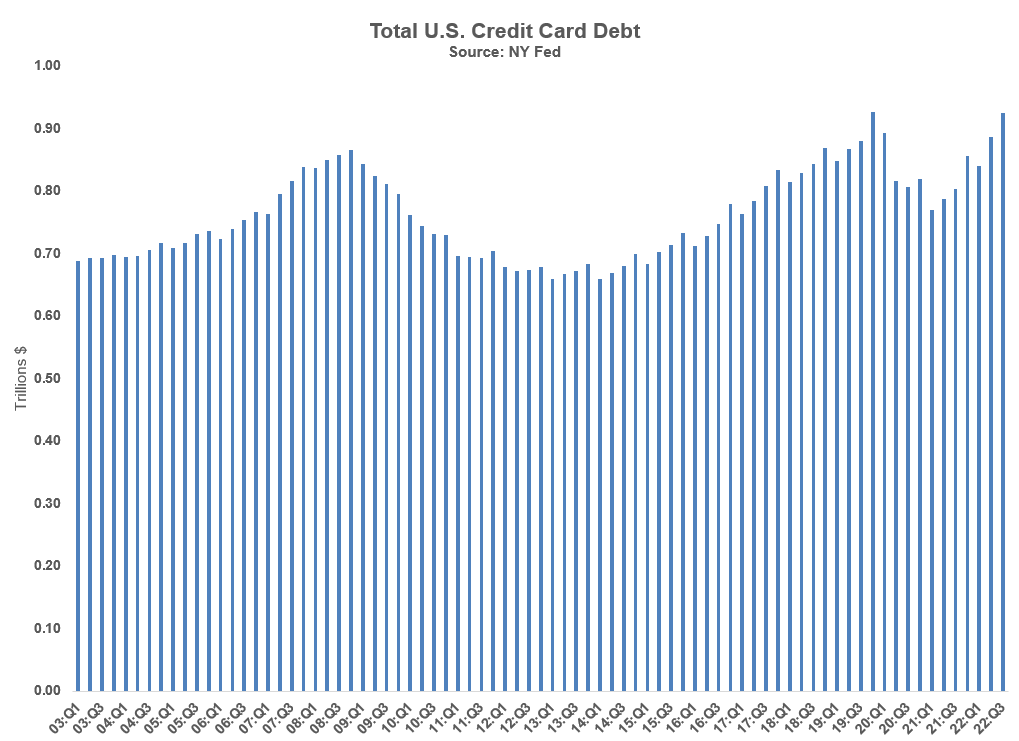
Consumer credit has continued to expand, and revolving credit remains an important signal because it often reflects credit-card borrowing. At the same time, household debt has climbed, and more consumers are carrying balances for longer. That does not mean every household is in trouble. Many high-income households still have strong balance sheets, rising home equity, investments, and savings buffers. But the average can hide the squeeze on younger, lower-income, and credit-dependent consumers.
Credit can delay a consumer slowdown. It cannot prevent one forever. If rates stay high and balances grow, interest costs eat into future spending power. The consumer can keep dancing, but the DJ is charging 21% APR.
The Split-Screen Consumer Economy
One reason the consumer seems confusing is that there is no single consumer. There are many Americas shopping at once.
Higher-income households are still spending
Households with strong incomes, home equity, retirement accounts, or investment gains may continue spending on travel, dining, home upgrades, and services. They feel inflation, but they often have more room to absorb it. For them, higher prices are annoying rather than budget-breaking.
Middle-income households are editing the cart
The middle-income consumer is often in adjustment mode. They may keep spending but become more disciplined. They look for sales, delay big-ticket purchases, downgrade brands, or reduce frequency. Instead of eating out twice a week, they go once. Instead of buying a new car, they repair the old one and give it a pep talk.
Lower-income households feel the squeeze first
Lower-income consumers have less flexibility because essentials consume a larger share of income. When rent, utilities, food, gas, and insurance rise, there is less room to maneuver. These households may be the first to cut discretionary spending and the first to show stress through delinquencies or reduced purchase volume.
This split-screen economy explains why some companies report strong demand while others warn about trade-down behavior. Luxury travel can remain hot while discount grocery grows. Restaurants can see traffic pressure while warehouse clubs gain members. The consumer is not disappearing; the consumer is rearranging priorities.
Sentiment Looks Weak, But Spending Has Been Stronger Than Feelings
Consumer sentiment surveys have been soft, and that should not be ignored. When people say they feel bad about the economy, they are usually telling the truth about their lived experience. Prices are high. Housing affordability is difficult. Insurance costs are painful. Debt is expensive. The vibe, as economists definitely say at central bank conferences, is not immaculate.
Yet sentiment and spending do not always move together. Consumers can feel pessimistic and still spend because life keeps happening. Children grow out of shoes. Cars need repairs. Birthdays arrive. Friends get married. Refrigerators break at the worst possible moment, as if they have access to your calendar.
This gap between confidence and behavior is one of the defining features of the current economy. People may not feel prosperous, but many are still employed. They may dislike prices, but they still need goods and services. They may be anxious, but anxiety does not automatically cancel every purchase.
Why a Mild Slowdown May Not Be Enough
A mild slowdown can change the composition of spending without crushing the total. Consumers may spend less on goods and more on services. They may choose discount stores over specialty retailers. They may delay furniture but keep spending on travel. They may reduce restaurant visits but increase grocery spending.
Businesses often interpret these changes as weakness, but from a macroeconomic view, they can be more like rotation. Money moves around rather than vanishing. That is why the economy can absorb pockets of pain without falling into recession.
To truly slow the consumer, several forces usually need to hit together: weaker job growth, rising unemployment, tighter lending standards, lower asset values, reduced confidence, and depleted savings. One of these pressures can sting. All of them together can change behavior at scale.
What a Recession Would Change
If a recession arrives, the consumer story would likely change in five major ways.
1. Job security would become the main concern
When layoffs rise, even people who keep their jobs become more cautious. Households build cash, postpone large purchases, and reduce optional spending. Fear does not need to be universal to affect behavior. It only needs to be plausible.
2. Credit would become harder and less attractive
In a downturn, lenders may tighten standards. Consumers with weaker credit profiles may lose access to affordable borrowing. Others may voluntarily avoid new debt because the future feels uncertain.
3. Big-ticket purchases would suffer
Cars, furniture, appliances, vacations, electronics, and home renovations are easier to delay than groceries or rent. These categories often feel recession pressure earlier and more visibly.
4. Discount and value brands would gain power
Consumers do not stop needing things. They search for cheaper ways to meet those needs. Private labels, warehouse clubs, resale platforms, repair services, and budget-friendly retailers can gain share.
5. Emotional spending would become more selective
People still seek comfort in hard times, but the form changes. A luxury vacation may become a local day trip. A fine-dining reservation may become takeout. A full home remodel may become a $40 paint project and a weekend of heroic optimism.
What Businesses Should Learn From the Resilient Consumer
The lesson is not “consumers are invincible.” They are not. The lesson is that consumers adapt before they surrender. Businesses should watch behavior more carefully than headlines.
Companies that rely on premium pricing need to prove value clearly. Retailers should monitor basket size, repeat purchases, traffic quality, and trade-down patterns. Restaurants should consider menu engineering, loyalty programs, and flexible price points. Service providers should emphasize reliability and necessity. Brands that make customers feel smartnot merely temptedare better positioned.
In a pressured economy, the winning message is not always “buy more.” Often, it is “this purchase is worth it.” That small shift can make a large difference.
What Households Can Do Before the Economy Forces the Issue
For consumers, the goal is not to panic. Panic is a terrible financial planner. The goal is to prepare while income is still steady. That means reviewing recurring subscriptions, comparing insurance, building or rebuilding emergency savings, paying down high-interest credit-card debt where possible, and delaying nonessential purchases that would create stress later.
Households should also separate temporary wants from durable needs. A good purchase solves a real problem without damaging future flexibility. A risky purchase creates a monthly payment that looks small until life throws a wrench, a dental bill, and a car repair into the same week.
The consumer may be strong, but strength is not the same as unlimited capacity. The smartest households are not necessarily the ones that spend the least. They are the ones that keep options open.
Experiences and Real-World Lessons: Why Consumers Keep Spending Until They Cannot
Anyone who has watched household spending up close knows that consumers rarely change behavior all at once. They adjust in layers. First, they complain. Then they compare prices. Then they switch brands. Then they cut frequency. Then, only when pressure becomes serious, they cancel the purchase entirely.
Think about a family dealing with higher grocery bills. At first, they may keep the same shopping routine and simply grumble at the receipt. Next, they begin choosing store brands. Then they plan meals around discounts. Then they reduce restaurant meals because eating out suddenly feels like inviting a tiny accountant to sit at the table and judge everyone. Only if income falls or debt becomes too heavy do they make deep cuts across the board.
The same pattern appears in travel. Many households do not instantly cancel vacations because airfare is high. They shorten the trip, choose a cheaper hotel, fly at inconvenient times, or visit family instead of a resort. The spending changes shape before it disappears. This is why travel demand can remain surprisingly strong even when consumers say the economy feels difficult.
In retail, the experience is similar. A shopper may still buy clothes but wait for seasonal sales. A parent may still buy school supplies but skip the premium backpack. A homeowner may still improve the house but choose a small weekend project instead of a contractor-led renovation. The consumer’s mindset shifts from “Can I afford this?” to “Can I justify this?” That difference is subtle, but it drives billions of dollars in spending decisions.
From a business perspective, this creates both risk and opportunity. Companies that ignore the pressure may lose customers. But companies that respond with smart value can build loyalty. For example, a grocery chain that offers useful digital coupons, clear unit pricing, and reliable private-label quality can become a hero in a high-price environment. A restaurant that offers a strong lunch special may keep customers who would otherwise stop dining out. A retailer with flexible return policies and honest promotions may win trust when shoppers are more careful.
From a household perspective, the biggest lesson is that small leaks matter. A few subscriptions, high-interest balances, impulse purchases, and convenience fees can quietly weaken a budget. In good times, those leaks feel harmless. In a recession, they become loud. The best time to fix them is before the income shock arrives.
This is why the idea that “it might take a recession to slow down the consumer” rings true. Consumers are not ignoring reality. They are managing it. They keep spending because life requires spending, because habits are sticky, because credit extends the runway, and because employment keeps confidence alive even when surveys look gloomy. But if a recession damages jobs and income, the adjustment would likely become faster, broader, and more defensive.
The consumer is not a machine. The consumer is a household trying to live, work, raise kids, enjoy weekends, fix cars, celebrate birthdays, and occasionally buy something unnecessary because life cannot be all utility bills and canned beans. That human reality is why spending can remain resilient for so long. It is also why, when the labor market finally cracks, the pullback can be powerful.
Conclusion: The Consumer Is Resilient, Not Bulletproof
The U.S. consumer has proven difficult to slow because spending is supported by jobs, income, credit access, household adaptation, and the simple fact that many purchases are necessary. Inflation has hurt. Higher rates have hurt. Weak confidence has flashed warning signs. Debt stress is real. Yet the consumer has continued to move forward, even if the stride is shorter and the shopping cart is more carefully edited.
That is why a recession may be the event that finally changes the pattern. Not because consumers suddenly become rational after years of chaos, but because recessions attack the foundation of spending: employment, income, credit, and confidence. Until those weaken together, the consumer may bend without breaking.
For businesses, the message is clear: do not underestimate the consumer, but do not take them for granted. For households, the message is equally clear: resilience is easier when your budget has breathing room. The American consumer may still be standing, but even the strongest shopper eventually notices when the receipt, the interest rate, and the layoff rumor all walk into the room together.