Learning how to say love in Thai is a little like opening a beautifully wrapped gift: it looks simple, but there are layers. The most basic Thai word for love is รัก, pronounced rák. Add a pronoun here, a polite particle there, and suddenly you have a phrase that can sound formal, sweet, casual, poetic, or awkwardly dramaticdepending on how you say it.
That is why “I love you” in Thai is not just a direct word-for-word translation. Thai is a tonal language, which means pitch matters. It also uses pronouns and sentence-ending particles in ways that reflect politeness, gender, relationship closeness, and social context. In plain English: you cannot just toss words into a blender and hope romance comes out. Well, you can, but the blender may produce linguistic soup.
This guide explains how to say love in Thai in five practical steps, with Thai script, romanized pronunciation, real examples, cultural notes, and beginner-friendly tips. Whether you are learning Thai for travel, friendship, family, a relationship, music, dramas, or pure curiosity, this article will help you say love naturally and respectfully.
Step 1: Learn the Thai Word for Love: รัก (Rák)
The main Thai word for “love” is:
รัก rák love; to love
In Thai, รัก can work as both a verb and part of a noun phrase. For example, it can mean “to love” in a sentence like “I love you,” and it appears in words related to love, affection, or beloved people. A common noun form is:
ความรัก khwaam rák love, affection, the feeling of love
Think of รัก as the emotional engine of the phrase. It is short, powerful, and easy to remember. The trick is pronunciation. The word rák has a short vowel sound and a high tone in common romanization systems. It should not be stretched into “raaak” like you are singing the final note of a power ballad. Keep it short and crisp.
How to pronounce รัก
The closest beginner-friendly pronunciation is “ruk” or “rak”, but neither English spelling is perfect. The Thai vowel is short, and the final consonant stops sharply. Say it quickly, with energy, and avoid adding an extra “uh” at the end. It should not become “rak-uh.” Thai words often end cleaner than English speakers expect.
Example:
รัก rák love
Practice it three times: rák, rák, rák. Congratulations, you have now said “love” in Thai three times and possibly made your room 12% more romantic.
Step 2: Say “I Love You” in Thai
The most standard way to say “I love you” in Thai is:
ฉันรักคุณ chǎn rák khun I love you
This phrase is widely understood. However, Thai pronouns are more flexible than English pronouns, and the best version depends on who is speaking, who is listening, and how formal or close the relationship is.
Common versions of “I love you” in Thai
ผมรักคุณ phǒm rák khun I love you
This version is commonly used by male speakers in polite or standard speech. ผม means “I” for many male speakers, รัก means “love,” and คุณ means “you.”
ฉันรักคุณ chǎn rák khun I love you
This version uses ฉัน, a common “I” pronoun. In many learning materials, it is presented as a female speaker’s version, but in real Thai, pronoun use can vary by context, personality, region, formality, and relationship.
รักคุณ rák khun Love you / I love you
Thai often drops pronouns when the meaning is clear. So instead of saying the full “I love you,” someone may simply say รักคุณ. This sounds less textbook and more natural in some situations.
รักนะ rák ná Love you, okay? / Love you
This is softer and more affectionate. The particle นะ adds warmth, tenderness, or gentle emphasis. It is often used between people who are close.
What does คุณ (khun) mean?
คุณ means “you,” but it can also function like a polite title, similar to “Mr.,” “Ms.,” or a respectful way to address someone. In a close relationship, Thai speakers may use a nickname, name, kinship term, or no pronoun at all instead of คุณ.
For beginners, ผมรักคุณ or ฉันรักคุณ is safe and understandable. But if you want to sound more natural, learn how Thai speakers actually soften, shorten, or personalize the phrase.
Step 3: Add Politeness with ครับ (Khrap) or ค่ะ (Kha)
Thai is famous for polite sentence-ending particles. These small words do not always translate directly into English, but they affect tone, respect, and social smoothness. They are the verbal equivalent of not slamming a door in someone’s face.
The two most common polite particles are:
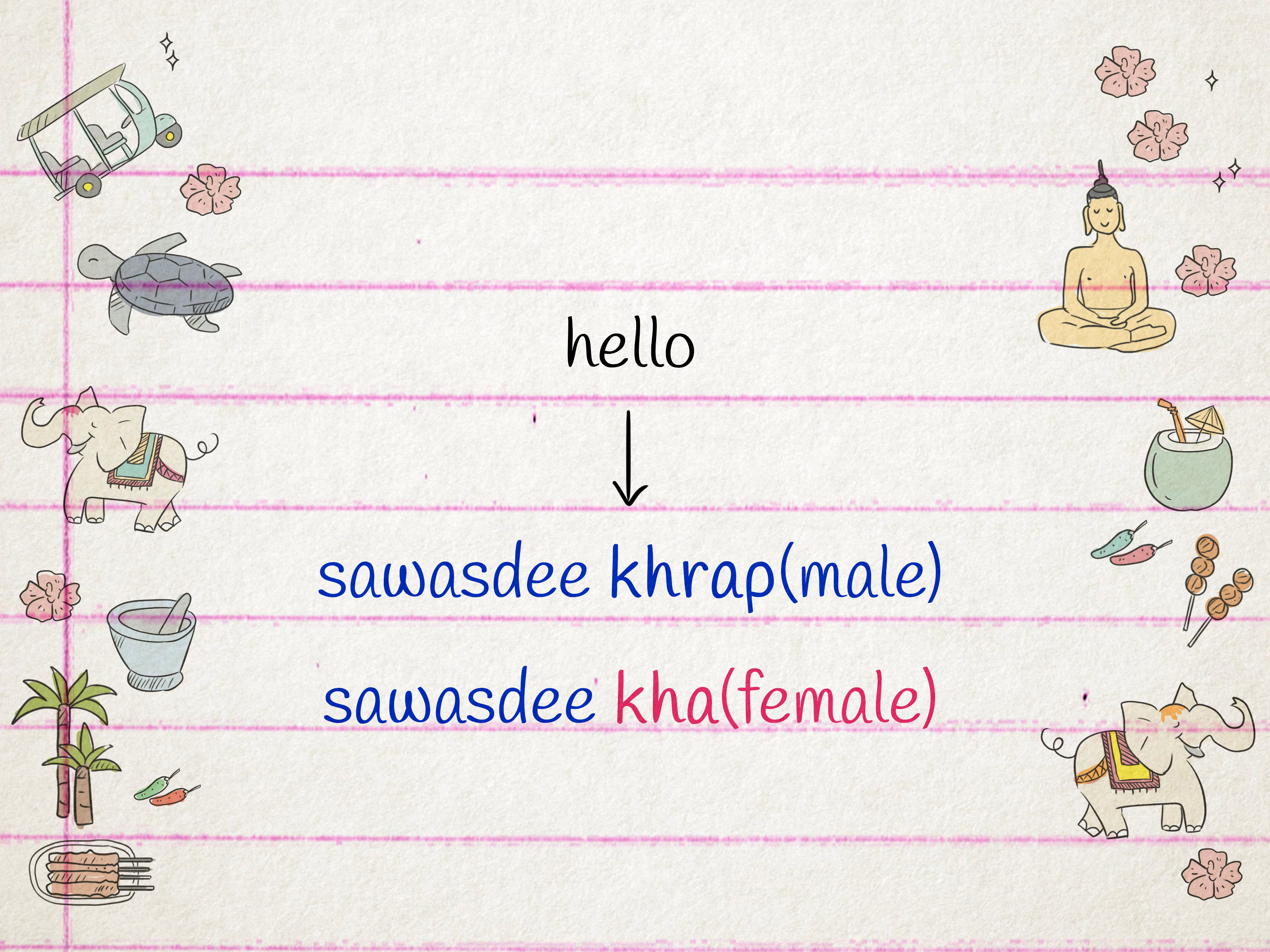
ครับ khrap polite particle often used by male speakers
ค่ะ kha polite particle often used by female speakers
You can add them to love phrases to make the sentence more polite or gentle:
ผมรักคุณครับ phǒm rák khun khrap I love you.
ฉันรักคุณค่ะ chǎn rák khun kha I love you.
These versions sound respectful and clear. They may feel slightly formal depending on the relationship, but they are excellent for learners because they show care and politeness.
Should you always add khrap or kha?
Not always. In casual, intimate, or emotional moments, Thai speakers may skip polite particles or use softer particles like นะ. For example:
รักนะ rák ná Love you.
This phrase can feel warmer than a very formal sentence. Imagine saying “I love you, respectfully” during a heartfelt scene. It is not wrong, but it may sound like you are confessing love and applying for a government permit at the same time.
A beginner-friendly rule is this: use ครับ or ค่ะ when you want to sound polite, especially with someone you do not know deeply. Use นะ when the relationship is closer and the tone is affectionate.
Step 4: Choose the Right Love Phrase for the Situation
English speakers use “love” for everything: people, pets, pizza, shoes, movies, sleep, and sometimes a really good office chair. Thai can be more selective. For people and deep emotional bonds, รัก is appropriate. For objects, foods, hobbies, or casual preferences, Thai speakers often use ชอบ (châwp), meaning “like.”
Love for people
ฉันรักแม่ chǎn rák mâe I love Mom.
ผมรักครอบครัว phǒm rák khrâwp-khrua I love my family.
รักเธอ rák thoe Love you / I love you.
เธอ can mean “you” in a more familiar or intimate way, but it depends heavily on context. Do not use it randomly with strangers unless your hobby is creating confused facial expressions.
Love for things, food, and hobbies
For objects or activities, ชอบ is usually more natural:
ฉันชอบอาหารไทย chǎn châwp aa-hǎan Thai I like Thai food.
ผมชอบเพลงนี้มาก phǒm châwp phleeng níi mâak I really like this song.
If you say you รัก noodles, people may understand you, but it can sound stronger or more emotional than intended. Unless those noodles helped you through a difficult semester, ชอบมาก (“really like”) is probably enough.
Useful Thai love phrases
รักมาก rák mâak love very much
คิดถึง khít-thǔeng miss; think of someone
ชอบคุณ châwp khun I like you
คุณน่ารัก khun nâa-rák You are cute / lovely
ที่รัก thîi-rák darling; beloved
Notice the phrase น่ารัก (nâa-rák). It literally combines a structure meaning “worthy of” or “pleasant to” with รัก, and it is commonly used to mean “cute,” “adorable,” or “lovely.” You will hear it often in Thailand, especially when talking about people, pets, outfits, gestures, or anything that triggers the universal human sound: “aww.”
Step 5: Practice Tone, Context, and Confidence
Thai is tonal, so pronunciation matters. A word can change meaning when the tone changes. That does not mean you need to panic every time you open your mouth. It simply means you should practice with audio, repeat slowly, and pay attention to how native speakers say the phrase.
Start with these three beginner phrases:
รัก rák love
รักนะ rák ná love you
ผมรักคุณครับ / ฉันรักคุณค่ะ phǒm rák khun khrap / chǎn rák khun kha I love you
Practice method for beginners
First, say only รัก. Keep it short. Then add คุณ: รักคุณ. Finally, add the full sentence: ผมรักคุณครับ or ฉันรักคุณค่ะ. Build the phrase like stacking blocks. If the tower falls, no problemstart again. Language learning is basically elegant tower repair.
Next, practice with feeling, not just sound. Thai communication often values softness, politeness, and emotional timing. Saying the words correctly is good. Saying them with the right tone and situation is better.
Common Mistakes When Saying Love in Thai
Mistake 1: Using “love” for everything
In American English, “I love this coffee” sounds normal. In Thai, using รัก for objects can feel too strong. Use ชอบ for likes and preferences, especially with food, places, songs, and hobbies.
Mistake 2: Ignoring polite particles
Particles like ครับ, ค่ะ, and นะ shape the emotional temperature of a sentence. Without them, the phrase may still be understandable, but it can sound less natural or less polite in some situations.
Mistake 3: Relying only on romanization
Romanized Thai is helpful for beginners, but it is not perfect. Different websites may write the same Thai sound in different ways: khrap, krub, krap, or khap. The Thai script stays consistent, so learning the script little by little will help you pronounce words more accurately.
Mistake 4: Forgetting relationship context
Thai pronouns can change based on age, closeness, politeness, and social role. A phrase that sounds fine in a textbook might sound stiff between close friends. When possible, listen to native speakers and notice how they address each other.
Mini Phrase Guide: How to Say Love in Thai Naturally
Love: รัก rák
Love you: รักนะ rák ná
I love you: ฉันรักคุณ chǎn rák khun
I love you said by many male speakers: ผมรักคุณครับ phǒm rák khun khrap
I love you with polite feminine ending: ฉันรักคุณค่ะ chǎn rák khun kha
I love you very much: รักคุณมาก rák khun mâak
I miss you: คิดถึงคุณ khít-thǔeng khun
You are cute: คุณน่ารัก khun nâa-rák
Darling: ที่รัก thîi-rák
Experience Notes: What It Feels Like to Learn “Love” in Thai
One of the most interesting experiences when learning how to say love in Thai is realizing that a tiny phrase can carry a lot of social information. In English, “I love you” is grammatically simple. The speaker is “I,” the feeling is “love,” and the listener is “you.” Done. English walks into the room wearing sneakers. Thai walks in wearing carefully chosen shoes, checks the relationship, adjusts the tone, and then speaks.
For many learners, the first surprise is that ผมรักคุณ or ฉันรักคุณ may be correct but not always the most natural phrase in every close relationship. Textbooks often teach full sentences because they are clear and easy to analyze. Real life, however, loves shortcuts. A Thai speaker may simply say รักนะ, and that small phrase can feel warmer than the full formal version. It is like the difference between “I sincerely express my affection for you” and “Love you.” Both communicate emotion, but one sounds like it arrived wearing a necktie.
Another memorable part of learning Thai love phrases is discovering how much emotional flavor particles add. The word นะ can make รัก feel gentle and affectionate. The particles ครับ and ค่ะ add politeness, but they also change the feeling of the sentence. When beginners first learn Thai, they sometimes attach polite particles to everything, as if every sentence needs a safety helmet. That is not a terrible habit at first because it helps you sound respectful. Over time, though, you begin to hear when a phrase should be polished, playful, soft, or casual.
Pronunciation is another adventure. The word รัก looks short, and it is short, but getting it to sound natural takes practice. English speakers may over-pronounce the “r,” stretch the vowel, or add an extra sound at the end. A better approach is to listen carefully, repeat gently, and avoid forcing it. Thai pronunciation rewards patience. You do not need to sound perfect on day one. You just need to sound willing to learn.
Cultural context also matters. Thai people may express affection through actions, care, food, helpfulness, teasing, or small daily gestures, not only through direct declarations. This does not mean Thai speakers never say “I love you.” They do. But the emotional weight, timing, and relationship context can feel different from American English. Sometimes a simple คิดถึงนะ“I miss you”may feel deeply affectionate. Sometimes กินข้าวหรือยัง, meaning “Have you eaten yet?” can carry care in a very practical, human way. Love is not always fireworks. Sometimes love is making sure someone has dinner.
If you are learning Thai because of someone special, the best experience is not memorizing one perfect sentence. It is learning how that person uses language. Do they prefer polite words? Nicknames? Playful particles? Do they laugh when you pronounce something wrong but appreciate the effort? That is part of the charm. Language learning is not only about accuracy; it is about connection.
The safest beginner path is to start with รัก, then learn รักนะ, then practice the fuller forms ผมรักคุณครับ or ฉันรักคุณค่ะ. After that, listen to real Thai conversations, songs, dramas, and native speakers. Notice when people use รัก, when they use ชอบ, and when they say nothing directly but show care through action. That is when the phrase stops being a vocabulary item and becomes part of real communication.
Conclusion
To say love in Thai, start with the essential word รัก (rák). From there, you can say ผมรักคุณครับ, ฉันรักคุณค่ะ, รักคุณ, or the softer and very useful รักนะ. The best choice depends on politeness, closeness, tone, and context.
Remember that Thai is not only about translating words. It is about choosing the right level of warmth and respect. Practice pronunciation, learn the particles, avoid using รัก for every object you like, and pay attention to how native speakers express affection naturally. Do that, and your Thai love phrases will sound much less like a phrasebook and much more like real human speech.
Note: Thai pronunciation and pronoun use can vary by speaker, region, relationship, and level of formality. Use these examples as a practical beginner guide, and practice with native audio whenever possible.