Note: This article is written in original, publication-ready American English and is designed for SEO use without inserted source links inside the body content.
If dinner had a personality, this roasted veggies and tempeh bowl would be the reliable friend who shows up on time, brings snacks, and somehow makes vegetables exciting. It is colorful, hearty, plant-based, meal-prep friendly, and flexible enough to forgive you when you use broccoli instead of Brussels sprouts because that is what the fridge had left to offer.
The beauty of a roasted veggies and tempeh bowl recipe is that it checks nearly every weeknight dinner box. You get crispy-edged vegetables, chewy golden tempeh, a satisfying grain base, and a creamy dressing that ties the whole situation together like a tiny edible peace treaty. It is the kind of bowl that looks like it came from a trendy café, but you can make it at home while wearing socks that do not match. Victory tastes roasted.
This guide walks you through how to make the best roasted veggies and tempeh bowl with simple ingredients, smart roasting techniques, flavor-packed marinades, and easy substitutions. Whether you are vegan, vegetarian, plant-curious, or simply trying to make dinner without ordering delivery again, this bowl has your back.
Why This Roasted Veggies and Tempeh Bowl Works
A great bowl is not just a pile of healthy things sitting together awkwardly. It needs contrast. This recipe works because every part brings something different to the party.
The roasted vegetables provide sweetness, color, and caramelized edges. The tempeh brings plant-based protein, nutty flavor, and a satisfying bite. The grain base makes the bowl filling. The dressing adds creaminess, brightness, and a little “Oh wow, I did cook something impressive today” energy.
Tempeh is made from fermented soybeans pressed into a firm cake. Compared with tofu, it has a denser texture and a naturally nutty, earthy flavor. Some people love that flavor immediately. Others need a marinade to become emotionally available to tempeh. This recipe uses a savory-sweet marinade to make tempeh golden, flavorful, and slightly crisp around the edges.
Ingredients for the Best Roasted Veggies and Tempeh Bowl
This recipe serves four people, or two very hungry people plus tomorrow’s lunch. Future you will be delighted.
For the Bowl
- 8 ounces tempeh, cut into 1-inch cubes or thin triangles
- 1 medium sweet potato, peeled if desired and cut into small cubes
- 2 cups broccoli florets
- 1 red bell pepper, sliced
- 1 zucchini, cut into half-moons
- 1 small red onion, cut into wedges
- 2 tablespoons olive oil or avocado oil
- 1 teaspoon smoked paprika
- 1 teaspoon garlic powder
- 1/2 teaspoon ground cumin
- 1/2 teaspoon kosher salt, plus more to taste
- 1/4 teaspoon black pepper
- 3 cups cooked quinoa, brown rice, farro, or cauliflower rice
- 2 cups baby spinach, arugula, or chopped kale
- Optional toppings: sesame seeds, pumpkin seeds, sliced avocado, fresh cilantro, parsley, or scallions
For the Tempeh Marinade
- 2 tablespoons low-sodium soy sauce or tamari
- 1 tablespoon maple syrup
- 1 tablespoon rice vinegar or apple cider vinegar
- 1 tablespoon olive oil
- 1 teaspoon Dijon mustard
- 1 clove garlic, finely grated or minced
- 1/2 teaspoon grated fresh ginger, optional but highly recommended
- 1 teaspoon sesame oil, optional for deeper flavor
For the Creamy Tahini Lemon Dressing
- 1/4 cup tahini
- 2 tablespoons fresh lemon juice
- 1 tablespoon maple syrup
- 1 small garlic clove, grated
- 2 to 4 tablespoons warm water, as needed
- Salt and black pepper to taste
Step-by-Step Instructions
Step 1: Preheat the Oven
Preheat your oven to 425°F. This temperature is the sweet spot for roasted vegetables because it is hot enough to encourage browning and caramelization without turning everything into tiny vegetable fossils.
For extra-crispy vegetables, place a large rimmed sheet pan in the oven while it preheats. A hot pan helps moisture evaporate faster, which means better browning. In normal human language: fewer sad steamed vegetables, more golden deliciousness.
Step 2: Steam the Tempeh, If You Want a Milder Flavor
This step is optional, but it is useful if you are new to tempeh or find it slightly bitter. Place the tempeh in a steamer basket over simmering water for 8 to 10 minutes, then pat it dry before marinating.
Steaming softens the tempeh and helps it absorb marinade more easily. Think of it as giving the tempeh a quick spa treatment before sending it into the oven to become dinner.
Step 3: Marinate the Tempeh
In a medium bowl, whisk together soy sauce or tamari, maple syrup, vinegar, olive oil, Dijon mustard, garlic, ginger, and sesame oil if using. Add the tempeh and toss gently until coated.
Let it sit for at least 15 minutes. If you have 30 minutes, even better. If you planned ahead and can marinate it overnight, congratulations, you are the kind of person meal-prep videos warned us about.
Step 4: Chop the Vegetables Evenly
Cut the vegetables into similar-sized pieces so they cook at the same pace. Dense vegetables like sweet potatoes should be cut smaller than tender vegetables like zucchini or bell peppers. A sweet potato cube the size of a golf ball will not cook at the same speed as a zucchini slice. That is not a recipe problem; that is vegetable physics.
For the best texture, keep vegetables in a single layer on the sheet pan. Crowding the pan traps steam and makes vegetables soft instead of roasted. If your pan looks like a vegetable traffic jam, use two pans.
Step 5: Season and Roast
In a large bowl, toss sweet potato, broccoli, bell pepper, zucchini, and onion with olive oil, smoked paprika, garlic powder, cumin, salt, and pepper.
Carefully remove the hot sheet pan from the oven and spread the vegetables across it in a single layer. Add the marinated tempeh, leaving a little space between the pieces. Roast for 25 to 30 minutes, flipping halfway through, until the vegetables are tender and browned and the tempeh is golden at the edges.
If the zucchini cooks faster than everything else, do not panic. Next time, add softer vegetables 8 to 10 minutes after the sweet potato and broccoli. Cooking is mostly learning how not to panic around hot things.
Step 6: Make the Dressing
While the vegetables roast, whisk tahini, lemon juice, maple syrup, garlic, salt, and pepper in a small bowl. Add warm water one tablespoon at a time until the dressing becomes smooth and pourable.
At first, tahini may thicken and look like it has made poor life choices. Keep whisking and adding water. It will relax into a creamy dressing. We all need encouragement sometimes.
Step 7: Assemble the Bowls
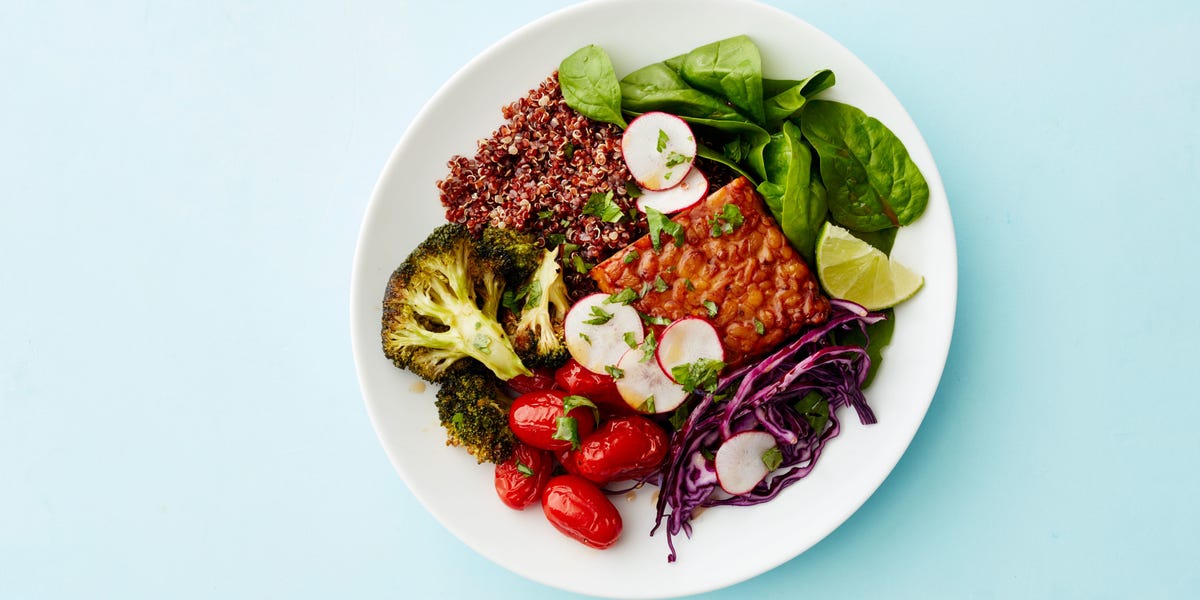
Divide cooked quinoa, brown rice, farro, or cauliflower rice among four bowls. Add a handful of greens to each bowl. Top with roasted vegetables and tempeh. Drizzle generously with the tahini lemon dressing.
Finish with sesame seeds, pumpkin seeds, herbs, avocado, or scallions. Serve warm, room temperature, or chilled. This vegan tempeh bowl is not fussy, which is exactly what dinner should be after a long day.
Recipe Card: Roasted Veggies and Tempeh Bowl
Prep Time, Cook Time, and Servings
- Prep time: 20 minutes
- Cook time: 30 minutes
- Total time: 50 minutes
- Servings: 4 bowls
- Diet style: Vegan, vegetarian, dairy-free; gluten-free if using tamari and a gluten-free grain
Quick Directions
- Preheat oven to 425°F and place a sheet pan inside to heat.
- Steam tempeh for 8 to 10 minutes if desired, then pat dry.
- Whisk marinade ingredients and toss with tempeh.
- Chop vegetables into even pieces and toss with oil and spices.
- Spread vegetables and tempeh on a hot sheet pan in a single layer.
- Roast 25 to 30 minutes, flipping halfway through.
- Whisk tahini dressing until creamy.
- Assemble bowls with grains, greens, roasted vegetables, tempeh, dressing, and toppings.
Best Vegetables for a Roasted Tempeh Bowl
The best vegetables for this bowl are the ones that roast well and bring different textures. Sweet potatoes give sweetness and body. Broccoli adds crisp edges and a pleasantly earthy flavor. Bell peppers become juicy and sweet. Red onions turn mellow and slightly jammy. Zucchini adds softness and color.
You can also use Brussels sprouts, cauliflower, carrots, mushrooms, butternut squash, parsnips, beets, asparagus, or cherry tomatoes. Just remember the timing rule: dense vegetables need more time, tender vegetables need less time, and all vegetables become suspicious when crowded.
Seasonal Variation Ideas
Fall bowl: Use Brussels sprouts, butternut squash, red onion, kale, maple mustard dressing, and pumpkin seeds.
Spring bowl: Use asparagus, carrots, snap peas, quinoa, arugula, lemon tahini dressing, and fresh dill.
Summer bowl: Use zucchini, bell peppers, cherry tomatoes, corn, basil, brown rice, and a smoky chipotle dressing.
Winter bowl: Use sweet potatoes, cauliflower, carrots, cabbage, farro, spinach, and a creamy garlic sauce.
How to Make Tempeh Taste Amazing
Tempeh has character. It is nutty, firm, and a little earthy. That is great when handled properly and slightly confusing when it is tossed into a bowl plain and expected to perform miracles.
The trick is to give tempeh three things: moisture, salt, and contrast. Soy sauce or tamari adds savory depth. Maple syrup helps browning and balances the earthy flavor. Vinegar or lemon juice brightens the marinade. Garlic, ginger, mustard, paprika, or chili flakes make it taste intentional instead of “I bought this because it was next to tofu.”
For crispier tempeh, cut it into thin triangles or small cubes. Smaller pieces mean more surface area, which means more golden edges. You can roast it with the vegetables or cook it separately in a skillet if you want extra control.
What to Serve with Roasted Veggies and Tempeh
This bowl is a complete meal on its own, but you can customize the base depending on your appetite and goals.
- Quinoa: Light, fluffy, and rich in plant-based protein.
- Brown rice: Nutty, affordable, and perfect for meal prep.
- Farro: Chewy, hearty, and great if you want a rustic grain bowl.
- Cauliflower rice: A lighter option that keeps the bowl vegetable-forward.
- Soba noodles: Excellent with sesame, ginger, and soy-based dressing.
- Greens: Spinach, kale, arugula, or shredded cabbage add freshness and crunch.
For toppings, go for texture. Sesame seeds, crushed peanuts, roasted cashews, pumpkin seeds, crispy chickpeas, or fried shallots can turn a good bowl into a great one. A bowl without crunch is still food, but it is food that has not reached its full potential.
Meal Prep and Storage Tips
This healthy roasted vegetable bowl is excellent for meal prep because the components keep well and can be mixed and matched throughout the week.
Store the roasted vegetables and tempeh in an airtight container in the refrigerator for up to four days. Keep the dressing separate so the bowl does not become soggy. Cooked grains should also be stored in a sealed container. For best food safety, refrigerate leftovers within two hours of cooking.
To reheat, warm the roasted vegetables, tempeh, and grains in the microwave or in a skillet over medium heat. Add greens and dressing after reheating. If you like a crispier texture, reheat the tempeh and vegetables in an oven or air fryer for a few minutes.
Common Mistakes to Avoid
Mistake 1: Crowding the Pan
Crowding is the number one reason roasted vegetables turn soft and pale. Give everything breathing room. Vegetables need personal space too.
Mistake 2: Cutting Vegetables Unevenly
If some pieces are huge and others are tiny, dinner becomes a guessing game. Cut dense vegetables smaller and tender vegetables slightly larger.
Mistake 3: Skipping the Sauce
A bowl without sauce is just ingredients attending a meeting. Dressing brings them together. Tahini lemon sauce is creamy and bright, but peanut sauce, miso ginger dressing, cilantro lime sauce, or spicy cashew cream also work beautifully.
Mistake 4: Underseasoning the Tempeh
Tempeh needs seasoning. A good marinade makes the difference between “interesting health food” and “I would absolutely eat this again tomorrow.”
Flavor Variations
Maple Balsamic Tempeh Bowl
Swap the marinade for balsamic vinegar, maple syrup, Dijon mustard, garlic, olive oil, salt, and pepper. Pair it with Brussels sprouts, carrots, and farro for a cozy cold-weather bowl.
Spicy Peanut Tempeh Bowl
Use a sauce made from peanut butter, lime juice, soy sauce, maple syrup, garlic, ginger, and a little sriracha. Serve with brown rice, cabbage, carrots, broccoli, and scallions.
Mediterranean Tempeh Bowl
Season the vegetables with oregano, garlic, lemon zest, and smoked paprika. Serve over quinoa with cucumbers, greens, olives, and a lemon tahini dressing.
BBQ Tempeh Bowl
Toss tempeh with barbecue sauce, smoked paprika, and a splash of apple cider vinegar. Roast with sweet potatoes and Brussels sprouts, then serve over rice with crunchy slaw.
Nutrition Benefits of a Roasted Veggies and Tempeh Bowl
This bowl is built around whole plant foods: vegetables, soy-based protein, grains, seeds, and a simple dressing. That means it can deliver fiber, plant protein, vitamins, minerals, and long-lasting satisfaction without feeling like a punishment meal.
Tempeh is especially useful in plant-based cooking because it is firm, filling, and protein-rich. Vegetables add fiber and color, which often means a wider range of nutrients. Whole grains help make the meal more satisfying, while tahini contributes creaminess and healthy fats.
Of course, “healthy” should still taste good. Nobody gets a trophy for eating a bland bowl while staring sadly out the window. The goal is balance: nourishing ingredients, bold flavor, and enough texture to keep every bite interesting.
Personal Experience: What I Learned Making Roasted Veggies and Tempeh Bowls
The first time I made a roasted veggies and tempeh bowl, I treated it like a refrigerator clean-out project. There was half a sweet potato, one tired zucchini, a red onion with dramatic outer layers, and a block of tempeh I had purchased with confidence but no actual plan. I chopped everything, threw it on a pan, added oil, and hoped for the best. The result was edible, but let us just say it did not receive a standing ovation from my fork.
What went wrong? I made three classic mistakes. First, I crowded the pan. The vegetables steamed instead of roasted, which made them soft but not caramelized. Second, I cut the sweet potato too large, so by the time it was tender, the zucchini had surrendered completely. Third, I barely seasoned the tempeh. Plain tempeh has a strong personality, and without marinade, that personality can walk into the room wearing muddy boots.
After a few rounds of testing, the bowl improved dramatically. Preheating the pan helped the vegetables brown faster. Cutting the sweet potato into smaller cubes made the cooking time more even. Marinating the tempeh with soy sauce, maple syrup, vinegar, garlic, and mustard gave it the savory-sweet balance it needed. The tahini lemon dressing was the final upgrade. Suddenly the bowl tasted like an actual recipe, not a committee meeting of leftovers.
One of the best things about this recipe is how forgiving it becomes once you understand the basic structure. You need a base, a protein, roasted vegetables, sauce, and crunch. That is the formula. The ingredients can change depending on the season, your budget, or which vegetable is currently threatening to wilt in the crisper drawer.
For weekday lunches, I like to meal prep the components separately. I cook a pot of quinoa or brown rice, roast a double batch of vegetables, bake the tempeh, and keep the dressing in a jar. Then I assemble bowls as needed. This prevents the greens from wilting and keeps the dressing from turning everything into soup. It also makes lunch feel less like a sad desk obligation and more like something you might actually look forward to.
For dinner, I prefer serving the bowl warm with extra sauce and something crunchy on top. Toasted sesame seeds are easy. Pumpkin seeds are excellent. Crushed peanuts are dangerous because one handful becomes four, but emotionally, I support it. Fresh herbs also make a big difference. Cilantro, parsley, basil, or scallions can wake up the bowl and make it taste fresher.
The biggest lesson is that roasted veggies and tempeh bowls are not about perfection. They are about building a meal that is flexible, flavorful, and satisfying. Once you get comfortable with the method, you can make endless versions without needing a new recipe every time. That is the kind of cooking confidence that makes weeknights easierand makes the vegetables in your fridge feel like opportunity instead of homework.
Conclusion
Learning how to make roasted veggies and tempeh bowl is really learning how to build a balanced, flavorful meal from simple parts. Start with a hearty grain, add well-seasoned tempeh, roast your vegetables until caramelized, and finish with a creamy dressing that pulls everything together.
This recipe is practical enough for meal prep, colorful enough for entertaining, and flexible enough for whatever vegetables you already have. It is plant-based comfort food with crunch, color, and personality. Best of all, it proves that healthy dinners do not have to whisper politely. Sometimes they can show up roasted, saucy, and ready to steal the spotlight.