Note: This article is original, written in standard American English, and synthesized from real pool-maintenance, wildlife-safety, mosquito-control, and humane animal-deterrent guidance.
Finding a frog in your pool can feel like opening the backyard version of a surprise mystery box. One minute you are ready for a peaceful swim; the next, a tiny green lifeguard is floating near the skimmer, judging your chlorine levels. Frogs are not trying to ruin your summer. They are simply following what nature tells them: look for water, insects, shelter, and a safe place to cool off.
The problem is that a swimming pool is not a pond. It has chemicals, slippery walls, skimmers, pumps, and no easy exit for small wildlife. Frogs may become trapped, lay eggs, leave waste, or attract more insects. Even worse, dead frogs in the pool create an unpleasant cleanup job nobody requested on the weekend chore menu.
The good news is that you can keep frogs out of a pool without harming them. The best approach is simple: make your pool less attractive, block easy access, reduce the bug buffet, and give any unlucky frog a safe way out. Below are 12 practical, humane, and homeowner-friendly ways to deter frogs from your swimming pool.
Why Are Frogs Getting in Your Pool?
Before you start blaming the frogs for poor manners, it helps to understand why they show up. Frogs are amphibians, which means they depend on moisture and often spend time around water. A backyard pool can look like prime real estate, especially at night when pool lights attract flying insects.
Common reasons frogs are attracted to pools include bright outdoor lights, mosquitoes and other insects, tall grass, damp landscaping, nearby ponds, puddles, birdbaths, uncovered water, and easy access under gates or fences. In short, if your pool area offers water, food, shade, and hiding spots, frogs may treat it like a five-star resort.
How to Keep Frogs Out of a Pool: 12 Ways to Deter Them
1. Use a Pool Cover When the Pool Is Not in Use
A pool cover is one of the most effective ways to keep frogs out of your pool. It creates a physical barrier between frogs and the water, especially at night when frogs are most active. A properly fitted cover also helps keep leaves, insects, pollen, and other debris out of the pool.
For best results, use a safety cover, automatic cover, or tightly secured manual cover. Avoid leaving loose edges or sagging areas where frogs can crawl underneath or become trapped. If your cover collects rainwater, pump it off regularly so it does not become a mini frog pond. Frogs are not picky. Give them two inches of standing water and they may start planning a family reunion.
2. Turn Off Pool Lights at Night
Frogs do not usually come to your pool because they admire your lighting design. They come because lights attract insects, and insects attract frogs. Pool lights, patio lights, landscape lights, and porch lights can turn your backyard into a glowing buffet after dark.
Turn off unnecessary lights when you are not using the pool. If you need lighting for safety, choose motion-activated fixtures or yellow “bug” lights, which tend to attract fewer insects than standard white bulbs. The goal is not to make your yard look abandoned; it is to stop advertising free dinner to every moth, mosquito, beetle, and frog in the neighborhood.
3. Remove Standing Water Around the Yard
Standing water is a major attraction for insects and amphibians. Frogs are especially drawn to damp environments where they can stay hydrated and find prey. Mosquitoes also breed in stagnant water, and more mosquitoes can mean more frogs hunting near your pool.
Walk around your yard after rain and check for water in buckets, toys, plant saucers, tarps, clogged gutters, old tires, wheelbarrows, pet bowls, birdbaths, and low spots in the lawn. Empty or drain these areas regularly. Keep fountains and water features circulating. If you have puddles that keep returning, consider improving drainage with soil grading, gravel, French drains, or landscaping adjustments.
4. Keep the Pool Water Clean, Balanced, and Circulating
A clean, well-maintained pool is less attractive to frogs than water that looks still, murky, or pond-like. Frogs prefer natural water sources, and a pool with good circulation, proper sanitizer levels, and minimal debris is not exactly frog paradise.
Run your pump long enough each day to circulate the water properly. Skim leaves and bugs from the surface. Brush walls and steps. Vacuum debris. Maintain proper chlorine or bromine levels and keep pH in the recommended range. Balanced water is important for swimmer safety, but it also makes your pool less inviting to algae, insects, and the frogs that follow them.
5. Install a Frog Escape Ramp
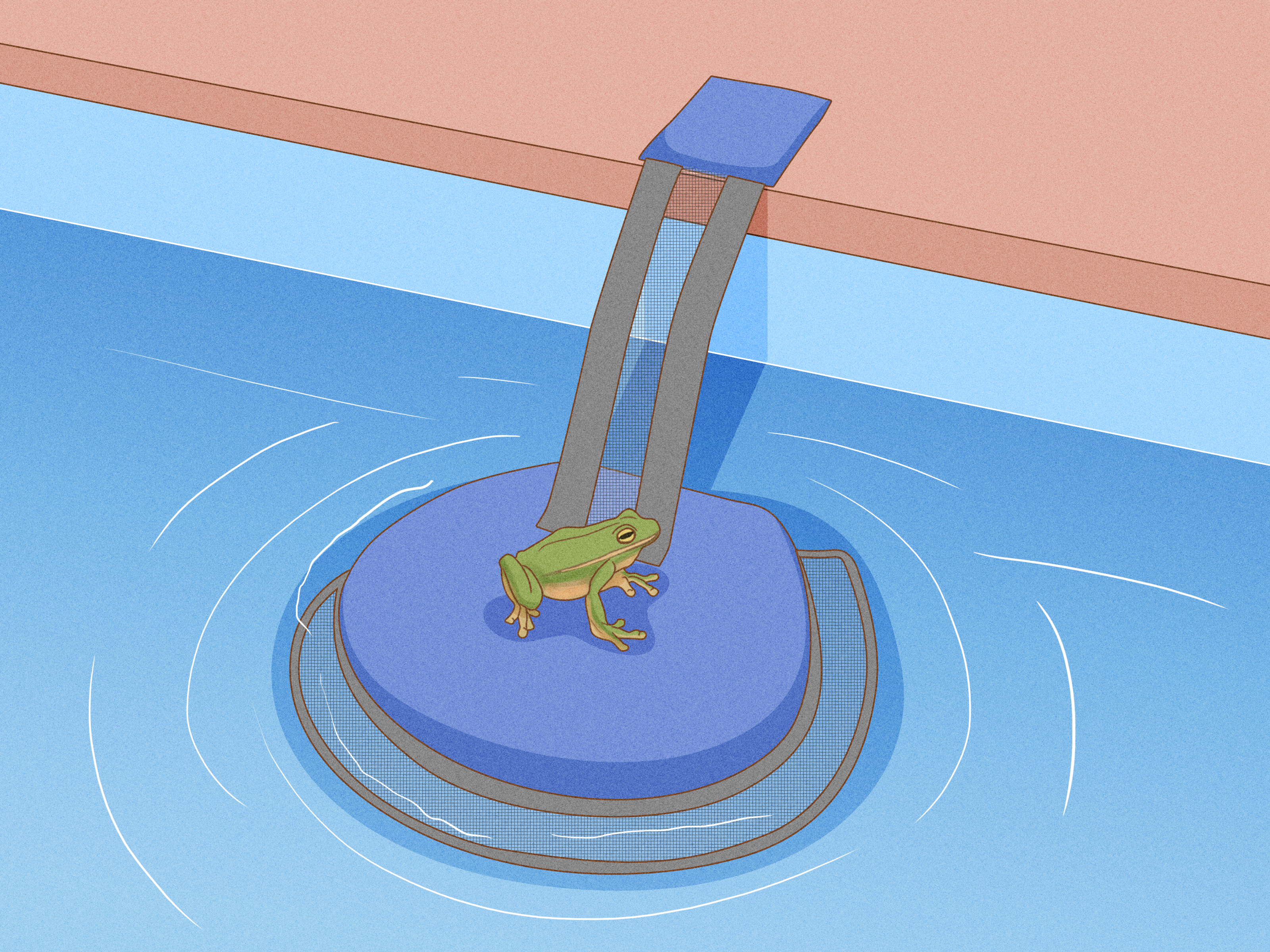
Even with prevention, a frog may still end up in the water. Pool walls are often too steep and slippery for small animals to climb out. A frog escape ramp, sometimes called a wildlife escape ramp or pool animal saver, gives frogs, lizards, mice, chipmunks, and other small animals a way to exit safely.
These devices usually float along the pool edge and include a mesh or textured ramp leading back to the deck. Place one near the skimmer or in an area where animals naturally drift. If your pool is large, use more than one. This does not technically deter frogs from entering, but it prevents drowning and reduces the unpleasant discovery of dead animals in the pool. Think of it as a tiny emergency exit sign, minus the drama.
6. Build or Improve the Pool Fence
A fence helps reduce frog traffic, especially if it has tight gaps and extends close to the ground. Many frogs can squeeze through surprisingly small openings, so a decorative fence with wide gaps may look nice but function like an amphibian welcome arch.
Use fine mesh, hardware cloth, or a solid lower barrier around the base of an existing fence. Check gates for gaps underneath. Add weather stripping or a threshold if needed. Keep in mind that fencing should always comply with local pool safety codes. The best pool fence protects children, pets, and wildlife while still looking better than a backyard fortress.
7. Trim Grass, Weeds, and Dense Plants Near the Pool
Frogs love cool, damp hiding places. Tall grass, weeds, overgrown shrubs, piles of leaves, and dense groundcover near the pool give frogs shelter during the day and easy launching pads at night.
Keep grass trimmed around the pool deck. Pull weeds along fences, pavers, and retaining walls. Prune shrubs so air can circulate underneath. Move thick plantings farther away from the pool edge. You do not need to turn your yard into a lifeless concrete runway, but you should create a clean buffer zone around the swimming area.
If you enjoy wildlife-friendly landscaping, place frog-friendly plants, logs, and water features in another part of the yard. That way, frogs have a better destination than your chlorinated rectangle of confusion.
8. Reduce the Insect Population Naturally
Frogs eat insects, so fewer bugs around the pool usually means fewer frogs. Start with nonchemical insect control whenever possible. Remove standing water, keep trash cans sealed, clean up food crumbs after outdoor meals, and use fans on patios because many flying insects struggle in moving air.
Keep the pool deck clean and rinse away sugary drink spills. Empty skimmer baskets often. Consider using screened enclosures, mosquito traps placed away from the pool, or professional mosquito-control services that use targeted methods. Be cautious with broad pesticide use, especially near water, because frogs and other amphibians are sensitive to environmental changes and chemical exposure.
9. Create a Better Habitat Away from the Pool
This may sound odd, but one humane way to keep frogs out of the pool is to give them a better place to go. If frogs are common in your area, they are part of the local ecosystem and help control insects. Instead of trying to banish them from planet Earth, redirect them away from the pool zone.
Consider creating a small wildlife-friendly area on the far side of your yard with native plants, shade, leaf litter, and a shallow water feature that is safe and chemical-free. Keep it away from the pool and house entrances. This strategy works best on larger properties, but even a modest habitat corner can reduce frog interest in your pool area.
10. Use Gentle, Pool-Safe Deterrents Around the Perimeter
Some homeowners use strong scents around the pool perimeter to discourage frogs. However, this must be done carefully. Never pour chemicals, bleach, ammonia, pesticides, or salt directly into the pool or onto frogs. These can harm wildlife, damage surfaces, irritate swimmers, and create runoff problems.
If you try a scent-based deterrent, keep it mild and use it only on hard surfaces outside the pool water. A diluted vinegar solution sprayed lightly around the outer deck perimeter may discourage frogs from lingering, but test it first on a small area because vinegar can affect some stone, concrete, or metal finishes. Reapply only as needed and avoid spraying plants, animals, or pool equipment.
The safest deterrents are still physical and environmental: covers, fences, lighting changes, clean decks, trimmed vegetation, and fewer insects.
11. Check Skimmers, Steps, and Corners Daily During Frog Season
Frogs are more active during warm, wet weather, especially after rain. If your area has seasonal frog activity, make a quick morning pool check part of your routine. Look in skimmer baskets, corners, steps, tanning ledges, and behind pool accessories.
If you find a live frog, use a pool net or container to remove it gently. Release it in a shaded, damp area away from the pool, ideally near natural vegetation. Wash your hands afterward. Do not handle frogs with sunscreen, lotion, insect repellent, or pool chemicals on your hands, since amphibians absorb substances through their skin.
Daily checks also help you spot frog eggs early. Frog eggs usually look like jelly-like clusters or strings. Remove them with a net before they hatch, then dispose of them away from natural waterways unless local wildlife rules say otherwise.
12. Respond Safely If You Find a Dead Frog in the Pool
Finding a dead frog is unpleasant, but it is not a reason to panic, drain the pool, and move to a condo. Close the pool to swimmers, put on disposable gloves, and remove the frog with a net or bucket. Dispose of it safely according to your local guidelines.
After removal, make sure the filtration system is running and test the water. Adjust chlorine or bromine and pH as needed. The Centers for Disease Control and Prevention provides guidance for responding to dead animals in pools, including maintaining proper disinfectant levels and allowing time for disinfection before swimming again. When in doubt, follow local health guidance or ask a pool professional.
What Not to Do When Deterring Frogs
When frogs keep showing up, frustration can make bad ideas look tempting. Avoid methods that harm frogs, damage your pool, or create safety risks.
- Do not pour bleach, ammonia, salt, pesticides, or harsh cleaners around the pool to kill or repel frogs.
- Do not dump frogs into the street, storm drains, or unfamiliar natural areas.
- Do not leave a loose pool cover where frogs or other animals can become trapped.
- Do not ignore standing water, because it encourages insects and may increase frog activity.
- Do not rely on one method only; frog prevention works best as a system.
Quick Frog Prevention Checklist
If you want a simple weekend plan, start here: cover the pool at night, turn off unnecessary lights, empty standing water, clean the pool deck, trim grass around the pool, install a frog escape ramp, and inspect the fence line for gaps. These steps handle the biggest frog attractions: water, bugs, shelter, and easy access.
Common Questions About Frogs in Pools
Are frogs in the pool dangerous?
Most frogs are not dangerous to people, but they can leave waste, die in the water, or introduce organic debris. The main issue is pool cleanliness and the frog’s safety. Always remove frogs gently and maintain proper pool chemistry.
Does chlorine keep frogs away?
Chlorine may make pool water less appealing than a natural pond, but it is not a reliable frog deterrent by itself. Frogs may still jump in, especially if insects, lights, and shelter are nearby.
Will frogs lay eggs in a swimming pool?
Yes, frogs may lay eggs in a pool if the water is accessible and conditions seem suitable. Remove eggs quickly with a net and improve barriers, lighting, and pool circulation to discourage repeat visits.
What is the most humane way to keep frogs away?
The most humane method is prevention: cover the pool, reduce insects, remove hiding spots, install barriers, and provide escape ramps. These steps protect both your pool and the frogs.
Real-World Experience: What Actually Works When Frogs Keep Returning
In real backyard life, keeping frogs out of a pool is rarely solved by one magic trick. It is more like making your pool slightly less interesting every day until the frogs decide your neighbor’s damp flower bed has better amenities. Homeowners often start by focusing on the pool water, but the bigger issue is usually the area around the pool.
One common experience is the “after-rain invasion.” A pool may be frog-free for weeks, then a heavy summer storm rolls through and suddenly frogs appear overnight. This happens because rain creates temporary puddles, increases humidity, and wakes up insect activity. The solution is not just shocking the pool. It is walking the yard the next morning and dumping water from buckets, toys, plant trays, and low spots. That small habit can make a big difference.
Another lesson is that lights matter more than people think. Many pool owners love the look of glowing water at night, and who can blame them? A lit pool looks beautiful. Unfortunately, insects also think it looks beautiful. Once the bugs arrive, frogs follow. Switching to motion-sensor lights or turning off decorative lighting after swimming often reduces the frog problem quickly. It is not glamorous, but neither is scooping amphibians out of the skimmer before coffee.
Landscaping also plays a major role. A lush tropical border around the pool may look like a resort, but to frogs it looks like shelter, shade, and excellent hunting territory. The goal is not to remove every plant. Instead, create a drier, cleaner buffer between dense planting beds and the water. Trim lower branches, rake leaves, move planters back from the edge, and keep grass short. Even two or three feet of open, dry deck can make the pool less inviting.
Pool escape ramps are another practical discovery. Many people install them after finding one too many dead frogs, but they are worth using before there is a problem. They are inexpensive, easy to place, and helpful for more than frogs. Lizards, mice, chipmunks, and other small animals may also use them. A ramp will not stop every visit, but it can prevent a sad ending and reduce cleanup.
The most successful homeowners treat frog control as a routine, not a battle. They cover the pool at night, empty standing water after rain, reduce unnecessary lights, keep the pool clean, and check skimmers during warm wet weather. None of these tasks is dramatic, but together they work. The frogs are not defeated in a grand backyard showdown. They simply lose interest and hop toward easier living.
Conclusion
Learning how to keep frogs out of a pool comes down to one simple idea: stop making the pool look like a pond with free snacks. Frogs are attracted to water, insects, shelter, and damp hiding places. When you remove those attractions and add smart barriers, your pool becomes much less appealing.
The best frog deterrent plan combines several humane methods: use a pool cover, turn off lights at night, remove standing water, maintain clean circulating water, trim vegetation, install a fence or mesh barrier, reduce insects, and add a frog escape ramp. These steps protect your pool, save frogs from drowning, and spare you from surprise skimmer discoveries.
Frogs are useful creatures in the garden, but they belong in safe natural spaces, not trapped in chlorinated water. With a little prevention and a few practical upgrades, you can enjoy a cleaner pool and let the frogs continue their bug-control career somewhere more appropriate.