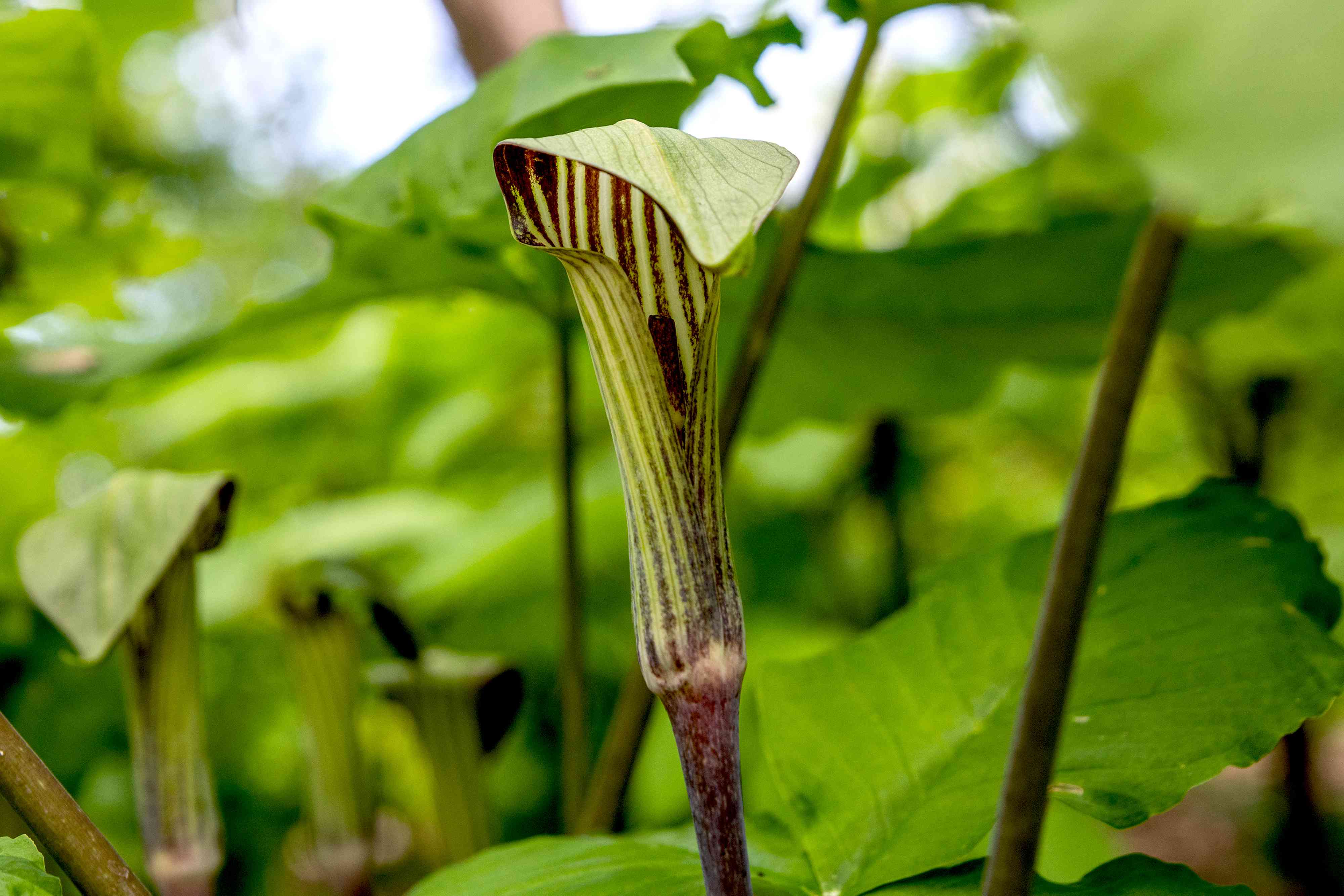
If your shade garden feels a little too polite, Jack-in-the-pulpit is here to fix that. This native woodland perennial looks like it wandered out of a fairy tale, dressed in a striped hood and ready to deliver a sermon to the ferns. Despite the dramatic stage costume, it is not a diva. Give it the right conditions, and this fascinating plant settles in with the quiet confidence of someone who knows they are the most interesting thing in the woods.
Also called bog onion, Arisaema triphyllum is not an onion at all. It belongs to the arum family, which explains its unusual flower structure: the upright spike is the “Jack,” and the hooded sheath around it is the “pulpit.” In the wild, it grows in rich deciduous forests, damp slopes, creek edges, and floodplains. In a home landscape, it thrives when you stop trying to treat it like a sunny border flower and instead lean into its woodland personality. Think moist soil, leafy mulch, filtered light, and a gardener willing to play the long game.
Why Jack-in-the-Pulpit Is Worth Growing
Jack-in-the-pulpit is one of those native plants that earns admiration without begging for it. In spring, the flower rises beneath one or two glossy, three-part leaves and instantly steals the scene. In summer, the plant often slips into dormancy just when you were getting emotionally attached. Then, on mature fruiting plants, a tight cluster of green berries turns bright red by late summer to fall, as if the plant decided to make one final dramatic exit.
Beyond its looks, this plant has genuine ecological value. It is native to the eastern United States, fits beautifully into woodland gardens, and can work in naturalized plantings, rain gardens, and damp shade beds. Birds may eat the berries, deer usually leave the foliage alone, and the plant’s oddball charm gives your garden instant conversation value. In other words, it is both useful and delightfully strange.
What Jack-in-the-Pulpit Needs to Grow Well
Light: Shade Is Not Optional
This is not a sun worshipper. Jack-in-the-pulpit grows best in part shade to full shade, especially the kind of bright, filtered light you find under deciduous trees. Morning sun can be acceptable in cooler regions if the soil stays moist, but hot afternoon sun is a fast track to crispy disappointment. If you are choosing between “slightly too shady” and “a little sunny,” choose shady every time.
Soil: Rich, Moist, and Full of Organic Matter
If this plant had a dating profile, it would say: “Seeking humus-rich soil, constant moisture, and zero drama from heavy clay.” The ideal soil is fertile, moisture-retentive, and loaded with leaf mold, compost, or other organic matter. Slightly acidic soil is especially welcome, which is one reason the plant feels so at home in woodland settings. Wet-to-moist soil is fine, but stagnant swampy muck is not a lifestyle goal. You want evenly moist, oxygenated soil, not a botanical hostage situation.
Heavy clay can be a problem because it compacts easily and slows root development. If your yard is naturally clay-heavy, improve the planting area generously with composted leaves, pine fines, or other organic materials before planting. Raised woodland berms or gently sloped beds can also help create the moisture balance this plant likes.
Water: Never Bone-Dry
Consistent moisture is the secret sauce. Jack-in-the-pulpit naturally grows in places that stay reliably damp in spring, so it resents being planted in dry shade under thirsty trees without any support. Water regularly during establishment and during dry spells. A thick layer of shredded leaves or natural mulch helps hold moisture and keeps soil temperatures more stable.
That said, this is not a plant that wants to sit in standing water year-round. Moist, cool, woodland soil is ideal. If the bed dries out fast after every rain, the plant will sulk, shrink, or simply vanish like a woodland magician with trust issues.
Hardiness and Climate
Jack-in-the-pulpit generally grows well in USDA Zones 4 through 9. It is cold hardy, woodland tough, and perfectly content in regions with a real winter. In fact, winter chill helps with the life cycle of seed-grown plants. It is happiest where spring arrives gently and summer heat is softened by shade and moisture.
How to Plant Jack-in-the-Pulpit
Planting Corms
If patience is not your dominant personality trait, start with corms rather than seed. Jack-in-the-pulpit grows from a corm, which is an underground storage structure that looks like nature’s version of a compact emergency pantry. Plant corms in spring or fall, setting them a few inches deep in rich, moist soil. Space them far enough apart to allow a natural colony to develop over time, but not so far apart that the bed looks lonely for the next decade.
After planting, water thoroughly and mulch with chopped leaves or another soft organic mulch. Then leave them alone. This is a plant that prefers stability. It is not impressed by frequent digging, dividing, relocating, or “just checking on the roots.”
Growing from Seed
Yes, you can grow Jack-in-the-pulpit from seed. Yes, it is rewarding. Yes, it also requires the emotional resilience of someone who can watch a streaming wheel spin without screaming. Seeds often need a cold, moist stratification period before they germinate, and seed-grown plants may take four to five years, sometimes longer, to flower. That is not a typo. This plant does not rush for anyone.
If you collect berries from a mature plant, clean the seeds promptly and do not let them dry out completely. Sow them in a moist medium or give them a period of cold, moist stratification before planting. Keep the medium evenly damp, and be prepared for a slow but satisfying process. This is a good project for gardeners who enjoy woodland natives, long timelines, and tiny triumphs that arrive quietly.
Seasonal Care Tips
Spring
Spring is the main event. New growth emerges from the corm, leaves unfurl, and the flower appears beneath the leafy canopy. This is the season to monitor soil moisture, top-dress with compost, and admire the plant before it remembers it is too mysterious for constant public appearances.
Avoid aggressive spring cleanup in woodland beds. Jack-in-the-pulpit appreciates leaf litter and natural cover, and removing every fallen leaf like you are auditioning for a sanitation ad can make the site drier and less hospitable. Woodland plants like this one evolved with nature’s mulch already built in.
Summer
By midsummer, many plants begin to fade or go dormant, especially if conditions are warm. Do not panic and assume you have accidentally committed horticultural homicide. This is normal. Mature fruiting plants may hold on longer, especially if they are developing berry clusters, but much of the colony may seem to disappear. Mark the spot if needed so you do not dig it up later while planting “something cheerful.” It was cheerful. It just finished early.
Fall
Fall is the season for bright berry clusters on female or fruiting plants, and it is also a good time for planting corms in suitable climates. Keep the bed lightly mulched and allow fallen leaves to remain. This plant likes its winter blanket natural and slightly messy, which is excellent news if your yard cleanup energy peaks at “halfhearted.”
Winter
In winter, the corm rests underground. There is not much to do except avoid disturbing the planting area and appreciate how much work the plant is doing invisibly. Woodland gardening is a lot like having a cat: just because nothing appears to be happening does not mean you are in charge.
Feeding and Maintenance
Jack-in-the-pulpit is not a heavy feeder. In fact, the best “fertilizer” is usually a yearly layer of compost or decomposed leaves. Rich organic matter improves soil texture, boosts moisture retention, and mimics the forest floor the plant naturally prefers. Skip heavy synthetic feeding unless a soil test tells you otherwise. Too much fertilizer can push lush but weak growth and upset the natural balance of a woodland bed.
Maintenance is refreshingly low. Water during drought, replenish mulch, and resist the urge to fuss. This is one of those plants that does better when the gardener acts more like a forest and less like a stage manager.
Common Problems and How to Avoid Them
Dry Soil
The biggest mistake is planting it in dry shade and assuming “shade plant” means “survives neglect under a giant maple with zero rain penetration.” It does not. Dry soil leads to weak growth, smaller plants, and reduced flowering.
Heavy Clay
Compacted, poorly structured clay can cause trouble. Improve the site before planting rather than asking the corm to become an engineer.
Accidental Digging
Because the plant may go dormant by midsummer, gardeners often forget where it lives and dig into it later. Mark the area discreetly or plant it among other shade companions that help define the space.
Toxicity
All parts of Jack-in-the-pulpit contain calcium oxalate crystals, which can irritate the mouth, skin, and digestive tract. The berries are showy but not snack-worthy. Wear gloves if handling berries or corms, keep the plant away from curious pets and children who sample the landscaping, and admire it with your eyes rather than your teeth. This is a decorative sermon, not a salad ingredient.
Disease and Pests
In general, this plant has few major insect or disease issues. Rust can occasionally occur, but Jack-in-the-pulpit is not known for being especially fussy. Deer pressure is usually low because the plant is unpalatable, though “usually” in gardening still means “some deer somewhere did not read the memo.”
Best Companion Plants
Jack-in-the-pulpit looks best in a layered woodland planting where the soil stays cool and the mood is pleasantly fern-filled. Good companions include Virginia bluebells, wild ginger, foamflower, blue cohosh, cinnamon fern, sensitive fern, trilliums, and other spring woodland natives. These plants share similar light and moisture preferences, and together they create the kind of understory scene that makes you want to whisper for no practical reason.
It also works well in rain gardens with shade, naturalized borders, and moist woodland edges. Because it tolerates heavy shade and even black walnut better than many plants, it can solve some otherwise awkward garden situations.
How Long Does It Take to Look Good?
If you plant corms, you may get a respectable display much sooner than if you start from seed. Even then, Jack-in-the-pulpit is not an instant-gratification perennial. It is the opposite of a flashy annual. It rewards gardeners who enjoy watching a bed mature over several seasons, with plants gradually increasing, cormlets spreading, and colonies becoming more established.
That is part of the charm. A big patch of Jack-in-the-pulpit feels discovered rather than manufactured. It looks like the woods approved your design.
Experience Notes: What Growing Jack-in-the-Pulpit Feels Like in a Real Garden
One of the most interesting things about growing Jack-in-the-pulpit is that the experience is less like managing a typical perennial and more like participating in a seasonal treasure hunt. Gardeners often spend the first year worrying it is too small, the second year wondering if it vanished, and the third year realizing the plant has been teaching patience the whole time. It does not burst onto the stage with fireworks. It emerges quietly, often when the rest of the garden still looks sleepy, and suddenly there it is: a striped hood tucked beneath those elegant three-part leaves, looking like it has been plotting this entrance since January.
In a woodland bed, the plant creates a very particular mood. It does not read as bright or cheerful in the way daffodils do. Instead, it adds mystery, texture, and that wonderful sense that the garden has layers. When morning light hits the spathe, especially on striped forms, the flower can look almost painted. And because it sits low among leaf litter, ferns, and spring wildflowers, spotting it feels rewarding. Gardeners frequently end up bending down for a closer look, which is really part of the whole charm. This is a plant that invites curiosity rather than demanding attention from across the yard.
Another real-world lesson is that Jack-in-the-pulpit changes how you think about “empty space.” Because it can go dormant by midsummer, the bed around it matters just as much as the plant itself. Many gardeners learn to pair it with other shade lovers that fill in later, so the area never looks abandoned after Jack takes his leave. Ferns are especially good at this. They step forward just as Jack-in-the-pulpit starts fading, like reliable understudies who actually know their lines.
There is also a special satisfaction in watching mature plants produce berries. The first time a gardener notices that green berry cluster shifting to vivid red, it feels like a bonus plot twist. The plant already gave you one strange flower in spring, and now it returns in late season with a second act. That late color is especially valuable in shade gardens, where bright fruit can be more dramatic than flowers.
Perhaps the biggest experience-based takeaway is this: Jack-in-the-pulpit rewards restraint. Gardeners who constantly divide, relocate, over-fertilize, or over-clean woodland beds tend to have less success. Gardeners who improve the soil, keep it moist, leave the leaf litter, and let the plant settle in are usually the ones who end up with the best colonies. It is a wonderful teacher for anyone trying to garden more naturally. Instead of asking, “How do I control every detail?” this plant nudges you toward a better question: “How do I make this spot feel more like a forest?” Ask that, and Jack-in-the-pulpit is much more likely to answer.
Final Thoughts
Jack-in-the-pulpit is a brilliant choice for gardeners who love native plants, shade gardens, and botanical weirdos with excellent stage presence. Give it moist, humus-rich soil, dependable shade, and time to settle in, and it will reward you with one of the most memorable flower forms in the woodland world. Add the glowing red berries, low maintenance needs, and ecological value, and suddenly this “bog onion” starts looking like one of the smartest plants you can tuck into a shady corner.
Just remember the golden rule: keep it moist, keep it shady, and do not eat the sermon.