If you have ever fallen down a late-night internet rabbit hole, you have probably seen this strange little money trick: fold a $20 bill just right, and the back design lines up in a way that looks eerily like the Twin Towers. It is one of those “Wait, hold on, do that again” illusions that makes people squint, tilt their head, and suddenly become part-time origami critics.
Let’s clear the air before we start folding. This is not a prophecy, not a secret code, and definitely not a sign that your wallet has developed supernatural powers. It is a visual coincidence created by geometry, familiar imagery, and the human brain’s favorite hobby: seeing patterns where patterns seem to fit. Still, it is a fascinating fold, a memorable conversation starter, and a weirdly effective example of how design changes depending on angle, symmetry, and what your eyes expect to see.
In this guide, you will learn how to fold a $20 bill into the internet-famous Twin Towers image, why the illusion works, what to do if your fold looks more like a sad paper bird than a skyline, and why this trick has stuck around for so many years. We will also look at the history behind the fold with the respect the subject deserves, because this is one of those rare paper tricks that comes with both curiosity and emotional weight.
What You Need Before You Start
You do not need a magic wand, a YouTube PhD, or unnaturally steady hands. You just need:
- One $20 bill
- A flat surface
- A little patience
- A willingness to make a bill temporarily look like a tiny paper airplane with opinions
A crisp bill usually gives the clearest result because the folds hold their shape better. A soft, wrinkled, battle-tested $20 that has clearly seen some things may still work, but you may need to adjust the angles more carefully. If your bill is collectible or in unusually good condition, maybe leave it out of this experiment. Repeated sharp folds are not ideal for paper money.
How to Fold a $20 Bill Into the Twin Towers Image
The famous effect comes from a simple lengthwise fold followed by two matching diagonal folds. The trick is not brute force. The trick is symmetry.
Step 1: Flatten the bill
Place the bill on a table and smooth it with your fingers. You want it as flat as possible before you begin. Think of this as stretching before a workout, except the athlete is money.
Step 2: Make the first long fold
Fold the bill lengthwise in half. The exact starting side is not something to panic over, because if the image is facing the wrong way later, you can simply flip the folded bill over. What matters most is that you make a clean, even crease straight across the long center.
Press that crease firmly. A sharp fold makes the rest of the trick much easier.
Step 3: Hold the folded bill with the open edge up
After the first fold, pick up the bill and orient it so the open edge faces upward. This makes the next folds easier to mirror.
Step 4: Fold one side diagonally upward
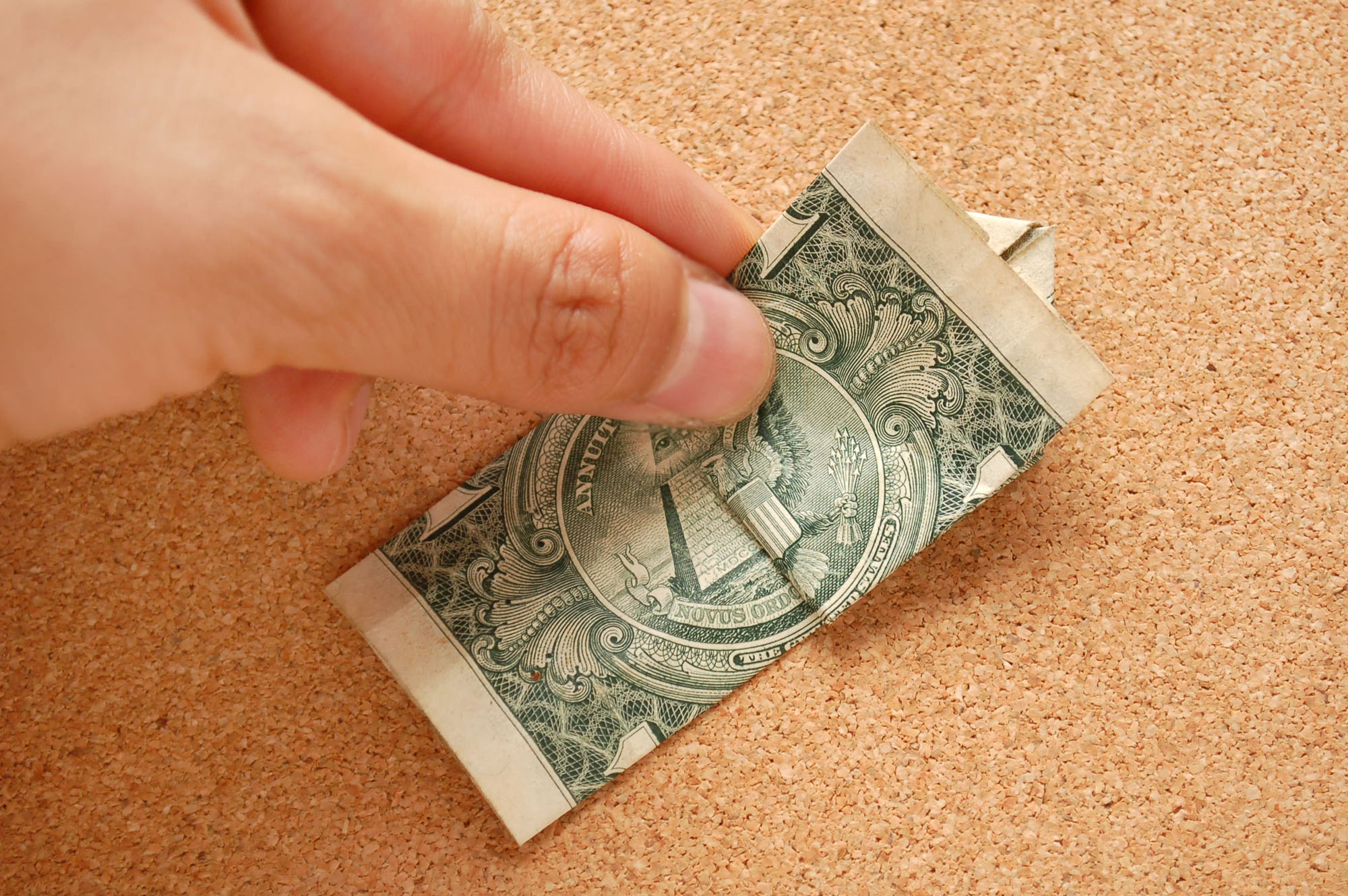
Take one end of the folded bill and fold it upward at a diagonal toward the center. You are creating a triangular flap, almost like the start of a paper airplane nose. The outer edge should angle inward, and the fold should look neat rather than random.
Step 5: Repeat on the other side
Now do the same thing on the opposite end. Try to match the angle as closely as possible. When both ends are folded up, the shape should look balanced, with a point or narrow triangular space in the middle.
Step 6: Turn it over and look closely
Flip the folded bill over. This is the moment when the illusion usually appears. The outer sections of the design can line up in a way that resembles the Twin Towers, while the darker surrounding shapes can suggest smoke or fire depending on the bill series, the fold angle, and how dramatic your imagination feels that day.
Step 7: Adjust the angles if needed
If your result does not immediately look like the image you expected, do not declare defeat and accuse the bill of betrayal. Nudge the diagonal folds slightly. Small changes in angle can dramatically change what you see. Many people get the effect only after a second or third try.
Why the Fold Works
This is where the trick gets genuinely interesting. The folded $20 bill creates a visual illusion because it rearranges familiar graphic elements from the note into a compact, symmetrical composition. The brain loves symmetry. It also loves recognizable silhouettes. When those two things show up together, your mind rushes in like an overexcited detective and says, “Aha, I know what that is.”
That mental shortcut is called pattern recognition, and sometimes it tips into what people loosely describe as pareidolia: seeing meaningful shapes in visual noise or incomplete images. It is the same reason people see faces in clouds, animals in toast, or a suspiciously judgmental expression in their car’s front grille.
With this fold, the back design of the bill becomes compressed into strong vertical shapes and dark side areas. Once someone tells you, “It looks like the Twin Towers,” your brain is primed to lock onto that reading. After that, it is hard to unsee it. The fold becomes less about paper and more about perception.
A Quick Bit of Context About the $20 Bill
The $20 bill is one of the most recognizable pieces of U.S. currency. The front features Andrew Jackson, while the back shows the White House. Modern $20 notes also include security elements and colored background details that were added to help fight counterfeiting. Older $20 bills remain valid money as well, which is why different versions may still show up in circulation.
That matters for this fold because different printings and wear patterns can slightly change how strong the illusion looks. A newer bill may give you clearer lines. An older one may produce a softer, more abstract result. In other words, not every $20 bill is equally dramatic, and some of them are better actors than others.
The Internet History Behind the Fold
The “Twin Towers $20 bill fold” became widely known in the early internet era, when chain emails, message boards, and homemade web pages could turn a niche curiosity into a full-blown cultural oddity overnight. People passed it around because it combined three things the web has always loved: mystery, a visual trick, and a giant claim attached to a small object.
That combination gave the fold a long shelf life. Some people saw it as a spooky coincidence. Others treated it like a party trick. Still others used it to push conspiracy-heavy interpretations that do not hold up. The most sensible way to understand it is the least flashy one: it is a fold-based visual illusion that became famous because it touched a real historical wound and looked uncanny enough to spread.
And yes, “uncanny enough to spread” is basically the internet’s official motto.
How to Get a Cleaner Twin Towers Effect
Use a sharper crease
If the folds are loose, the shapes blur together. Strong creases make the vertical lines appear more clearly.
Keep both diagonal folds symmetrical
If one side is higher than the other, the image starts to look lopsided. Match the angles as closely as you can.
View it straight on
Sometimes the illusion is strongest when you hold the folded bill at eye level rather than looking straight down at it on a table.
Try another bill
If one note does not cooperate, another might. Tiny differences in wear, stiffness, and print alignment can affect the result.
Common Mistakes People Make
- Folding too quickly: rushing usually creates uneven angles.
- Ignoring the center: the illusion depends on the middle space between the two folded sides.
- Expecting an exact photograph: this is an illusion, not a high-definition printout.
- Using a badly crumpled bill: soft folds can make the shape mushy.
Is This Money Origami?
Sort of, yes. It lives in the same neighborhood as money origami, but it is much simpler than the fancy dollar-bill rings, shirts, butterflies, and flowers people make for gifts or tips. This fold is less about building a finished object and more about revealing an image through positioning. It is almost like a visual riddle disguised as a quick paper fold.
That is part of its appeal. You do not need ten minutes, a tutorial soundtrack, and a motivational speech. You need about a minute, a steady crease, and the willingness to say, “Okay, that is weird,” when the image appears.
A Respectful Note About the Subject
Because this fold references the Twin Towers, it naturally brushes up against the memory of September 11 and the lives lost that day. That is one reason the trick still lands differently from ordinary money folds. It is not just clever; it is emotionally charged.
So if you share it, do so with a little awareness. It can be a conversation about visual perception, internet culture, or historical memory. It does not need to become a performance of fake mystery. The illusion is interesting enough on its own.
Why This Trick Still Fascinates People
Some paper tricks are fun for five seconds and then vanish into the attic of your brain forever. This one lingers because it combines ordinary currency with an extraordinary association. A bill is something you use without thinking. Fold it once, fold it twice, and suddenly it feels like it is telling a story. That shift from everyday object to eerie image is what keeps people coming back.
There is also a strange theatrical quality to it. The bill starts as one familiar image, transforms into a new silhouette, and asks the viewer to participate in the reveal. In that sense, it works like good magic: not because it breaks the rules, but because it hides the rules in plain sight.
Experiences People Often Have With This Fold
One reason this topic keeps resurfacing is that people tend to remember exactly where they were when they first saw it. For some, it was a school hallway, where one student pulled out a crumpled $20 and announced, with the confidence of a tiny stage magician, that money was about to get weird. For others, it was an office break room, a family gathering, or a message chain from the early internet days that arrived sandwiched between jokes, warnings, and things nobody should have forwarded but absolutely did.
The emotional experience usually follows a pattern. First comes skepticism. Someone says, “Fold it like this and you’ll see the Twin Towers,” and the immediate reaction is usually a polite version of, “Sure, pal.” Then comes the folding itself, which feels too simple to produce anything remarkable. Then comes the reveal. And that is when the room often changes tone. People go quiet for a second. Not because they believe the bill contains hidden knowledge, but because the resemblance is stronger than expected.
That moment of silence is part of what makes the trick memorable. Most small illusions cause laughter. This one often causes a pause. The subject matter carries emotional weight, and even viewers who are just curious can feel that. The fold turns a routine object into a brief visual echo of a real historical trauma, and that creates a different kind of reaction than an ordinary card trick or napkin fold.
There is also the experience of trying it alone. Plenty of people first encounter the fold online, late at night, in the exact sort of internet mood where one click turns into seventeen tabs and suddenly you are researching money design, skyline silhouettes, chain emails, and the psychology of seeing patterns. When they try it for themselves, the result can feel oddly personal. Not mystical. Just oddly intimate. A familiar bill becomes unfamiliar for thirty seconds, and that is enough to make the experience stick.
Collectors, travelers, and casual curiosity-seekers often describe another layer of the experience: comparison. One bill looks sharper than another. One fold pops immediately. Another requires fiddling. A new note may make the illusion clearer, while an older, softer bill can blur the lines and make the image feel more abstract. That trial-and-error process adds a tactile element. You are not just looking at the effect; you are physically shaping it.
For some people, the fold becomes less about the image itself and more about what it says about memory. Why do certain silhouettes hit so hard? Why do some visual cues become culturally permanent? Why can a few lines on a folded bill trigger recognition so quickly? Those questions are part of the experience too. The trick opens the door to bigger conversations about design, perception, and the way history lives inside ordinary objects.
And then, of course, there is the final experience nearly everyone shares: showing it to someone else. Because once you have seen it, you almost immediately want to test whether another person will see it too. That is the social life of the fold. It moves from hand to hand, person to person, not because it proves anything dramatic, but because it creates a genuine reaction. In a world full of forgettable distractions, a tiny paper illusion that makes people stop, look twice, and think for a moment still has surprising staying power.
Final Thoughts
Learning how to fold a $20 bill into a picture of the Twin Towers is less about mastering origami and more about understanding how visual suggestion works. It is a quick fold, an internet-era curiosity, and a reminder that the brain is always looking for meaning in shapes. Sometimes it finds a skyline. Sometimes it finds a story. Sometimes it finds both.
If your goal is to recreate the effect, focus on clean folds, even angles, and a straight-on view. If your goal is to understand why people still talk about this trick, the answer is simple: it is memorable, eerie, easy to try, and tied to an image that remains deeply embedded in public memory. That is a powerful combination for a piece of paper that usually just buys lunch.