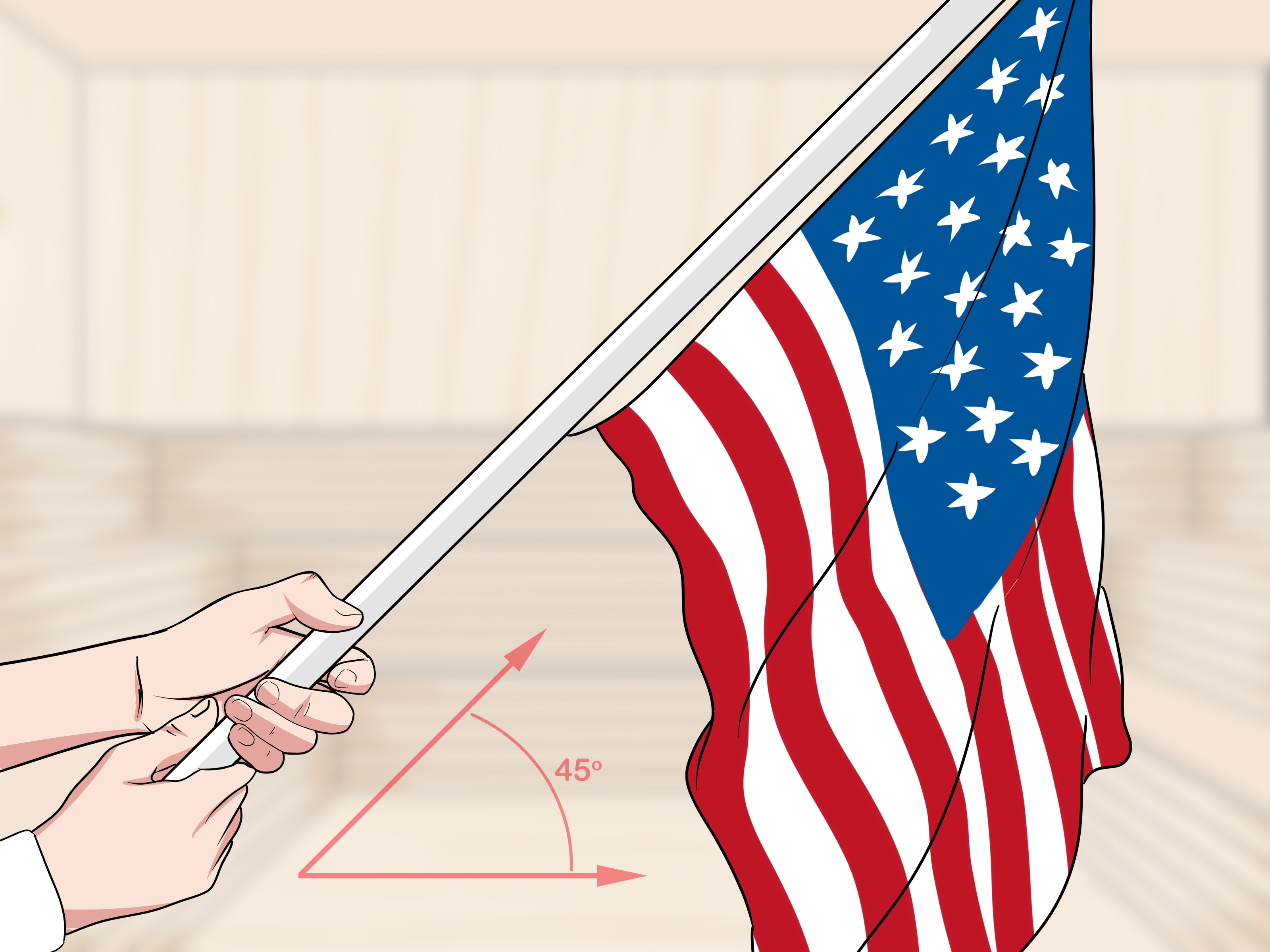
Displaying the American flag with other flags sounds simple until you are suddenly standing in a school gym, a church lobby, a parade lineup, or a community festival thinking, “Wait… does Old Glory go on the left, the right, the center, the tallest pole, or the emotional high ground?” The good news is that there are clear rules. The even better news is that once you understand the basic logic, flag etiquette stops feeling like a pop quiz written by a very patriotic geometry teacher.
In most situations, the American flag gets the place of honor. That means it is not treated like just another decorative rectangle in the group photo. Whether you are displaying it with state flags, military flags, organizational banners, or the flag of another nation, the setup matters. Position, height, order, and even which side the blue field faces all send a message. Do it right, and the display looks respectful, balanced, and intentional. Do it wrong, and the internet’s unofficial committee of flag enthusiasts may materialize out of thin air.
This guide breaks down the real dos and don’ts for displaying the U.S. flag with other flags in plain English. No legal jargon overload. No robotic checklist vibes. Just practical guidance, common mistakes to avoid, and examples that actually make sense when you are holding a pole and trying not to look confused.
The Quick Answer: What Is the Basic Rule?
Here is the simplest version: when the American flag is displayed with state, city, local, military, or organizational flags, it should occupy the position of honor. In many setups, that means it is higher than the others, first in line, centered and elevated, or placed to the flag’s own right, which usually appears to the viewer’s left. When the display includes the national flags of other countries, the rule changes a bit: each nation’s flag should be flown on a separate staff of the same height, and the flags should be about the same size.
In other words, flag etiquette is not random. It is context-dependent. The right display for a school stage is not the same as the right display for an international event. The right display for a single pole is not the same as the right display for several poles. Once you know which category your display falls into, the rest becomes much easier.
Do: Put the American Flag in the Position of Honor
Do place it at the top when multiple flags share one pole
If the American flag is flown on the same halyard or pole as a state, city, or organization flag, the U.S. flag belongs at the top. Think of it as the penthouse suite of the pole. Nothing goes above it in that setup. This is one of the clearest and most widely recognized rules in American flag etiquette.
A good example is a municipal building flying the U.S. flag and a city flag on one pole. The Stars and Stripes should be at the peak, with the city flag below it. Same rule for a school flag, club banner, or commemorative flag. If it is sharing the same pole and it is not another sovereign nation’s flag, the American flag goes on top.
Do use separate staffs of equal height for other national flags
Here is where people get tripped up. If the display includes the flag of another country, the American flag should not be stacked above it on the same pole. Instead, each nation’s flag should be flown on its own staff. The staffs should be the same height, and the flags should be approximately equal in size.
This is the international courtesy rule. It reflects the idea that one sovereign nation does not place its flag above another nation’s flag in peacetime. So if you are setting up an international festival, a diplomatic event, or a welcome ceremony with the U.S. flag and, say, the Canadian, Japanese, or French flag, give each flag its own separate pole at equal height. That is respectful, proper, and far less likely to trigger awkward conversations near the refreshment table.
Do place the U.S. flag on the viewer’s left in a line of flags
When flags are displayed on adjacent staffs in a row with state or local flags, the American flag should be in the position of honor. In practical terms, that usually means the U.S. flag appears on the far left from the audience’s point of view. Another way of saying it is that it stands to the flag’s own right.
If you are arranging flags outside a courthouse, veterans hall, or school entrance, think from the perspective of the person facing the display. The American flag should usually land at the far left of that lineup. It should also be hoisted first and lowered last.
Do place it in the center and highest point when grouped
In a grouped display of several staffs, the American flag belongs at the center and at the highest point. This often applies to ceremonial clusters of flags, such as in auditoriums, memorial halls, or patriotic events where multiple banners are grouped together instead of arranged in a straight line.
If the display looks like a flag bouquet, the American flag should be the star of the bouquet. Not hidden in the back. Not awkwardly leaning off to one side like it arrived late. Centered, elevated, and clearly distinguished.
Do put it on the speaker’s right in auditoriums and churches
On a speaker’s platform, the American flag should be placed at the speaker’s right as the speaker faces the audience. To the audience, that means the flag appears on the left side of the stage. If the flag is displayed flat behind the speaker, it should be above and behind the speaker, with the union positioned correctly.
This rule matters in places where people often improvise, such as graduations, assemblies, church programs, and community ceremonies. The flag should not be tossed wherever there is an empty corner and good lighting. Placement matters here, and the speaker’s right is the correct place of honor.
Do keep the union oriented correctly
The union, which is the blue field with stars, should be uppermost and to the flag’s own right when the flag is displayed horizontally or vertically against a wall. To the observer, that usually means the blue field appears in the upper left. In a window, it should still appear in that same respectful orientation from the viewpoint of someone looking at it from the street.
This is one of the easiest mistakes to make because people hang the flag the way they hang a beach towel: quickly and with misplaced confidence. Slow down. The stars belong in the upper left from the viewer’s perspective in most wall and window displays.
Do: Follow the Right Rule for the Right Setting
Parades and processions
In a procession with other flags, the American flag should be on the marching right, which is the flag’s own right, or in front of the center of the line if there are several flags. That means it should lead with dignity, not trail behind like a forgotten accessory.
Crossed staffs on a wall
If two flags are displayed on crossed staffs against a wall, the American flag should be on its own right, which appears on the left to a person facing the wall. Its staff should also be in front of the other flag’s staff. This is not just about which side gets prettier lighting. It is about visual precedence.
Building-mounted displays
When the American flag is displayed from a staff projecting from a building, the union should be at the peak of the staff unless the flag is at half-staff. If the flag is hung over a sidewalk from a rope, it should be hoisted union first from the building. Little details matter because flag etiquette is basically a master class in “close enough” not actually being close enough.
Don’t: Treat All Other Flags the Same
One of the biggest mistakes people make is assuming every flag follows the same display rule. Not true. State flags, city flags, military flags, commemorative flags, and foreign national flags do not all get handled the same way.
For example, a state flag can be flown below the U.S. flag on the same pole. A foreign national flag should instead be on a separate staff of equal height. An organizational banner belongs in a subordinate position. A service flag at a veteran event should not outrank the national flag. If you remember nothing else, remember this: before you decide where a flag goes, ask what kind of flag it is.
Don’t: Make These Common American Flag Mistakes
Don’t place another flag above the U.S. flag on the same pole
This is the classic error. If the American flag shares a pole with state, city, or organizational flags, nothing goes above it. Ever. It is the top position, full stop.
Don’t fly foreign national flags beneath the U.S. flag on one pole
When another sovereign nation’s flag is involved, use separate staffs. Stacking one nation under another on the same pole is not the proper move for a peacetime display.
Don’t let the flag touch the ground, floor, water, or merchandise
This is a major etiquette issue. The flag should be displayed aloft and free. It should not drag, bunch up on the floor, puddle on a table, or brush the ground because someone bought a pole that was two feet too short.
Don’t use the flag as drapery or decoration fabric
The flag should not be used as bedding, drapery, table covering, ceiling covering, or event swag. If you want patriotic decoration, use bunting in red, white, and blue instead. Bunting does the decorative job without turning the flag into party linen.
Don’t drape it over a car hood, float, or speaker’s desk
The U.S. flag should be displayed from a staff or hung properly so it falls free. Draping it over a vehicle or across a platform may look dramatic, but flag etiquette says no. Patriotic does not mean theatrical.
Don’t display it upside down unless it is a genuine distress signal
An upside-down American flag is not a cute visual twist. It traditionally signals dire distress. If your goal is a respectful display, keep the union where it belongs.
Don’t write on it or attach things to it
No signatures, no slogans, no printed messages, no decorative add-ons. The flag is not a guest book, a marketing banner, or a DIY craft project that got way out of hand.
Specific Examples That Make the Rules Easier
Example 1: U.S. flag with a state flag at a school
If both are on separate poles outside the school, place the U.S. flag in the position of honor, typically on the audience’s left, and raise it first. If both are on one pole, the U.S. flag goes on top.
Example 2: U.S. flag with city and organization flags at a civic event
If the flags are grouped indoors on staffs, place the U.S. flag at the center and highest point. If the flags are in a straight row on separate poles, place the U.S. flag in the honored position and make sure the others do not outrank it.
Example 3: U.S. flag with foreign national flags at an international festival
Use separate staffs of equal height. Keep the flags roughly the same size. Do not put the U.S. flag above the others in that international arrangement. Respect between nations is the point.
Example 4: U.S. flag on a church or auditorium stage
Put the American flag on the speaker’s right as the speaker faces the audience. That means the audience sees it on the left. If another flag is present, it goes on the opposite side.
One Myth Worth Retiring: Texas Is Not the Only State That Can Fly Side by Side
This myth refuses to retire, probably because it enjoys attention. Many people believe Texas alone has the right to fly its state flag side by side with the U.S. flag. That is not correct. Other state flags may also be flown alongside the U.S. flag on separate poles, as long as the American flag remains in the position of honor and no state flag is flown higher.
So yes, Texas can absolutely fly its flag next to the American flag. It just is not uniquely entitled to do so. The legend is bigger than the rule. Shocking, I know.
Final Thoughts
Learning how to display an American flag with other flags comes down to one principle: respect shown through placement. Once you know whether you are dealing with state, local, military, organizational, or foreign national flags, the right setup becomes much clearer. Give the U.S. flag the place of honor when appropriate. Use equal-height separate staffs for foreign national flags. Keep the union oriented correctly. And please, for the love of orderly ceremonies everywhere, do not improvise with duct tape and wishful thinking.
A well-displayed flag arrangement communicates care, tradition, and understanding. It tells people this was not thrown together five minutes before the event started. Whether you are organizing a school ceremony, decorating a civic building, preparing for a parade, or setting up a veterans event, these dos and don’ts will keep your display respectful, correct, and wonderfully free of accidental flag chaos.
Experience Section: Real-World Observations on Displaying the American Flag with Other Flags
Over time, one thing becomes obvious: most flag mistakes are not made out of disrespect. They happen because people are in a hurry, working with limited space, or assuming the rules are simpler than they really are. I have seen community events where volunteers carefully polished every chair, checked every microphone, and printed perfect programs, only to place the U.S. flag on the wrong side of the stage because everyone thought someone else had looked it up. Flag etiquette has a funny way of exposing the difference between “we meant well” and “we prepared well.”
School ceremonies are where these lessons show up most clearly. A principal wants the stage to look formal, the music teacher wants room for the choir, and the student council wants banners for school pride. Suddenly the American flag is competing with a mascot flag, a state flag, and a giant balloon arch that absolutely did not improve the situation. The best setups are always the simplest ones. Once the U.S. flag is given its proper place of honor and the other flags are arranged around it, the room feels calmer and more intentional. People may not be able to quote the rule, but they can usually tell when the display looks right.
International events bring a different kind of pressure. These displays require precision because you are not only honoring the United States, but also showing courtesy to other nations. Equal-height poles and similar flag sizes make an enormous difference. A mismatched display can look accidental at best and rude at worst. When done properly, though, a row of national flags feels elegant. It sends the message that everyone present understands both protocol and mutual respect. It is one of those details people remember, even if they never say it out loud.
Veterans events and memorial ceremonies often carry the most emotional weight. In those settings, the flag is not background décor. It is part of the meaning of the day. That is why small details matter so much. A clean flag, a straight staff, correct placement, and a dignified arrangement can transform an ordinary setup into something moving. You notice the difference immediately. The display stops being visual clutter and becomes part of the ceremony itself.
What I have learned from watching good flag displays is that correctness does not make them stiff; it makes them graceful. People stand straighter. The room looks more organized. The event feels more respectful before anyone even says a word. And that is really the goal. Proper American flag etiquette is not about showing off obscure rules. It is about honoring a symbol in a way that fits the occasion, respects other flags, and keeps the display from descending into well-meaning confusion. In a world full of rushed setups and “that should be fine” decisions, getting the flag right is a small act of care that still says a lot.