There are two kinds of people in the world: those who handle awkward moments with grace, and those who say “you too” when the movie ticket clerk says, “Enjoy the show.” If you belong to the second group, congratulationsyou are painfully human, and you may feel very seen by the brutally honest comics of Just Jon.
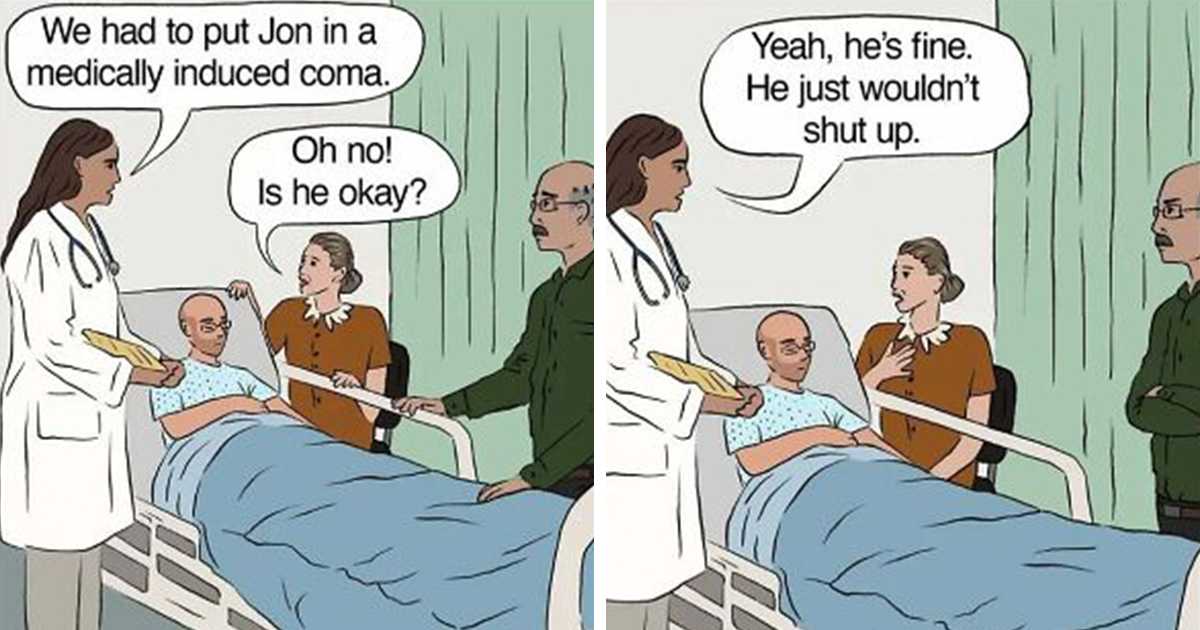
The viral collection titled "How Awkward Can People Be?": 39 Brutally Honest Comics That Nail Weird Moments Made By This Artist taps into the tiny social disasters that make life both uncomfortable and hilarious. These are not flashy superhero panels or complicated fantasy worlds. They are simple, minimalist comics about overthinking, blunt conversations, misunderstood social cues, awkward honesty, bad timing, and the strange little ways people accidentally turn normal moments into emotional obstacle courses.
And that is exactly why they work. Just Jon’s comics do not need dramatic explosions. The explosion is internal. It happens when someone says something a little too honest, a conversation goes one sentence too far, or a character realizesmuch too latethat silence would have been a wonderful career choice.
Who Is Just Jon, and Why Are His Comics So Relatable?
Just Jon is known online for clean, minimalist comics that turn everyday discomfort into sharp, deadpan humor. The project is associated with the handle justjoncomic, and its tone is often described as sad-but-funny, awkward, dry, and brutally honest. The art style is intentionally simple: basic characters, uncluttered scenes, and dialogue that does the heavy lifting.
That simplicity is a major part of the charm. Instead of distracting readers with busy backgrounds or elaborate visual details, the comics focus on timing, expression, and the uncomfortable truth hiding inside ordinary interactions. A conversation about a wedding invitation can become a joke about social exclusion. A casual “talk later” can become a literal late-night misunderstanding. A small confession can feel like someone opened a trapdoor under the floor of polite society.
The result is a brand of humor that feels instantly recognizable. Readers do not have to be comic experts to understand it. They only need to have lived through a conversation that made them want to leave their body, move to a forest, and communicate exclusively with squirrels.
Why Awkward Comics Hit So Hard
Awkwardness is universal. Everyone has misread a situation, responded too quickly, laughed at the wrong time, forgotten someone’s name, or tried to act normal while their brain was loudly buffering. What makes Just Jon’s awkward comics effective is that they capture these moments without overexplaining them.
The best relatable comics often work like a mirror. They show us a tiny version of ourselvesusually the version that says the wrong thing in a grocery store or panics during small talkand somehow make that version lovable. Instead of saying, “Look how strange people are,” these comics say, “Yes, people are strange, and unfortunately, you are people.”
The humor of social discomfort
Much of the comedy in Just Jon’s work comes from social discomfort. A character may misunderstand a phrase, take a comment too literally, or respond with honesty so intense it should probably come with a warning label. The joke is not simply that someone is awkward. The joke is that the awkwardness feels believable.
That matters because forced humor often falls flat. When a comic tries too hard to be random, readers can sense it. But when a comic reveals a familiar patternlike the way people overexplain, avoid confrontation, or accidentally make a situation worseit feels earned. The laugh comes with recognition.
Deadpan dialogue makes the punchline stronger
Just Jon’s style leans heavily on deadpan delivery. Characters often speak in flat, matter-of-fact sentences while the situation around them becomes increasingly absurd. This creates a funny contrast between tone and meaning. Nobody is screaming, flailing, or announcing that a joke has occurred. The panels simply present the situation and let the reader do the cringe-laughing.
That quiet confidence is one reason the comics travel well online. A clean image, a short setup, and a sudden punchline are perfect for quick scrolling. Readers can understand the joke in seconds, then immediately send it to a friend with the message, “This is you,” which is both affectionate and legally questionable.
The Art of Making Cringe Feel Comfortable
Cringe comedy is tricky. Done badly, it can feel mean. Done well, it feels like emotional relief. Just Jon’s comics usually land on the safer, more relatable side because the humor points toward human behavior rather than cruelty. The characters are not monsters; they are people fumbling through communication with the elegance of a shopping cart with one bad wheel.
That makes the comics easy to enjoy. Readers can laugh at the characters without feeling like they are laughing down at them. In many cases, the reader is the character. The awkward person is not “someone else.” It is your inner monologue wearing shoes.
Brutal honesty without being brutal
The phrase “brutally honest” fits these comics, but the brutality is usually soft around the edges. The honesty is sharp because it exposes what people often hide: insecurity, confusion, dread, disappointment, avoidance, and the bizarre need to keep talking after the conversation should have ended three sentences ago.
For example, a comic about someone not being invited to an event is funny because it reveals the strange dance of politeness. One person tries to be subtle. The other person refuses to understand the hint. The awkwardness grows until the truth has no choice but to walk into the room wearing tap shoes.
These comics understand that people are rarely awkward on purpose. Most awkwardness comes from trying too hard to be polite, funny, impressive, casual, or emotionally normal. Unfortunately, “emotionally normal” is a very difficult costume to wear in public.
Why Minimalist Comics Work So Well Online
Minimalist webcomics have become a major part of internet humor because they are fast, accessible, and emotionally direct. Readers do not need a long backstory. They do not need to know a universe of characters. They only need one small situation, one recognizable feeling, and one punchline that lands like a tiny social meteor.
Just Jon’s comics fit neatly into this tradition. The plain visual style gives the dialogue room to breathe. The panels move quickly. The jokes often turn on a small shift: a literal interpretation, an unexpected confession, a sudden dark thought, or a perfectly timed misunderstanding.
Simple drawings, complicated feelings
The art may look simple, but the emotional territory is surprisingly rich. Awkward humor often depends on complicated feelings: embarrassment, relief, dread, insecurity, loneliness, and the weird comfort of knowing other people are also not doing great at being people.
A minimalist drawing can make those feelings clearer. Without visual clutter, the reader focuses on the social tension. A blank stare, a tiny pause, or a plain speech bubble can become funnier than a detailed action scene. Sometimes the emptiness around the characters makes the awkwardness louder, like a microphone placed directly next to a bad decision.
The 39 Comics and the Everyday Weirdness They Capture
The 39-comic collection highlights a range of awkward situations: conversations that spiral, jokes that overstay their welcome, social expectations that make no sense, internal anxiety dressed up as casual behavior, and people being honest at exactly the wrong moment.
Some comics focus on misunderstandings. Others lean into darker, absurd humor. A few touch on familiar emotional topics like imposter syndrome, vague dread, anxiety, or the uncomfortable gap between what people say and what they actually mean.
That variety keeps the collection engaging. Not every comic depends on the same formula. Some jokes are quick and silly. Others are painfully accurate. A few may make readers laugh first and then quietly stare at a wall for personal reasons.
Awkward honesty as a storytelling tool
One of the strongest themes in Just Jon’s comics is awkward honesty. In real life, people often soften the truth. They say “maybe” when they mean “no,” “interesting” when they mean “please stop,” and “we should hang out sometime” when they mean “I respect you as a concept.”
Comics can cut through that social fog. By making characters say the quiet part out loud, Just Jon creates humor from the gap between politeness and reality. The punchline often lands because readers recognize the hidden truth immediately. It is the thing everyone was thinking but nobody wanted to put in a speech bubble.
Why Readers Love Comics About Being Socially Awkward
Relatable comics about awkward moments are popular because they make embarrassment feel less lonely. When readers see a comic about overthinking a simple conversation, they may laugh because they have done the same thing. When a character misreads a social cue, readers may remember their own greatest hits of conversational failure.
That recognition can be oddly comforting. It suggests that awkwardness is not a personal defect. It is part of being alive around other people. We are all improvising. Some people just have better lighting.
Awkward comics turn shame into shared laughter
Embarrassment tends to isolate people. After an awkward moment, the brain loves to replay it in high definition at 2:13 a.m., usually with director’s commentary. Humor interrupts that cycle. A funny comic can take a private cringe and make it communal.
Instead of thinking, “I am the only person who does this,” readers think, “Oh good, apparently the whole species is defective.” That may not sound inspirational, but it is deeply healing in the way only internet humor can be.
The Psychology Behind the Cringe-Laugh
Why do we laugh at awkward moments? Partly because humor helps reduce tension. A socially uncomfortable situation creates pressure: someone said the wrong thing, a cue was missed, or a moment has become too weird to ignore. A joke gives that tension somewhere to go.
Awkward comics also rely on recognition and surprise. The setup feels familiar, but the punchline twists it slightly. That twist may be absurd, too honest, or unexpectedly dark. The reader laughs because the comic breaks the normal pattern of social behavior while still making emotional sense.
In other words, the best awkward humor is not random. It is organized chaos. It takes the strange rules of social life and pokes them until they squeak.
Cringe is funny because it is safe distance
Reading a comic about an awkward moment is safer than living through one. The reader gets to experience the discomfort from a distance. Nobody is actually trapped in the conversation. Nobody has to apologize to a cashier. Nobody has to explain why they waved back at someone who was waving to the person behind them.
That safe distance turns discomfort into entertainment. It lets people laugh at embarrassment without being swallowed by it. This is why cringe comedy, awkward webcomics, and brutally honest cartoons can feel both painful and delightful at the same time.
What Makes Just Jon’s Humor Stand Out?
Just Jon’s humor stands out because it understands restraint. The comics rarely feel overbuilt. They do not drag the joke across twelve unnecessary panels. They trust the reader to understand the situation quickly, which makes the punchlines feel sharper.
The voice is also consistent: dry, awkward, observant, and slightly melancholy. Many comics have a “sad humor” quality, but not in a heavy way. More like the feeling of opening the fridge, forgetting what you wanted, and accepting that this is simply your life now.
Relatable, but not generic
“Relatable” can be a lazy word online, but here it fits. These comics are relatable because they are specific. They do not merely say, “People are awkward.” They show the exact shape of awkwardness: the literal friend, the over-explainer, the person who cannot take a hint, the character haunted by vague dread, the one who turns a simple exchange into a philosophical emergency.
Specificity is what makes broad humor feel personal. A comic about “anxiety” may be fine. A comic about a tiny black circle of vague dread quietly existing in the room is more memorable because it gives the feeling a shape. Suddenly the reader can point to it and say, “Yes, that. That little emotional dust bunny has been following me for years.”
How These Comics Reflect Modern Social Life
Modern social life is full of opportunities to be awkward. Texting adds typing bubbles, read receipts, and the terrifying possibility of sending “Thanks, love you” to a delivery driver. Social media adds public performance, comment sections, and the pressure to appear casual while carefully editing your casualness.
Just Jon’s comics fit this world because they capture how strange communication has become. People are more connected than ever, yet still confused by basic interaction. We can send a message across the planet in one second, then spend twenty minutes deciding whether “okay” sounds passive-aggressive.
The internet loves awkward honesty
Online audiences often reward humor that feels honest. Perfect lives can become boring. Awkward truth has texture. It tells readers, “You are not alone in your weird little panic rituals.” That is why comics about cringe, anxiety, and everyday absurdity spread so easily. They are quick to read, easy to share, and emotionally accurate enough to feel personal.
Just Jon’s comics succeed because they make the awkward parts of life feel less like failure and more like material. That is a powerful shift. Your weird moment is not just embarrassing. It is potentially a four-panel comic.
Experiences Related to Awkward Moments: Why We Keep Laughing at Ourselves
Most people have at least one awkward memory that appears without permission. You could be brushing your teeth, doing homework, or standing in line for coffee, and suddenly your brain says, “Remember when you called your teacher Mom?” Thank you, brain. Very productive. Excellent use of storage space.
The reason comics like Just Jon’s feel so familiar is that they match these everyday experiences. Awkwardness usually arrives in small, harmless moments. Maybe you greet someone enthusiastically and realize they were waving to a person behind you. Maybe you hold the door for someone who is still half a parking lot away, forcing both of you into a slow-motion social contract. Maybe someone says, “Have a good flight,” and you respond, “You too,” even though they are clearly not boarding the plane with you.
These moments are tiny, but they feel enormous while they are happening. Time slows down. Your face becomes hot. Your brain opens twenty emergency tabs at once. One tab says, “Explain yourself.” Another says, “Run.” A third, unhelpfully, plays circus music.
What makes awkward experiences funny later is the distance. In the moment, they feel like disasters. Afterward, they become stories. A bad answer in a conversation becomes a family joke. A weird misunderstanding becomes the thing your friends lovingly bring up forever, because friendship is basically emotional support plus archival humiliation.
Awkward comics help speed up that process. They turn embarrassment into a shared joke before shame has time to unpack its suitcase. When readers see a character doing something socially clumsy, they can laugh not only at the character but at their own similar moments. The comic becomes permission to stop taking every mistake so seriously.
There is also something refreshing about seeing people in comics behave imperfectly. Much of online life encourages polish: perfect captions, perfect photos, perfect reactions, perfect confidence. But real life is not polished. Real life is accidentally saying “good morning” at 6 p.m. and then thinking about it for the rest of the week. Real life is asking “What?” three times, still not hearing the answer, and finally nodding like you have received wisdom from a mountain oracle.
Awkwardness can even create connection. When someone admits they are nervous, confused, or socially clumsy, the room often relaxes. People recognize honesty. A small laugh can turn tension into warmth. That is one reason self-aware humor works so well: it says, “I know this is weird, and I am not pretending otherwise.”
In that sense, awkward moments are not just failures of communication. Sometimes they are proof that people are trying. Trying to be polite. Trying to be funny. Trying to belong. Trying to say the right thing with a brain that has unfortunately chosen that exact moment to update its software.
Just Jon’s comics understand this beautifully. They do not make awkwardness glamorous, but they do make it bearable. They remind us that everyone has strange thoughts, bad timing, and conversations they wish they could edit. The best we can do is laugh, learn, and maybe stop replying “you too” to people whose situation is clearly not the same as ours. No promises, though.
Conclusion
"How Awkward Can People Be?": 39 Brutally Honest Comics That Nail Weird Moments Made By This Artist works because it turns ordinary discomfort into smart, bite-sized comedy. Just Jon’s minimalist style, dry dialogue, and sharp understanding of social weirdness make these comics easy to read and hard to forget.
The collection is funny because it is honest. It captures the strange little failures that come with being human: missed cues, nervous jokes, blunt truths, literal interpretations, and the emotional gymnastics of everyday conversation. More importantly, it makes those failures feel shared rather than shameful.
Awkward people are not broken. They are just living proof that social interaction is an advanced sport with no official rulebook. And if a comic can make us laugh at that, then maybe the next weird moment will feel a little less catastrophicand a lot more like material.
Note: This article is an original synthesis based on publicly available information about Just Jon comics, relatable webcomics, awkward humor, cringe comedy, and the psychology of everyday social discomfort.