Note: This article is designed for web publishing and is based on real entomology, pollinator conservation, garden ecology, public-health, and citizen-science information from reputable U.S. and science-based organizations.
Introduction: Tiny Legs, Big Main Character Energy
There is a special kind of bravery required to spot an insect, lean closer, and say, “Yes, I should absolutely photograph this tiny armored stranger.” One minute you are watering basil, walking the dog, or rescuing a sock from the porch. The next minute, you are eye-to-compound-eye with a beetle that looks like it came from a fantasy movie with a very small costume budget.
That is the charm behind the prompt, “Hey Pandas, Post A Picture Of An Insect That You’ve Encountered.” It is not just a request for bug photos. It is an invitation to notice the miniature wildlife living beside us: bees loading up on pollen like grocery shoppers before a snowstorm, dragonflies patrolling ponds like tiny helicopters, moths wearing patterns that would make fashion designers jealous, and ants conducting sidewalk logistics with better teamwork than most office meetings.
Insects are everywhere, and that is exactly why they are so easy to overlook. Yet they shape gardens, farms, forests, food systems, and even our backyard stories. Whether your insect encounter was beautiful, funny, startling, or mildly scream-inducing, every photo can become a tiny window into biodiversity.
Why Insect Photos Fascinate Us
They Reveal a Hidden World
Most insects are small enough to live just below our usual attention span. But a close-up photo changes everything. A bee’s fuzzy body suddenly looks like a golden winter coat. A fly’s eyes become glittering red domes. A caterpillar turns into a living accordion with opinions. A grasshopper’s legs look engineered by someone who took jumping very seriously.
This is why insect photography, especially macro photography, has become so popular online. It turns the ordinary into the extraordinary. A creature that seemed like a dot on a leaf becomes a dramatic portrait subject. Suddenly, the garden is not just a garden; it is a wildlife documentary set with tomatoes.
They Are Weird in the Best Possible Way
Insects are endlessly creative. Some mimic leaves. Some look like twigs. Some flash colors bright enough to make a sports car feel underdressed. Others practice camouflage so convincing that the classic “spot the insect” photo becomes a puzzle, a prank, and a science lesson all at once.
Part of the fun of posting insect pictures is the reaction. Someone will say, “That’s adorable.” Someone else will say, “Burn the porch.” A third person will arrive with surprising expertise and identify it as a wheel bug, katydid, lady beetle larva, or cicada nymph. The internet can be chaotic, but occasionally it becomes a very helpful field guide with jokes.
What Counts as an Insect?
Before everyone posts a spider and starts a comment-section civil war, let’s clear up the basics. Insects generally have six legs, three main body partshead, thorax, and abdomenand one pair of antennae. Many adult insects also have wings, though not all do.
Spiders, ticks, mites, scorpions, and centipedes may be fascinating arthropods, but they are not insects. Spiders have eight legs and belong to a different group called arachnids. That does not make them less interesting. It just means that if the prompt says “insect,” your eight-legged bathroom roommate may need its own separate gallery titled, “Hey Pandas, Who Is This Tiny Land Octopus?”
Common Insects People Encounter Every Day
Bees: The Fuzzy Professionals
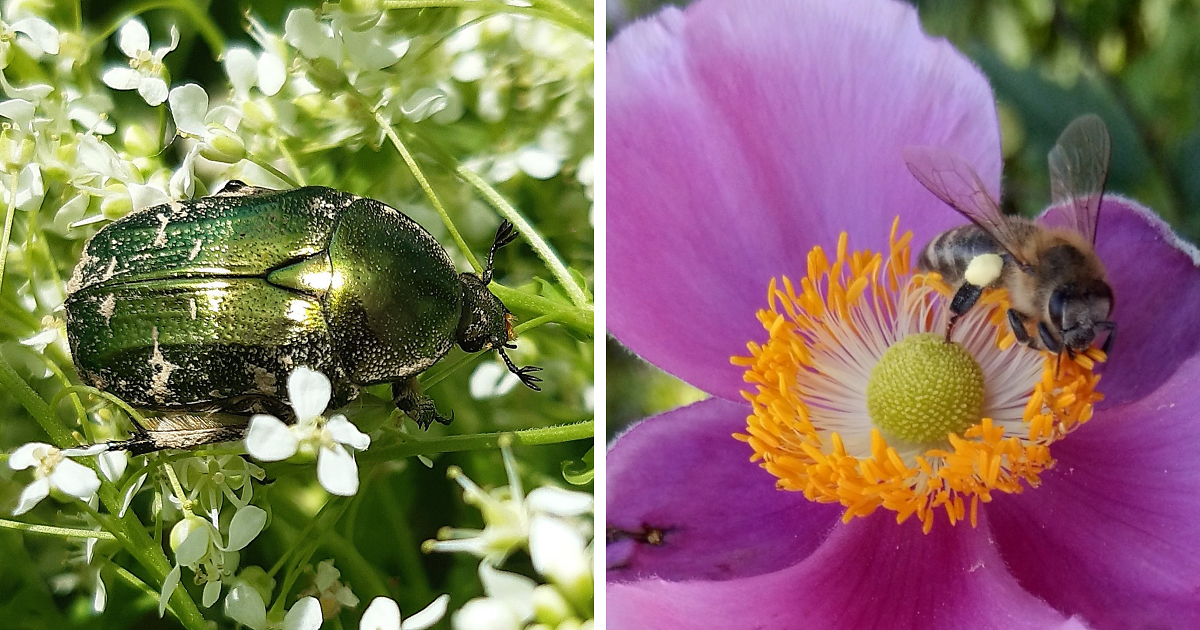
Bees are among the most familiar insects people photograph, and for good reason. They are busy, photogenic, and usually too focused on flowers to care about your camera. Native bees, bumble bees, carpenter bees, sweat bees, and honey bees all play roles in pollination. Many fruits, vegetables, nuts, and flowering plants depend on animal pollinators, including bees, butterflies, moths, beetles, and flies.
When you photograph a bee, try to capture it on a flower. The image becomes more than cute; it shows behavior. Is the bee gathering pollen? Is it visiting a native plant? Is it covered in yellow dust like it fell face-first into a cheese puff? Congratulations, you have documented pollination in action.
Butterflies and Moths: The Winged Art Gallery
Butterflies are the celebrities of the insect world. They flutter dramatically, land on flowers, and generally behave as if they know they are being photographed. Moths, meanwhile, are the underrated night-shift artists. Some are soft and muted; others have patterns so bold they look hand-painted.
A butterfly or moth picture can also tell a bigger ecological story. These insects often depend on specific host plants during their caterpillar stage. Monarch caterpillars, for example, rely on milkweed. Many other species have equally important relationships with native plants. A beautiful winged insect is often the visible chapter of a much longer life cycle.
Lady Beetles: Cute, Round, and Ruthless
Many people call them ladybugs, but “lady beetles” is the more precise name. They are beloved for their round bodies and cheerful spots, but beneath that charming exterior is a serious predator. Lady beetles and their larvae feed on aphids and other soft-bodied plant pests, making them useful allies in gardens.
The larvae, however, can surprise people. They look less like storybook garden friends and more like tiny alligator dragons. If you encounter one crawling on a plant, do not panic. That odd little creature may be doing pest control before it grows into the polka-dotted icon everyone recognizes.
Praying Mantises: The Garden Philosophers With Elbows
A praying mantis always looks like it knows something you do not. With folded front legs and a triangular head, it seems peaceful until you remember it is an ambush predator. Mantises eat many insects, and their hunting style makes them fascinating photo subjects.
If you find one, take your picture without handling it unnecessarily. Mantises can be delicate, and their stillness is part of the magic. Also, they may turn their head toward you in a way that feels personally judgmental. That is normal. The mantis is not angry; it is simply built like a tiny forest wizard.
Dragonflies and Damselflies: Pond Patrol
Dragonflies are fast, colorful, and excellent at making photographers question their reflexes. They hunt mosquitoes, flies, and other small insects, often near water. Damselflies are similar but usually slimmer, with a more delicate posture.
A good dragonfly photo often requires patience. Watch where it lands repeatedly. Many dragonflies return to the same perch while patrolling. Instead of chasing it around like a confused paparazzo, wait near the perch and let the insect do the work.
Cicadas: The Loud Summer Mysteries
Cicadas are famous for their sound. Some appear every year, while periodical cicadas emerge in synchronized broods after years underground. Their shed skins clinging to tree trunks are often easier to photograph than the adults, and they make wonderfully strange backyard discoveries.
Finding a cicada shell as a kid can feel like finding a tiny alien spacesuit. As an adult, it still feels that way. Some things do not need to become less magical just because you now pay utility bills.
Why Insects Matter More Than We Realize
Pollination Keeps Food and Flowers Going
Insects are not just background characters. They help pollinate flowering plants and many food crops. Bees, butterflies, moths, beetles, wasps, and flies all move pollen as they feed. Without pollinators, many ecosystems and agricultural systems would be less productive, less colorful, and far less delicious.
Think about berries, melons, squash, apples, almonds, and many garden vegetables. Pollinators are involved in the success of many of these crops. So the next time a bee photobombs your picnic, remember: it may have contributed more to the menu than your cousin who brought one bag of chips.
Predators Help Balance Garden Pests
Not all garden insects are pests. Many are natural pest managers. Lacewings, lady beetles, assassin bugs, parasitic wasps, hover flies, and mantises can help control aphids, caterpillars, mites, and other plant-damaging insects.
This is one reason gardeners are encouraged to build diverse habitats instead of reaching for sprays at the first sign of a chewed leaf. A few nibbles do not mean your garden is failing. Sometimes they mean your yard has become a functioning ecosystem with snacks, drama, and predator-prey relationships.
Decomposers Clean Up the Planet
Some insects do the unglamorous work of decomposition. They break down dead plants, animal remains, dung, and other organic matter. This returns nutrients to the soil and keeps ecosystems cycling. It is not a glamorous job, but someone has to do it, and insects have been doing it long before humans invented trash bags.
How to Take Better Insect Photos
Use Natural Light
Good light can turn a blurry bug blob into a crisp wildlife portrait. Morning and late afternoon often provide softer light than harsh midday sun. Overcast days can also be excellent because clouds act like a giant diffuser.
Avoid blasting insects with bright flash at close range if it causes stress or repeated disturbance. The goal is to document, not interrogate.
Get Close, But Not Too Close
Close-up detail is wonderful, but insects need space. Move slowly. Avoid casting a sudden shadow over them. If the insect backs away, flies off, curls up, or starts behaving defensively, take the hint. Your photo session is over, and your model has left the building.
Many phone cameras now have strong close-focus abilities. If yours struggles, step back slightly and crop later. A sharp photo from a little farther away is usually better than a blurry close-up that looks like it was taken during an earthquake.
Photograph Multiple Angles
If you want help identifying an insect, take more than one photo. A top view, side view, front view, and a shot showing size can all be useful. Wings, antennae, legs, body shape, markings, and behavior can help narrow down an identification.
Place a coin, ruler, leaf, or familiar object nearby for scale when possible. Just avoid poking the insect with your comparison object. Nobody wants to be measured by a giant while trying to eat lunch.
Focus on Behavior
A technically perfect insect portrait is nice, but a behavior photo is often more interesting. A bee collecting pollen, an ant carrying food, a caterpillar chewing a leaf, a dragonfly eating prey, or a beetle hiding under bark can tell a story.
When posting your picture, include where you found it, what it was doing, and what plant or surface it was on. These details can help others identify it and understand the encounter.
Ethical Insect Photography: Be Curious, Not Cruel
The best insect photos respect the insect. Avoid killing, freezing, trapping, gluing, relocating, or stressing a living creature just to get a better shot. Some insects depend on specific plants, microhabitats, or moisture levels. Moving them for a cleaner background may put them at risk.
If an insect is indoors and needs help getting outside, use a cup and paper instead of bare hands, especially if you are unsure what it is. Release it somewhere safe and close to where you found it. If it is a stinging insect or a species that may bite, keep your distance and prioritize safety over photography glory.
Safety Tips for Bug Encounters
Know When to Admire From Afar
Most insects are harmless when left alone, but some can sting, bite, or trigger allergic reactions. Wasps, hornets, fire ants, some caterpillars, and certain biting flies deserve extra caution. Mosquitoes can spread disease, so prevention matters, especially in areas where mosquito-borne illnesses are a concern.
Use EPA-registered insect repellent when needed, wear long sleeves and pants in buggy areas, and remove standing water around your home to reduce mosquito breeding sites. Sensible prevention does not make you less outdoorsy. It makes you less itchy, which is a noble goal.
Do Not Touch Unknown Caterpillars
Some caterpillars have irritating hairs or spines. They may look fluffy and adorable, but nature sometimes packages regret in velvet. Take a photo, admire the texture, and keep your fingers out of the plot.
Posting Your Insect Picture: What to Include
If you are answering the prompt “Hey Pandas, post a picture of an insect that you’ve encountered,” make your post useful and fun. You do not need to be a scientist. A simple caption can make your picture more engaging.
Helpful Details to Add
- Where you found it: garden, porch, park, trail, window, kitchen, mailbox, or shoe of doom.
- Approximate location: state, region, or general climate area.
- Size: compare it to a coin, fingernail, leaf, or other object.
- Behavior: flying, eating, hiding, crawling, mating, molting, or staring into your soul.
- Plant or surface: flower, tree bark, vegetable plant, sidewalk, wall, light fixture, or compost pile.
- Your reaction: amazed, confused, delighted, terrified, or all four at once.
Citizen Science: Your Bug Photo Can Help
Insect photos can do more than entertain. Platforms such as iNaturalist allow people to upload observations of living things, receive identification help, and contribute to biodiversity records. Even ordinary backyard photos can become useful data when they include a date, location, and clear image.
This matters because insects are not always easy to monitor. Many are small, seasonal, nocturnal, or highly localized. A single photo may not change science by itself, but thousands of observations from everyday people can reveal patterns in distribution, timing, and abundance.
In other words, your picture of a beetle on a patio chair might be more than a funny post. It might be a tiny data point in the grand story of life on Earth. Not bad for something you noticed while looking for your flip-flops.
How to Welcome More Photo-Worthy Insects
Plant Native Flowers
Native plants are often better suited to local insects than ornamental plants from far away. They can provide nectar, pollen, leaves for caterpillars, and shelter. A mix of flowers that bloom at different times supports insects across the season.
Reduce Pesticide Use
Pesticides can harm beneficial insects along with pests. Before using them, identify the problem accurately and consider gentler options. Sometimes the best solution is patience, pruning, hand removal, or encouraging natural predators.
Leave a Little Wild Space
A perfectly tidy yard may look neat, but insects often need leaf litter, hollow stems, bare soil, brush piles, and undisturbed corners. Leaving part of a yard a little messy can create habitat. Think of it as interior design for tiny tenants.
Personal Experiences: The Insects We Remember
Some insect encounters are forgettable. Others become tiny legends in a person’s life. Almost everyone has a bug story: the moth that appeared on the bathroom mirror at midnight like a fuzzy omen, the bee that landed on a picnic cup and refused to pay rent, the cicada that screamed from a tree with the confidence of an emergency alarm, or the beetle that wandered across the driveway looking like it had an important meeting.
One of the most memorable insect experiences is finding a praying mantis in the garden. It usually happens quietly. You are checking tomatoes or pulling weeds when suddenly a green shape separates itself from the leaves. At first it looks like a stem. Then it turns its head. That is the moment when the garden becomes personal. The mantis seems to examine you with calm intelligence, as if deciding whether you are a threat, a landmark, or simply too large to be interesting. Taking a photo feels less like capturing wildlife and more like being granted a brief audience with a tiny monarch.
Another classic encounter is the first time someone notices a lady beetle larva. Many people expect baby lady beetles to look like smaller versions of the adult. They do not. They look like spiky little creatures from a low-budget dragon movie, usually marching around aphid-covered stems with great purpose. Once you learn what they are, the whole garden changes. The strange larva is no longer alarming; it is a helpful predator in disguise. That is the magic of insect knowledge: fear often shrinks when understanding grows.
Then there are moth encounters. A large moth resting near a porch light can stop you in your tracks. Its wings may be patterned like bark, leaves, eyes, waves, or antique fabric. Many moths are active at night, so seeing one up close feels like receiving a secret from the dark. Photographing it is tricky because porch lights create harsh shadows, but even a simple phone photo can reveal delicate scales and subtle colors that the naked eye misses.
Dragonflies create a completely different kind of memory. They are fast, precise, and almost impossible to sneak up on. People often meet them near ponds, lakes, drainage ditches, and summer trails. A dragonfly may land on a reed, lift off, patrol a loop, and return to the same perch. Once you notice the pattern, you can wait with your camera ready. The successful photo feels earned, like you solved a small aerial puzzle.
Ants, although common, can also make fantastic photo subjects. A close look at an ant trail reveals cooperation, communication, and persistence. One ant carries a crumb too large for its body. Another investigates a leaf edge. A group reroutes around an obstacle as if running a miniature public works department. Ant photos remind us that impressive wildlife behavior does not always require a national park. Sometimes it is happening beside a sidewalk crack.
The funniest insect encounters often happen indoors. A beetle appears in the sink. A fly refuses to use the open window six inches away. A cricket begins a concert somewhere behind the refrigerator and instantly becomes impossible to locate. These moments are not always convenient, but they are memorable because insects interrupt the illusion that our homes are separate from nature. They are not. Nature has six legs, no appointment, and occasionally terrible timing.
Posting insect pictures online turns these small experiences into shared curiosity. Someone may identify the insect. Someone may share a similar story. Someone may admit they screamed, took a photo, and then became emotionally attached. That is the beauty of a simple community prompt. It transforms “I saw a bug” into “Look what lives near us.”
In the end, every insect encounter is a reminder to slow down. The world is full of tiny lives doing complicated things just outside our usual focus. A photo helps us pause long enough to notice. And once we start noticing, the backyard, porch, garden, trail, and city sidewalk become richer, stranger, and much more alive.
Conclusion: Post the Picture, Keep the Wonder
“Hey Pandas, Post A Picture Of An Insect That You’ve Encountered” is more than a fun online prompt. It is a celebration of curiosity. Insects may be small, but they carry huge ecological importance. They pollinate plants, feed wildlife, control pests, recycle nutrients, and fill our world with color, movement, and surprise.
Whether your photo shows a glamorous butterfly, a hardworking bee, a suspicious mantis, a dramatic beetle, a mystery caterpillar, or a moth with runway-model wings, it deserves a moment in the spotlight. Share the picture. Tell the story. Ask for an ID. Laugh at your own reaction if necessary. The tiny creatures around us are not background noise. They are neighbors, workers, hunters, artists, recyclers, and occasional jump-scare specialists.
So next time an insect crosses your path, take a closer look before you wave it away. You may discover beauty, science, humor, or a new appreciation for the wild world hiding in plain sight. Just remember: six legs for insects, patience for photos, respect for living creatures, and maybe a little courage if it lands on your sleeve.