Imagine the scene. You are standing in line for coffee, mentally debating whether paying seven dollars for cold foam is a personality flaw, when you look up and see that celebrity. Not your favorite celebrity. Not the person whose movies you have watched twelve times. This is the famous person who makes you reach for the remote faster than an action hero reaches for a conveniently parked motorcycle.
Suddenly, all those imaginary speeches you have delivered from the safety of your couch seem available for immediate deployment. Do you criticize them? Ask a difficult question? Pretend you have absolutely no idea who they are? Smile politely? Or simply order your coffee and leave before your brain invents a sentence that will haunt you at 3 a.m. for the next decade?
The question, “If you met a celebrity you disliked, what would you say to them?” sounds like lightweight internet entertainment, but it reveals something surprisingly interesting about celebrity culture, parasocial relationships, disagreement, and how differently people behave when a screen disappears and another human being is suddenly standing three feet away.
Research grounding: Parasocial relationships and celebrity attachment.
Why Disliking a Celebrity Can Feel So Personal
Most of us have opinions about famous people we have never met. We may admire an actor’s performances but dislike their interviews. We may enjoy a musician’s songs while finding their public persona exhausting. Sometimes a celebrity represents opinions, trends, behavior, or values that strongly conflict with our own.
The odd part is that the celebrity almost certainly has no idea we exist.
Psychologists use the term parasocial relationship for a one-sided connection people develop with media personalities. These relationships are not automatically unhealthy. Watching someone perform, listening to a podcast every week, or following a creator for years naturally creates familiarity. Your brain collects details about the person even though the relationship does not work both ways.
Social media has turned the volume up. A celebrity may appear on your phone while eating breakfast, during your commute, at lunch, and again before bed. You see opinions, vacations, arguments, interviews, apologies, advertisements, outfits, pets, and occasionally a photo caption long enough to qualify as a short novel.
That repeated exposure can make admiration feel personal. It can also make irritation feel personal.
So when someone says, “I cannot stand that celebrity,” they may be reacting not only to a movie or song but to dozensor hundredsof tiny media encounters accumulated over time.
Then You Meet Them, and the Internet Suddenly Disappears
Online, criticizing a famous person is effortless. You type a comment, press a button, and return to your sandwich.
Face-to-face communication is different.
The celebrity is no longer an avatar, headline, meme, or fifteen-second clip. They are a person standing there, perhaps tired, late for something, trying to find Gate B17, or simply attempting to purchase toothpaste without becoming today’s trending topic.
This is where many imaginary confrontations probably collapse.
You may have rehearsed:
“At last! I shall calmly explain everything wrong with your entire career.”
Reality may produce:
“Oh. Hi.”
That is not cowardice. Human interactions contain facial expressions, tone, uncertainty, body language, and immediate consequences that disappear online.
Research grounding: Respectful communication, active listening and anger management.
What Could You Actually Say?
Option 1: Say Absolutely Nothing
This option deserves much more respect than the internet usually gives it.
You do not owe every person you dislike a review of their personality. Likewise, celebrities are not required to participate in surprise debates because someone recognized them near the frozen-food aisle.
If you encounter a famous person whose work or public behavior annoys you, walking past them may be the cleanest choice available.
There is even a tiny comedic victory in treating the encounter as completely ordinary:
Celebrity: “Excuse me, is anyone sitting here?”
You: “Nope.”
And thus ends the least exciting celebrity encounter ever documented.
Option 2: Ask a Real Question Instead of Delivering a Speech
If your criticism concerns something meaningful, a sincere question may accomplish more than a dramatic accusation.
Instead of saying:
“Everything you say is terrible!”
You might ask:
“I’ve heard you discuss this issue several times. What led you to that position?”
This does not mean agreeing with the answer. Curiosity is not surrender.
Research and communication guidance repeatedly emphasize that people tend to have better difficult conversations when they listen, ask questions, and avoid immediately turning disagreement into combat. Someone who feels attacked usually prepares a defense. Someone who feels genuinely questioned may actually explain themselves.
Research grounding: Curiosity and listening during disagreements.
Option 3: Make the Criticism Specific
Suppose you genuinely have an opportunity to speak with a public figure and believe criticism is appropriate.
Specific criticism beats vague hostility.
“I disagreed with what you said about X because…” creates the possibility of conversation.
“You are the worst human being ever produced by the planet Earth” creates the possibility of security arriving.
There is also an important distinction between criticizing someone’s behavior and attacking someone’s entire identity. The former can communicate a point. The latter mostly communicates anger.
If you want a person to remember your argument rather than simply remember “the stranger who yelled at me near baggage claim,” specificity helps.
Option 4: Use Humor Without Becoming Cruel
Humor is probably the most tempting response, especially for anyone who has spent years imagining the perfect one-liner.
You could say:
“I have disagreed with you for so long that meeting you feels like encountering the final boss of my news feed.”
Or:
“I promised myself I would give you a fifteen-minute lecture if we ever met. Unfortunately, I now realize that sounds exhausting for both of us.”
The trick is distinguishing playful humor from humiliation. A clever comment does not require attacking someone’s appearance, family, health, or other personal characteristics unrelated to the disagreement.
If your joke would make everyone nearby slowly examine the floor, perhaps keep that masterpiece in the drafts folder.
What Probably Shouldn’t You Say?
Don’t Treat a Rumor Like a Court Verdict
Celebrity culture runs on compressed information. A complicated interview becomes a headline. A ten-minute conversation becomes an eleven-second clip. Anonymous claims circulate beside verified reporting, and old stories regularly return wearing new captions.
If your dislike depends on something you only vaguely remember reading online, confronting someone as though every detail were unquestionably established can go badly.
There is nothing embarrassing about admitting, “I may not have the full context.”
In fact, that sentence could probably improve approximately half the arguments on the internet overnight.
Don’t Demand a Performance
Fame creates a strange expectation that celebrities should always be available.
Fans may want selfies. Critics may want explanations. Content creators may want reactions. Everybody wants something.
But meeting a celebrity in public does not automatically turn the sidewalk into a press conference.
Respecting boundaries applies whether you love someone, dislike them, or possess seventeen carefully organized questions about why their latest movie required three separate explosions involving helicopters.
Research grounding: Etiquette emphasizes consideration, respect and honest interaction.
Don’t Confuse Cruelty With Courage
There is a popular fantasy in which saying something vicious to a powerful or famous person automatically counts as bravery.
Sometimes challenging public figures is important. But insults are not automatically challenges, and aggression is not automatically honesty.
You can say, “I strongly disagree with what you did.”
You do not need twelve additional sentences comparing the person’s intelligence to household furniture.
The Funniest Possibility: You Might Actually Like Them
Here is the plot twist nobody preparing an angry speech wants to consider: the celebrity could be perfectly pleasant.
Maybe they hold the door for you.
Maybe they make a surprisingly funny joke.
Maybe they listen to your criticism without becoming defensive.
Maybe they apologize for bumping into you before either of you realizes who the other person is.
Suddenly your carefully constructed mental image has a problem.
People naturally build impressions of celebrities from available media. But media appearances represent only pieces of a person’s life. Even firsthand celebrity-encounter stories illustrate this limitation: one person remembers an entertainer being wonderfully generous, another remembers the same person appearing impatient, and both stories could be accurate. Humans have good days, bad days, headaches, deadlines, missed flights, family problems, and moments when the coffee has not started working yet.
One interaction cannot reliably summarize an entire personality.
Research grounding: Reports of celebrity encounters illustrate how different one-off experiences can produce sharply different impressions.
Could Meeting Someone Change Your Opinion?
Possibly.
Changing your impression does not require abandoning your values. You can still disagree with someone’s politics, business decisions, public comments, art, or behavior while recognizing that the actual human being is more complicated than the character assembled in your mind.
Likewise, meeting a celebrity who behaves badly does not prove that every negative rumor about them is true.
This middle ground is less exciting than declaring someone either “an angel” or “literally the worst,” which may explain why the internet rarely enjoys it.
Nuance is terrible clickbait.
The Best Question to Ask Yourself Before Speaking
Before approaching the celebrity, ask:
“What am I trying to accomplish?”
If the answer is “I want to understand their position,” ask a question.
If the answer is “I want to respectfully tell them why something they did bothered me,” be brief and specific.
If the answer is “I want everyone nearby to film me destroying them verbally so I can become famous for approximately nine hours,” perhaps reconsider.
Your goal changes the conversation.
Communication researchers and psychologists frequently distinguish assertiveness from aggression. Assertiveness means expressing your own position clearly while respecting another person’s basic dignity. Aggression tries to dominate, humiliate, or injure.
That distinction works whether you are talking to a coworker, relative, neighbor, politician, movie star, or the guy who somehow uses both armrests on an airplane.
What Real Celebrity Encounters Can Teach Us
Stories about meeting famous people are endlessly fascinating because they collapse the distance between celebrity mythology and ordinary life. A person who normally appears forty feet tall on a movie screen is suddenly trying to remember where they parked.
Accounts shared across online communities describe virtually every possible version of the experience. Some people remember celebrities who were unexpectedly warm, patient, or funny. Others report awkward, dismissive, or disappointing interactions. Plenty of encounters are neither wonderful nor terriblethey are simply strange.
And that may be the most useful lesson.
Experience One: The Speech That Never Happens
Picture someone who has disliked a particular actor for years. Every interview irritates them. Every awards-season appearance produces an involuntary eye roll. They have jokes prepared. Arguments prepared. Possibly visual aids.
Then they unexpectedly meet the actor in a hotel lobby.
The actor says, “Morning.”
Our courageous critic says, “Morning.”
That is it.
Why? Because imaginary social situations are clean and controllable. Real situations are filled with uncertainty. Once another person’s face enters the equation, the desire to perform outrage often becomes weaker.
Experience Two: A Question Works Better Than an Attack
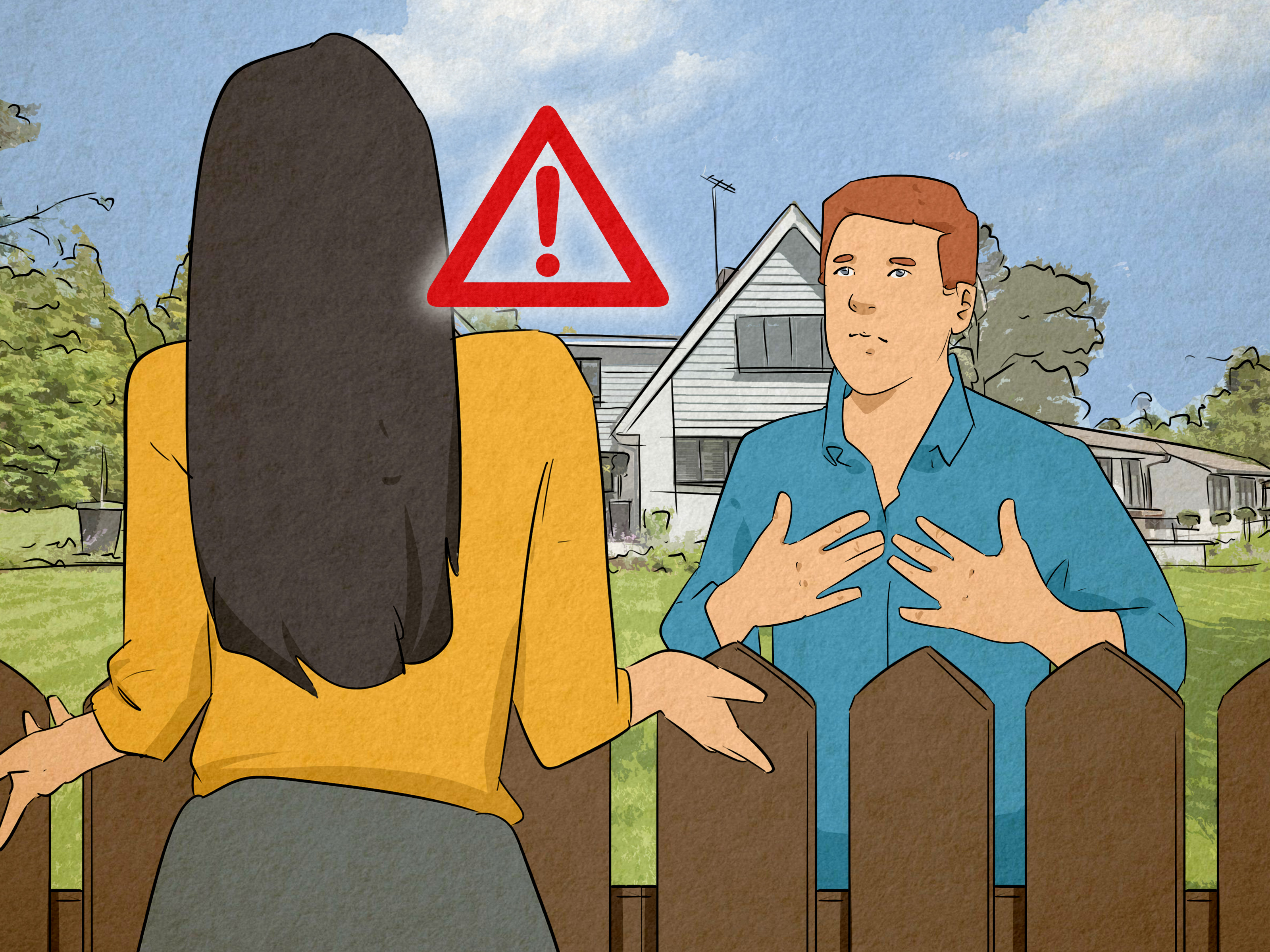
Imagine meeting a celebrity whose public statement genuinely bothered you. Instead of launching into an accusation, you say, “Can I ask why you said that? I interpreted it very differently.”
Perhaps the celebrity doubles down. Perhaps they clarify what they meant. Perhaps you still completely disagree.
But you leave knowing more than you knew before.
That alone makes the conversation more valuable than exchanging insults.
Experience Three: The Celebrity Is Having a Bad Day
Another common feature of celebrity-encounter stories is how much meaning gets assigned to extremely short interactions.
Someone asks for a photograph. The celebrity declines. The conclusion becomes: “They are horrible.”
Maybe.
Or perhaps they had already taken fifty photographs. Perhaps they were rushing to an appointment. Perhaps a family member was sick. Perhaps they simply did not want a photograph.
The opposite mistake happens too. A celebrity smiles and spends two friendly minutes chatting, and suddenly someone concludes they must be the greatest person alive.
Brief experiences are real experiences, but they remain brief.
Experience Four: Disagreement Becomes Surprisingly Normal
There is another possibility that sounds almost revolutionary in the social-media era: two people can disagree and then continue existing.
You might tell a celebrity, “I strongly disagreed with your comments about that issue.”
They might answer, “Fair enough.”
You might respond, “Thanks for hearing me.”
And then everyone goes home.
No viral video. No dramatic soundtrack. No slow-motion walk away from an explosion.
Just disagreement.
Healthy conversation does not require converting the other person. Sometimes the victory is simply communicating clearly without becoming cruel.
Experience Five: You Discover Your Opinion Was Mostly About an Image
This may be the most uncomfortable outcome.
You meet the person and realize that what you hated was largely a public image: a role, editing style, social-media persona, tabloid narrative, or exaggerated version of certain traits.
That does not mean publicity completely invents celebrity personalities. It means audiences necessarily work with incomplete information.
Every famous person exists in at least two forms: the human being and the public version assembled through performances, interviews, headlines, photographs, commentary, and audience interpretation.
Meeting the human being may not erase criticism. But it can remind us that the simplified version living in our heads is exactly thata simplified version.
Research grounding: Fame, public image and parasocial perception.
So, Pandas: What Would You Really Say?
Maybe you would confront them.
Maybe you would ask one serious question.
Maybe you would deliver the cleverest joke of your lifetime.
Maybe you would say, “I don’t agree with much of what you’ve said, but I appreciate you hearing me.”
Maybe you would discover that all your confidence disappears and simply mutter, “Love your… shoes?” before escaping into the nearest elevator.
Or perhaps you would choose the most peaceful response of all: nothing.
The interesting part of this hypothetical celebrity encounter is not really which famous person you dislike. It is what you would do when dislike moves from an abstract opinion to a real human interaction.
Would you try to embarrass them, understand them, challenge them, joke with them, ignore them, or reconsider the assumptions you brought into the encounter?
There is no requirement to admire celebrities. Public figures can and should face legitimate criticism for public actions. But criticism becomes far more useful when it focuses on something specific instead of treating another human being like a cardboard target.
Besides, imagine finally meeting the celebrity who has annoyed you for ten years and discovering that they’re charming.
Now you have an entirely new problem.
You may have to update your opinion.
And everyone knows changing your mind is much harder than writing an angry comment.
Conclusion
Meeting a celebrity you dislike would probably be much stranger than the fantasy version. Years of opinions, headlines, social-media posts, and imagined arguments would suddenly collide with an ordinary face-to-face conversation.
The smartest response depends on your purpose. You can ask a sincere question, offer specific criticism, make a lighthearted joke, or simply leave the person alone. What matters is remembering that disagreement does not require humiliation and that one interactionpositive or negativerarely tells the complete story of another human being.
So here’s the question for you: If you unexpectedly met a celebrity you genuinely disliked, what would you say? Would you finally deliver that speech you’ve been rehearsing, politely ask them to explain themselves, crack a joke, or suddenly develop an intense interest in the nearest vending machine?
Note: The encounter scenarios in this article are illustrative composites inspired by common patterns in public discussions of celebrity interactions; they are not presented as firsthand experiences or allegations about any specific celebrity.
Research synthesized from 10+ reputable U.S.-based sources, including APA, Cleveland Clinic, Harvard Health, UC Berkeley Greater Good Science Center, Psychology Today, Pew Research Center, NIH/PMC, Emily Post Institute, Scientific American, Verywell Mind, Find a Psychologist/APA Division 46, Smithsonian, and Bored Panda’s collections of public encounter anecdotes.