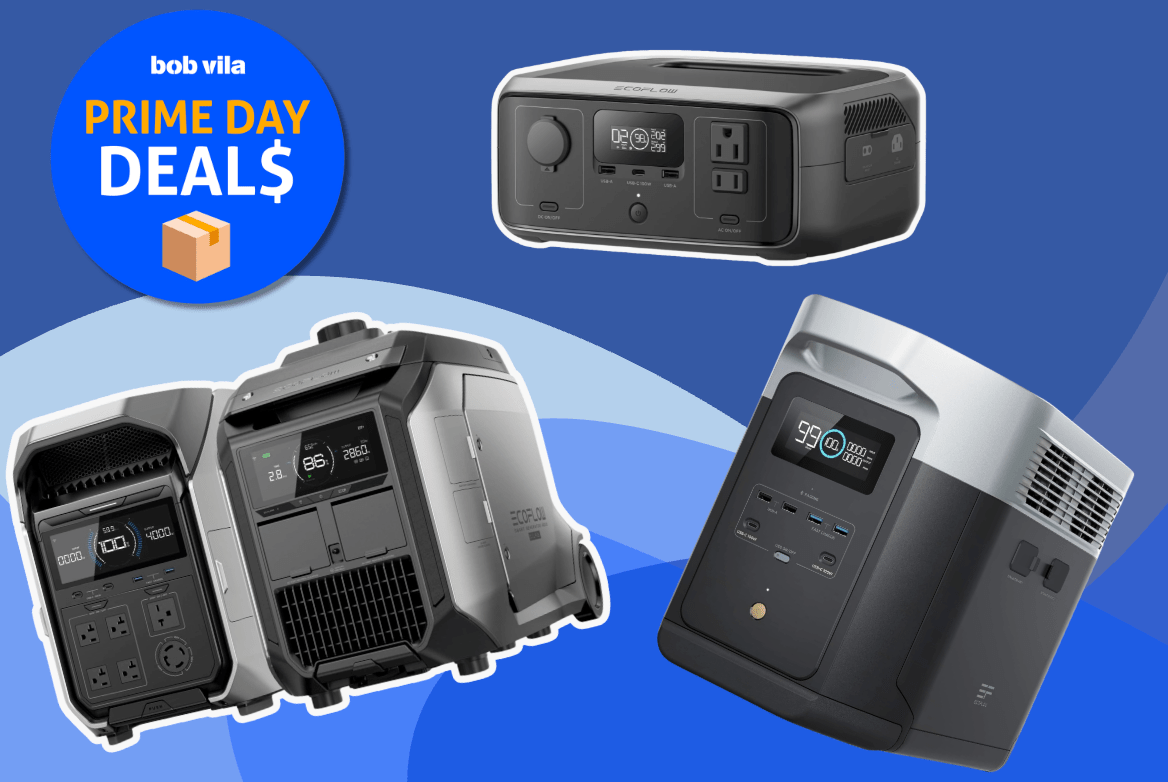
Prime Day waits for no one. It does not care that you meant to “compare models later.” It does not care that your cart has been emotionally abandoned since breakfast. And it absolutely does not care that your power outage plan currently consists of one flashlight, three mismatched batteries, and a prayer to the weather app.
That is why the final hours of EcoFlow generator deals are worth a serious look. During major Amazon Prime Day-style sales, EcoFlow portable power stations, solar generator bundles, backup batteries, and whole-home power solutions often drop to some of their best prices of the year. Some models have been listed at around 50% off or more during major sale windows, which can mean hundredsor even thousandsof dollars in savings on serious backup power.
EcoFlow “generators” are usually battery-powered portable power stations or solar generators, not old-school gas machines that roar like a lawn mower with unresolved anger issues. They store electricity, power appliances through AC outlets and USB ports, recharge from wall power, solar panels, car outlets, or compatible alternator chargers, and can help keep essentials running when the grid decides to take an unscheduled nap.
If you have been waiting to buy a portable power station for home backup, camping, RV travel, storm season, tailgating, remote work, or keeping the fridge alive during an outage, these final Prime Day hours are exactly when procrastination either becomes geniusor gets expensive.
Why EcoFlow Generator Deals Are Getting So Much Attention
Portable power stations have moved from “cool camping gadget” to “why does every prepared neighbor have one?” In the past, homeowners often thought about backup power only in terms of gas generators. Those still have their place, especially for long-running high-demand loads, but battery-powered power stations have become popular because they are quieter, cleaner during use, easier to store, and more practical for apartments, bedrooms, home offices, RVs, and indoor essentials.
EcoFlow is one of the biggest names in this category because its lineup covers nearly every use case. Small RIVER models can charge phones, laptops, lights, cameras, and small appliances. Midrange DELTA models can handle refrigerators, routers, fans, TVs, coffee makers, and power tools. Larger DELTA Pro and DELTA Pro Ultra systems are built for more serious home backup, expandable battery capacity, and integration with smart home panels or transfer-switch-style setups.
The appeal during Prime Day is simple: these devices are useful but not cheap. A quality portable power station can cost as much as a weekend trip, a new appliance, or the amount of money you mysteriously spend at Target while buying “just toothpaste.” So when EcoFlow generators are discounted by 40%, 50%, or more, shoppers pay attention.
What “Save 50% Off EcoFlow Generators” Really Means
Big sale language can be exciting, but it deserves a little decoding. “Save 50% off EcoFlow generators” usually does not mean every EcoFlow product is exactly half off. Instead, it often means select models, bundles, or configurations are discounted by up to 50% or slightly more. The deepest markdowns may apply to specific portable power stations, solar generator bundles, extra battery packages, previous-generation models, or member-only deals.
For example, EcoFlow’s current sale pages have shown models such as the DELTA 2 Max, DELTA 3 Max, DELTA Pro, and DELTA Pro Ultra bundles with large percentage discounts depending on configuration. Deal coverage from U.S. shopping publishers has also highlighted past EcoFlow Prime Day and Prime Big Deal Days offers on models like the RIVER 2 Pro, DELTA 2, DELTA 2 Max, DELTA Pro, DELTA Pro 3, and solar panel bundles.
The key is to compare the final checkout price, not just the crossed-out number. Look for coupon boxes, Prime-exclusive pricing, member-only pricing, bundle savings, and whether the deal includes a solar panel, extra battery, carry bag, alternator charger, or smart home panel. A bare power station and a full solar generator kit are not the same thing, even if both listings include the word “generator.” Sneaky? A little. Normal retail behavior? Unfortunately, yes.
Best EcoFlow Generators to Watch in the Final Hours
EcoFlow’s lineup can feel like alphabet soup with outlets. RIVER, DELTA, Max, Pro, Ultra, Plus, Classicat some point you may wonder if you are shopping for backup power or naming a space mission. Here is the practical breakdown.
EcoFlow RIVER Series: Best for Small, Portable Power
The RIVER family is best for people who want compact emergency power without dragging around a battery the size of a mini fridge. These models are ideal for phones, tablets, laptops, cameras, camp lights, Wi-Fi routers, fans, small kitchen gadgets, and weekend travel.
A model like the RIVER 2 Pro sits in the sweet spot for campers and apartment dwellers because it offers meaningful capacity without becoming a full home-backup system. It is the kind of power station you grab for a road trip, a backyard movie night, a work-from-anywhere setup, or a short outage where the goal is to keep communications, lights, and small comforts running.
Choose a RIVER model if your biggest concern is portability. Skip it if you expect to power a full-size refrigerator for a long outage, run multiple high-watt appliances, or support a household that treats electricity like an all-you-can-eat buffet.
EcoFlow DELTA 2: Best Everyday Backup Pick
The EcoFlow DELTA 2 is one of the most popular midrange portable power stations because it balances capacity, output, charging speed, and size. It stores about 1kWh of energy, delivers strong AC output, supports expansion with an extra battery, and can power many household essentials. EcoFlow has described it as capable of powering refrigerators, phones, hotplates, routers, lights, TVs, and other everyday devices depending on wattage and runtime.
For many shoppers, the DELTA 2 is the “normal person with realistic problems” option. It is big enough to matter during an outage but not so large that you need a training montage before moving it. If your priorities are keeping the fridge cold, charging devices, running a fan, powering a Wi-Fi router, or supporting a small home office, this is one of the first EcoFlow generators to check during Prime Day.
EcoFlow DELTA 2 Max: Best for Longer Runtime
The DELTA 2 Max steps things up with a 2048Wh capacity and 2400W output. It is expandable up to 6kWh with extra batteries, uses long-lasting LFP battery chemistry, and supports fast AC and solar charging. This is the model for shoppers who looked at the DELTA 2 and said, “Cute, but what if the outage lasts longer and my fridge is full of expensive cheese?”
It is especially useful for RV owners, remote workers, families, storm-prep shoppers, and anyone who wants a more confident backup power cushion. With enough output for larger appliances and capacity for longer runtimes, the DELTA 2 Max is often one of the most compelling Prime Day targets when it drops heavily in price.
EcoFlow DELTA Pro: Best for Serious Home Backup
The DELTA Pro is designed for heavier backup needs. A single unit starts at 3.6kWh and provides 3600W AC output, with expandable capacity and options for pairing units or accessories. It is much more than a camping battery. This is the “the power is out, but the kitchen is still in business” category.
For homeowners, the DELTA Pro makes sense if you want to support multiple essential appliances, reduce dependence on extension cords, add expandable batteries later, or build toward a more integrated backup system. It is also useful for workshops, mobile businesses, off-grid cabins, and RV setups that require more muscle than a standard portable unit.
EcoFlow DELTA Pro Ultra and DELTA Pro 3: Best for Whole-Home Ambitions
If the smaller EcoFlow models are backup power, DELTA Pro Ultra-style systems are more like a personal energy bunkerwith better branding. These high-capacity systems are intended for substantial home backup, high output, expansion, and compatibility with smart home energy setups.
They are not impulse buys unless your impulse buys usually arrive on a pallet. But Prime Day can make them far more attractive, especially when bundles include batteries, inverters, solar support, or smart home panel accessories. If your goal is to power critical circuits, prepare for extended outages, or create a more resilient home energy system, the final hours of a major sale are worth watching closely.
Solar Generator Bundles: When the Panel Is Worth It
A portable power station stores electricity. A solar generator bundle usually pairs that power station with one or more solar panels so you can recharge off-grid. That difference matters. Without solar, your power station is only as useful as the energy already stored inside it. With solar, you have a way to refill during daylightslowly on cloudy days, faster in strong sun, and dramatically better if your panel wattage matches the station’s solar input capacity.
For emergency prep, a solar bundle is often worth the extra cost if you live in a storm-prone area, camp often, travel by RV, or want a backup plan that does not depend entirely on wall charging. For apartment users or people with limited outdoor space, a panel may be less practical unless you have a balcony, patio, driveway, or sunny yard where it can be safely set up.
During Prime Day, bundles can offer better value than buying a power station and panel separately. However, check the panel wattage. A 60W panel and a 400W panel are not remotely the same experience. One is “nice trickle charge.” The other is “now we are cooking with photons.”
How to Choose the Right EcoFlow Generator Before the Deal Ends
Before clicking “Buy Now,” make a short list of what you actually need to power. This is where many shoppers go wrong. They buy based on discount percentage instead of real-world wattage and runtime. A 55% discount on the wrong unit is not a deal; it is just a future Facebook Marketplace listing.
Step 1: List Your Essential Devices
Start with the non-negotiables: refrigerator, Wi-Fi router, phone, laptop, medical devices, lights, fan, CPAP machine, modem, small heater, TV, sump pump, or cooking appliance. Check each item’s wattage. Appliances with motors, compressors, or heating elements may use much more power than small electronics.
Step 2: Match Output, Not Just Capacity
Capacity is measured in watt-hours. Output is measured in watts. Capacity tells you how much energy the unit stores. Output tells you what it can run at one time. A power station may have enough capacity for a device but still fail if the appliance’s startup surge exceeds the inverter’s output rating.
Step 3: Add a Runtime Buffer
Real-world runtime is affected by temperature, inverter losses, battery age, appliance cycling, and how many devices are plugged in. If your math says you need 900Wh, do not buy a 900Wh unit and expect miracles. Add a buffer. Electricity has a habit of being most needed exactly when your spreadsheet was too optimistic.
Step 4: Decide Whether Expansion Matters
EcoFlow’s larger systems often support extra batteries. That is useful if you want to buy a core unit now and expand later. If you are building a home backup setup over time, expansion support may matter more than saving a few extra dollars on a smaller, non-expandable model.
EcoFlow vs. Gas Generators: The Safety Difference
Battery-powered EcoFlow portable power stations do not create exhaust while powering your devices. That makes them practical for indoor use during outages, especially for bedrooms, offices, kitchens, and apartments. They are also much quieter than gas generators, which matters if you are running a CPAP machine overnight or trying to work while the neighborhood sounds like a construction site.
Gas generators are different. They burn fuel and produce carbon monoxide, an odorless gas that can be deadly. Fuel-powered generators should never be used indoors, in garages, in basements, on balconies, near open windows, or in partially enclosed spaces. Safety agencies recommend using portable fuel generators outdoors, far away from doors, windows, and vents, with carbon monoxide alarms installed in the home.
If you buy an EcoFlow battery station, that safety profile is one of the biggest benefits. If you buy an EcoFlow bundle that includes a dual-fuel generator accessory or any fuel-powered charging device, treat that fuel-powered component like a traditional generator: outside only, dry conditions, proper distance, proper cords, and zero shortcuts.
Who Should Buy During the Final Hours?
EcoFlow Prime Day deals are especially good for four types of shoppers.
First, storm-prep households. If your area gets hurricanes, thunderstorms, winter outages, wildfire shutoffs, or unreliable grid service, backup power can save groceries, preserve communication, and make outages less miserable.
Second, remote workers. A portable power station can keep a router, laptop, monitor, phone, and light running long enough to finish work instead of explaining to your boss that the grid has chosen violence.
Third, campers and RV travelers. EcoFlow generators can power lights, fridges, fans, cooking devices, cameras, projectors, and gadgets without the noise and fumes of a gas generator.
Fourth, deal hunters who already know the model they want. Final hours are not ideal for casually learning the entire category from scratch. They are ideal for shoppers who have narrowed the choice and are ready to pounce before the price jumps back up like a startled cat.
Final-Hours Buying Tips
Because Prime Day deals can change quickly, open the listing and verify the price at checkout. Clip any visible coupon. Compare Amazon pricing with EcoFlow’s official site. Check whether the deal is for the standalone unit or a bundle. Read the return policy. Confirm shipping dates, especially if you need backup power before a trip or storm season. Look at warranty coverage, battery chemistry, expansion options, solar input, weight, and outlet layout.
Also, avoid buying purely because the discount looks dramatic. A huge whole-home system is wonderful if you need it and expensive overkill if you live in a studio apartment and only want to charge a phone. Likewise, a tiny power station is convenient until you ask it to run a refrigerator and it politely gives up.
Real-World Experience: What It Feels Like to Use an EcoFlow Generator
The best way to understand an EcoFlow generator is to imagine a normal outage. Not the cinematic kind where everyone lights candles and bonds meaningfully. The real kind: the fridge is full, your phone is at 18%, the Wi-Fi is dead, someone needs coffee, and the dog is judging the household leadership structure.
With a midrange EcoFlow DELTA-style unit, the first relief is psychological. You plug in the router, a lamp, phones, and maybe the fridge, and the house stops feeling like a pioneer reenactment. The screen shows input, output, battery percentage, and estimated runtime. That little display becomes weirdly addictive. You start turning things off like a tiny energy accountant. “Do we need this lamp?” “Why is that charger still plugged in?” “Who opened the fridge again?” Congratulations, you are now the mayor of Wattville.
For camping, the experience is even better. Instead of rationing phone battery, you can run string lights, charge camera gear, keep a small cooler going, inflate a mattress, and power a fan at night. The quiet operation is a big deal. A gas generator may technically power the campsite, but it also announces to every raccoon within a three-county radius that you brought machinery. A battery station just sits there doing its job like a polite robot.
For RV users, an EcoFlow system can reduce generator runtime and make off-grid stops more comfortable. Paired with solar panels, it can refill during the day and support evening essentials. The trick is managing expectations. Solar charging is fantastic, but clouds, shade, panel angle, and season all matter. A 220W panel does not always deliver 220W in real life. Trees are lovely until they turn your solar plan into decorative origami.
At home, the most practical setup is usually planned before the outage. Charge the unit when storms are forecast. Keep the cables in one place. Know which appliances you will power first. Test the refrigerator or medical device before an emergency. If you are using a larger DELTA Pro setup with home integration accessories, have installation handled correctly and safely. The middle of a blackout is a bad time to discover that your extension cord plan was mostly vibes.
One underrated benefit is convenience during everyday life. Portable power stations are useful even when the grid works. They can power tools in the yard, run a laptop on the patio, support outdoor parties, keep camera gear charged on shoots, and bring electricity to places where outlets are either unavailable or located with the comic timing of a haunted house.
The main downsides are weight, cost, and finite capacity. Bigger EcoFlow generators are not featherweights. You will notice them when moving from garage to car. The best models are still investments, even on sale. And unlike fuel generators, battery stations eventually need recharging. That is why the right size matters. Buy too small and you will feel limited. Buy too large and your wallet may file a complaint.
Overall, using an EcoFlow generator feels like turning chaos into a manageable checklist. It will not make outages fun, exactly. But it can make them calmer, safer, quieter, and less expensiveespecially if it saves a fridge full of food or keeps essential devices running. During the final hours of Prime Day, that kind of peace of mind at 50% off is not just a gadget deal. It is a preparedness upgrade with outlets.
Conclusion: Is This EcoFlow Prime Day Deal Worth It?
If you need backup power, camping electricity, RV support, solar charging, or a quieter alternative to fuel-based generators, the final hours of EcoFlow Prime Day deals are worth checking carefully. The best values are usually the models that match your real energy needs: RIVER for portability, DELTA 2 for everyday backup, DELTA 2 Max for longer runtime, DELTA Pro for serious home support, and DELTA Pro Ultra-style systems for whole-home ambitions.
The smart move is not to buy the biggest discount. It is to buy the right capacity, output, battery chemistry, charging speed, and bundle at a price that makes sense. If the deal includes a solar panel, extra battery, or useful accessory, compare the bundle value against buying pieces separately. And remember: prices can change fast during Prime Day. The final hours are not the time for leisurely cart meditation.
EcoFlow generators are popular because they solve a very modern problem: we depend on electricity for almost everything, but the grid occasionally has other plans. A discounted EcoFlow power station gives you a cleaner, quieter, more flexible way to stay charged, connected, and comfortable when power is scarce. If the right model is sitting at 50% off, that is not just a sale. That is your future self whispering, “Thank you for not waiting until the lights went out.”

