Erectile dysfunction (ED) has a talent for showing up at the worst possible timelike a surprise pop quiz you didn’t study for.
And when it happens, it’s easy to go hunting for “natural” fixes that feel low-stakes and private. Essential oils often land in that
search because they smell great, feel spa-adjacent, and come with big promises on the internet.
Let’s be real (and a little kind): ED is common, and it’s also complicated. Sometimes it’s stress and performance anxiety. Sometimes it’s
medication side effects. Sometimes it’s blood flow, hormones, nerves, sleep, alcohol, smoking, or an underlying condition like diabetes or heart disease.
That’s why the smartest approach is to treat essential oils as a supportive toolnever the main event.
This article breaks down what essential oils can and can’t do for ED, what the research suggests (and what it doesn’t),
how to use oils safely, and how to combine them with evidence-based steps that actually move the needle.
ED 101: what’s really going on?
An erection is basically a teamwork project between your brain, blood vessels, nerves, hormones, and muscles. If any part of that system is
under pressureliterally or figurativelyED can happen. ED can also be an early clue that something else is going on in the body,
especially with cardiovascular or metabolic health.
Common contributors to ED
- Stress, anxiety, depression, and relationship tension (your brain is the biggest sex organawkward but true)
- Blood-flow issues (high blood pressure, high cholesterol, atherosclerosis)
- Diabetes (can affect blood vessels and nerves)
- Medications (some can interfere with erections or libido)
- Smoking, heavy alcohol use, poor sleep, sedentary habits
- Low testosterone or other hormonal factors (less common than people think, but important in some cases)
If ED is persistent, new, or worseningespecially if you also have chest pain, shortness of breath, diabetes, high blood pressure,
or you’ve had prostate/pelvic surgerytalking to a clinician is the move. Not because you “failed,” but because ED can be treatable and informative.
Where essential oils fit (and where they don’t)
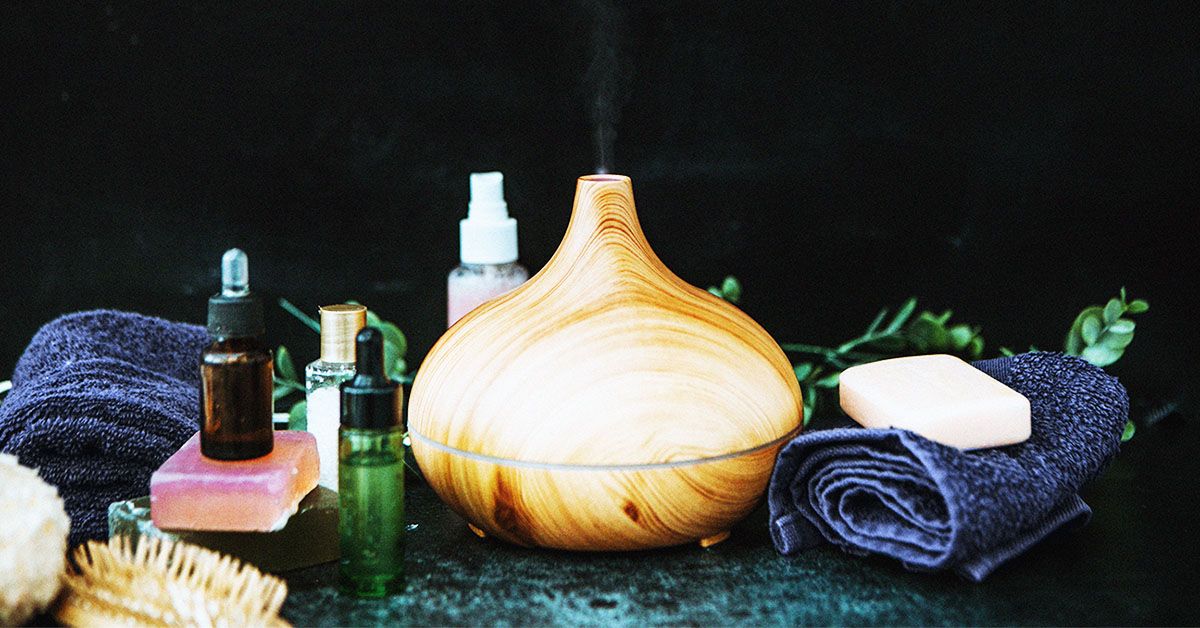
Essential oils are concentrated plant extracts used most often through aromatherapy (inhalation) or diluted topical application.
They are not proven treatments for ED itself. There isn’t solid human evidence that essential oils reliably improve erectile function
by changing penile blood flow or fixing the physical mechanisms of ED.
What essential oils may help with is the context around EDespecially stress-related ED:
calming the nervous system, improving mood, supporting relaxation, and making intimacy feel less like a performance review.
Think “helpful supporting actor,” not “miracle cure.”
The most realistic benefits
- Reducing stress and performance anxiety (arousal is harder when your body is in fight-or-flight mode)
- Creating a consistent wind-down ritual that signals “it’s safe to relax now”
- Boosting sensory comfort (smell and touch can be powerful cues for arousal)
- Encouraging connection if used as part of a couple’s routine (massage, shared bath, slow buildup)
What the research says about essential oils and sexual function
Here’s the honest headline: direct evidence for essential oils treating ED in humans is weak.
Many claims come from small studies, indirect outcomes (like stress reduction), animal research, or traditional use.
Aromatherapy has been studied more for symptoms like anxiety, stress, sleep quality, nausea, and general well-being than for ED specifically.
That doesn’t mean oils are uselessit looks more like this: if anxiety, stress, or mood are major drivers of someone’s ED,
a calming routine (which might include essential oils) can help create better conditions for arousal and response.
But if ED is primarily vascular, neurologic, hormonal, or medication-related, essential oils are unlikely to be enough on their own.
A practical way to interpret “positive” aromatherapy claims
When you see “lavender improves blood flow” or “ylang-ylang boosts libido,” translate it into:
“This scent may help some people relax or feel more sensual.” That’s valuablejust not the same as treating ED.
Essential oils people commonly try for ED
If you’re going to experiment, start with oils that are typically used for relaxation, mood support, and a “soft landing” into intimacy.
The goal is to reduce tension and increase comfortnot to slap a “turbo button” on your nervous system.
1) Lavender (the “deep breath” oil)
Lavender is widely used in aromatherapy for relaxation and sleep support. For stress-related ED, lavender’s best “mechanism”
is likely calming the nervous system and easing anxious spirals.
2) Bergamot or sweet orange (the “mood reset” citrus)
Some citrus oils are popular for mood-lifting and stress reduction. If your ED is tightly tied to mental load, a brighter scent can help
shift the vibe from “workday brain” to “present moment.” Just be careful: some citrus oils can be phototoxic on skin
(more on that in the safety section).
3) Ylang-ylang or jasmine (the “sensual ambience” oils)
Floral oils are often used to support sensuality and relaxation. Their role is mostly about emotional tone and sensory association:
they can help intimacy feel less rushed and more connected.
4) Peppermint (use with caution)
Peppermint is stimulating and can feel “energizing,” but it can also irritate skin and isn’t a great idea near sensitive areas.
If you like it, keep it for diffusionnot for genital skin.
5) Ginger or cinnamon (warming oilsbe extra careful)
These are sometimes mentioned for “warming” sensations. In real life, they’re also more likely to cause irritation if used incorrectly.
If you’re curious, stick with inhalation or extremely conservative dilution well away from the genitals.
How to use essential oils safely (the part everyone skips)
Essential oils are potent. “Natural” doesn’t mean “gentle,” and your skin definitely doesn’t care that something came from a plant.
Safe use mattersespecially because irritation, allergic reactions, or burning sensations are not exactly romantic.
Golden rules
- Do not ingest essential oils unless under qualified clinical guidance for a specific product and indication.
- Never apply undiluted oils to skinespecially not genital skin.
- Dilute in a carrier oil (like fractionated coconut oil, jojoba, or sweet almond oil) for topical use.
- Patch test first on a small area (like the inner forearm) and wait 24 hours.
- Keep oils away from eyes and mucous membranes.
- Use caution if you have asthma, allergies, eczema, or sensitive skin.
- Keep oils away from kids and petsaccidental exposure can be dangerous.
A simple dilution guide for massage (non-genital areas)
A conservative approach is best. For adults, many aromatherapy guides recommend staying under low concentrations for leave-on products.
If you’re not sure, aim for a very light dilution and adjust only if your skin tolerates it.
- 1% dilution: about 5–6 drops of essential oil per 1 ounce (30 mL) of carrier oil
- 2% dilution: about 10–12 drops per 1 ounce (30 mL) of carrier oil
Use this for shoulders, neck, back, hands, or feetnot the genitals. If you want to involve the pelvic area, keep it to lower abdomen or inner thighs,
avoiding mucous membranes and the most sensitive skin.
Diffuser tips that won’t overwhelm the room
- Start with 3–5 drops in a diffuser (follow device instructions).
- Run it 10–20 minutes before intimacynot all night like a fog machine at a middle-school dance.
- Ventilate the room if the scent feels strong or irritating.
Condom and lubricant compatibility
Oil-based products can weaken latex condoms. If you’re using condoms, keep oils and oil-based blends away from the condom area,
and choose condom-compatible lubricants. When in doubt: keep the oils to diffusion and non-genital massage.
Essential oils vs. evidence-based ED treatment (what actually works)
Essential oils can support relaxation and mood, but evidence-based ED care targets the underlying cause.
Depending on your situation, that may include lifestyle changes, talk therapy, medication, devices, or other medical options.
Evidence-based options to know about
- Lifestyle changes: exercise, weight management, quitting smoking, improving sleep, moderating alcohol
- Counseling or sex therapy: especially for performance anxiety, depression, or relationship issues
- Oral medications (PDE5 inhibitors): first-line for many men when appropriate
- Vacuum erection devices: mechanical option that can work even when medications don’t
- Injections or other second-line therapies when needed, guided by a specialist
If you’re already using ED medication, essential oils generally don’t “conflict” in a direct way when used through diffusion.
The bigger concern is skin irritation from topical use and the risk of unsafe ingestion.
Always check with a clinician if you have chronic conditions or take multiple medications.
A realistic “essential oils + ED” routine (with examples)
Here are a few ways to use essential oils as part of a broader, evidence-aligned planwithout turning your bedroom into a candle-and-claims showroom.
Routine A: Stress-related ED (the nervous system reset)
- 10-minute transition: phone away, lights softer, breathe slower.
- Diffuser: lavender + bergamot (3 drops + 2 drops) for 15 minutes.
- Simple touch: hand or shoulder massage with a 1% diluted blend.
- Pressure off: agree that intimacy doesn’t have to equal penetrationfocus on connection and pleasure.
Routine B: Low mood + low desire (the “feel human again” setup)
- Move a little: a short walk or light stretching earlier in the day.
- Shower: warm water + a few slow breaths (no oils needed in the water if you have sensitive skin).
- Diffuser: sweet orange or a gentle floral for a brighter tone.
- Conversation: one honest sentence each about what would help you feel more relaxed tonight.
Routine C: Relationship tension (the “we’re a team” approach)
- Start earlier: intimacy begins at 6 p.m., not at 11:57 p.m. when you’re both half-asleep.
- Shared ritual: a short massage exchange (non-genital) using a pre-diluted blend.
- Keep expectations flexible: prioritize closeness over outcome.
When essential oils are a bad idea
- You have a history of allergic contact dermatitis or strong fragrance sensitivity.
- You plan to apply oils on or near genital skin (high risk of burning/irritation).
- You’re considering ingestion to “boost testosterone” or “improve circulation.”
- You have pets that are sensitive to diffused oils, or kids who can access bottles.
- You have persistent ED and are using oils to avoid medical care even though symptoms are ongoing.
How to shop smarter (so you don’t buy fancy-smelling mystery liquid)
Quality varies. “Therapeutic grade” is mostly marketing language, not a regulated standard.
If you’re buying essential oils, prioritize transparent labeling and realistic claims.
- Look for the botanical name (e.g., Lavandula angustifolia).
- Avoid products making disease treatment claims.
- Choose bottles with child-resistant caps if available.
- Start with one oil and learn how your body responds before building a “collection.”
Experiences with essential oils for ED (real-world patterns people report)
Let’s talk about “experiences,” because this is where essential oils get their reputation. Not from blockbuster clinical trials,
but from what people notice in their actual lives. The key is to interpret these experiences the right way:
they’re often about reducing pressure and improving connection, not flipping a biological switch.
One common experience is the “mental gear shift.” People who struggle with stress-related ED often describe feeling like their body is
still at workjaw tight, shoulders up, brain running a background tab called Everything I Forgot To Do Today.
A consistent scent (like lavender or a gentle citrus) can become a cue that it’s time to slow down. Seeing the diffuser turn on,
noticing the smell, and pairing it with a few minutes of breathing can create a reliable pre-intimacy routine. Over time, some couples
report that the routine itself becomes the “permission slip” to relax.
Another experience people mention is that essential oils help remove the spotlight from erections. When a couple adds a brief massage
using a properly diluted blend, it changes the opening move. Instead of “are we ready yet?” the focus becomes comfort, touch, and connection.
This matters because anxiety and arousal don’t share a couch well. Men who describe performance anxiety often say the most helpful part
isn’t the oilit’s the slower pace and the feeling that intimacy is happening with them, not being demanded from them.
Some people also report a boost in confidence simply because they’re “doing something.” That can sound silly until you remember that ED can
make people feel powerless. A small ritualchoosing a scent, mixing a dilution once, setting the roomcan restore a sense of control.
And confidence, even when it starts as a practical setup step, can support arousal by lowering self-consciousness.
There are also less glamorous experiences that deserve airtime. A number of people discover (the hard way) that certain oils sting,
irritate skin, or trigger headaches. Some describe trying a “warming” oil and ending up with redness that kills the mood instantly.
Others overdo the diffuser and feel nauseated or overwhelmed by fragrance. These stories are useful because they point to the real lesson:
less is more. Low doses, good ventilation, patch testing, and keeping oils away from genital skin are not optional details.
Finally, a lot of couples describe that the biggest “win” from essential oils is the conversation they finally had while setting it up.
When you decide together what helpsless pressure, more time, different expectationsyou’re already treating one of the major drivers of ED:
fear of failure. In that sense, essential oils can be a gentle gateway into a better process: more teamwork, more calm, more curiosity,
and fewer silent assumptions. That’s not a miracle cure. But it is a meaningful shift, and for some people, it’s the shift that makes
everything else (medical treatment, lifestyle changes, therapy, or simply better communication) work better.
Bottom line
Essential oils aren’t a proven treatment for erectile dysfunction, but they can be a useful adjunct when ED is influenced by stress,
anxiety, mood, or relationship dynamics. Used safelymostly through diffusion and properly diluted massage away from genital skinoils can support
relaxation and connection, which are legitimately important ingredients for sexual function.
If ED is persistent or new, treat it as a health signal, not a private failure. Evidence-based options exist, and they work for many men.
Essential oils can be part of the atmosphere, not the entire plan.