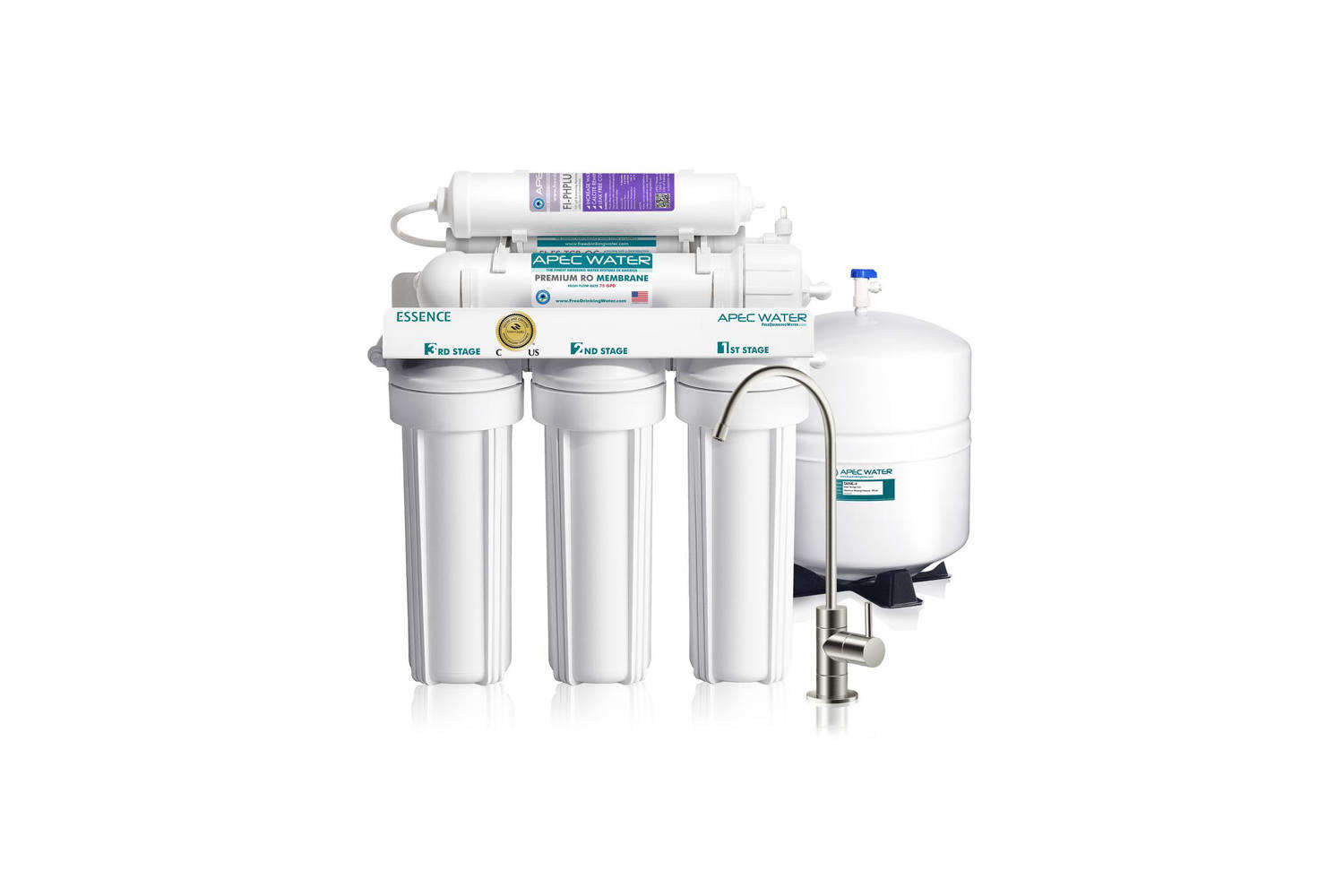
Tap water can be perfectly legal, carefully treated, and still taste as though it spent the afternoon socializing with a swimming pool. Chlorine odors, dissolved minerals, aging plumbing, and local water conditions can all influence what arrives at the kitchen faucet. That is where the Essence Premium Quality Reverse Osmosis Drinking Water Filter System, commonly sold as the APEC ROES-50, enters the conversation.
This under-sink reverse osmosis system uses five filtration stages to reduce sediment, unwanted tastes, odors, dissolved solids, and a broad range of potential contaminants. It is designed to provide filtered water through a dedicated faucet for drinking, cooking, coffee, tea, and ice.
The system is not a tiny faucet attachment or a pitcher that spends half its life blocking the refrigerator door. It is a traditional, tank-based reverse osmosis setup with full-size filters, a semipermeable membrane, tubing, a storage tank, and its own drinking-water faucet. That means it requires more installation space, but it also offers substantially more comprehensive treatment than basic carbon filtration alone.
What Is the Essence Reverse Osmosis Water Filter System?
The Essence Premium Quality Reverse Osmosis Drinking Water Filter System is a point-of-use water treatment system installed beneath a kitchen sink. The best-known version is the APEC ROES-50, a five-stage unit rated to produce up to 50 gallons of filtered water per day under specified laboratory conditions.
Rather than treating every gallon used throughout the house, it focuses on the water people are most likely to consume. Regular tap water still supplies the main kitchen faucet for washing dishes and cleaning, while purified water is delivered through a separate faucet.
This arrangement offers two practical advantages. First, it avoids using highly filtered water for jobs such as rinsing a frying pan. Second, it reduces the workload placed on the filters and membrane. Purifying water for drinking and cooking is generally more economical than trying to provide reverse osmosis water to every shower, toilet, and garden hose.
The ROES-50 includes a pressurized storage tank because reverse osmosis filtration is relatively slow. Water is purified gradually and stored until someone opens the dedicated faucet. The tank then provides a usable flow instead of making the household wait patiently beside the sink like guests at the world’s least exciting beverage bar.
How the Five-Stage Filtration Process Works
Reverse osmosis systems work best when several treatment methods cooperate. The membrane performs the most intensive separation, but the filters before and after it protect the system and improve the final taste.
Stage 1: Sediment Filtration
The first stage uses a polypropylene sediment filter to capture visible and suspended particles such as rust, dirt, sand, and pipe scale. Removing these materials early helps prevent them from clogging the carbon filters or damaging the reverse osmosis membrane.
This stage is particularly valuable in homes with older plumbing or private wells, where sediment levels may fluctuate. However, extremely muddy water, heavy iron, or substantial well-water contamination may require additional pretreatment before the RO system.
Stage 2: Carbon Block Filtration
The second stage uses an activated carbon block to reduce chlorine, unpleasant odors, cloudiness, discoloration, and certain organic chemicals. This step improves taste while also protecting the membrane.
Chlorine is useful in municipal water because it helps control microorganisms during distribution. Unfortunately, it is not friendly to many thin-film composite reverse osmosis membranes. Removing it before the membrane is therefore not merely cosmetic; it supports longer membrane life.
Stage 3: Additional Carbon Treatment
A second carbon block provides another layer of treatment for chlorine, odors, tastes, and various organic compounds. The dual-carbon arrangement gives incoming water more contact time with filtration media and provides additional protection for the membrane.
Think of the first carbon stage as a nightclub bouncer and the second as the person checking wristbands inside. Anything troublesome that sneaks through the first checkpoint gets another opportunity to be shown the door.
Stage 4: Reverse Osmosis Membrane
The fourth stage is the heart of the system. Water pressure pushes water molecules through a thin semipermeable membrane while many dissolved substances are rejected and carried toward the drain in a concentrate stream.
Reverse osmosis can reduce total dissolved solids and may reduce substances such as lead, arsenic, fluoride, chromium, nitrate, sodium, copper, radium, and various other dissolved contaminants. Actual reduction performance depends on the contaminant, membrane condition, incoming pressure, water temperature, chemistry, and the system’s certified performance claims.
The manufacturer advertises reduction of up to 99% of many contaminants, but consumers should not interpret that figure as a universal guarantee for every substance in every home. Water treatment is not a magic trick. A household concerned about a specific contaminant should test its water and verify that the exact model is certified for the relevant reduction claim.
Stage 5: Coconut-Shell Carbon Polishing Filter
After filtration, water sits in the pressurized storage tank until needed. Before reaching the faucet, it passes through a final coconut-shell carbon filter. This polishing stage reduces any residual taste or odor that may develop during storage.
The result is typically neutral, crisp-tasting water that works well for drinking and food preparation. Coffee and tea may taste cleaner because fewer dissolved minerals and treatment chemicals are competing with their natural flavors. Ice cubes can also appear clearer, although perfectly transparent ice still requires controlled freezing conditions. The filter is talented, but it has not yet earned a degree in thermodynamics.
Key Specifications of the ROES-50
| Feature | Typical Specification |
|---|---|
| Filtration stages | Five |
| Rated production | Up to 50 gallons per day at 60 psi and 77°F |
| Approximate production at 50 psi | About 30 gallons per day at 77°F |
| Recommended feed-water pressure | 40–85 psi |
| Feed-water temperature | 40–100°F |
| Maximum incoming TDS | Up to 2,000 ppm |
| Storage tank | Nominal 4-gallon pressurized tank |
| System dimensions | Approximately 15.5 inches long, 5.25 inches wide, and 17 inches high |
| Tank dimensions | Approximately 11 by 11 by 15 inches |
| Certification | WQA Gold Seal-certified system |
Rated production figures are measured under controlled conditions. Colder water moves through an RO membrane more slowly, and lower water pressure can significantly reduce daily output. A house receiving only 40 psi should not expect the same production rate as a laboratory test conducted at 60 psi and 77°F.
What the Certification Means
The ROES-50 is marketed as a WQA Gold Seal-certified reverse osmosis system. Third-party certification matters because it provides more meaningful assurance than marketing language alone.
Standards used for point-of-use reverse osmosis systems evaluate areas such as material safety, structural integrity, total dissolved solids reduction, product information, and certain contaminant-reduction claims. Certification does not mean that every certified RO system removes every possible contaminant. It means the product has been independently evaluated for the specific standards and claims shown in its certification listing.
Before purchasing any filtration system, compare the contaminants listed in a local water-quality report or private laboratory test with the product’s current performance data sheet. This is especially important for private wells because well-water chemistry can vary from one property to the next, even when the homes are close enough for the owners to argue over the same leaf blower.
Installation Requirements
The Essence reverse osmosis system is designed for do-it-yourself installation, and it includes color-coded tubing, quick-connect fittings, a feed-water adapter, a drain saddle, a tank valve, a filter-housing wrench, and a dedicated faucet.
Still, “DIY-friendly” does not mean “install it five minutes before dinner guests arrive.” A typical installation involves shutting off the cold-water supply, connecting the feed adapter, mounting the drain saddle, positioning the filtration assembly, connecting the storage tank, and installing the separate faucet.
Check the Space Under the Sink
The filter assembly is relatively narrow, but the storage tank needs additional room. Measure cabinet height, depth, and width before ordering. Also account for the garbage disposal, drain pipes, cleaning products, and the mysterious collection of reusable grocery bags that reproduces whenever the cabinet door is closed.
Plan for the Dedicated Faucet
The filtered-water faucet needs an existing accessory hole or a newly drilled opening in the sink or countertop. Stainless steel sinks are usually easier to drill than granite, quartz, porcelain, or certain composite materials. Homeowners who are uncomfortable drilling an expensive countertop should hire a plumber or countertop professional.
Flush the System Before Drinking
New carbon filters may release harmless carbon fines, and the system must be flushed before regular use. The first storage tanks of water are generally discarded according to the manufacturer’s instructions. Initial water may appear cloudy because of trapped air, which typically clears after flushing.
Maintenance and Filter Replacement
Reverse osmosis systems are not install-and-forget appliances. Routine maintenance protects water quality, flow rate, and membrane performance.
For the ROES-50, the first three prefilters are generally replaced every 6 to 12 months. The reverse osmosis membrane and final carbon filter may last approximately 2 to 4 years, depending on usage and incoming water quality.
Homes with heavy sediment, high chlorine levels, hard water, or greater water consumption may need more frequent service. Warning signs include reduced faucet flow, unusual taste, odor, continuously running drain water, slow tank refilling, or an unexpected increase in filtered-water TDS.
A handheld TDS meter can help track membrane performance, but it should not be treated as a universal contaminant detector. TDS measures the concentration of dissolved ionic substances; it does not identify lead, PFAS, bacteria, pesticides, or individual chemicals. Water can have a low TDS reading and still require testing for specific concerns.
Filter changes should include inspection of tubing, fittings, O-rings, and the storage tank. Periodic sanitizing is also wise, particularly when replacing the membrane or when the system has been unused for an extended period.
Benefits of the Essence Reverse Osmosis System
Broad Water Treatment
The combination of sediment filtration, activated carbon, and reverse osmosis addresses more water-quality concerns than a basic pitcher or refrigerator filter. It can reduce both aesthetic problems and many dissolved substances.
Better-Tasting Drinks and Food
Reducing chlorine, odors, and excess dissolved minerals can noticeably improve plain drinking water, coffee, tea, soups, sauces, and ice. People who regularly buy bottled water may find the convenience especially appealing.
Standard-Size Replacement Filters
The system uses conventional 10-inch filter housings and widely recognized component formats. Standardized parts can make long-term maintenance more practical than proprietary cartridges available from only one supplier.
No Electricity Required
Under normal pressure conditions, the ROES-50 operates using household water pressure and does not require an electrical outlet. Homes with low pressure may need an optional booster pump.
Stored Water Is Ready on Demand
The pressurized tank allows users to fill glasses, cooking pots, and coffee makers without waiting for the membrane to produce water in real time.
Potential Drawbacks to Consider
The first drawback is cabinet space. The filter assembly and tank occupy considerably more room than a direct-connect carbon filter. Small apartments and crowded sink cabinets may require creative organization.
Second, reverse osmosis produces a reject-water stream. Some water carries concentrated dissolved substances to the drain while purified water enters the tank. The exact ratio varies with pressure, temperature, membrane condition, and system design. Buyers concerned about conservation should compare current efficiency and recovery data rather than assuming all RO systems perform alike.
Third, reverse osmosis removes many naturally occurring minerals along with unwanted substances. Most people obtain essential minerals primarily from food, but some users prefer the taste of mineralized water. Those users may consider an optional remineralization stage or a different Essence model with an alkaline mineral filter.
Finally, the system requires ongoing filter purchases and maintenance. Ignoring replacement intervals can reduce performance and create exactly the kind of unpleasant water the owner bought the unit to avoid.
Who Is This System Best For?
The Essence Premium Quality Reverse Osmosis Drinking Water Filter System is a strong fit for households that want comprehensive point-of-use filtration without moving to a more expensive tankless or whole-house setup.
It may be especially useful for homes experiencing noticeable chlorine taste, elevated dissolved solids, mineral-related flavor, or concern about contaminants that ordinary carbon filters may not adequately reduce. It is also practical for families that consume substantial bottled water and want a permanent kitchen alternative.
It may be less suitable for renters who cannot modify plumbing, homes with extremely limited cabinet space, or households with water pressure below the recommended range. Private-well users should test their water before installation. Heavy iron, manganese, sulfur, sediment, hardness, or microbial contamination may require pretreatment or disinfection beyond a standard under-sink RO system.
Everyday Ownership Experience: What Living With the System Is Really Like
Living with the Essence ROES-50 is generally less dramatic than installing it. Once the system is flushed, the tubing is checked, and the cabinet floor is confirmed to be dry, it mostly disappears into the background. That is a compliment. The ideal water filter is not an appliance that demands emotional support every Tuesday.
The first noticeable change is often taste. Municipal water with a strong chlorine presence can become much more neutral. Coffee may taste cleaner and less bitter, especially when the previous tap water contained noticeable mineral or disinfectant flavors. Tea can reveal subtler notes, while soups and sauces may taste more like their ingredients and less like the local water-treatment plant.
The dedicated faucet also changes kitchen habits. Family members may begin filling reusable bottles before leaving home instead of grabbing bottled water. The faucet is convenient for rinsing produce that will be eaten raw, preparing infant formula when appropriate medical and safety guidance is followed, filling pet bowls, or adding water to countertop appliances.
The storage tank introduces a small learning curve. Although it is described as a 4-gallon tank, the usable water volume is lower because part of the internal space is occupied by compressed air and because delivery pressure changes as the tank empties. A household can fill several containers, but a long session of cooking, bottle filling, and coffee making may temporarily outrun the stored supply. When that happens, the flow slows until the membrane refills the tank.
Water pressure and temperature become more noticeable during ownership. In winter, cold feed water may reduce production. A home with weak pressure may experience slower tank recovery throughout the year. These changes do not necessarily indicate a broken system; they are normal characteristics of membrane filtration. Persistent low flow, however, may signal clogged prefilters, improper tank pressure, a worn membrane, or a partially closed valve.
Installation quality strongly shapes the ownership experience. Properly inserted tubing and correctly seated O-rings can provide years of quiet operation. A fitting pushed in only halfway may create a slow leak that waits until everyone has gone to bed before making its artistic debut on the cabinet floor. Placing a leak alarm or shallow moisture tray beneath the system is an inexpensive precaution.
The first filter replacement is usually the moment when owners understand the system rather than merely admire it. The water supply must be shut off, pressure relieved, housings loosened, old cartridges removed, and new filters installed in the correct order. A filter-housing wrench helps, although housings should not be overtightened during reassembly.
Used prefilters can provide a visual reminder of what the system has captured. A once-white sediment cartridge may appear tan, brown, or orange depending on local plumbing and water conditions. That sight is satisfying, slightly horrifying, and excellent motivation to stop postponing the next replacement date.
Maintenance becomes easier when filter changes are recorded on a calendar. Writing the installation date directly on each housing or keeping replacement cartridges on hand can prevent a simple task from becoming a three-month exercise in procrastination.
Over time, the most valuable benefit may not be a dramatic contaminant-removal statistic. It may be consistency. The same faucet provides the water used for drinking, cooking, and beverages every day. There are no pitchers to refill, no heavy cases of bottled water to carry, and no refrigerator shelf being held hostage by a plastic dispenser.
That convenience comes with responsibility. The system must be maintained, sanitized when appropriate, and monitored for leaks or performance changes. When treated as a working appliance rather than permanent plumbing furniture, the Essence ROES-50 can provide a dependable and pleasant everyday water experience.
Final Verdict
The Essence Premium Quality Reverse Osmosis Drinking Water Filter System offers a practical balance of thorough filtration, conventional components, manageable maintenance, and household-friendly capacity. Its five-stage design addresses sediment, chlorine, odors, dissolved solids, and many contaminants that simpler filters may leave behind.
Its main compromises are familiar to traditional reverse osmosis systems: cabinet space, wastewater production, slower membrane output, and recurring filter replacements. Buyers who understand those limitations and verify that the system matches their water conditions are more likely to be satisfied than those expecting a maintenance-free miracle faucet.
For households seeking cleaner-tasting water at one kitchen sink, the ROES-50 remains a compelling, straightforward option. It is not flashy, connected to an app, or likely to send a push notification congratulating you for drinking eight glasses. It simply filters waterand sometimes that is exactly what a good appliance should do.
Note: Product specifications, certification listings, included components, prices, and warranties may change. Verify the current model label, performance data sheet, installation requirements, and certified contaminant-reduction claims before purchasing or relying on the system for a specific water-quality concern.