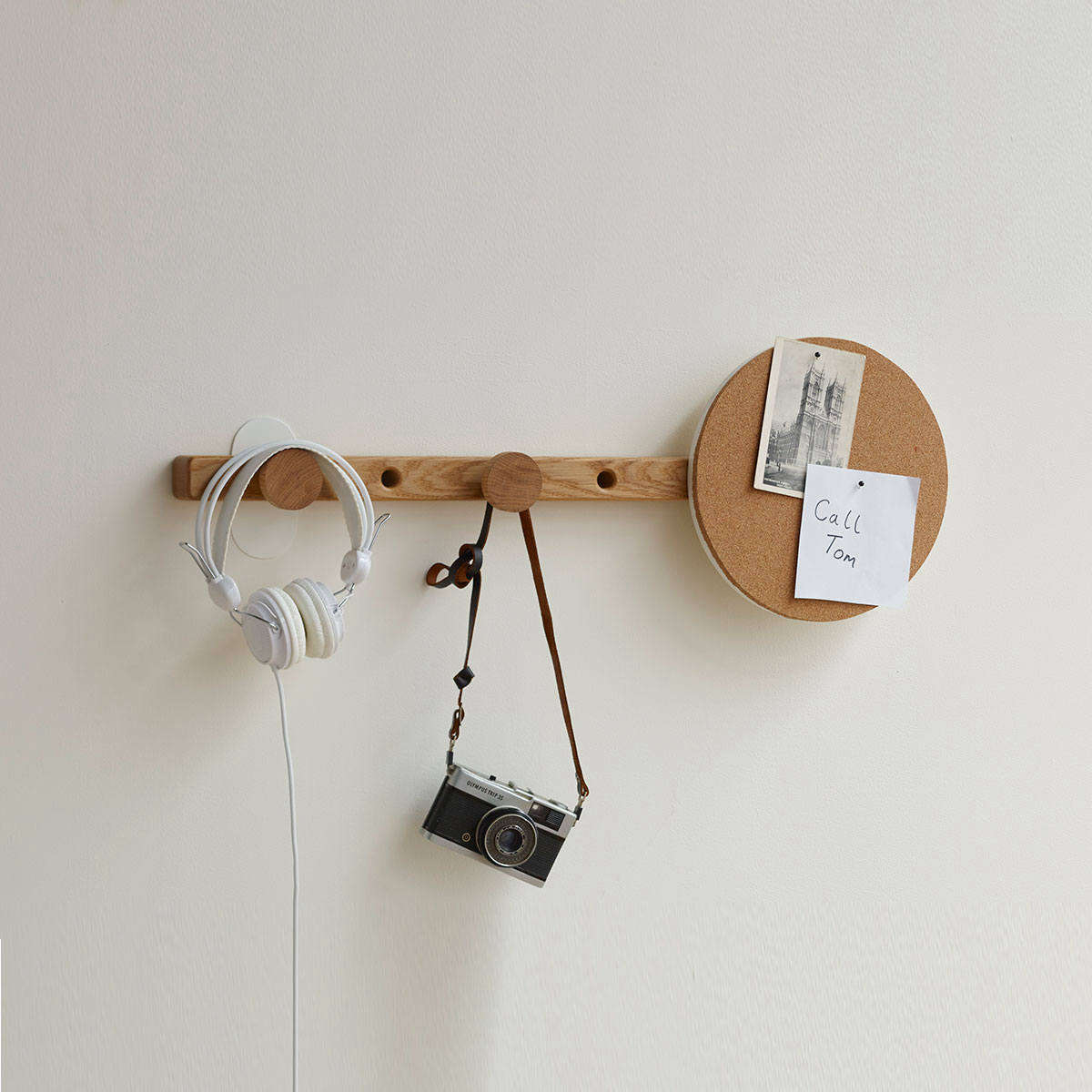
The Dot Bar Coat & Accessory Rack is the kind of home accessory that quietly solves a very loud problem: where exactly are the coats, keys, bags, hats, scarves, dog leashes, sunglasses, and “I swear I just had it” items supposed to go? In many homes, the entryway becomes a small airport terminal for everyday chaos. A jacket lands on a chair. A tote bag migrates to the floor. Keys disappear into another dimension. The Dot Bar takes a calmer approach. It turns one strip of wall into a clean, flexible, good-looking storage zone.
At its heart, this rack belongs to the modern peg rail family, but it feels more refined than the traditional row of wooden pegs your grandmother might have used for aprons and garden hats. Its appeal comes from the balance between simplicity and customization. The bar can hold hooks, small accessories, and decorative add-ons, making it useful for coats and bags while still feeling intentional enough for a design-conscious hallway, bedroom, office, or mudroom.
This article explores why the Dot Bar Coat & Accessory Rack works so well, how to style it, where to install it, and how it compares with other entryway storage solutions. We will also look at practical lessons from real-life use, because a coat rack is not truly tested until it has survived backpacks, winter layers, reusable grocery bags, and one suspiciously heavy tote full of “quick errands.”
What Is the Dot Bar Coat & Accessory Rack?
The Dot Bar Coat & Accessory Rack is a wall-mounted storage piece designed to organize everyday items while adding a minimal design element to the room. Unlike bulky hall trees or freestanding coat racks, it uses vertical wall space instead of precious floor space. That makes it especially helpful in apartments, narrow hallways, compact entryways, small bedrooms, and homes where every square foot has already been assigned three jobs.
The design is based on a simple horizontal bar that can be paired with hooks and round accessories. Depending on configuration, it may be used with wooden hooks, a round pinboard, a small mirror, or similar functional accents. This modular idea is what makes the rack more interesting than a standard row of hooks. You are not just hanging coats; you are building a tiny command center for leaving and entering the home.
A Modern Peg Rail With Personality
Traditional peg rails are loved because they are honest, practical, and easy to understand. You hang things on them. That is the entire pitch, and frankly, it is a strong pitch. The Dot Bar updates that idea with a cleaner silhouette and a more flexible accessory system. It can look Scandinavian, modern, playful, or quietly architectural depending on how it is styled.
The “dot” element gives the piece a softer visual rhythm. Instead of aggressive metal hooks shouting from the wall, the rounded forms feel friendly. They make coats, hats, canvas totes, and accessories look less like clutter and more like part of the room. That is a small detail, but in an entryway, small details do big work.
Why Wall-Mounted Storage Is So Effective
Entryways often fail because they are expected to do too much without enough structure. People walk in carrying mail, bags, jackets, water bottles, school supplies, pet gear, and sometimes emotional baggage from traffic. Without designated spots, everything lands wherever gravity allows. A wall-mounted coat rack changes the behavior of the space by creating obvious places for daily essentials.
A slim wall rack also keeps the floor open. That matters in narrow spaces where a bench, cabinet, or freestanding coat stand may block movement. A bulky organizer can look great in a catalog but feel like a furniture traffic cone in real life. The Dot Bar Coat & Accessory Rack gives you storage without turning the entryway into an obstacle course.
It Uses Vertical Space
Vertical storage is one of the smartest strategies in small-space organization. Walls are often underused, yet they are perfect for grab-and-go items. Coats, bags, scarves, umbrellas, headphones, and keys all need visibility. When these items are hidden too deeply in a closet, they often end up on chairs instead. A visible rack encourages better habits because the storage is right where the action happens.
It Creates a Drop Zone
A good entryway needs a drop zone: a clearly defined place for the items you use every day. The Dot Bar works beautifully for this purpose because it can handle both hanging storage and small accessories. Add a hook for a work bag, another for a jacket, and a small round accessory for reminders or quick notes. Suddenly the front door area feels less like a dumping ground and more like mission control.
Best Places to Use the Dot Bar Coat & Accessory Rack
Although the name suggests coats and accessories, this rack is not limited to entryways. Its clean design makes it useful in multiple rooms. The best placement depends on your lifestyle, your wall space, and the items that currently have no proper home.
Entryway or Hallway
The entryway is the most obvious location. Install the Dot Bar near the front door to hold daily coats, reusable shopping bags, hats, umbrellas, and keys. If your home does not have a formal foyer, do not worry. A small wall beside the door is enough. In fact, the smaller the entryway, the more useful a wall-mounted rack becomes.
Bedroom
In a bedroom, the rack can serve as a gentle alternative to “the chair,” also known as the place where clean clothes go to develop a complicated relationship with laundry. Use it for robes, tomorrow’s outfit, scarves, handbags, or jewelry organizers. The result is more polished than a pile and less demanding than a full closet reorganization.
Bathroom
A Dot Bar can work in a bathroom for towels, robes, toiletry bags, or hair accessories, as long as the material and finish are suitable for the room’s humidity level. It is especially useful in guest bathrooms, where visitors appreciate an obvious place to hang a towel instead of performing the awkward “where does this go?” dance.
Home Office
In an office, the rack can hold headphones, laptop bags, lanyards, calendars, lightweight organizers, or small memo boards. This is a great option for people who want their workspace to feel tidy but not sterile. A little wall organization can make a desk feel less crowded, which may or may not make emails less annoying. No promises.
Design Style: Minimal, Warm, and Flexible
The beauty of the Dot Bar Coat & Accessory Rack is that it does not scream for attention. It gives the wall structure without overwhelming the room. The rounded accessories soften the geometry, while the horizontal bar keeps the look neat. This is why it fits comfortably into modern, Scandinavian, Japandi, minimalist, contemporary, and casual interiors.
It also pairs well with natural materials. Wood hooks bring warmth. A round mirror adds light and function. A pinboard introduces texture and practicality. The overall effect can be playful without becoming childish, minimal without becoming cold, and useful without looking like it escaped from a school locker room.
For a Scandinavian Look
Pair the rack with pale walls, light wood flooring, woven baskets, and neutral coats. Keep the number of visible items low. A tan tote, a wool scarf, and a simple black jacket can look intentional when spaced properly. The goal is calm, not “Nordic showroom where no one owns keys.”
For a Modern Apartment
Use the Dot Bar as a compact entryway organizer beside the door. Add a narrow shoe cabinet below it and a small tray for keys. This creates a complete storage system without requiring a large foyer. In a rental, be sure to check mounting rules and choose appropriate hardware for your wall type.
For a Family Home
Install the rack at a practical height and assign hooks by person or category. One hook for school bags, one for jackets, one for dog gear, and one for reusable bags can reduce morning confusion. If children use the rack, consider a lower companion row or nearby basket so they can actually reach their things. Storage that requires adult intervention every time is not storage; it is a customer service desk.
How to Style the Dot Bar Without Creating Visual Clutter
Open storage is convenient, but it needs editing. The trick is to keep only daily-use items on display. The Dot Bar Coat & Accessory Rack looks best when it holds a thoughtful mix of functional objects rather than every coat you have owned since 2012.
Use the One-Week Rule
If you have not used an item in the past week, it probably does not need to live on the rack. Seasonal coats, extra tote bags, rarely worn hats, and backup umbrellas should go elsewhere. The rack should serve the rhythm of daily life, not become a museum exhibit titled “Things We Might Need Eventually.”
Balance Heavy and Light Items
Avoid loading one side with bulky coats while the other side holds a single keychain. Visual balance matters. Place heavier items toward the ends or distribute them evenly. If you use a mirror or pinboard accessory, let it breathe by leaving a little empty space around it.
Choose a Color Story
Open storage looks cleaner when the visible items share a loose color palette. You do not need to buy matching beige coats unless you want your hallway to look like a very organized oat milk commercial. Just avoid overcrowding the rack with clashing bags, neon accessories, and too many small dangling items.
Installation Tips Before You Drill
Before installing any wall-mounted coat rack, measure carefully. Think about height, clearance, wall type, and the weight of the items you plan to hang. A rack used for lightweight hats has different demands than one expected to hold winter coats, backpacks, and a gym bag full of mysterious metal water bottles.
Pick the Right Height
For adults, a comfortable coat hook height often falls around shoulder level or slightly higher. In a family home, consider whether children need access. If the rack is too high, kids will use the floor. The floor is very reliable, but unfortunately, it is not an organization system.
Check the Wall
Whenever possible, mount into studs or use hardware appropriate for drywall, plaster, brick, or masonry. The rack may look delicate, but coats and bags can become surprisingly heavy. Proper installation protects both the rack and the wall.
Leave Room Below
Plan what will sit underneath the rack. A slim bench, shoe tray, basket, or small cabinet can complete the entryway system. Make sure hanging coats will not drag across shoes or block drawers. Good storage should feel smooth in daily use, not like solving a puzzle before school drop-off.
Dot Bar vs. Traditional Coat Rack
A traditional freestanding coat rack has charm, but it can become unstable or crowded. It also takes up floor space, which is not ideal in compact homes. A wall-mounted rack like the Dot Bar is more streamlined and usually easier to integrate into a small entryway.
Compared with basic wall hooks, the Dot Bar offers a more cohesive look. Individual hooks can work well, but they require careful spacing and alignment. A bar system feels cleaner because the design is unified. Compared with a full hall tree, it is lighter, less expensive in space, and easier to style. The trade-off is that it does not provide built-in shoe storage or seating, so you may want to pair it with a bench or cabinet if your entryway needs more function.
Who Should Consider the Dot Bar Coat & Accessory Rack?
This rack is ideal for people who want practical organization without bulky furniture. It is especially useful for renters with limited floor space, homeowners designing a clean entryway, families who need a grab-and-go station, and design lovers who want storage that looks intentional.
It is also a strong choice for anyone who dislikes clutter but still needs everyday items within reach. Minimalism is easy when you own three objects and live in a magazine spread. For the rest of us, smart storage is the more realistic path. The Dot Bar supports that middle ground: tidy, attractive, and actually usable.
Real-Life Experience With a Dot Bar Coat & Accessory Rack
Using a Dot Bar Coat & Accessory Rack in real life feels different from admiring it in a product photo. In a photo, it usually holds one perfect coat, one perfect hat, and maybe a tote bag that has never carried anything heavier than a paperback novel. In daily life, the rack becomes a hardworking landing strip for everything that follows you through the door.
The first thing you notice is how quickly it changes habits. Before installing a wall-mounted rack, many people rely on temporary surfaces. A dining chair becomes a coat closet. The kitchen counter becomes a key drawer. The sofa arm becomes a bag stand. After adding the Dot Bar, the routine becomes simpler: walk in, hang the coat, drop the bag, place keys where they belong. It sounds almost too basic, but basic systems are often the ones that stick.
The second lesson is that capacity needs discipline. A beautiful rack can become messy if it is overloaded. During the first week, it is tempting to hang everything on it because it feels so convenient. Then one day you realize the rack is holding three jackets, two canvas bags, a baseball cap, a scarf, a dog leash, headphones, a raincoat, and a reusable bag containing another reusable bag. That is when editing becomes essential. The best experience comes from treating the rack as daily storage, not permanent storage.
In a small apartment, the Dot Bar is especially helpful because it makes the entry feel designed rather than improvised. A narrow wall that once did nothing suddenly becomes useful. Add a shoe tray below and a small mirror nearby, and the space starts behaving like a real entryway even if the front door opens directly into the living room. This is one of the rack’s biggest strengths: it helps create a zone where no zone existed before.
In a family setting, the experience is slightly more energetic. The rack can reduce clutter, but only if everyone understands what belongs there. Assigning hooks makes a big difference. One hook for each person works better than a vague “everyone use the rack” policy, because vague systems tend to collapse under backpacks and snack wrappers. For kids, lower hooks or a nearby basket can help them participate without needing help every time.
Another practical benefit is visual accountability. When items are visible, you notice when the entryway is getting crowded. A closet can hide chaos until it becomes a geological formation of winter accessories. A wall rack shows you exactly what is happening. That makes it easier to tidy in small moments: remove the extra tote, return the umbrella, move the off-season coat. The rack quietly encourages maintenance.
The only real caution is installation. A coat rack is only as good as its mounting. If you plan to hang heavy coats or bags, take the time to use the correct hardware. Once properly installed, the rack feels dependable and becomes one of those small home upgrades that makes daily life smoother. It will not fold your laundry or answer emails, sadly, but it can stop your jacket from living on the back of a chair. That is already a respectable achievement.
Conclusion
The Dot Bar Coat & Accessory Rack proves that useful storage does not have to be bulky, boring, or visually loud. Its wall-mounted design saves floor space, its modular nature adds flexibility, and its clean look makes it easy to blend into modern interiors. Whether used in an entryway, bedroom, bathroom, or home office, it gives everyday essentials a proper place to land.
The best way to use it is with intention. Keep daily items visible, store seasonal extras elsewhere, and pair the rack with smart supporting pieces like a shoe tray, bench, basket, mirror, or small cabinet. When styled with restraint, the Dot Bar becomes more than a coat rack. It becomes a tiny organizational upgrade that makes leaving the house easier, coming home calmer, and your chairs slightly less burdened by outerwear.
Note: This article synthesizes real product context and current home-organization guidance into original, publication-ready content without external source links, as requested.