DIY can be a beautiful thing. It can save money, build confidence, and give you the deeply satisfying right to point at a wall and say, “I did that.” But there is a line between weekend project and please call a licensed professional before your house turns into a cautionary tale. This is where many homeowners get into trouble: they assume that if a job looks simple on a video, it must be safe in real life.
It usually is not.
Some home improvement tasks carry risks that go far beyond cosmetic mistakes. A crooked shelf is annoying. A bad deck connection, a damaged gas line, or hidden lead dust is a completely different category of problem. The most dangerous DIYs involve one or more of the following: electricity, gas, heights, structural loads, toxic materials, high-pressure systems, or code requirements that the average homeowner has never had to think about.
If you love DIY, this article is not here to crush your spirit. It is here to protect your fingers, your lungs, your roofline, and your insurance deductible. Below are the 13 most dangerous DIY projects homeowners should think twice about, plus the red flags that mean it is time to hire a pro.
Why Some DIY Projects Cross the Line
The most dangerous DIY projects have one thing in common: when they go wrong, they go wrong fast. You do not always get a friendly warning. A circuit does not send a polite email before it arcs. A roof does not schedule your fall for a convenient time. A garage door spring does not care that you watched three tutorials and felt “pretty sure.”
Another problem is that serious home repairs are often hidden systems jobs. You are not just changing a part. You may be changing airflow, load paths, drainage, combustion safety, code compliance, moisture behavior, or fire risk throughout the house. That is why many dangerous DIY projects are not risky because homeowners are lazy or careless. They are risky because houses are sneaky, and the consequences of one bad assumption can spread behind walls, under floors, and into the future.
1. Electrical Panel Work and New Circuit Installation
Replacing a switch plate is one thing. Opening the electrical panel, adding breakers, running new circuits, or modifying service equipment is a different league entirely. This is where shock, electrocution, arc faults, and fire hazards become real concerns. Even experienced tradespeople treat panel work with respect because one wiring error can create hidden danger that does not reveal itself until much later.
Electrical DIY also has a nasty habit of seeming successful right up until it is not. The light turns on, so you assume the job is correct. Meanwhile, a loose connection behind the wall quietly heats up every time the circuit is used. That is not a victory lap. That is a delayed panic attack.
Hire a pro if: the project involves the main panel, service upgrades, new circuits, aluminum wiring, permits, or anything more complex than a very basic fixture swap you are fully qualified to handle.
2. Gas Line Repairs and Gas Appliance Hookups
Natural gas and propane are not forgiving. A bad connection can create fire, explosion, or carbon monoxide risks, and none of those come with a charming farmhouse aesthetic. Gas ranges, dryers, water heaters, furnaces, fireplaces, and standby generators all involve fuel systems that must be installed and tested correctly.
This is one of those categories where people say, “It was only one fitting,” as if gas molecules are known for being understanding. They are not. A small error can become a very big emergency.
Hire a pro if: you are adding, moving, extending, pressure-testing, or reconnecting any gas line or gas-fired appliance.
3. Roof Repairs and Re-Roofing
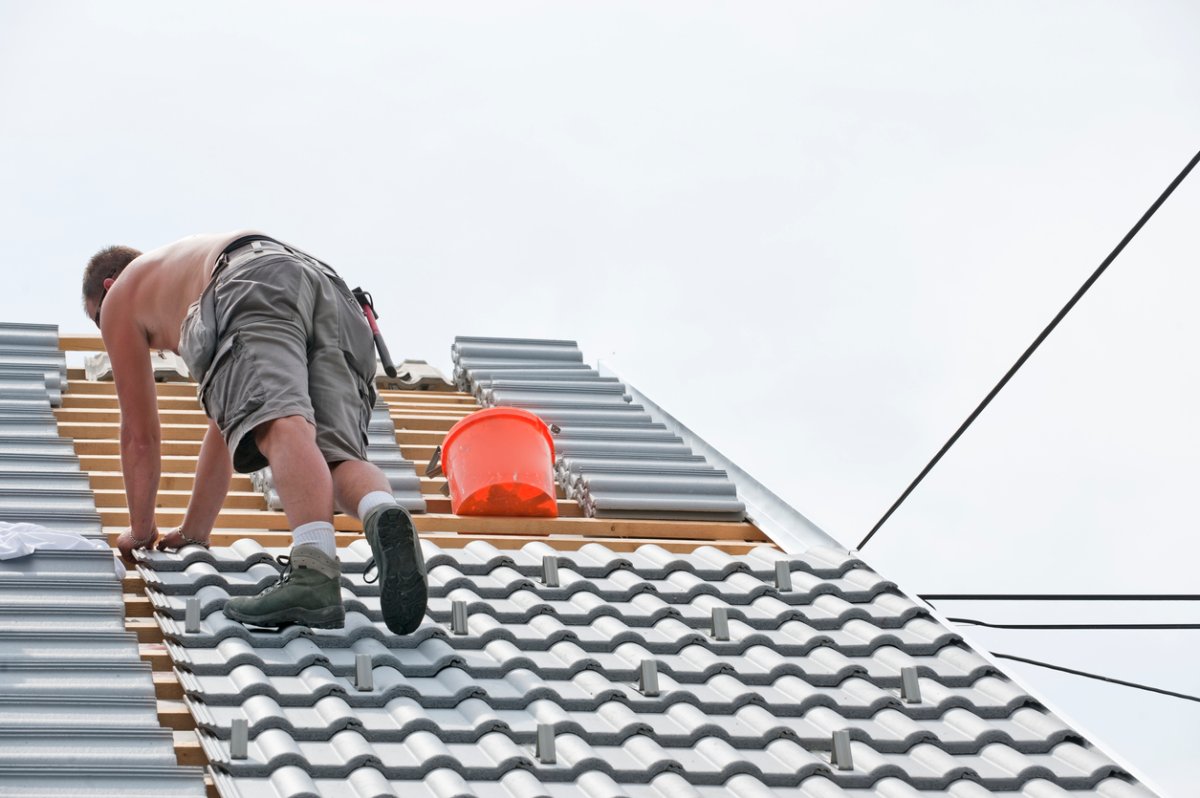
Roof work looks doable from the driveway. It looks much less doable when you are carrying materials up a ladder, balancing on a slope, and dealing with loose shingles, soft decking, wind gusts, heat, or moisture. Falls are the obvious danger, but they are not the only one. A poorly repaired roof can also let water into the home, where it quietly damages insulation, framing, drywall, and indoor air quality.
And let us be honest: a lot of homeowners are only one confident step away from discovering that sneakers are not a fall protection system.
Hire a pro if: the roof is steep, tall, wet, aging, or structurally questionable, or if the repair is anything more involved than a safe visual inspection from the ground.
4. Tree Removal and High Chainsaw Work
Cutting down a tree is not just “wood, but vertical.” Tree removal combines unpredictable weight, tension, gravity, kickback, weather, fall zones, and often power lines. Even professionals face serious struck-by and fall hazards in tree care operations. A limb can swing, split, roll, or drop differently than expected, especially when the tree is dead, diseased, leaning, or storm-damaged.
Homeowners often underestimate the part that happens after the first cut. The tree may not fall where you imagine. It may hang up. It may barber-chair. It may teach everyone in the yard several new vocabulary words.
Hire a pro if: the tree is large, near a house or utility line, requires climbing, or needs anything more advanced than pruning small, accessible branches from stable ground.
5. Garage Door Spring Replacement
Garage doors look harmless because we use them all the time. Their springs are another story. Torsion and extension springs are under enormous tension, and when that energy is released the wrong way, things can go sideways very quickly. Fast.
This is why garage door spring repair has such a strong reputation for danger. It is not about bravery. It is about physics. The spring does not care how motivated you are. It only cares whether the load is controlled.
Hire a pro if: the door is unbalanced, a spring is broken, cables are frayed, or any spring component needs adjustment or replacement.
6. HVAC Repairs Involving Refrigerant, Combustion, or Major Components
Heating and cooling systems mix electrical work, moving parts, airflow design, combustion safety, and, in many cases, refrigerant handling. That alone should be enough to make most homeowners put the screwdriver down. Improper HVAC work can reduce efficiency, damage equipment, void warranties, or create indoor air and safety problems that are hard to trace later.
Refrigerant handling is especially important because federal rules require technician certification for work that can release refrigerants. So no, “I watched a guy online recharge his system in flip-flops” is not a recognized credential.
Hire a pro if: the job involves refrigerant lines, compressors, burners, heat exchangers, gas furnaces, or anything beyond routine filter changes and simple manufacturer-approved maintenance.
7. Disturbing Lead Paint in Older Homes
If your home was built before 1978, lead-based paint may be present. Sanding, scraping, cutting, demolishing, or replacing painted components can create dangerous lead dust, which is especially harmful to children and pregnant women. The scary part is that lead dust is easy to spread and hard to see. A renovation that looks “clean enough” can still contaminate floors, clothing, and nearby rooms.
Lead is where DIY confidence often collides with reality. The homeowner thinks they are freshening up trim. What they may actually be doing is turning a weekend refresh into a whole-house contamination problem.
Hire a pro if: the house is older, painted surfaces will be disturbed, or children, pregnant people, or frequent visitors may be exposed.
8. Asbestos Removal and Vermiculite Disturbance
Asbestos can be found in older flooring, insulation, siding, pipe wrap, and other building materials. Vermiculite attic insulation may also contain asbestos. The danger is not just that the material exists. The danger is disturbing it and releasing fibers into the air. Once that happens, cleanup is not a “run the shop vac and open a window” kind of moment.
This is one of the clearest cases where curiosity can make a job worse. Poking around in an attic or tearing out old tile may feel productive, but if hazardous material is involved, the smartest move is often to stop, test, and get expert guidance.
Hire a pro if: you suspect asbestos, find old suspect materials, or discover vermiculite in the attic. Do not disturb it just to “see what’s under there.”
9. Large-Scale Mold Cleanup
Mold after leaks or flooding is not just ugly. It can signal a moisture problem that affects materials, air quality, and health. Small, surface-level cleanup may be manageable in limited situations, but widespread mold, recurring mold, or contamination after flooding is another matter. Mold remediation often requires containment, protective equipment, careful removal of damaged materials, and fixing the underlying water issue.
A common mistake is trying to outsmart mold with paint, bleach, optimism, and denial. Mold loves optimism. It eats denial for breakfast.
Hire a pro if: the damage is extensive, the mold keeps returning, the source is unknown, the home has flood damage, or anyone in the household has respiratory sensitivity.
10. Removing a Load-Bearing Wall or Doing Major Structural Demolition
Open-concept dreams have destroyed many a reasonable weekend plan. Not every wall is load-bearing, but the ones that are matter very much. Removing or altering structural elements without proper support can compromise floors, ceilings, roof loads, and the overall stability of the home. Even when collapse does not happen, sagging, cracking, door misalignment, and long-term structural headaches can follow.
Structural work is the ultimate reminder that houses are not just collections of surfaces. They are systems of force. If you remove the wrong thing, the house may respond like a grumpy giant whose favorite chair you just kicked out from under him.
Hire a pro if: the project involves wall removal, beam changes, foundation movement, major demo, or permits and engineering review.
11. Main Sewer Line, Basement Bath, and Septic System Work
Minor plumbing repairs can be DIY-friendly. Main drains, venting changes, sewer work, new bathroom rough-ins, and septic-related repairs are not in that cozy category. These jobs often involve permits, precise slopes, code rules, excavation, wastewater concerns, and the sort of mistakes that make your whole home smell like regret.
Basement bathrooms and drain reconfigurations are especially tempting because they seem like a puzzle you can solve with enthusiasm. But improper plumbing can lead to backups, leaks, mold, fixture problems, and expensive rework behind finished walls.
Hire a pro if: the job touches the main sewer line, requires trenching, changes venting, adds fixtures, or affects a septic system.
12. Decks, Balconies, and Retaining Walls
Outdoor structures fool people because they are visible. You can see the boards, so surely you understand the structure, right? Not exactly. Decks, balconies, stairs, and retaining walls rely on correct footings, connections, hardware, drainage, spans, and local code requirements. A deck may look sturdy while hiding critical fastening mistakes. A retaining wall may look great while quietly preparing to shift under pressure.
This is why these projects deserve more respect than they usually get. They are not giant Lego sets. They are load-bearing structures that must survive weather, movement, and repeated use by actual humans carrying actual drinks.
Hire a pro if: the structure is elevated, attached to the home, requires engineered support, holds back soil, or must pass inspection.
13. Generator Installation and Transfer Switch Work
Portable and standby generators can help during outages, but improper installation can create carbon monoxide, fire, and electrocution hazards. A generator is not just a machine you plop somewhere and hope for the best. Whole-house systems also involve electrical panels, transfer equipment, fuel supply, and safe placement.
The danger here is that a generator feels like a practical preparedness purchase, which it is. But the moment it connects to the home, the job becomes serious. One bad setup can endanger the people inside the house you were trying to protect.
Hire a pro if: the system connects to home wiring, uses a transfer switch, involves standby installation, or touches gas service.
What Smart Homeowners Do Instead
The safest homeowners are not the ones who never touch a tool. They are the ones who know when to stop. They save their DIY energy for painting, hardware swaps, caulking, shelving, trim touch-ups, weatherstripping, and other projects where a mistake is annoying instead of dangerous.
For everything else, the smart play is simple: get the right permit, ask questions, bring in licensed help where needed, and respect systems you cannot fully inspect. There is no shame in hiring an electrician, roofer, plumber, HVAC technician, arborist, or remediation specialist. In fact, it is often the most cost-effective choice once you factor in redos, damaged materials, code corrections, and emergency repairs.
The best DIY mindset is not “I can do everything.” It is “I know which jobs are mine and which jobs belong to a professional.” That is how you protect your budget, your home value, and your weekend from becoming a dramatic case study.
Experience Corner: What These Dangerous DIYs Feel Like in Real Life
Ask enough homeowners about dangerous DIY projects and the same pattern appears again and again: the project starts with confidence and ends with a humbled phone call to a professional. Not because the homeowner was foolish, but because the house turned out to be more complicated than expected.
One homeowner starts removing drywall for a simple kitchen update and discovers that the “little wall” is doing a very important job. Suddenly the ceiling begins to complain with cracks, the floor feels different underfoot, and the sentence “let’s just open this up” becomes deeply unfunny. Another homeowner decides to save money by handling an old window replacement alone in a pre-1978 house. The work seems routine until dust gets everywhere, cleanup becomes confusing, and the family begins wondering whether the project was really as harmless as it looked.
Roof stories tend to follow a similar script. Someone climbs up to fix one missing shingle and realizes that balancing, bending, carrying tools, and judging surface condition at height is nothing like watching from the yard. The task that looked like a 20-minute fix becomes a lesson in fear, weather, and gravity. The person comes down slowly, calls a roofer, and spends the rest of the day pretending that was the plan all along.
Garage door experiences are even more revealing. Many people say the same thing after looking into spring replacement: “I got as far as understanding how much tension was involved, and that was enough for me.” Honestly, that is wisdom. There is no prize for winning a staring contest with a loaded torsion spring.
Tree work produces another common confession. Homeowners think the challenge is cutting wood. Professionals know the real challenge is predicting movement, weight, wind, and landing zones. A branch swings unexpectedly, a trunk settles differently than planned, or the saw binds at the worst possible moment. The homeowner walks away shaken, not because disaster fully happened, but because they suddenly understand how easily it could have.
Then there are the hidden-danger projects: mold, gas, electrical, and HVAC. These are the jobs that often do not produce instant drama. Instead, they create uncertainty. Is that smell normal? Why does the breaker trip now? Why is there still moisture? Why is the room dusty again? Why does the furnace sound different? Hidden-system mistakes are stressful because you cannot always see the risk, and that uncertainty can linger long after the tools are put away.
The most valuable experience homeowners report is not a triumphant finish. It is the moment they learned the difference between being capable and being qualified. That realization saves money, reduces risk, and often leads to better outcomes. In the end, the smartest DIY story is sometimes the one where you stop in time, make one call, and let a trained pro take it from there.
The Bottom Line
DIY is still one of the best ways to learn your home and improve it with pride. But the most dangerous DIYs are dangerous for a reason. They involve systems that can injure people, damage the home, create hidden hazards, or violate code in ways that cost far more later. When electricity, gas, structural loads, toxic materials, or major fall risk enter the picture, the cheapest decision is often the one that feels expensive up front: hiring the right professional.
In other words, paint the bookshelf. Install the new cabinet pulls. Organize the garage. But when the job starts sounding like something that should require a helmet, a permit, and a second mortgage if it goes wrong, step away from the heroics.