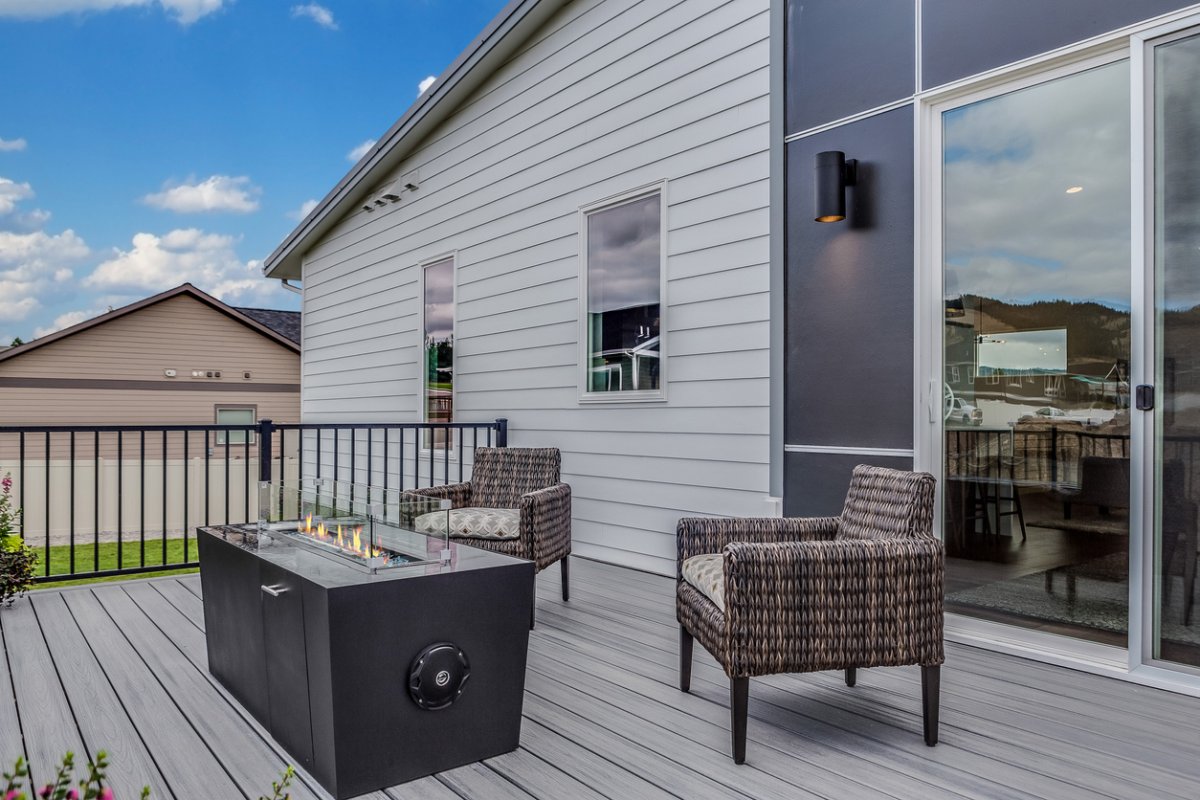
A backyard upgrade has a funny way of starting small. One minute, you are thinking, “A few chairs would be nice.” The next, you are pricingor that costs more than your first car.
Before the accessories stage gets out of hand, there is a fundamental decision to make: deck vs. patio. Both can create comfortable outdoor living space, improve the way you use your yard, and make summer dinners dramatically more pleasant. Their costs, however, are shaped by very different construction methods.
In general, a patio is often the less expensive option because it sits at or near ground level and can require fewer structural components. Decks rely on framing, supports, fasteners, and, depending on their height and design, stairs and guard systems. Current U.S. cost guides commonly put professional deck construction in a broad range of roughly $30 to $60 per square foot for many projects, while a basic concrete patio may fall around $5 to $18 per square foot. Those are planning ranges, not promises from the remodeling fairy. Location, materials, labor, access, and site conditions can send estimates in either direction.
ackyard upgrade deserves your money? These eight factors can help you compare deck vs. patio cost without judging the project solely by the first number on a contractor’s estimate.
1. Upfront Construction Cost Usually Favors a Patio
For homeowners working with a tight budget, a simple patio frequently has the financial advantage. A ground-level surface made from poured concrete or basic pavers generally needs fewer structural parts than an elevated deck.
Consider a straightforward 300-square-foot outdoor living area. A plain concrete patio may require excavation, grading, a prepared base, forms, reinforcement as specified for the job, concrete placement, and finishing. A 300-square-foot deck, by comparison, can involve footings, posts, beams, joists, deck boards, connectors, fasteners, flashing, and possibly guardrails or stairs.
That longer shopping list is one reason deck labor can be substantial. Recent national cost data from Angi estimates professional deck-building labor at approximately $15 to $35 per square foot on average. HomeAdvisor reports that new deck installations commonly total between $4,000 and $16,000, although elaborate and large projects can move well beyond that range.
not automatically cheap. Natural stone, intricate paver patterns, major excavation, or decorative concrete can turn a supposedly economical project into a backyard celebrity with its own financial manager. Still, for a basic design on suitable terrain, the patio usually starts with the lower price tag.
2. Your Yard’s Slope Can Completely Change the Price
A price comparison based only on square footage can be misleading because backyards are rarely as cooperative as graph paper.
Flat yards tend to suit patios
Patios generally perform best where installers can establish a properly graded, stable base without extreme earthwork. A relatively flat area may need excavation and base preparation, but the process is usually straightforward.
On a sloped property, creating a level patio could require significant grading, soil removal, fill, drainage changes, or a retaining wall. Fixr places many professionally built retaining walls in a national range of $3,500 to $10,000. Add that expense to the hardscape itself, and the “cheap patio” may suddenly clear its throat and ask to discuss financing.
Decks can adapt to elevation
A deck is supported by a structural frame, so builders can often create a usable level surface over sloping terrain. Bob Vila’s guidance on patio construction similarly notes that a deck may be more appropriate when a landscape has a dramatic gradient.
taller decks need more structural consideration. Longer posts, additional bracing, stairs, railings, and difficult access can increase costs. For a steep backyard, though, the deck may solve an expensive landscaping problem rather than simply add an outdoor floor.
Cost takeaway: Choose according to the site you actually own, not the perfectly flat backyard you wish your real estate agent had included.
3. Material Choice Creates Huge Price Differences
Asking, “How much does a deck cost?” is a little like asking, “How much does a car cost?” The answer changes considerably when one person is picturing an economy hatchback and another has already selected ventilated leather seats.
Common deck materials
Pressure-treated lumber remains a common lower-cost decking option. Cedar and other naturally attractive woods can raise material costs, while premium hardwoods may cost significantly more. Composite and PVC decking usually have higher upfront prices than basic pressure-treated wood, but they are marketed for reduced maintenance and resistance to problems such as rot and insect damage.
Trex currently estimates composite deck materials, including substructure, decking, hardware, and fasteners in its example, at about $15 to $30 per square foot before considering all project-specific installation expenses. The actual installed cost depends heavily on design and local labor.
Common patio materials
Patios offer their own price ladder. Basic poured concrete is generally among the more economical professionally installed choices. Concrete Network places many concrete patio projects around $5 to $18 per square foot and estimates a typical 288-square-foot patio at approximately $3,200.
Decorative finishes increase the bill. Basic stamped concrete may run around $10 to $14 per square foot, with complex colors and patterns reaching $20 per square foot or more. Brick, porcelain pavers, and premium natural stone can also move the project into a higher price category.
omparison is not “deck versus patio” in the abstract. Compare the specific materials you would genuinely buy. A basic wood deck and a premium natural stone patio tell a very different cost story from a luxury composite deck and a simple broom-finished concrete slab.
4. Labor and Design Complexity Can Eat the Budget
Rectangles are wonderful for budgets. Curves, multiple levels, picture-frame borders, hidden fasteners, diagonal decking, built-in seating, and artistic paver patterns are wonderful for contractors who enjoy challenging work. Both facts can be true.
Deck labor becomes more expensive when the design requires complicated framing, numerous stairs, multiple elevations, custom railings, or difficult connections to an existing house. HomeAdvisor notes that multi-level decks may average around $50 per square foot, with broad project ranges based on design and material.
Patio labor can also climb. Large-format stone may require skilled placement. Detailed paver patterns demand more cutting. Decorative concrete with multiple patterns, borders, and hand-applied coloring can cost substantially more than a basic finish.
esting quotes, decide which features directly improve how you will use the space. A second deck level looks impressive, but if your biggest outdoor event involves you, a cup of coffee, and one confused squirrel, simpler construction may serve you just fine.
5. Permits, Structural Requirements, and Inspections Matter
One overlooked difference in the patio vs. deck price comparison is the paperwork and structural oversight that may accompany construction.
Local rules vary across the United States, so homeowners should contact their municipal or county building department before starting either project. Decks often receive particular attention because they are structural assemblies. The International Residential Code includes prescriptive requirements for wood-framed exterior decks, addressing components and considerations such as supports, connections, decking attachment, and guards.
ound-level patio may face fewer building-code requirements in some jurisdictions, but that does not mean homeowners can assume no approval is necessary. Zoning rules, lot coverage restrictions, easements, stormwater requirements, historic districts, and accessory features may affect a project.
Add a roof, electrical circuits, plumbing, a gas line, outdoor kitchen, or significant retaining structure and the permit picture may change rapidly.
Ask contractors whether permit fees are included in their bids. When comparing two estimates, a low quote that quietly excludes permits, engineering, disposal, and site preparation is not necessarily the bargain it appears to be.
6. Maintenance Changes the Long-Term Cost
The cheapest outdoor living space to install is not necessarily the cheapest one to own for 15 or 25 years.
Wood decks demand attention
Traditional wood decking may need regular cleaning and periodic sanding, staining, or sealing, depending on the species, finish, climate, and exposure. Deck manufacturers naturally have an interest in promoting their composite products, so company cost comparisons should be treated as product-specific examples rather than universal guarantees. Still, both Trex and TimberTech emphasize the recurring maintenance difference between wood and engineered decking.
TimberTech states that traditional wood deck boards commonly last around 10 to 15 years, while composite decking may last 25 to 30 years or longer. Trex estimates roughly $400 per year for cleaning and staining in one 25-year wood-deck comparison.
Composite reduces refinishing work
Composite and PVC boards generally do not require the periodic staining and sealing associated with traditional wood. They still need cleaning and inspection; “low maintenance” is not the same as “the deck cleans itself while you watch baseball.”
Patio maintenance depends on the surface
Concrete may crack or need surface repairs. Paver joints can collect weeds or lose joint material. Individual pavers may settle when the base or drainage is inadequate. Natural stone can require material-specific cleaning and sealing.
Fixr estimates many patio repairs between $250 and $1,250, with a national average around $750, although severe structural or drainage problems can cost more.
10- or 20-year ownership scenario before choosing. Include cleaning products, professional refinishing, potential repairs, andmost importantyour tolerance for weekend maintenance. Your free time has value, even if your family refuses to assign it an hourly rate.
7. Drainage and Climate Can Create Hidden Costs
Water is exceptionally talented at finding construction mistakes.
A patio needs appropriate grading and a base suited to the material and local soil conditions. Poor drainage can contribute to ponding, erosion, frost-related movement, or settlement. Water should be managed so the new surface does not direct runoff toward the house or create a problem for neighboring properties.
Homeowners concerned about stormwater may consider permeable paving systems where site conditions and local requirements permit. The U.S. Environmental Protection Agency explains that permeable pavements can allow rain and snowmelt to move through the surface into underlying soil and gravel layers. Properly designed systems can reduce runoff and provide stormwater-management benefits.
water to pass between deck boards, but moisture management still matters. Attached decks need careful connections and flashing details to reduce the risk of water affecting the home’s structure. Framing material, hardware, and fasteners should also be appropriate for the environment and compatible with the construction materials used.
Climate should influence surface selection as well. Dark materials can become uncomfortable in intense sun. Freeze-thaw cycles place demands on hardscape bases. Coastal environments may require additional attention to corrosion. In humid areas, homeowners may place a higher value on materials resistant to decay and moisture-related deterioration.
Do not treat drainage as the boring line item to delete when a project estimate feels uncomfortable. Drainage is boring right up until the first major thunderstorm. Then it becomes the main character.
8. Resale Value and Everyday Use Should Influence the Decision
A backyard project is partly a financial purchase and partly a lifestyle purchase. That distinction matters.
Research from the National Association of Realtors on outdoor remodeling has examined both estimated cost recovery and homeowner satisfaction. The organization’s 2023 outdoor features report found high “Joy Scores” for the outdoor projects studied, highlighting the personal value owners can receive after improving their properties.
Patios and decks also remain appealing home features. NAHB research has identified patios and decks among outdoor features wanted by large shares of home buyers. In one buyer-preference report, a patio was considered essential or desirable by 82 percent of respondents, while a deck reached 75 percent.
ot mean a $50,000 backyard project automatically adds $50,000 to a home’s sale price. Local buyer expectations, neighborhood values, build quality, design, and the condition of the overall property all matter.
Think about function first. A deck can create a natural transition from an elevated back door to the yard and may be particularly useful on sloped sites. A patio can provide an accessible, grounded area for dining, fire features, and garden connections.
The best upgrade is usually one that suits the house rather than looking as though it arrived by parachute from a luxury resort.
Deck vs. Patio Cost Comparison: A Practical Example
Imagine two homeowners each want approximately 300 square feet of backyard entertaining space.
Homeowner A: Flat suburban yard
The back door is close to grade, the site is accessible, and the soil presents no obvious major grading challenge. This homeowner wants a grill, dining table, and chairs.
A basic concrete or modest paver patio may be the logical budget choice. There is little reason to pay for elevated structural framing when the desired living area can sit comfortably at ground level.
Homeowner B: Sloped yard with an elevated rear door
The back entrance sits several feet above grade and the yard drops sharply. Creating a patio could involve extensive earthwork, retaining structures, and a staircase from the house.
Here, a deck may offer a more natural design. Even when its price per square foot is higher, it can solve the elevation problem and create a direct extension of the indoor living area.
This is why national averages are best used for early planning. The site can change the winner before anyone selects a single deck board or patio paver.
How to Keep Your Backyard Upgrade on Budget
Start by defining the job the space needs to perform. Measure your furniture instead of guessing. A grill, six-person dining table, and circulation space require real dimensions. Designing a 700-square-foot outdoor platform because “bigger is better” can create an expensive empty dance floor.
Request detailed bids from qualified contractors who regularly build the type of project you are considering. Compare excavation, base preparation, structural components, materials, railings, stairs, permits, debris removal, and site restoration separately when possible.
Also price must-have upgrades before construction begins. Electrical outlets, lighting, shade structures, and gas lines are easier to plan when the primary project is being designed. Discovering three weeks later that your dream outdoor kitchen needs utility work across a newly finished patio is a special variety of homeowner heartbreak.
My Experience Comparing Deck and Patio Projects: What the Estimates Don’t Tell You
After looking closely at backyard projects, one lesson keeps repeating: homeowners tend to focus on surfaces while contractors focus on everything underneath them. The homeowner sees a beautiful cedar board or a charcoal-gray paver. The contractor is thinking about footings, drainage, elevations, access, soil, fasteners, disposal, and whether a concrete truck can get within shouting distance of the backyard.
I have found that the first useful question is not, “Which looks better?” Both decks and patios can look fantastic. The better question is, “What is this yard already trying to tell me?” A flat backyard with a low rear doorway almost seems to volunteer for a patio. A hillside behind an elevated walkout practically waves a tiny flag marked “consider a deck.” Fighting the site is often where budgets start developing emotional problems.
Another important experience is comparing quotes line by line. One estimate may appear thousands of dollars cheaper because it lists a single project price. A more expensive-looking bid might include excavation, permit handling, haul-away, drainage work, and final grading. Once the exclusions are identified, the supposed bargain can disappear.
Material samples also matter more than online photographs. I would never make a major decking or patio decision based only on a screen. Deck boards can look different under direct sun, and some surfaces feel noticeably warmer. Paver colors shift when wet. Textures that look “rustic” in a catalog may feel surprisingly aggressive under bare feet. Take samples outdoors when possible and look at them morning, noon, and evening.
Maintenance conversations are equally revealing. Almost everyone says, “I don’t mind a little maintenance.” The definition of “a little” changes rapidly when sanding, washing, drying, and applying a finish consume a sunny weekend. Homeowners who genuinely enjoy caring for natural wood may be delighted with a traditional deck. Those who resent cleaning a toaster crumb tray may want to examine lower-maintenance materials very carefully.
I also believe size deserves more skepticism. Many people automatically design the largest outdoor space the lot and budget can tolerate. In practice, a smaller area with comfortable circulation, useful shade, and properly scaled furniture often feels better than an oversized slab or deck. Spend money on the square feet you will use.
One of the smartest approaches I have seen is to mock up the proposed footprint. Use stakes, string, painter’s tape on an existing surface, or even a garden hose to outline the perimeter. Place representative chairs and a table inside the area. Walk around them while pretending to carry a tray of hamburgers. It sounds slightly ridiculous, but it quickly exposes tight passages and wasted space. Architectural dignity is overrated when someone is holding hot food.
Finally, I would treat the deck-versus-patio decision as a long-term lifestyle choice rather than a contest to achieve the highest theoretical resale percentage. Think about when you use your yard, who joins you, how much maintenance you accept, and whether accessibility may become important. A beautiful project that fits daily life has a value that does not appear neatly in a cost-per-square-foot calculator.
My practical conclusion is simple: patios often make the strongest financial case on level, accessible sites, while decks can justify their additional structural cost when elevation, slope, or the home’s layout favors a raised platform. Get the site conditions right first. The design decision becomes much easier afterward.
Conclusion: Is a Deck or Patio Cheaper?
For many straightforward backyard projects, a patio is cheaper to build than a deck. Basic concrete can provide usable outdoor living space at a relatively modest cost, and ground-level construction generally avoids the extensive framing associated with decks.
However, the lowest upfront price should not make the entire decision. A steep lot can make patio preparation expensive. Premium stone can cost more than an economical deck design. A traditional wood deck may require more long-term maintenance, while composite decking asks homeowners to accept a higher initial material cost in exchange for reduced refinishing work.
Compare deck vs. patio cost using eight factors: initial construction price, slope, material, labor, permits, maintenance, drainage, and long-term value. Then choose the structure that fits your yard and your actual habits.
Because the best backyard is not necessarily the one that looks most impressive in a real estate photo. It is the one where you voluntarily go outside, sit down, and stay awhile.
Note: Cost figures are national planning ranges based on current U.S. industry and home-improvement data. Local labor rates, material prices, code requirements, soil conditions, and project specifications can significantly change a contractor’s estimate.