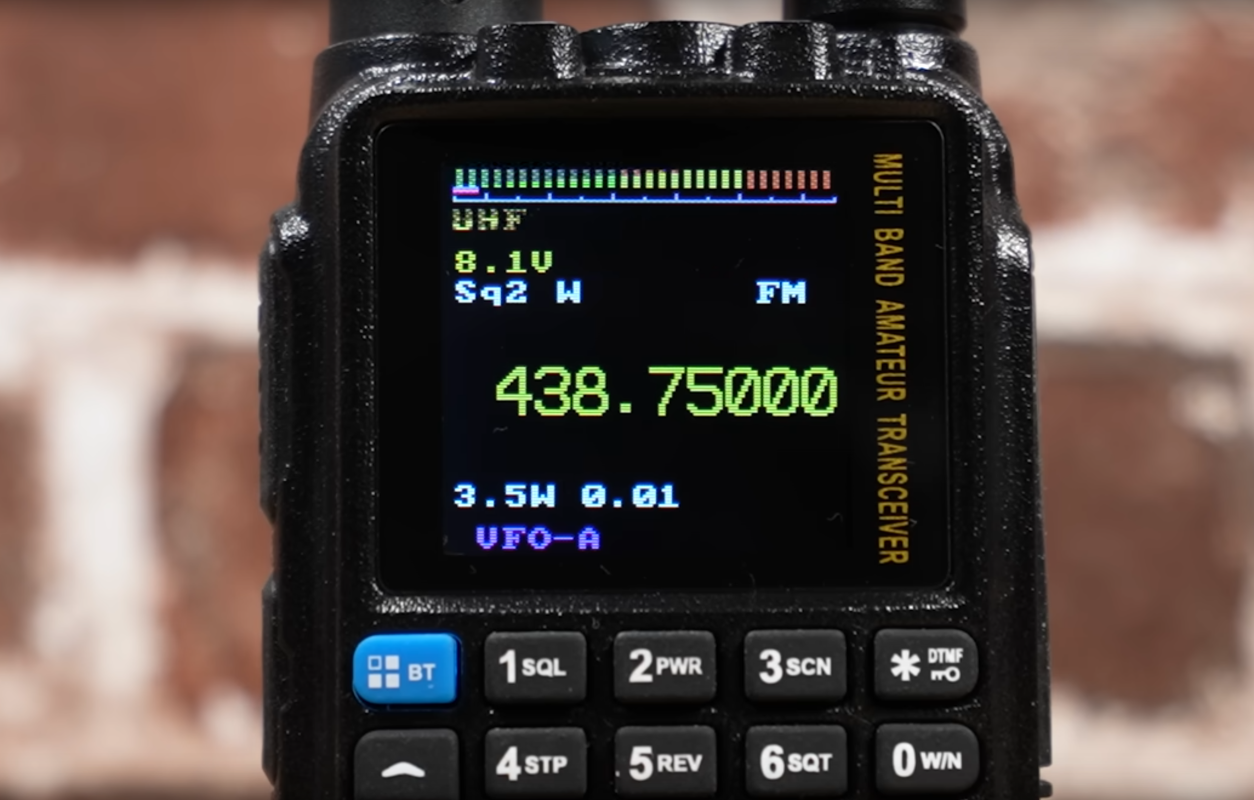
A handie talkie used to be the radio equivalent of a dependable pocket knife: simple, rugged, and mostly interested in doing one job without drama. You pressed push-to-talk, you talked, and if you were lucky, the tiny screen did not look like it had been designed by a calculator with stage fright. But the latest wave of custom firmware for affordable handheld radios is changing that story. A small, inexpensive HT can now gain smarter signal displays, tone monitoring, better programming tools, live computer control, spectrum-style views, and features that once belonged mostly to higher-end gear.
The headline example is custom firmware for the TIDRADIO TD-H3 and TD-H8, often discussed under the NicSure or nicFW umbrella. These radios are already popular because they are inexpensive, USB-C friendly, and flexible enough for ham and GMRS-style users depending on model and legal configuration. With custom firmware, however, they become more than “cheap walkie-talkies that live in a drawer next to mystery batteries.” They become hackable radio platforms.
That matters because modern amateur radio is increasingly software-shaped. The RF hardware still does the serious work, of course; no firmware update can turn a modest handheld into a laboratory-grade receiver or a 100-watt base station. But software can make the same hardware easier to read, easier to program, easier to diagnose, and far more enjoyable to use. In short, custom firmware adds capabilities to a handie talkie by unlocking convenience, visibility, and experimentation.
What Is Custom Firmware for a Handie Talkie?
Firmware is the built-in software that tells a radio how to behave. It manages the menu system, memory channels, squelch, display, button shortcuts, scan behavior, tone handling, transmit options, and communication with external programming tools. Factory firmware is written to satisfy the manufacturer’s goals: ship the product, keep costs low, meet basic specifications, and avoid customer support chaos. That is understandable, but it often leaves advanced users muttering into their coffee.
Custom firmware is community-developed or independent replacement software that changes how the radio works. In the TIDRADIO TD-H3 and TD-H8 world, NicSure’s work has attracted attention because it adds useful radio features while also offering tools for flashing and programming. The concept is similar to what happened with the Quansheng UV-K5/K6 scene, where updatable firmware and low-cost hardware led to a burst of experimentation: spectrum analyzers, improved AM receive behavior, custom button functions, better battery displays, and other changes that made inexpensive radios feel surprisingly capable.
The important word is “capable,” not “magical.” Custom firmware does not rewrite physics. If the front-end filters are limited, they remain limited. If the power amplifier is designed for certain bands, firmware cannot make it clean and compliant everywhere else. If the antenna is a rubber duck with the personality of a wet noodle, software cannot turn it into a hilltop repeater. But firmware can make the radio more transparent, more controllable, and more pleasant to operate.
Why the TIDRADIO TD-H3 and TD-H8 Are Getting Attention
The TIDRADIO TD-H3 and TD-H8 sit in a sweet spot: inexpensive enough for experimenters, modern enough to include convenient connectivity, and popular enough to build a user community. Their appeal is not only price. Many operators like that these radios support app or web-style programming workflows, USB-C connectivity, and a feature set that is friendlier to tinkering than many traditional handhelds.
That last part is the spark. A radio with accessible programming and update paths invites people to ask, “What else can this thing do?” Once developers begin reverse engineering menus, memory structures, serial protocols, and hardware behavior, the radio stops being a closed appliance and starts becoming a platform. That is when the fun begins, along with the occasional “please do not flash the wrong file at midnight” warning.
Key Features Custom Firmware Can Add
1. A Better S-Meter
One of the most visible improvements is a more useful S-meter or signal-strength display. On many budget handhelds, the factory signal meter behaves like a decorative mood ring. It may show full bars for signals that are merely decent, or it may provide too little resolution to help you position an antenna, compare locations, or understand whether a repeater is fading.
A better S-meter gives operators more useful feedback. It helps when testing antennas, choosing a location during an emergency net, or finding the least terrible spot in a building where RF signals go to question their life choices. Even if it is not laboratory accurate, a clearer relative indication can make the radio feel less blind.
2. CTCSS Tone Detection and Display
CTCSS tones are subaudible tones used by many repeaters. In plain English, they are the little “key” your radio sends so the repeater knows to open up and retransmit your signal. Without the correct tone, you may be transmitting beautifully into the void while the repeater politely ignores you.
Custom firmware that can detect and display received CTCSS tones is especially useful for repeater work. Imagine you are listening to local traffic and need to identify the tone being used. Instead of digging through outdated repeater listings or testing tones one by one like a safecracker with a soldering iron, the radio can show the tone it hears. That makes setup faster and reduces operator frustration.
3. Improved Battery Display
Factory battery icons are often optimistic little cartoons. Three bars can mean “basically full,” “halfway there,” or “prepare for betrayal.” Some custom firmware builds add battery percentage or voltage displays, giving operators a clearer idea of remaining power.
That matters in real use. If you are monitoring a weather net, helping at a public-service event, hiking, camping, or using the HT as a backup communication tool, battery awareness is not a luxury. It is the difference between planning responsibly and discovering your radio is dead right when someone asks, “Can anybody copy?”
4. Fine Tuning and Receive Mode Overrides
Some firmware mods provide finer tuning steps or receive mode overrides, including AM or USB-style listening behavior where supported by the hardware and firmware design. This can be helpful for monitoring certain signals, experimenting with receive performance, or making the radio more flexible as a listening device.
Here is the legal and technical caution: receive improvements are not the same as transmit permission. A handheld radio may be able to tune or listen beyond its original marketing claims, but transmitting is governed by license privileges, certification rules, band plans, and hardware limitations. A responsible operator treats extended receive as a listening and learning feature, not an invitation to transmit wherever the digits on the screen happen to go.
5. Spectrum and Ultra Graph-Style Views
One of the most exciting ideas in handheld firmware is the addition of spectrum-style displays. These are not always full professional spectrum analyzers, but they can show activity around selected frequencies or display signal movement in a way that is far more informative than a silent channel list.
For a handheld radio, this is a big usability upgrade. A live activity graph can help an operator see whether a frequency is busy, spot nearby signals, or understand local RF activity. It brings a taste of software-defined radio thinking to a small push-to-talk device. The result is not exactly a lab bench instrument, but it is much more interesting than staring at a blinking cursor and hoping the ether says hello.
6. Computer Programming and Remote Control
Programming channels directly on a tiny keypad is a rite of passage, but so is accidentally putting the offset in backward and wondering why everyone on the repeater has apparently moved to Mars. Computer-based programming tools solve much of that pain. Custom firmware projects often improve how the radio communicates with software, enabling easier channel management, codeplug backup, live configuration changes, and sometimes remote terminal-style operation.
This is where affordable radios begin to feel much more serious. A user can build channel lists, update names, adjust tones, manage scan behavior, and experiment with settings faster than through nested menus. For clubs, event volunteers, and tinkerers, that time savings is real.
How Browser-Based Flashing Changes the Game
One reason newer firmware projects are spreading quickly is the rise of browser-based flashing tools. Instead of installing a mysterious Windows utility from an equally mysterious download page, users may be able to connect the radio by USB, open a compatible browser, select the firmware file, and flash directly through a web interface.
This lowers the barrier to entry. It does not remove risk, but it makes the process less intimidating. The same idea helped the Quansheng UV-K5 community grow: when a radio can be updated using common cables and accessible tools, more users experiment, more feedback arrives, and more features get refined. A firmware ecosystem starts to form.
Still, easy flashing should not become careless flashing. Always confirm the exact radio model, firmware version, cable type, and instructions before writing new firmware. Back up the original configuration when possible. Keep the battery charged. Do not unplug the cable halfway through because the cat has decided the desk is a runway. Radios can be bricked, and “I was almost done” is not a recovery plan.
Why Ham Operators Care About These Features
For amateur radio operators, the attraction is not just novelty. Custom firmware solves everyday annoyances. Repeater programming becomes easier. Tone discovery becomes less painful. Signal reports become more meaningful. Battery status becomes less vague. Computer control makes experimentation more practical. These are the kinds of small improvements that add up.
Consider a newly licensed Technician-class operator trying to join a local net. They need the repeater output frequency, offset direction, offset amount, and tone. If one setting is wrong, the radio may receive but not access the repeater. A firmware feature that shows incoming tone information, improves memory organization, or makes programming easier can remove a major beginner headache.
Now consider an experienced operator building a compact go-kit. They may want a low-cost handheld that can monitor local repeaters, NOAA weather, simplex calling channels, event channels, and maybe function as part of an AllStarLink or hotspot-adjacent experiment. Firmware that improves COS-style behavior, computer control, or audio-state reporting can make a humble HT useful in projects that normally require more specialized gear.
Custom Firmware Does Not Replace Good Operating Practice
It is tempting to see custom firmware as a superpower. In reality, it is a tool. The operator is still responsible for knowing where they may transmit, identifying properly, using appropriate power, avoiding interference, and respecting local band plans. In the United States, amateur radio operators must identify with their assigned call sign at required intervals and must operate within the privileges of their license class.
GMRS, FRS, MURS, public safety, aviation, marine, and commercial frequencies all have their own rules. A radio that can tune a frequency is not automatically legal to use there. This point deserves to be printed on a sticker and placed next to every programming cable: capability is not permission.
Good firmware should help responsible operators, not encourage reckless ones. Features such as receive-only modes, transmit limits, tone monitoring, and clearer displays can support better behavior. But users must resist the urge to treat every unlocked menu as a dare.
The Bigger Trend: Radios Are Becoming Software Platforms
The handie talkie firmware scene reflects a larger trend in radio technology. Affordable hardware is becoming more flexible, while users expect software-level customization. Open-source and community firmware projects show that enthusiasts want radios that can evolve after purchase. They want bug fixes, better workflows, new displays, and tools that do not feel trapped in 2007.
OpenGD77 showed how replacement firmware could reshape certain DMR radios for amateur use. The Quansheng UV-K5/K6 scene showed how a cheap handheld could become a playground for receive experiments and interface improvements. The TIDRADIO TD-H3 and TD-H8 firmware work continues that pattern: take an accessible radio, study it, document it, improve it, and share the results with a community that enjoys both communication and controlled chaos.
Manufacturers should pay attention. Users like hardware that is documented, updateable, and friendly to innovation. A radio that welcomes experimentation can build a loyal following. A radio that locks everything down may still sell, but it will not inspire the same kind of community energy. In ham radio, community energy is practically a renewable resource, powered by coffee, curiosity, and suspiciously well-organized parts bins.
Risks Before You Flash
Custom firmware is exciting, but it comes with risks. The first is bricking the device. If the wrong file is flashed, the process fails, or the radio loses power at the wrong moment, the radio may stop booting. Some devices can be recovered; others may become decorative paperweights with antennas.
The second risk is compatibility. A firmware build intended for one hardware revision may not work correctly on another. Budget radios often change internal components without dramatic changes to the product name. Two radios that look identical on a desk may not be identical inside.
The third risk is compliance. Firmware may expose settings that the operator should not use for transmission. Responsible users must understand the difference between listening, testing into a dummy load, and transmitting over the air. When in doubt, stay conservative.
The fourth risk is support. Once you install unofficial firmware, manufacturer support may not apply. Community support can be excellent, but it is not the same as a warranty department. Read documentation, follow release notes, and avoid treating beta firmware like a toaster manual.
Practical Experiences With Custom Firmware on a Handie Talkie
The first experience most users notice after installing custom firmware is that the radio suddenly feels less like a sealed black box. The menus may include options that explain what the radio is doing. The display may show signal information more clearly. The battery readout may finally stop pretending that three bars are a scientific instrument. Even before making a contact, the radio feels more communicative.
One practical scenario is repeater setup. A user hears local traffic but does not know the access tone. With tone monitoring enabled, the radio can help identify the CTCSS tone being received. That does not replace checking a current repeater directory, but it gives the operator a clue. Instead of guessing through a long tone list, the user can confirm the likely value and program the channel properly. For beginners, this is a confidence boost. For experienced operators, it is a time saver.
Another experience comes from antenna testing. Suppose you are comparing the stock antenna with a longer whip, a roll-up J-pole, and a mag-mount on a cookie sheet because radio people are nothing if not creative with kitchen hardware. A more useful S-meter lets you compare signals from the same repeater in different positions. You can move near a window, step outside, raise the antenna, or rotate your body like a human compass. The readings may be relative rather than lab-grade, but they still help you learn what improves reception.
Computer control changes the experience again. Programming a batch of local repeaters by keypad is possible, but it is also how patience goes to retire. With a good programming tool, you can create named memories, organize scan lists, save backups, and restore settings after experiments. This makes the radio better for road trips, club events, and emergency-preparedness kits. You can create one channel plan for home, another for travel, and another for public-service volunteering.
The spectrum or graph-style features are especially fun for learning. A new operator can see that the band is not just empty silence. Signals appear, disappear, drift, and cluster. During a local net, the display may show activity that helps explain how repeaters and simplex channels behave. During scanning, a visual cue can make the process feel less random. The radio becomes a teaching tool, not just a talking tool.
There is also an emotional experience: custom firmware makes a modest radio feel personal. You are no longer using exactly the same factory menu everyone else received. You have selected features, learned the risks, backed up files, read release notes, and made the device fit your operating style. That sense of ownership is part of why firmware communities grow. People do not just want cheaper radios; they want radios that invite participation.
Of course, the best experience comes from using restraint. The smartest operators test carefully, document what they changed, keep original files where possible, and do not transmit outside their privileges. They know that a firmware menu can be interesting without being legal or wise to use on the air. Custom firmware is most rewarding when it supports better listening, better programming, better diagnostics, and better operating habits.
Conclusion
Custom firmware adds capabilities to a handie talkie by turning a basic handheld radio into a more flexible, more informative, and more enjoyable communication tool. On radios such as the TIDRADIO TD-H3 and TD-H8, firmware projects like NicSure/nicFW show how much value can be added through smarter displays, CTCSS tone monitoring, improved S-meter behavior, battery readouts, programming tools, live computer control, and spectrum-style views.
The best part is not that a cheap radio becomes expensive. It is that a simple radio becomes teachable. It shows more of what is happening, gives the operator better control, and rewards curiosity. For ham radio users, experimenters, and preparedness-minded communicators, that is a meaningful upgrade.
Note: Custom firmware can be experimental. Flash only firmware intended for your exact radio model, back up settings when possible, keep the battery charged during updates, and transmit only where your license and local regulations allow.