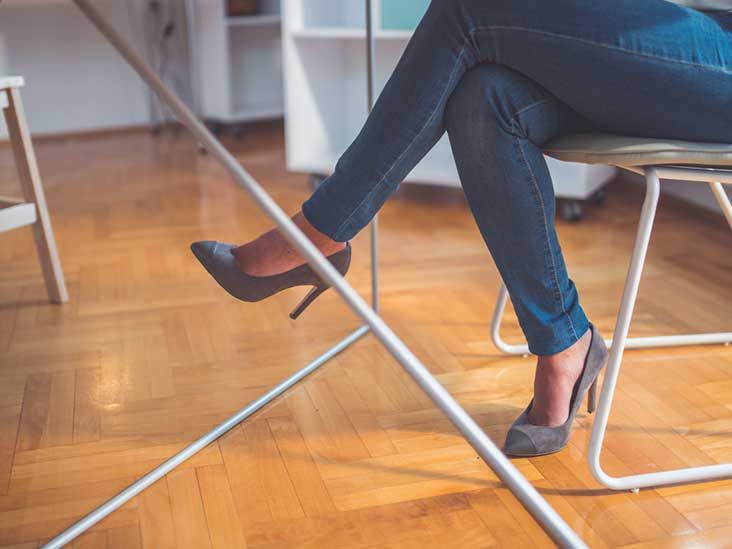
Crossing your legs is one of those habits that happens before your brain has time to file the paperwork. You sit down, one leg floats over the other, and suddenly you look ready to negotiate a movie contracteven if you are only answering emails in sweatpants.
But is sitting with crossed legs actually bad for you? You may have heard that it causes varicose veins, raises blood pressure, damages circulation, twists the pelvis, pinches nerves, or somehow turns your spine into a question mark. The truth is less dramatic. For most healthy adults, crossing the legs briefly is unlikely to cause serious harm. Problems are more likely when the position is held for a long time, repeated on the same side, or combined with hours of general inactivity.
The most useful advice is not to ban the posture forever. Instead, pay attention to comfort, change positions regularly, and keep both feet supported when accurate posture or blood pressure measurement matters.
The Quick Answer: Is Crossing Your Legs Bad?
Occasionally crossing your legs is generally harmless for most people. It may temporarily raise a blood pressure reading, shift the pelvis, change pressure beneath the hips, or compress a nerve near the knee. These effects usually disappear after you uncross your legs and move around.
The greater concern is not a five-minute leg cross during lunch. It is remaining in an asymmetrical position for hours, especially if you always place the same leg on top. Habitual positioning may contribute to stiffness, uneven muscle loading, numbness, or existing hip and lower-back discomfort. Research has observed changes in pelvic angle, trunk position, and pressure distribution during prolonged crossed-leg sitting, although these studies do not prove that occasional leg crossing permanently damages the spine.
Bottom line
Crossing your legs is a position, not a medical emergency. The real villain is staying still for too long.
What Happens to Your Body When You Cross Your Legs?
Your pelvis shifts slightly
When one thigh rests over the other, the weight beneath your hips becomes uneven. One side of the pelvis may rotate or tilt while the trunk makes small adjustments to keep your head centered. If you stay that way for several minutes, you may feel perfectly comfortable. If you stay that way for several hours, your muscles may begin sending increasingly impolite messages.
This asymmetry does not mean your skeleton has been permanently rearranged. However, repeatedly crossing the same leg may reinforce a preferred posture and place uneven stress on the hips, gluteal muscles, sacroiliac region, and lower back. Cleveland Clinic advises frequent position changes because crossed-leg sitting may tilt the pelvis and create uneven pressure across the glutes.
Pressure around the knee may increase
The common peroneal, or fibular, nerve passes close to the surface near the outside of the knee. Crossing one knee tightly over the other can press on this area. That pressure is one reason a foot may become numb, tingly, or temporarily difficult to control after prolonged sitting.
Brief tingling that resolves when you move is usually not dangerous. Habitual or extremely prolonged compression can, in rare cases, injure the nerve and contribute to foot drop, a condition that makes it difficult to lift the front of the foot. Frequent knee-over-knee sitting is recognized as a risk factor for peroneal nerve compression, although serious injury remains uncommon.
Blood flow changes temporarily
Crossing the legs can alter circulation and temperature in the lower limbs, particularly when the legs are pressed together tightly. Small studies have detected reductions in lower-leg skin temperature associated with changes in blood flow during prolonged crossed-leg sitting. That does not mean the blood supply has been completely “cut off.” In a healthy person, normal circulation typically returns after changing position.
Does Crossing Your Legs Raise Blood Pressure?
Yes, crossing your legs at the knee can temporarily increase a blood pressure measurement. Studies have reported increases of approximately 6 to 10 mmHg in systolic pressure in some participants, with smaller or variable changes in diastolic pressure. Crossing at the ankles appears to have less effect than crossing one knee over the other.
This temporary increase does not necessarily mean leg crossing causes chronic hypertension. The position may change cardiac output and the mechanics of blood returning from the legs, producing a higher reading while the posture is maintained. Once the legs are uncrossed, the measurement generally moves back toward baseline.
It matters most when you are having your blood pressure checked. The American Heart Association and Mayo Clinic recommend sitting with your back supported, your arm supported at heart level, and both feet flat on the floor. Your legs should remain uncrossed while you rest quietly and during the measurement. Otherwise, an inaccurate reading could make your blood pressure look higher than it really is.
Can Crossing Your Legs Cause Varicose Veins?
This is one of the most persistent crossed-leg myths. Crossing your legs has not been established as a direct cause of varicose veins. Harvard Health specifically identifies this claim as a myth. Varicose veins develop when valves inside the veins become weak or damaged, allowing blood to collect instead of traveling efficiently back toward the heart. Genetics, age, pregnancy, body weight, hormonal influences, and long periods of standing or sitting are more meaningful factors.
That said, staying motionless for hours can encourage blood to pool in the legs. Crossing your legs tightly may add pressure and discomfort, but uncrossing them every three minutes will not magically cancel an otherwise sedentary day. Walking, flexing the calf muscles, and changing position are more useful strategies. Johns Hopkins notes that prolonged sitting or standing can increase pressure in the leg veins and contribute to blood pooling.
Does Sitting Cross-Legged Cause Blood Clots?
Crossing your legs by itself is not considered a major independent cause of deep vein thrombosis, or DVT. The more important problem is prolonged immobility. Sitting in a cramped position for several hoursduring a long flight, car ride, hospital stay, or marathon work sessionslows venous blood flow and may increase clot risk, especially in people who already have risk factors.
Risk factors include a previous blood clot, recent surgery, cancer, pregnancy, estrogen-containing medication, obesity, smoking, certain inherited clotting disorders, and extended immobility. During trips lasting more than four hours, the Centers for Disease Control and Prevention recommends moving the legs, exercising the calves, and taking periodic walking breaks when possible.
In other words, the danger is less “one knee touched the other” and more “the entire lower half of the body has been parked since breakfast.”
Can Crossing Your Legs Cause Back, Hip, or Knee Pain?
It can contribute to discomfort, particularly if you already have joint irritation, limited hip mobility, sciatica-like symptoms, or lower-back pain. Knee-over-knee sitting places one hip in a combination of flexion, adduction, and rotation. The pelvis may tilt, and the lower back may compensate.
Some people cross their legs because the posture temporarily feels more stable or reduces muscular effort. Research has found that leg crossing may reduce activity in certain abdominal muscles and alter sacroiliac compression. Comfort, however, is not proof that a posture should be maintained indefinitely. Your couch may also feel comfortable at midnight while you are shaped like a shrimp, but your neck may submit a formal complaint the next morning.
The effects vary from person to person. Someone with flexible hips may tolerate the position easily, while someone with knee arthritis, hip impingement, a recent joint replacement, or nerve irritation may experience pain quickly. If crossing your legs reliably triggers pain, tingling, weakness, or symptoms that travel down the leg, choose another position and discuss persistent symptoms with a healthcare professional.
Is Crossing Your Legs During Pregnancy Unsafe?
Crossing your legs does not automatically harm a pregnancy. However, pregnancy can increase swelling, alter posture, loosen supporting tissues, and place additional stress on the pelvis and lower back. A neutral sitting position may therefore be more comfortable, especially later in pregnancy.
Cleveland Clinic recommends distributing weight evenly across both hips, keeping the hips and knees at approximately 90-degree angles, using a footrest when necessary, and placing both feet flat on the floor. These recommendations are primarily about comfort, body mechanics, and reducing unnecessary strainnot because briefly crossing the legs poses a direct threat to the baby.
Pregnant people who experience significant one-sided swelling, calf pain, redness, warmth, chest pain, or unexplained shortness of breath should seek prompt medical care because pregnancy itself increases the risk of blood clots.
Who Should Be More Careful?
You may need to limit prolonged leg crossing if you have:
- Frequent numbness, tingling, or weakness in a foot or lower leg
- Peroneal nerve injury, neuropathy, or a history of foot drop
- Recent hip, knee, leg, or pelvic surgery
- Chronic venous insufficiency or substantial leg swelling
- Lower-back, sacroiliac, sciatic, hip, or knee pain aggravated by the position
- A high risk of DVT or instructions from a clinician to avoid prolonged immobility
- A need for an accurate blood pressure reading
These situations do not always require a lifetime ban on crossed legs. They simply make posture awareness and regular movement more important.
How to Sit More Comfortably Without Becoming a Posture Robot
Keep your feet supported
Adjust the chair so both feet can rest on the floor. Use a stable footrest if the chair or desk is too high. OSHA workstation guidance recommends full foot support, relaxed shoulders, lumbar support, and enough room beneath the desk to avoid awkward leg positions.
Change positions regularly
No sitting posture remains ideal when held for hours. Alternate between feet-flat sitting, brief leg crossing, standing, walking, and gentle stretching. The ability to change positions matters more than achieving one magazine-perfect pose and freezing there like office furniture.
Alternate the top leg
If you enjoy crossing your legs, avoid always placing the same leg on top. Alternating sides may reduce repetitive asymmetrical loading. It is not a magical cure, but it gives each hip an equal opportunity to be mildly annoyed.
Avoid pressing directly behind the knee
Make sure the chair edge does not dig into the back of your thighs or knees. Excessive pressure can contribute to discomfort and interfere with normal leg movement.
Take movement breaks
Stand, walk, or perform ankle pumps every 30 to 60 minutes when practical. On long journeys, follow medical advice appropriate to your clot risk and move at least every one to two hours when possible. Even a brief break activates the calf muscles that help move venous blood upward.
Let symptoms guide you
Uncross your legs when you notice tingling, numbness, pressure, hip tightness, knee discomfort, or lower-back strain. Pain is not an achievement badge. You do not receive extra ergonomic points for enduring it.
When Should You See a Doctor?
Contact a healthcare professional if numbness, tingling, pain, or weakness continues after you change position. Seek evaluation if you repeatedly trip, cannot lift the front of your foot normally, or notice persistent changes in sensation.
Urgent medical attention is appropriate for sudden one-sided leg swelling, warmth, redness, or unexplained calf pain, particularly when clot risk factors are present. Call emergency services for chest pain, coughing up blood, fainting, or sudden shortness of breath, as these can be warning signs of a pulmonary embolism.
Real-Life Experiences With Crossed-Leg Sitting
The following scenarios are representative examples of common experiences rather than individual medical case reports. They illustrate how the same posture can feel harmless in one situation and troublesome in another.
The remote worker who always crossed the right leg
Imagine a remote employee who spends most of the day at a laptop. Every time she sits down, her right leg automatically goes over her left. The position feels polished and comfortable, especially during video meetings. After several months, she begins noticing tightness near the right hip and an ache on one side of the lower back by late afternoon.
Nothing dramatic happened to her spine. The likely issue is repetition. She has combined long sitting periods with the same asymmetrical position day after day. She lowers her chair, adds a footrest, alternates leg positions, and starts walking for a few minutes between meetings. Within several weeks, the end-of-day discomfort becomes less frequent.
The patient with the suspicious blood pressure reading
A man checks his blood pressure at a pharmacy kiosk while talking on the phone, sitting forward, and crossing one knee tightly over the other. The result is higher than expected, which launches a small internal disaster movie.
Later, he measures again at home after sitting quietly for five minutes with his back supported, feet flat, arm at heart level, and legs uncrossed. The result is lower. This does not prove he has no blood pressure problem; repeated properly taken readings still matter. It shows why standardized positioning is necessary before interpreting the number.
The traveler whose foot “fell asleep”
During a long train ride, a passenger spends nearly an hour with one knee pressed over the other. When he stands, the outer lower leg feels numb and the foot tingles. For a minute, walking feels awkward, as though the foot has temporarily forgotten its job description.
After uncrossing, moving the ankle, and walking, normal sensation returns. This is a common example of temporary nerve compression. If the weakness or numbness had persisted, or if he could not lift the front of the foot, medical evaluation would have been important.
The person who blamed crossed legs for varicose veins
A woman notices visible veins on her calves and assumes decades of crossed-leg sitting caused them. Her clinician explains that family history, pregnancy, age, and long periods of standing at work are more relevant. She does not need to treat every casual leg cross as a crime scene.
She does benefit from moving more frequently, walking during breaks, and following her clinician’s recommendations for managing venous symptoms. The lesson is subtle but useful: crossing the legs is not the same as being inactive, and avoiding the posture cannot replace regular movement.
The flexible sitter with no symptoms
Another person crosses his legs regularly and experiences no pain, numbness, swelling, or stiffness. He changes positions often, exercises, and rarely remains seated for more than an hour. For him, the posture is simply one of many comfortable options.
This experience matters because health advice should not turn every ordinary habit into a catastrophe. Bodies vary. A posture that irritates one person may be tolerated by another. The best clues are duration, repetition, existing medical conditions, and symptomsnot whether your knees happen to overlap during a 20-minute conversation.
The lesson shared by all five experiences
Crossed-leg sitting becomes more relevant when it is prolonged, rigid, one-sided, or painful. The practical solution is usually not constant self-policing. It is movement variety: uncross the legs, support the feet, switch sides, stand up, stretch, and give your body more than one position to work with.
Conclusion
So, is sitting with crossed legs bad for you? Usually, not in moderation. A brief leg cross is unlikely to cause varicose veins, permanent spinal damage, or a dangerous blood clot in an otherwise healthy person. It can temporarily raise a blood pressure reading, alter pelvic alignment, create uneven muscular pressure, and compress nerves when maintained for too long.
Use both feet on the floor during blood pressure checks, change positions throughout the day, and respond when your body produces numbness, pain, weakness, or swelling. Your legs are allowed to cross. They simply should not sign a long-term lease there.