If holiday decorating had a secret green-room stylist, moss cover would be sitting there with a glue gun, a cup of cocoa, and a suspicious amount of confidence. It is humble, soft, woodland-looking, and oddly magical. One minute it is covering the soil in a poinsettia pot; the next, it is turning a basic candle tray into something that looks like it wandered out of a snowy forest cottage.
Moss cover is one of those decorating materials that does not shout for attention. It whispers. It adds texture, warmth, and a natural holiday feeling without demanding glitter, batteries, or a PhD in ribbon curling. Whether you use sheet moss, preserved moss, reindeer moss, Spanish moss, or a faux moss mat, this simple green material can upgrade wreaths, centerpieces, mantels, terrariums, gift baskets, mini villages, and plant displays.
Best of all, moss cover works with nearly every holiday style. Rustic farmhouse? Moss loves it. Woodland Christmas? Moss basically invented the mood. Elegant winter tablescape? Moss can dress up if you give it candles, ornaments, and a little restraint. Kids’ craft table? Moss is ready, although it will absolutely leave tiny green crumbs everywhere like festive confetti with commitment issues.
What Is Moss Cover?
Moss cover is a decorative layer of moss or moss-like material used to hide surfaces, soften edges, and create a natural green base in floral arrangements, holiday crafts, planters, terrariums, and seasonal displays. Most holiday decorators use preserved moss, dried moss, or artificial moss because these options are easier to handle indoors and do not require the same care as living moss.
Common forms include sheet moss, which comes in flat pieces and is excellent for wrapping, covering, and lining; reindeer moss, which is soft, spongy, and often used as filler; Spanish moss, which has a loose, draping texture; and faux moss mats, which are convenient when you need a neat, uniform look. Living moss can be beautiful in terrariums and tabletop gardens, but for holiday decorations that sit near gifts, ornaments, lights, and furniture, preserved or artificial moss is usually the practical choice.
Why Moss Cover Works So Well For Holiday Decor
The holidays are full of shiny things: glass ornaments, metallic ribbon, glossy wrapping paper, and lights bright enough to guide Santa from low orbit. Moss cover balances all of that sparkle with softness. It brings in an earthy texture that makes displays feel layered rather than loud.
Moss also gives decorations a finished look. A bare tray with candles can feel unfinished. Add moss, pinecones, berries, and a few ornaments, and suddenly the same tray looks intentional. A potted amaryllis may be beautiful on its own, but covering the exposed soil with sheet moss makes it look like it came from a boutique florist instead of the corner of the kitchen where everyone drops the mail.
Best Types Of Moss Cover For Holiday Projects
Sheet Moss
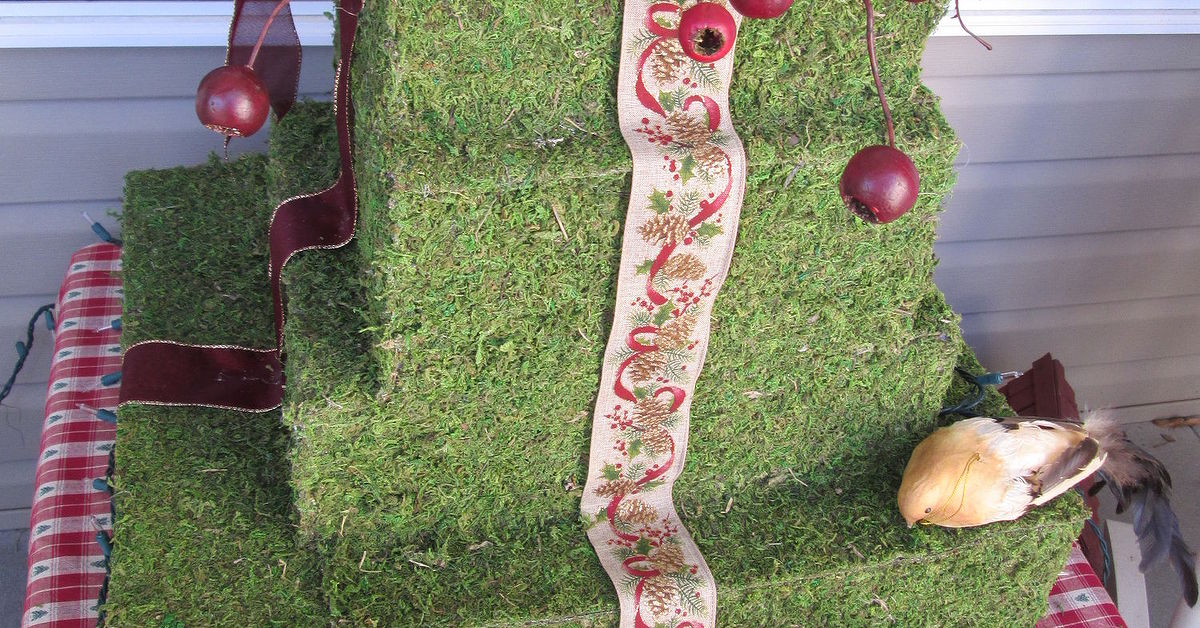
Sheet moss is the holiday workhorse. It lays flat, bends around shapes, and covers surfaces quickly. Use it on wreath bases, planter tops, foam cones, ornament forms, and miniature village landscapes. It is especially useful when you need a green carpet effect.
Reindeer Moss
Reindeer moss is technically a lichen, but in the decorating aisle it usually hangs out with moss products. It has a soft, cushiony texture and comes in natural greens as well as dyed colors. It is wonderful for filling gaps around candles, ornaments, floral stems, and small holiday figurines.
Spanish Moss
Spanish moss has a loose, trailing look that works beautifully in rustic, vintage, and Southern-inspired holiday displays. It is useful for gift baskets, angel crafts, nativity scenes, wreath texture, and hanging arrangements. A little goes a long way, so fluff it gently instead of packing it down.
Faux Moss Mats
Faux moss mats are ideal when you need speed, consistency, or durability. They are helpful for large surfaces such as table runners, craft backdrops, window displays, and children’s projects. They do not dry out, shed less than many natural options, and can often be reused from season to season.
Holiday Wreaths With Moss Cover
A moss-covered wreath is one of the easiest ways to bring a woodland holiday mood to your front door, interior wall, or kitchen window. Start with a grapevine, foam, or wire wreath base. Attach sheet moss with floral wire, greening pins, or hot glue, then layer on accents such as pinecones, faux berries, dried orange slices, mini ornaments, velvet ribbon, or small mushroom decorations.
For a refined look, keep the decorations grouped to one side and let the moss show through. For a whimsical look, cover the whole wreath with miniature trees, tiny deer, bells, and snow-dusted branches. For a modern look, use only moss, a wide ribbon, and one sculptural ornament. Moss does not need much help; it already has main-character texture.
Moss-Covered Centerpieces For The Holiday Table
Moss cover is a natural fit for holiday centerpieces because it hides mechanics. Floral foam, shallow bowls, plant saucers, wire grids, and plastic liners are useful, but nobody wants to admire them while passing the mashed potatoes. Moss politely covers the evidence.
Try placing a strip of moss down the center of the table like a living-looking runner. Add pillar candles in nonflammable holders, small ornaments, pine sprigs, and clusters of cranberries or faux berries. For a winter forest feel, tuck in bottlebrush trees and miniature houses. For a more elegant table, combine moss with white flowers, mercury glass, gold ornaments, and soft fairy lights.
Safety matters here. Preserved and dried decorative materials should be kept away from open flames, hot bulbs, fireplaces, and anything that can generate heat. Flameless LED candles are the easiest way to get the glow without turning your centerpiece into a dramatic family story retold every December.
Moss Cover For Potted Holiday Plants
Poinsettias, amaryllis, paperwhites, Norfolk Island pine, Christmas cactus, cyclamen, and mini evergreens all look more polished with moss cover over the soil. The moss hides plastic nursery pots, reduces the “fresh from the garden center” look, and makes plants feel like part of the decor.
To use moss on a plant, place it lightly over the soil surface rather than packing it tightly. Leave a little space around the stem or crown of the plant so moisture does not sit directly against sensitive tissue. Remove or lift the moss when watering if needed, then replace it once excess water has drained. For bulbs, sheet moss tied gently with twine can create a charming nest-like look, especially in bowls, baskets, or ceramic pots.
Mini Christmas Villages And Moss Landscapes
Miniature holiday villages become instantly more believable with moss cover. Instead of placing little houses on a bare shelf, create a base with sheet moss, faux snow, tiny trees, pebbles, and winding ribbon “roads.” Moss gives the village a landscape, making it feel like the homes belong somewhere instead of looking like they got lost on a bookcase.
For a woodland village, combine moss with pinecones, acorns, twig fences, mushroom ornaments, and soft white lights. For a classic Christmas village, use moss as the green ground and sprinkle faux snow lightly on top. The goal is not to bury the moss completely, but to make it look like winter has arrived politely.
Moss-Covered Ornaments And Gift Toppers
Moss-covered ornaments are surprisingly easy to make. Use foam balls, wooden shapes, plastic ornaments, or cardboard cutouts as the base. Attach small pieces of sheet moss with hot glue, then finish with twine, ribbon, bells, beads, or tiny pinecones. These ornaments look beautiful on rustic trees, woodland garlands, and wrapped gifts.
Moss also makes memorable gift toppers. Instead of a standard bow, try a small patch of moss, a cinnamon stick, a sprig of faux evergreen, and a kraft-paper tag. It feels handmade without looking like you panicked at midnight with a roll of tape and a dream.
Using Moss Cover On Mantels And Shelves
A mantel or shelf display can quickly look cluttered during the holidays. Moss helps connect separate objects into one cohesive scene. Lay a thin base of moss under candlesticks, small trees, framed art, ceramic houses, or garland. The moss acts like a visual bridge, making everything feel related.
For fireplace mantels, use extra caution. Keep moss, stockings, garlands, ribbon, and other decorative materials away from active flames, heat, and sparks. If the fireplace will be used, choose a nearby shelf, console table, or entryway cabinet for your moss display instead. Holiday charm is great; avoidable fire hazards are not part of the aesthetic.
Holiday Terrariums And Glass Displays
Moss cover is perfect for terrariums, cloches, apothecary jars, and glass bowls. Add a layer of pebbles, a little moss, and seasonal miniatures such as deer, snowmen, trees, mushrooms, or tiny houses. In a closed terrarium with living plants, moss can help create a lush miniature garden effect. In a purely decorative holiday jar, preserved or faux moss is often simpler.
One easy project is a winter cloche. Place moss on a small plate or wood slice, add a miniature tree and a small ornament, then cover it with a glass dome. It looks fancy enough for a holiday party but takes less time than finding the end of a roll of clear tape.
Moss Cover For Garlands And Stair Railings
Moss can add depth to artificial garlands, especially if they look a little thin. Tuck small pieces of sheet moss or reindeer moss into sparse areas, then add ribbon, pinecones, bells, or faux berries. On stair railings, moss can create a woodland effect when paired with cedar-style garland and warm white lights.
Use floral wire or reusable green twist ties to secure moss instead of permanent glue when you want to reuse the garland. For households with pets or curious children, keep loose pieces high enough that they will not be pulled apart, chewed, or scattered through the living room like tiny green tumbleweeds.
Moss Cover In Holiday Floral Arrangements
Florists often use moss to disguise foam, mechanics, and container edges. Home decorators can use the same trick. In a holiday arrangement, moss can cover the top of a vase, basket, or bowl while letting flowers, branches, and greenery rise naturally from the surface.
Try moss with red roses, white carnations, evergreen sprigs, eucalyptus, pinecones, and berries for a classic Christmas palette. For a softer winter look, pair moss with white flowers, dusty miller, silver brunia-style accents, and pale ribbon. For New Year’s Eve, moss can balance metallic ornaments and champagne-colored details so the arrangement feels festive but not overcaffeinated.
Creative Moss Cover Ideas For Holiday Parties
Moss is not limited to decorations that sit quietly in a corner. It can support party styling, too. Use moss as a base for place cards, buffet labels, dessert table risers, napkin ring accents, or photo-booth backdrops. A moss-covered tray can hold mugs for a cocoa bar. A moss mat can turn a plain cake stand display into a winter garden scene.
For a children’s craft table, pre-cut moss pieces and let kids decorate cardboard stars, small boxes, or paper cones. Use child-safe glue and avoid tiny decorations for younger children. The results may not look like a magazine spread, but they will have charm, personality, and probably one googly eye where no googly eye was requested.
How To Choose Moss Cover For Your Project
Choose moss based on texture, flexibility, color, and cleanup needs. Sheet moss is best for covering broad surfaces. Reindeer moss is best for fluffy filler. Spanish moss is best for loose, wispy movement. Faux moss is best for reusable displays and low-shed situations.
Look for preserved moss that feels pliable rather than brittle. Check whether dyed moss may transfer color, especially if it will touch linens, painted furniture, or handmade paper. For high-traffic areas, faux moss mats are often the most practical option. For elegant close-up displays, preserved natural moss usually has the richest texture.
Sustainability And Responsible Decorating
Moss may look small, but natural moss ecosystems can be ecologically important. Peat-forming sphagnum mosses, for example, are connected to wetland and peatland environments that store large amounts of carbon. That does not mean you can never use moss in decor, but it does mean responsible sourcing matters.
When possible, buy from brands that describe their moss as responsibly harvested, preserved, renewable, or cultivated. Reuse moss from year to year when it remains clean and intact. Avoid collecting moss from parks, protected land, or private property without permission. A good holiday rule: do not steal from the forest to impress the dining room.
Storage Tips For Moss Cover
After the holidays, store preserved or faux moss in a dry, ventilated container. Keep it away from direct sunlight, moisture, and heat. Do not water preserved moss; it is meant to stay decorative, not grow. If pieces are dusty, shake them gently outdoors or use a soft brush.
For reusable ornaments and wreaths, wrap them loosely in tissue paper and place them in a sturdy box. Avoid crushing reindeer moss, which can flatten under pressure. Label the box clearly so next December you do not open it expecting ornaments and discover a mysterious green fluff situation.
Common Mistakes To Avoid
Using Too Much Moss
Moss is beautiful, but too much can make a display look heavy. Use it as a base, accent, or texture layer rather than covering every visible surface. Let ornaments, greenery, candles, and flowers have room to shine.
Placing Moss Too Close To Heat
Keep moss away from open flames, fireplaces, hot bulbs, radiators, and heat vents. Dried and preserved decorative materials can be flammable, so flameless candles are the safest choice for moss-based designs.
Ignoring Color Transfer
Some dyed moss products may shed or transfer color. Test a small piece before placing it on white linens, unfinished wood, or delicate surfaces.
Forgetting About Cleanup
Natural moss can shed. Work over newspaper, a tray, or a craft mat. Your future self, vacuum in hand, will appreciate this tiny act of mercy.
Of Personal-Style Experience: Decorating With Moss Cover During The Holidays
There is a particular kind of holiday confidence that arrives when you discover moss cover. At first, it seems like a small craft supply: a bag of green texture sitting quietly next to ribbon, floral wire, and foam cones. Then you use it once, and suddenly you start looking at every plain surface in the house as if it needs a woodland makeover. A basic planter? Add moss. A candle tray? Add moss. A mini village? Add moss. The family dog? No, absolutely not, but you will think about it for half a second.
One of the best experiences with moss cover is how forgiving it is. Ribbon needs symmetry. Garland needs fluffing. String lights somehow develop knots that feel legally impossible. Moss, however, is relaxed. If a piece tears, you patch it. If one area looks thin, you tuck in more. If the edge is messy, call it rustic and move on with your life. That makes moss especially helpful for holiday decorators who want a handmade look without spending three hours measuring pinecones like tiny engineers.
Moss cover also has a way of making inexpensive decorations look richer. A simple thrift-store tray can become a centerpiece when lined with moss and filled with ornaments. Plain clay pots look seasonal when topped with sheet moss and tied with velvet ribbon. Battery candles look warmer when nestled into reindeer moss, provided they are safely placed and not buried. Even faux plants benefit from moss cover because it hides plastic soil and gives the arrangement a more natural finish.
Another enjoyable part is mixing textures. Moss pairs beautifully with shiny ornaments because the contrast makes both materials better. It softens metallics, grounds glitter, and gives bright red berries a more natural place to land. It also works well with dried oranges, cinnamon sticks, pinecones, burlap, linen, wood slices, mercury glass, and ceramic houses. In other words, moss is the friend at the holiday party who gets along with everyone and never tries to control the playlist.
For family projects, moss cover can turn crafting into a low-pressure activity. Kids can press moss onto cardboard trees, decorate small gift boxes, or create tiny winter scenes in jars. Adults can work on wreaths, tablescapes, and planters. Everyone can participate at their own skill level. The only serious rule is to set up a cleanup zone before opening the bag. Moss has a talent for traveling. It will appear on the floor, on sleeves, and possibly in a cup of coffee if the crafting table gets too ambitious.
The most satisfying holiday use, though, may be the potted plant upgrade. A grocery-store amaryllis or poinsettia can look instantly more elegant with moss covering the soil and a ribbon around the pot. It takes less than five minutes, but the result feels thoughtful. That is the magic of moss cover: it makes small efforts look intentional. During a season when everyone is busy cooking, wrapping, hosting, cleaning, and pretending they know where they stored the tree skirt, that kind of easy beauty is a gift.
Conclusion: Let Moss Bring The Holiday Magic Down To Earth
Moss cover may not be the loudest holiday decorating material, but it is one of the most versatile. It adds softness to shiny displays, hides practical mechanics, upgrades potted plants, gives miniature villages a landscape, and turns simple crafts into woodland-inspired decorations. From wreaths and centerpieces to garlands, terrariums, ornaments, and gift toppers, moss cover creates a natural holiday mood that feels cozy, creative, and timeless.
The key is to choose the right moss for the project, use it thoughtfully, and keep safety in mind around heat and flames. With a little planning, moss can help your home feel festive without looking overdone. It is proof that holiday decorating does not always need more sparkle. Sometimes, it just needs a soft green layer, a few pinecones, and the courage to say, “Yes, this tiny forest belongs on my dining table.”