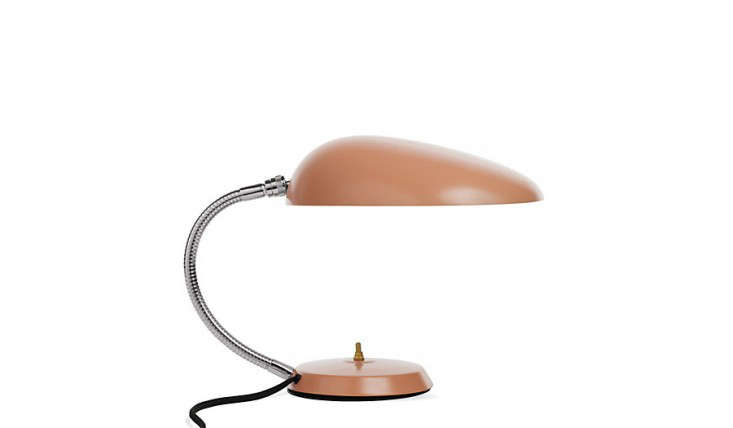
A Cobra Table Lamp does something most desk lamps can only dream about: it earns attention before anyone turns it on. Curved, poised, and slightly theatrical, it looks ready to illuminate your book, judge your furniture choices, and then slither off for a martini. Beneath the drama, however, is a practical ideadirect light exactly where you need it, wrapped in a sculptural form that makes a tabletop feel deliberately designed.
The name can be confusing because it belongs to more than one celebrated lamp. The best-known American mid-century version was created by Swedish-born designer Greta Magnusson Grossman around 1948–1950. A second icon, designed by Italian lighting pioneer Elio Martinelli in 1968, uses a rounded resin body that opens and rotates like a futuristic snake. Both remain in production and prove that good lighting can have considerably more personality than a beige shade on a stick.
What Is a Cobra Table Lamp?
Broadly, a Cobra Table Lamp is a directional table light whose silhouette recalls the raised neck or flared hood of a cobra. Unlike a traditional fabric-shaded lamp that spreads light in many directions, a Cobra design typically concentrates illumination through an adjustable metal or molded shade. It can serve as a reading lamp, desk light, accent light, or small sculptural focal point.
Greta Grossman’s Cobra Table Lamp
Grossman’s Cobra is closely tied to California mid-century modern design. Its oval metal shade, curved flexible arm, compact base, and clean profile combine European modernism with postwar American practicality. The shade recalls a cobra’s hood, while its adjustable construction lets the user aim the beam rather than accepting whatever angle the lamp feels like offering that day.
The design received a Good Design honor in 1950 and was exhibited through the Museum of Modern Art’s influential Good Design program. MoMA identifies a Grossman Cobra lighting fixture dated around 1948 that appeared in the U.S. Pavilion at the 1951 Milan Triennale. The Smithsonian’s Cooper Hewitt has also acquired a Grossman table lamp from roughly the same period, reinforcing her importance in twentieth-century lighting design.
Authorized contemporary editions are produced by GUBI. Product descriptions highlight the rotating shade, flexible arm, powder-coated metal surfaces, weighted base, and integrated switch. Exact socket, voltage, finish selection, and included components can vary by market, so U.S. buyers should verify the regional specification rather than relying on a European listing.
Elio Martinelli’s Cobra Table Lamp
Martinelli’s 1968 Cobra takes a different route. Instead of a narrow stem and hooded shade, it uses two smooth molded forms joined around a central pivot. Closed, the lamp reads as a near-spherical sculpture. Rotated, the upper section extends outward like a cobra preparing to strikeexcept this one attacks darkness and has excellent Italian manners.
Martinelli Luce describes the model as a direct-light swivel lamp made from molded resin, with the upper body rotating through 360 degrees. Current U.S. retail specifications include LED-compatible versions, and authorized listings may identify the fixture as UL listed. It is larger and more visually dominant than Grossman’s design, so it works well on a console, credenza, side table, or broad desk.
Why the Cobra Table Lamp Still Looks Modern
It Balances Sculpture and Function
Many statement lamps are beautiful until you need to read beneath them. The Cobra succeeds because its identity comes from the same parts that make it useful. The curved arm creates movement, the hood controls glare, and the adjustable shade redirects the beam. Nothing feels added merely to impress the neighbors, although impressing the neighbors remains a pleasant side effect.
Its Shape Is Organic Without Becoming Cluttered
The lamp borrows from nature without imitating a snake literally. There are no scales, eyes, or tiny forked tongues involved. Instead, the designers reduced the idea to posture: a raised head, curved neck, and sense of alertness. That abstraction lets a Cobra lamp fit into mid-century modern, contemporary, eclectic, industrial, and even traditional rooms.
Where a Cobra Table Lamp Works Best
On a Home-Office Desk
The Grossman-style Cobra is effective on a desk because its compact base preserves work surface while the adjustable shade directs light toward paperwork or a keyboard. Position it opposite your writing hand to reduce shadows. Keep the lamp slightly forward of your shoulder rather than directly beside the monitor to limit screen reflections.
On a Bedside Table
A Cobra lamp adds sharper character than a conventional bedside lamp and can be aimed toward a book without flooding the whole room. Because its opaque shade creates directional rather than broad ambient light, pair it with another soft source elsewhere in the bedroom. One bright island in a dark room may look dramatic, but it is not always comfortable.
On a Console or in a Reading Corner
The larger Martinelli Cobra excels on a console, where its rounded body reads like sculpture and its beam can wash a wall or highlight an object. A smaller Cobra can sit beside a reading chair when a floor lamp would crowd the layout. Aim it down and slightly behind the reader’s shoulder to keep glare out of the eyes. Lighting guidance focuses on illumination at the task surface, which is why an adjustable shade is valuable.
How to Choose the Right Cobra Table Lamp
Decide Which Cobra You Actually Want
Start with the silhouette. Grossman’s version is slender, asymmetrical, and visibly mid-century. Martinelli’s is rounded, bold, and closer to 1960s space-age design. The Grossman lamp suits smaller desks and nightstands; the Martinelli lamp asks for more physical and visual room. Searching by designer name is the quickest way to avoid ordering the wrong snake.
Choose an Authentic Reissue, Vintage Original, or Inspired Design
An authorized reissue offers documented design lineage, current electrical components, predictable finishes, and manufacturer support. A vintage original may have historical value and appealing patina, but old wiring, sockets, insulation, and plugs deserve professional inspection. An inspired lamp can be attractive and affordable, although it should not be represented as an original Grossman or Martinelli product.
When authenticity affects the price, look for manufacturer labels, model numbers, dealer documentation, consistent hardware, and credible provenance. Request close photographs of the base, underside, switch, cord, joints, shade interior, and labels. A seller who provides one glamorous photograph may be selling a lampor a very confident shadow.
Match the Finish to the Room
Black emphasizes the lamp’s outline and pairs easily with wood, concrete, leather, and neutral fabrics. Gray feels quieter. Red turns the lamp into punctuation. White or glossy resin heightens the space-age effect. Do not force every metal finish to match; repeating the Cobra’s color or curve once elsewhere is usually enough.
Bulbs, Brightness, and Color Temperature
Use the bulb type and maximum wattage stated by the manufacturer. An LED is generally practical because it produces useful light with less heat than an incandescent bulb, an advantage inside a compact shade. For bedrooms and living areas, warm light around 2700K often feels relaxed. A home office may benefit from a slightly crisper 3000K lamp, provided it does not clash with surrounding fixtures.
Brightness should follow the task. Decorative accent lighting needs less output than detailed paperwork or drawing. Use a dimmable bulb only when the lamp, switch, and dimmer are compatible. Otherwise, flicker, buzzing, or poor performance may make the fixture seem as though it is attempting Morse code.
Safety and Electrical Considerations
Buy from a reputable dealer and confirm that the fixture is designed for U.S. voltage and plug standards. Certification from a recognized testing organization indicates that a product has been evaluated to applicable safety requirements. UL Solutions warns that unauthorized or counterfeit UL marks can appear on lamps, so a logo alone is not proof of compliance.
Inspect the cord regularly, keep it away from pinching furniture, and stop using the lamp if insulation, the plug, socket, or switch is damaged or unusually hot. Have vintage fixtures evaluated by a qualified lamp-repair professional or electrician before daily use. Never exceed the labeled wattage.
How to Clean and Maintain a Cobra Lamp
Unplug the lamp and let it cool. Dust painted metal or resin with a soft microfiber cloth. For fingerprints, use a lightly dampened cloth followed by a dry one unless the manufacturer specifies another method. Avoid abrasive pads, harsh solvents, furniture polish, and enthusiastic scrubbing. A vintage finish is not a stubborn countertop stain.
Support the arm or shade while adjusting it rather than forcing the joint. If movement becomes stiff, loose, or noisy, consult the manufacturer or a repair specialist instead of applying random household oil. Check the base pads too; worn pads can scratch furniture and make the lamp wobble.
Living With a Cobra Table Lamp: Practical Experiences
The first experience is visual. A Cobra lamp changes the composition of a surface even when switched off. On a plain desk, it supplies the curved line that keeps the setup from looking like office equipment arranged for an insurance photograph. On a nightstand, it adds a deliberate design choice without requiring wallpaper, a new bed, or an emotionally complicated trip to the paint store.
The second experience is the pleasure of adjustment. With the Grossman design, small changes to the arm and shade noticeably alter the mood. Pointed down, it becomes a concentrated task lamp. Tilted toward a wall, it can create softer reflected light. Turned toward books or a ceramic object, it behaves almost like a tiny gallery spotlight. The best angle is often not the obvious one.
The third experience is learning that directional light has boundaries. A Cobra is excellent at illuminating a defined area, but it may not replace the ambient lamp that brightens an entire room. People who expect one compact fixture to handle reading, video calls, mood lighting, plant growth, and everyone’s emotional needs may be disappointed. Layered lighting works better: let the Cobra handle focus while another source supplies background glow.
Scale becomes more noticeable in daily use. The Grossman lamp feels agile and architectural, making it comfortable on a desk, dresser, or reasonably sized nightstand. The Martinelli model feels like an object with its own gravity. Put it on a broad credenza and it looks intentional; squeeze it beside a printer and unopened mail and it appears to be planning an escape.
Finish affects the experience more than online images suggest. A dark lamp creates a crisp silhouette and recedes when the room is dim. A colored version remains visually active all day. Glossy resin catches reflections and looks playful or futuristic, while matte powder coating feels quieter and more architectural. Fingerprints are more visible on glossy surfaces, a small tax collected by dramatic design.
There is also tactile pleasure in a well-made switch, balanced base, and smooth joint. These details are easy to ignore in photographs but matter every day. A weighted base keeps adjustment from becoming a two-handed wrestling match. A reachable switch prevents nightly fumbling behind furniture. A shade that stays aimed makes the lamp feel like a tool rather than a decorative employee who ignores instructions.
Placement becomes a small ritual as well. Moving the lamp only a few inches can change the balance of the tabletop, the reach of the beam, and the amount of reflected light on a nearby wall. That sensitivity is useful, but it rewards patience. The Cobra is happiest when treated as part lighting instrument, part sculpture, and part very well-behaved roommate.
Finally, a Cobra lamp becomes a conversation piece without demanding a conversation. Guests may recognize the design, ask about the name, or simply notice that the room feels more finished. That is the strongest argument for the lamp: it improves both illumination and visual rhythm. It is not merely an accessory placed on furniture. It participates in the room.
Conclusion
The Cobra Table Lamp remains relevant because it solves an ordinary problem with extraordinary shape. Greta Grossman’s model offers compact, adjustable elegance rooted in California modernism, while Elio Martinelli’s version turns direct light into a rotating space-age sculpture. Choose a properly specified fixture, match the bulb to the task, and give the lamp room to show its silhouette. It will brighten the surface beneath it and sharpen the entire roomno antivenom required.
Note: Product specifications, electrical components, finishes, and regional certifications can change between editions. Verify current manufacturer and retailer details before purchasing.