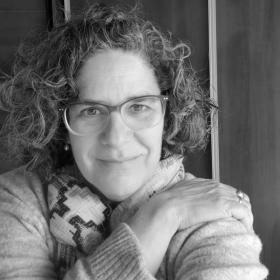
Cecilia Cabrera Martirena is an educator, educational consultant, English as a Foreign Language teacher, teacher educator, and professional development facilitator whose work focuses on young learners, inquiry-based learning, project-based learning, gifted education, classroom belonging, and meaningful language education. In simpler terms, she is the kind of educator who looks at a classroom full of curious children and thinks, “Good. Let’s build the lesson around that curiosity before someone turns it into another worksheet.”
Publicly available information presents Cecilia Cabrera Martirena as a long-time EFL teacher with more than 30 years of experience working with learners from very young children to adults. She has also served as a teacher educator in Montevideo, Uruguay, and has conducted continuous professional development workshops in countries including the United Kingdom, Brazil, Argentina, Colombia, Mexico, and Uruguay. Her published work and conference presence show a consistent professional mission: helping teachers create deeper, more responsive, and more human learning experiences.
This article explores who Cecilia Cabrera Martirena is professionally, what themes define her educational writing, why her work matters for teachers, and how her ideas can be applied in real classrooms without making educators feel like they need a cape, a laminator, and three extra hours in the day.
Who Is Cecilia Cabrera Martirena?
Cecilia Cabrera Martirena is best known in the education community as an EFL teacher, teacher educator, educational consultant, and writer. Her professional background centers on language education, early childhood learning, inquiry-based instruction, project-based learning, and teacher development. She has worked with students across age groups, from very young learners to adults, which gives her writing a practical range that many educators appreciate.
Her Edutopia profile identifies her as an educational consultant and notes more than three decades of experience teaching English as a foreign language. It also highlights her role as a teacher educator at state teacher education institutes in Montevideo, Uruguay. That combination matters because it places her work at the intersection of classroom practice and teacher preparation. She is not simply discussing education from a distance; her writing reflects the realities of actual classrooms, actual children, actual teachers, and actual glue-stick emergencies.
Across public sources, Cecilia Cabrera Martirena is associated with professional development workshops, Cambridge-related educational leadership work, International House, IATEFL contributions, and conference programming connected to English language teaching. Her work is especially relevant for educators interested in early years education, EFL/ELT methodology, active pedagogies, social-emotional learning, and student-centered instruction.
Why Cecilia Cabrera Martirena’s Work Matters
Education has no shortage of theories. Some are helpful. Some sound like they were assembled by a committee trapped inside a whiteboard. What makes Cecilia Cabrera Martirena’s work useful is that it translates big educational ideas into classroom behaviors teachers can actually use.
Her articles often begin with familiar school moments: a child asking a question, a class noticing something in nature, learners struggling with a concept, or teachers trying to support different needs at the same time. From there, she connects the moment to deeper teaching principles. This approach makes her writing practical and reflective rather than overly abstract.
One major thread in her work is the idea that young children are naturally curious. Instead of treating curiosity as a cute bonus, she frames it as a serious engine for learning. Children investigate, observe, compare, question, test, revisit, and explain. These are not “extra” activities; they are the raw materials of language, science, math, social-emotional growth, and critical thinking.
Core Educational Themes in Her Writing
1. Inquiry-Based Learning
Inquiry-based learning is one of the strongest themes connected with Cecilia Cabrera Martirena. In her work on English learning and young learners, inquiry is not treated as a decorative activity added after the “real lesson.” Instead, it becomes the lesson’s foundation. Students investigate questions that matter to them, and language grows naturally from the need to communicate discoveries.
For example, a class exploring water might need vocabulary related to bottles, rivers, rainfall, temperature, or the water cycle. Instead of memorizing random word lists, children use language because they need it. The words have a job. They are not just sitting on a flashcard hoping someone remembers them before Friday’s quiz.
This is especially powerful in EFL classrooms because language becomes connected to purpose. Students speak, listen, write, and read in order to solve problems, share findings, and make sense of the world. That is a very different learning experience from repeating sentences that nobody would ever say at a bus stop, a grocery store, or anywhere else on planet Earth.
2. Project-Based Learning for Young Students
Cecilia Cabrera Martirena has also written about project-based learning in pre-K and early elementary classrooms. Her approach emphasizes that young children are capable of meaningful projects when teachers design experiences with appropriate structure, observation, and support.
Project-based learning can sound intimidating in early childhood settings. Some educators picture a room full of five-year-olds building a suspension bridge while someone cries because the blue marker dried out. But the core idea is much simpler: children investigate a meaningful question or problem over time and create something that shows their learning.
In early years classrooms, this might involve observing insects, studying weather, exploring water, designing a garden, investigating community helpers, or documenting how plants grow. The teacher guides the process, helps students ask better questions, introduces vocabulary, supports collaboration, and makes learning visible through drawings, conversations, charts, models, stories, and shared reflections.
3. Differentiated Instruction
Another important theme in Cecilia Cabrera Martirena’s educational writing is differentiation. She recognizes that young learners do not enter the classroom with identical readiness levels, interests, strengths, or learning profiles. Any teacher who has spent ten minutes with a group of children already knows this. One child is reading chapter books, another is still figuring out scissors, and a third has somehow become the unofficial mayor of the block center.
Differentiation does not mean creating 24 separate lesson plans for 24 students. It means designing flexible pathways so learners can access meaningful content in different ways. This may include grouping students strategically, offering multiple materials, allowing different forms of expression, adjusting levels of support, or creating tasks that stretch learners without overwhelming them.
In Cecilia Cabrera Martirena’s work, differentiation is not framed as lowering expectations. It is about meeting children where they are and helping them move forward with confidence. That mindset is especially important in early childhood, language learning, and mixed-ability classrooms.
4. Social-Emotional Learning and Emotional Vocabulary
Her writing also explores the role of emotional vocabulary in preschool and early learning. Picture books, repeated readings, classroom conversations, and reflective questions can help children recognize and name feelings. This matters because young children often experience big emotions before they have the language to explain them.
When children revisit a story, they may notice a character’s fear, frustration, pride, courage, or uncertainty. With thoughtful guidance, those story moments become mirrors for their own experiences. A child might connect a character’s struggle to the feeling of trying something difficult, making a mistake, or needing encouragement.
This kind of work supports more than literacy. It helps children build empathy, self-awareness, and communication skills. It also helps teachers create classrooms where feelings are not treated like inconvenient weather systems passing through the room, but as part of learning itself.
5. Belonging and Classroom Environment
Cecilia Cabrera Martirena has written about the importance of classroom belonging, especially in elementary settings. Her approach suggests that students should not merely occupy a learning space; they should help shape it. When children contribute ideas to the classroom environment, they develop a stronger sense of ownership, connection, and community.
This may involve inviting students to help decide how learning areas are organized, where materials are placed, how displays reflect student work, or how classroom routines support collaboration. The classroom becomes more than a room with desks and posters. It becomes a shared learning ecosystem, preferably one where the markers have caps and the glue is not permanently attached to the table.
Cecilia Cabrera Martirena and Teacher Professional Development
Teacher professional development is another major part of Cecilia Cabrera Martirena’s public profile. She has been connected with CPD workshops, teacher education institutes, webinars, conference sessions, and educational leadership development. Her work addresses both teachers and school leaders, which is important because classroom innovation rarely succeeds when teachers are expected to transform everything alone.
High-quality professional development is not about dropping a shiny new strategy into a staff meeting and hoping it survives Monday morning. Teachers need time, modeling, reflection, coaching, collaboration, and permission to adapt ideas to their context. Cecilia Cabrera Martirena’s writing on professional learning communities and innovative pedagogy reflects this understanding.
Professional learning communities, when they function well, help educators investigate their practice together. Teachers analyze student learning, share strategies, ask difficult questions, and support one another. The best PLCs are not paperwork festivals. They are professional conversations with purpose.
Her Influence in English Language Teaching
In English language teaching, Cecilia Cabrera Martirena’s work stands out because it connects language learning with meaningful content. Rather than separating English instruction from children’s natural investigations, she shows how language can emerge through inquiry, projects, stories, experiments, and collaboration.
This approach is especially valuable for young learners. Children do not usually learn best through isolated grammar explanations. They learn through doing, noticing, playing, testing, repeating, pretending, asking, and explaining. In that environment, language becomes useful. It helps them name what they see, describe what they think, ask for materials, negotiate roles, and share conclusions.
For teachers, this means planning language instruction with a flexible mindset. The teacher still teaches vocabulary, structures, pronunciation, and communication skills. The difference is that these elements are connected to authentic classroom experiences. Students are not learning English as a museum object behind glass. They are using it as a tool.
Gifted Education and Student Potential
Cecilia Cabrera Martirena has also contributed ideas related to gifted learners. One key point associated with her work is that giftedness is not always obvious. Some gifted children may display strong memory, humor, curiosity, or advanced reasoning. Others may show procrastination, emotional intensity, frustration, or a preference for working alone. In other words, giftedness does not always arrive wearing a tiny graduation cap.
For teachers, this means observation matters. Self-directed lessons, inquiry tasks, open-ended questions, and flexible projects can reveal strengths that traditional assignments may hide. A child who seems quiet during direct instruction may become intensely engaged during independent investigation. Another child may show sophisticated thinking while building, drawing, questioning, or explaining a pattern.
The larger lesson is that classrooms should create space for different kinds of ability to surface. When students can ask questions, pursue interests, and show learning in varied ways, teachers gain a richer view of who they are teaching.
Specific Classroom Examples Inspired by Her Work
Example 1: The Water Investigation
A preschool class begins with a simple question: “Where does water go after it rains?” The teacher invites students to observe puddles, draw what they see, make predictions, compare sunny and shady areas, and use containers to explore water flow. Language emerges naturally: wet, dry, deep, shallow, evaporate, pour, float, sink, faster, slower.
Math appears through measuring and comparing. Science appears through observation and prediction. Social-emotional learning appears when students negotiate materials and share discoveries. Literacy appears when the class creates a shared water journal. This is the kind of integrated learning Cecilia Cabrera Martirena often supports: one rich experience, many learning pathways.
Example 2: Picture Books and Feelings
A teacher reads the same picture book several times across a week. The first reading focuses on the story. The second reading invites children to notice characters’ faces and actions. The third reading asks students to connect the story to their own experiences. Children begin to name emotions such as fear, frustration, excitement, pride, and relief.
The repeated reading gives children time to think. Nobody is rushed into a perfect answer. The book becomes a safe space for discussing feelings, which is much less chaotic than asking a room of preschoolers, “So, how is everyone emotionally processing life today?”
Example 3: A Student-Shaped Classroom
At the beginning of the year, an elementary teacher invites students to help organize classroom areas. Students discuss where reading should happen, how supplies should be stored, and how their work should be displayed. The teacher guides the decisions but gives students real voice.
The result is not just a tidier classroom. It is a stronger learning community. Students see their ideas reflected in the space, and the room becomes something they belong to rather than something simply assigned to them.
Lessons Educators Can Learn from Cecilia Cabrera Martirena
The first lesson is that young learners are capable of deep thinking. They may express that thinking through drawings, movement, play, questions, or wonderfully unexpected comments, but the thinking is there. Teachers who listen carefully can build powerful lessons from children’s curiosity.
The second lesson is that language learning should be meaningful. Students need vocabulary and grammar, yes, but they also need reasons to use them. Inquiry, projects, stories, and collaboration give language a purpose.
The third lesson is that teachers need support. Innovation works best when educators have time to reflect, plan, collaborate, and adjust. Professional development should help teachers grow, not make them feel like they have failed because they do not have a Pinterest-perfect classroom by Tuesday.
The fourth lesson is that learning is not linear. Children revisit ideas, forget things, rediscover them, and deepen understanding over time. A strong curriculum allows for rhythm, repetition, and depth rather than racing through content like it is being chased by a stopwatch.
Experience-Based Reflections Related to Cecilia Cabrera Martirena
One of the most relatable experiences connected to Cecilia Cabrera Martirena’s educational themes is the moment a teacher realizes that children’s questions are not interruptions. They are invitations. Many educators have planned a neat lesson, prepared the materials, arranged the chairs, and imagined a smooth instructional journeyonly for a child to raise a hand and ask something completely unexpected. At first, it can feel like the lesson has gone off track. But often, that question is the track.
Imagine a group of young learners studying animals. The teacher plans to introduce vocabulary such as feathers, wings, beak, nest, and eggs. Then a child looks out the window and notices a bird carrying a twig. Suddenly the room changes. The vocabulary is no longer abstract. The children want to know where the bird is going, why it needs the twig, whether the nest is safe, and how baby birds stay warm. A less flexible lesson might say, “Interesting, but let’s return to the worksheet.” A more inquiry-driven lesson says, “Let’s investigate.”
That shift can be powerful. Students draw the bird, describe what they saw, compare nests, count materials, listen to a story, learn new words, and ask more questions. The teacher still teaches. In fact, the teacher teaches more deeply because the children are emotionally and intellectually invested. They are not just receiving information; they are chasing meaning. And any teacher knows that when children are genuinely curious, the classroom energy changes. It is the difference between pushing a shopping cart with one stuck wheel and watching children run toward discovery with both sneakers untied.
Another experience connected to her work involves emotional vocabulary. In many classrooms, children feel frustration long before they can name it. A child may crumple paper, refuse to try, or say, “I can’t do it.” Through repeated stories and gentle discussion, teachers can help children recognize that this feeling has a name and that it can change. A character in a picture book can give children enough distance to talk safely about themselves. They may first say, “She is scared,” and later realize, “I feel that way too when something is hard.”
Teachers also experience the challenge of differentiation every day. A single classroom may include children who need more movement, more language support, more challenge, more reassurance, or more time. Cecilia Cabrera Martirena’s ideas remind educators that differentiation is not about perfection. It is about noticing. It is about asking, “What does this learner need next?” Sometimes the answer is a harder question. Sometimes it is a partner. Sometimes it is a picture, a gesture, a real object, or five quiet minutes away from the noise.
The most important experience, perhaps, is the teacher’s own learning. Educators grow when they observe closely, reflect honestly, and collaborate with others. A classroom is never finished. A lesson is never perfect. But with curiosity, professional support, and respect for children’s thinking, teaching becomes less about controlling every moment and more about designing conditions where meaningful learning can happen. That spirit sits at the heart of the educational conversation around Cecilia Cabrera Martirena.
Conclusion
Cecilia Cabrera Martirena represents a practical, thoughtful, and child-centered voice in modern education. Her work connects English language teaching with inquiry, project-based learning, emotional development, differentiation, gifted education, and professional growth for teachers. She reminds educators that young learners are not empty containers waiting to be filled with vocabulary lists. They are investigators, storytellers, builders, question-askers, collaborators, and occasionally tiny philosophers with snack crumbs on their sleeves.
For teachers and school leaders, her work offers a clear message: meaningful learning begins when educators take children’s curiosity seriously. Whether through a picture book, a water investigation, a classroom redesign, or a professional learning community, the goal is the samehelp learners build understanding through experience, language, reflection, and connection.
Note: Public information about Cecilia Cabrera Martirena is primarily professional and education-focused. This article avoids private, speculative, or unverified personal details and focuses on publicly documented educational work, themes, and professional contributions.