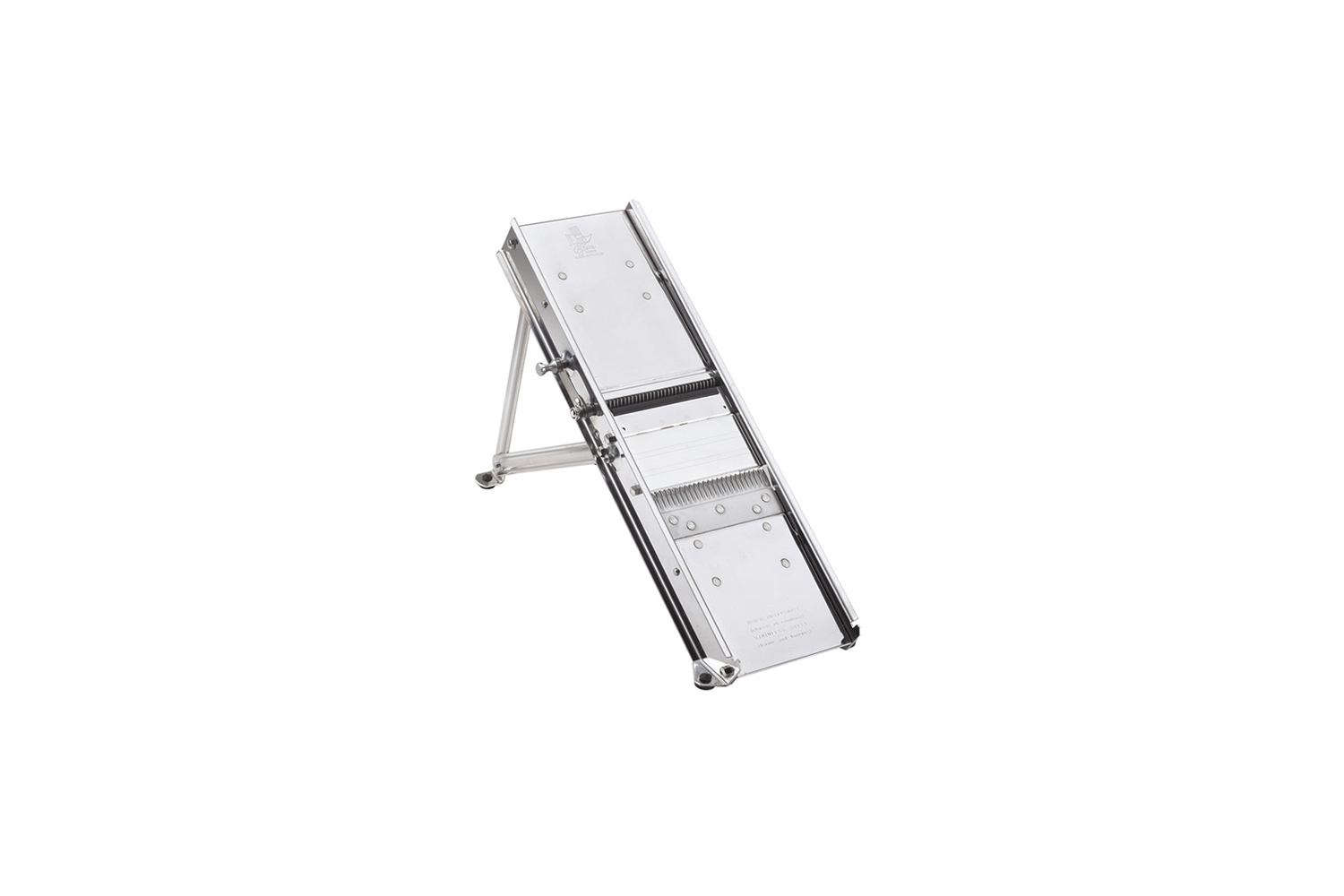
The Browne Mandolin SS Vegetable Slicer is the kind of kitchen tool that makes vegetables behave like they went to finishing school. Potatoes become neat gratin-ready sheets. Cucumbers turn into delicate ribbons. Carrots suddenly look like they have a private stylist. For cooks who care about speed, consistency, and presentation, a stainless steel mandoline is not just a gadget; it is a quiet little prep-station superhero with a blade sharp enough to deserve respect and maybe its own tiny warning label.
Browne Foodservice is known in professional kitchen circles for practical, commercial-grade smallwares, and its stainless steel mandoline slicers are built for cooks who want dependable vegetable prep without turning every dinner into a knife-skills exam. Depending on the listing and model variation, the Browne mandoline family is commonly associated with 18/10 stainless steel construction, julienne cutting options, serrated slicing, adjustable thickness, and a foldable or stand-supported design. Some older retail listings describe the Browne Mandolin SS Vegetable Slicer as a stainless steel vegetable slicer with 38 blades, while current related Browne models such as the 5720638 and 5715000 emphasize double-sided julienne blades, serrated blades, straight slicing, and chef-style precision.
In plain English: this is not a flimsy plastic slicer you buy because it looks cute next to the avocado toast. This is a serious prep tool for people who want uniform slices and are willing to treat sharp steel like sharp steel. A mandoline can be your best friend in the kitchen, but it is the best friend who also rides a motorcycle and tells you to wear a helmet.
What Is the Browne Mandolin SS Vegetable Slicer?
The Browne Mandolin SS Vegetable Slicer is a professional-style kitchen mandoline designed to slice, julienne, and shape firm fruits and vegetables with speed and consistency. It is especially useful for restaurants, catering kitchens, culinary students, serious home cooks, and anyone who has ever looked at a mountain of potatoes and whispered, “There has to be a better way.”
The main keyword here is Browne Mandolin SS Vegetable Slicer, but shoppers may also search for related terms such as Browne stainless steel mandoline, Browne Foodservice mandoline slicer, commercial vegetable slicer, professional mandoline slicer, and stainless steel julienne slicer. These terms point to the same general idea: a durable, precise slicing tool made for repeat use.
Mandoline vs. Mandolin: Yes, the “E” Matters
A mandolin is a musical instrument. A mandoline is a kitchen slicer. One plays bluegrass; the other makes paper-thin radishes. Mixing them up is harmless until someone tries to make coleslaw with a string instrument, which is frowned upon in most kitchens and all reasonable households.
In the U.S., “mandoline slicer” is the most common spelling for the kitchen tool, though some product listings use “mandolin.” Browne listings may appear under either variation, so shoppers should search both spellings when comparing retailers.
Key Features of the Browne Stainless Steel Mandoline
The strongest appeal of the Browne stainless steel mandoline is its professional construction. Many mandoline slicers are lightweight plastic tools designed for occasional home use. Browne’s stainless steel models are positioned more toward commercial food preparation, where tools need to survive repeated slicing, washing, storing, and being handled by cooks who are moving fast during prep service.
18/10 Stainless Steel Construction
One of the most important features is 18/10 stainless steel. This refers to stainless steel containing approximately 18 percent chromium and 10 percent nickel. In kitchen equipment, 18/10 stainless steel is valued for corrosion resistance, durability, and a polished appearance. It is commonly used for professional cookware, flatware, and foodservice tools because it handles moisture better than lower-grade materials.
For a mandoline slicer, stainless steel construction matters because the tool often comes into contact with watery vegetables, acidic ingredients, and frequent cleaning. Tomatoes, onions, apples, cucumbers, beets, potatoes, and citrus-adjacent prep can be tough on cheaper materials. Stainless steel gives the Browne slicer a sturdy, restaurant-ready personality. Translation: it is less “drawer gadget” and more “prep table workhorse.”
Julienne Cutting Options
Several Browne mandoline listings describe julienne functionality. The Browne 5720638, for example, is commonly listed with a double-sided julienne blade: one side with 30 teeth spaced around 3 mm apart, and another side with 10 teeth spaced around 10 mm apart. That means the tool can help produce finer matchstick cuts as well as wider strips.
Julienne cuts are useful for carrots, zucchini, potatoes, cucumbers, daikon, apples, and other firm produce. They are ideal for slaws, stir-fries, spring rolls, salads, garnishes, hash browns, and fancy little vegetable piles that make dinner look like it went to culinary school.
Serrated Blade and Thickness Adjustment
Browne stainless steel mandoline models are also associated with serrated blade options and thickness adjustment. A serrated blade can help with certain textures, while adjustable thickness allows cooks to control whether they want delicate shavings, medium slices, or thicker pieces for roasting and frying.
Thickness control is one of the biggest reasons cooks buy a mandoline. A knife can absolutely slice a potato. But slicing fifty potatoes into identical pieces? That is where the mandoline walks in wearing sunglasses. Uniform thickness helps ingredients cook evenly, which matters for potato gratin, apple chips, cucumber salad, pickled onions, vegetable tarts, zucchini ribbons, and homemade chips.
Foldable or Stand-Supported Design
Depending on the specific Browne model, shoppers may see a foldable mandoline design or a chef mandoline with a revolving stand. The foldable style is useful for storage and setup, while the stand-supported style gives the slicer a stable working angle. Professional mandolines often sit at an incline, allowing slices to fall beneath the cutting surface as the cook works.
Stability is not a luxury with a mandoline. It is a safety feature. A slicer that wobbles is like a ladder on roller skates: technically an object, practically a bad idea. A steady base helps keep the food, blade, and cook’s hands moving in predictable directions.
What Can You Make With the Browne Mandolin SS Vegetable Slicer?
The Browne Mandolin SS Vegetable Slicer is especially useful when a recipe depends on visual consistency or even cooking. A chef’s knife gives you control. A mandoline gives you repeatability. That makes it perfect for high-volume prep or for dishes where texture is everything.
Potato Gratin and Scalloped Potatoes
If there is one dish that justifies owning a mandoline, it is potato gratin. Thin, even potato slices stack neatly, absorb cream evenly, and bake into tender layers without random undercooked chunks. With a knife, one slice may be elegant and the next may look like it was cut during an earthquake. With a mandoline, the potato slices line up like disciplined little soldiers.
Cucumber Salad and Pickles
For cucumber salad, the Browne mandoline can create slices thin enough to absorb dressing quickly while still keeping a crisp bite. It is also useful for quick pickles, where consistent thickness helps every slice absorb vinegar, salt, sugar, and spices at the same pace.
French Fries, Shoestring Potatoes, and Garnishes
Julienne settings are helpful for potato strips, carrot matchsticks, and fine vegetable garnishes. Shoestring potatoes are not just fun to eat; they are also an excellent way to convince guests that you worked harder than you actually did. This is the noble purpose of good kitchen tools.
Apple Tarts and Fruit Desserts
Apples can be sliced into even pieces for tarts, galettes, pies, and dehydrated apple chips. Consistent slices bake more predictably and create that beautiful overlapping pattern that makes a dessert look bakery-level, even if the cook is wearing pajama pants.
Vegetable Carpaccio and Raw Salads
Radishes, fennel, beets, zucchini, and carrots can be sliced thin for raw salads and carpaccio-style plates. Thin slicing changes texture and flavor perception. A thick raw beet can feel earthy and aggressive. A paper-thin beet slice with vinaigrette, herbs, and goat cheese suddenly becomes elegant enough to charge restaurant prices.
Browne Mandoline vs. Basic Plastic Mandoline Slicers
Basic plastic mandoline slicers are affordable, lightweight, and convenient for occasional use. Many home cooks are perfectly happy with them. However, the Browne stainless steel mandoline is aimed at a more serious category. It prioritizes durability, professional construction, and broader prep performance over compact simplicity.
A plastic slicer may be easier to store and less intimidating for beginners. A stainless steel mandoline, on the other hand, often feels more stable, more durable, and better suited to repeated prep tasks. If you slice one cucumber every two months, a simple handheld mandoline may be enough. If you prep potatoes, carrots, onions, zucchini, apples, and garnishes often, the Browne Mandolin SS Vegetable Slicer becomes much more appealing.
Who Should Buy It?
The Browne Mandolin SS Vegetable Slicer is a good fit for professional cooks, caterers, culinary students, food truck operators, meal-prep fans, and home cooks who enjoy precise presentation. It is also useful for people who frequently make gratins, slaws, pickles, chips, salads, and stir-fry vegetables.
It may not be the best choice for someone who wants the safest beginner slicer possible. Some modern safety mandolines use enclosed chutes that keep hands away from the blade. Browne’s professional style requires more attention, more careful handling, and consistent use of a hand guard or cut-resistant glove.
Safety Tips: Respect the Blade, Keep the Fingers
A mandoline slicer is incredibly useful, but it is not a casual tool. Its blade is exposed, sharp, and designed to slice firm produce quickly. That same efficiency can become dangerous if the cook rushes, skips the guard, or decides to show off. The kitchen is no place for finger-based bravery.
Always Use a Hand Guard or Cut-Resistant Glove
If your Browne mandoline includes a hand guard, use it. If the guard feels awkward, use a properly fitted cut-resistant glove. Many experienced cooks prefer gloves because they allow better grip and control while still adding protection. The safest approach is simple: never push food across a mandoline with bare fingers near the blade.
Create a Flat Surface First
Round vegetables roll. Rolling vegetables are chaotic. Chaos and mandoline blades do not belong in the same sentence. Before slicing potatoes, onions, apples, or beets, cut a small flat side with a knife so the food sits securely against the slicer or guard.
Do Not Slice the Last Tiny Nub
Every mandoline user eventually faces the same temptation: “I can totally get one more slice out of this carrot.” This is how carrots win and fingers lose. Stop before the food gets too small to control. Use a knife for the final piece, save it for stock, or snack on it like a responsible adult rabbit.
Clean It Immediately and Carefully
Never drop a mandoline into a sink full of soapy water and forget it. That is not cleaning; that is setting a trap for Future You. Rinse the slicer carefully, identify the blade direction, wipe away from the cutting edge, and dry it before storage. Stainless steel is durable, but the blade still deserves careful handling.
Cleaning and Maintenance
The Browne stainless steel mandoline should be cleaned after each use, especially after slicing starchy potatoes, sugary apples, staining beets, or pungent onions. Warm water, mild dish soap, and a careful sponge are usually enough. Avoid abrasive pads that can scratch polished stainless steel surfaces.
Dry the slicer thoroughly before storage. Even stainless steel benefits from proper drying, especially around hinges, blade slots, screws, and folded areas where water can linger. If the unit has removable blades, clean and dry each blade separately before putting it away. Store blades safely so no one reaches into a drawer and gets an unpleasant surprise.
Buying Considerations Before You Choose a Browne Mandoline
Before buying the Browne Mandolin SS Vegetable Slicer, check the exact model number, included blades, dimensions, guard availability, and retailer status. Some older listings describe the Browne Mandolin SS Vegetable Slicer as discontinued, while other Browne mandoline models remain available through foodservice suppliers. Product names can vary across sellers, so model numbers matter.
The Browne 5720638 is commonly listed as a stainless steel mandoline with a serrated blade and double-sided julienne blade. The Browne 5715000 Chef Mandoline Slicer is commonly listed with a hand guard, multiple julienne blades, a serrated blade, an adjustable removable straight blade, and a revolving stand. These differences are important. One listing may say “Browne mandoline,” but the accessories and cutting range may not match another listing.
Ask These Questions Before Buying
- Is the model the Browne 5720638, 5715000, or another Browne slicer?
- Does it include a hand guard?
- Which blades are included?
- Is it foldable or stand-supported?
- Is the product new, discontinued, backordered, or sold as replacement stock?
- Can replacement guards or blades be purchased separately?
- Does the seller clearly state the return policy?
Pros and Cons of the Browne Mandolin SS Vegetable Slicer
Pros
- Durable stainless steel construction suitable for serious kitchen use.
- Useful for consistent slices, julienne cuts, garnishes, and high-volume prep.
- Professional appearance and sturdy design.
- Helpful for dishes that require even cooking and attractive presentation.
- Can save significant prep time compared with hand slicing.
Cons
- Sharper and more intimidating than beginner safety slicers.
- Requires careful cleaning and safe storage.
- Some Browne mandoline listings may be discontinued or vary by retailer.
- Professional stainless steel models may cost more than basic plastic slicers.
- Not ideal for cooks who refuse to use a hand guard or cut-resistant glove.
Practical Experience With the Browne Mandolin SS Vegetable Slicer
Using a Browne Mandolin SS Vegetable Slicer feels different from using a lightweight home slicer. The first thing you notice is the seriousness of the build. Stainless steel has a certain kitchen authority. It does not wiggle into the room asking for approval. It arrives, folds out, and looks ready to prep vegetables for a banquet, a brunch service, or a suspiciously ambitious Sunday dinner.
The best experience starts with setup. Place the mandoline on a stable counter or cutting board, confirm the blade is locked or seated correctly, and make sure the working angle feels comfortable. If the slicer has a stand, open it fully. If it is foldable, make sure it is secure before the first slice. This is not a tool to use on the corner of a wet counter while also answering a text message. Give it space, give it attention, and it will reward you with slices that look professionally measured.
Potatoes are a great first test. A medium russet or Yukon Gold shows how evenly the slicer performs. Once the thickness is set, each pass creates a consistent slice that stacks cleanly. For gratin, this is excellent. The potatoes layer evenly, bake evenly, and absorb cream without some pieces collapsing while others stay stubbornly firm. That consistency is the difference between “nice casserole” and “who secretly invited a French chef?”
Cucumbers are another satisfying ingredient. With a sharp mandoline, cucumber slices come out thin, clean, and nearly translucent. Toss them with rice vinegar, salt, sugar, sesame oil, and chili crisp, and suddenly the side dish looks intentional instead of improvised. The same goes for red onions. Thin mandoline-sliced onions are better for salads, tacos, burgers, and quick pickles because they bring flavor without the harsh crunch of thick uneven chunks.
Carrots and zucchini are where the julienne function earns its applause. A double-sided julienne blade can turn firm vegetables into fine strips for slaw, noodle bowls, stir-fries, or garnish. The key is firm pressure without forcing the vegetable. Let the blade do the work. If you feel yourself pushing aggressively, stop and check the blade, angle, or food position. A mandoline is fast because it is sharp, not because the cook becomes a human bulldozer.
The learning curve is real but manageable. At first, the blade may feel intimidating. That is normal. In fact, a little fear is healthy. Fear says, “Maybe use the guard.” Confidence says, “I have ten fingers and would like to keep the full collection.” After a few careful sessions, the process becomes smoother: trim the vegetable, create a flat side, secure it in the guard, slice with steady movement, stop early, and finish the nub with a knife.
Cleanup is part of the experience too. The Browne stainless steel surface rinses well, but food can cling around blade areas. Clean immediately after use so starch and juice do not dry into stubborn kitchen glue. Beets require extra attention because they stain everything and behave as if they own the sink. Onions need a thorough rinse because their aroma likes to file a long-term lease. Drying the mandoline before storage keeps it looking better and helps preserve the feel of a professional tool.
Storage should be deliberate. Do not toss the slicer loosely into a crowded drawer with measuring spoons, peelers, and mystery rubber bands. If it has removable blades, keep them in a protective case or dedicated container. If it folds, fold it carefully and store it where the blade is not exposed to casual hands. A mandoline is wonderful when you choose to use it. It is less wonderful when it surprises someone searching for a bottle opener.
For meal prep, the Browne Mandolin SS Vegetable Slicer can genuinely change habits. When slicing vegetables becomes faster, salads become less annoying. Pickles become easy. Potato dishes feel less like punishment. Even simple sandwiches improve because thin, even vegetables stack better and bite cleaner. There is a quiet joy in opening the refrigerator and seeing containers of neatly sliced cucumbers, carrots, onions, and cabbage ready for the week.
The biggest practical lesson is this: the Browne mandoline is best for cooks who value precision and are willing to respect the tool. It is not a novelty gadget. It is not a toy. It is a professional-style slicer that can make prep faster, prettier, and more consistent. Use it carefully, clean it properly, store it safely, and it can become one of those kitchen tools you reach for whenever a recipe calls for “thinly sliced” and you do not feel like proving your knife skills to an invisible panel of judges.
Final Verdict
The Browne Mandolin SS Vegetable Slicer is a strong choice for cooks who want a durable, stainless steel mandoline with professional utility. Its appeal comes from consistent slicing, julienne capability, sturdy construction, and the ability to make everyday vegetables look far more polished. It is especially useful for gratins, salads, slaws, pickles, garnishes, chips, and high-volume prep.
The main caution is safety. A mandoline is only as smart as the person using it. Always use a hand guard or cut-resistant glove, slice slowly, stop before the final nub, and clean the blade with full attention. Treat it with respect and the Browne stainless steel mandoline can become a long-term prep companion. Treat it casually and it may remind you that vegetables are not the only things it can slice.
Note: Browne mandoline specifications, included accessories, prices, and availability can vary by model and retailer. Before purchasing, confirm the exact model number, blade set, hand guard inclusion, and current seller status.