If you have ever looked at a handmade broom and thought, “That is either a cleaning tool or a tiny piece of folk art,” congratulations: you already understand the appeal of a broom making kit. It lives in that sweet spot where craft meets function. You get to tie, weave, trim, and shape something with your own hands, and when you are done, you do not just have a cute object gathering dust on a shelf. You have the thing that sweeps the dust off the shelf.
That is part of the magic. A good broom making kit is practical, creative, and just old-fashioned enough to feel charming without turning into a history lecture in an apron. Whether you want to make a whisk broom for your kitchen, a decorative hand broom for gifting, or simply learn a traditional craft with real roots in American making, the right kit can turn curiosity into a very satisfying weekend project.
This guide explains what a broom making kit is, what usually comes inside one, how to choose the best kit for your goals, and what kind of experience you can realistically expect. Spoiler alert: it is more fun than it sounds, and yes, the twine may test your patience in the same way a puzzle tests your patience. But the end result is worth it.
What Is a Broom Making Kit?
A broom making kit is a curated set of materials and instructions designed to help you make one or more handmade brooms at home. Most kits focus on smaller styles such as whisk brooms, turkey wing brooms, or hand brooms, because they are easier for beginners to complete without needing a full workshop or a broom maker’s studio.
The heart of most kits is broomcorn, the traditional fiber used to make many handmade brooms. Despite the name, broomcorn is not actually corn in the grocery-store sense. It is a type of sorghum grown for its long, durable brushy seed heads. When tied and layered correctly, those fibers create a broom that is flexible, sturdy, and surprisingly beautiful.
In other words, a broom making kit is not just a box of supplies. It is a small invitation into a craft tradition that has been part of American making for centuries. That alone makes it more interesting than the average craft kit that produces a lopsided paper flower and emotional confusion.
What Usually Comes in a Broom Making Kit?
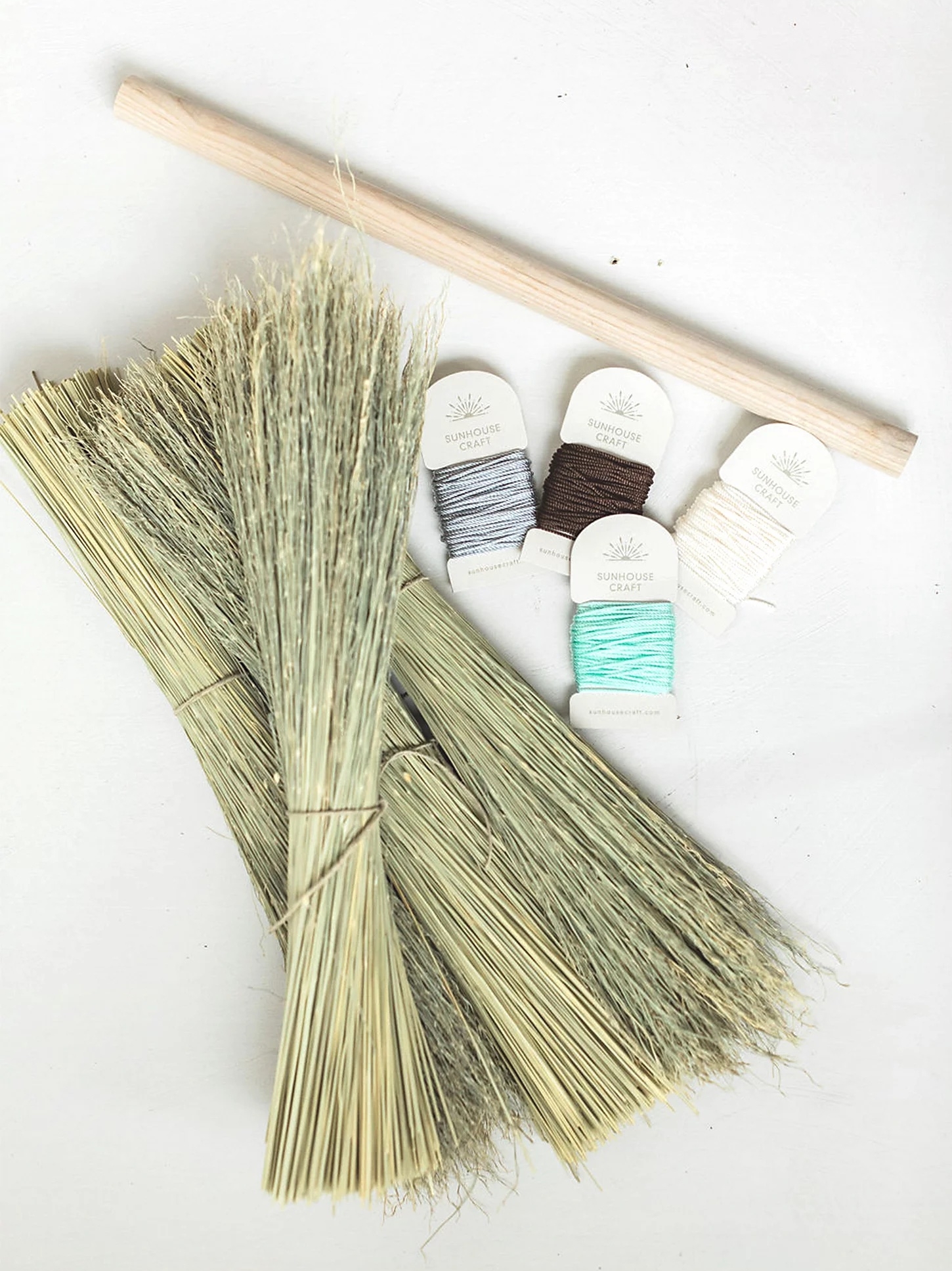
Not every kit is identical, but the better ones include enough materials to let you focus on learning the process instead of running around your house looking for mystery tools. Here is what you will usually find.
Broomcorn
This is the main material. Some kits include natural broomcorn in its warm straw color, while others offer dyed or hand-colored options for a more decorative look. The amount of broomcorn included often determines whether you can make one broom, a few whisk brooms, or a small set of hand brooms.
Cording, Twine, or Nylon Thread
The binding material matters more than many beginners expect. Strong cording helps secure the broomcorn tightly and can also add visual style. Some kits keep it simple with neutral thread, while others include multiple colors so you can turn a humble broom into something that looks oddly elegant hanging by the door.
Handle Materials or Dowel Pieces
Some brooms are tied directly from bundled fibers, while others use a wooden handle or dowel. A few kits also include a small dowel or spool-like piece to help with tension while weaving. This can make the process much easier, especially if you are learning how to keep your wraps neat and firm.
Instructions
Instructions are where kits either become a delight or a tiny personal crisis. The best broom making kits include clear, step-by-step printed guides, diagrams, photo booklets, or access to a digital class. Since broom making involves hand tension, shaping, binding, and trimming, good instructions are not a bonus. They are the difference between “Look what I made” and “Why does mine resemble a startled haystack?”
Optional Extras
Some kits go further and include decorative reeds, hanging cords, bonus patterns, recycled packaging, or gift-ready presentation. These extras are not necessary, but they do make the experience feel more complete, especially if you are buying the kit as a present.
Why Broom Making Has Such Lasting Appeal
Handmade brooms sit at a fascinating crossroads of utility, heritage, and design. Historically, broom making became a meaningful craft in the United States through traditional makers and communities that refined technique and function over time. Today, the appeal is just as strong, but for slightly different reasons.
First, people are tired of disposable everything. A handmade broom feels refreshingly honest. You can see the materials. You can understand how it is made. You can repair, display, use, and appreciate it. It is the anti-plastic impulse buy.
Second, broom making is tactile in a way many modern hobbies are not. Your hands are busy. Your attention narrows. You are measuring, wrapping, pulling, shaping, and trimming. It has that same satisfying quality as knitting, woodworking, basketry, or pottery, except the finished object can immediately earn its keep in your kitchen.
Third, the finished broom often looks better than people expect. A well-made whisk broom has texture, rhythm, and character. It can feel rustic, minimal, Appalachian, Shaker-inspired, or contemporary depending on the materials and colors you choose. Functional? Yes. Boring? Absolutely not.
How to Choose the Best Broom Making Kit
Shopping for a broom making kit is easier when you know what kind of experience you want. Some buyers want a relaxing first craft. Others want a serious introduction to traditional broom work. The right choice depends on skill level, style, and expectations.
Choose by Skill Level
If you are new to broom making, start with a beginner-friendly whisk broom or hand broom kit. These usually require less setup, fewer advanced weaving steps, and less brute force. They are ideal if you want a project you can finish in one sitting or over a quiet afternoon.
If you already enjoy fiber crafts, basketry, or detailed handwork, you may enjoy a more advanced kit with decorative weaving, layered construction, or multiple broom styles. These kits can be deeply rewarding, but they also ask for more patience and better hand control.
Choose by Broom Style
Different kits produce different results:
- Whisk brooms are compact and beginner-friendly.
- Turkey wing brooms often have a distinctive curved shape and more decorative personality.
- Appalachian-style hand brooms often highlight weaving and folk-craft charm.
- Long-handled brooms are impressive, but usually better once you have some experience.
If your main goal is learning the craft, start small. If your main goal is creating a dramatic statement piece, make sure the kit includes enough material and instruction to support that ambition.
Choose by Instruction Quality
Never underestimate the power of good teaching. A kit with excellent instructions, photos, or video support is often a better buy than a prettier kit with vague directions. Clear guidance matters because broom making depends on technique. You are not just gluing parts together; you are building tension, shape, and structure.
Choose by Quantity and Value
Some broom making kits provide enough material for one broom. Others let you make three or four. If you are testing the waters, one broom may be enough. If you are buying for a family activity, a gift, or repeated practice, a multi-broom kit usually offers better value and a more forgiving learning curve.
What Makes a Great Broom Making Experience?
The best broom making kits do not simply deliver supplies. They create momentum. You open the package and immediately understand where to start. The materials feel intentional. The broomcorn is usable. The cording is strong. The instructions are not written like a scavenger hunt.
A great experience also leaves room for personality. Maybe you choose bold thread colors. Maybe you keep the design simple and natural. Maybe you make one broom that stays in the kitchen and another that goes straight on the wall because, frankly, you are proud of it and want visitors to notice. That is part of the fun. Handmade brooms are not just tools; they are expressions of taste and craftsmanship.
How to Use a Broom Making Kit Successfully
You do not need a barn, forge, or beard of wisdom to use a broom making kit well. You do need a little preparation. Here are a few practical tips that make the process smoother.
Set Up a Clean Workspace
Give yourself a flat area with room to sort broomcorn, thread, scissors, and instructions. You will want space to pull cord, trim ends, and rotate the broom as you work. A crowded table is the enemy of neat wrapping.
Read the Instructions Before Touching the Materials
This sounds obvious, yet many people skip straight to the “fun part” and then spend ten minutes wondering why step four assumes they already know step two. Read through the whole guide once. Your future self will be grateful and slightly smug.
Expect a Learning Curve with Tension
The biggest beginner challenge is usually tension. Wrap too loosely and the broom feels floppy. Wrap too tightly without control and the shape can become uneven. The good news is that your hands learn quickly. By the second broom, most people look at their first attempt with affection and mild judgment.
Trim at the End, Not the Beginning
It is tempting to trim aggressively while working, but wait until the broom is fully tied and shaped. Final trimming helps even the silhouette and gives the piece a polished look.
Common Mistakes to Avoid
Even the best broom making kit cannot stop human optimism from making interesting choices. Here are the most common mistakes:
- Using too little tension in the binding
- Ignoring broomcorn length and bundle consistency
- Rushing decorative weaving before mastering the basic tie
- Skipping workspace prep and misplacing materials halfway through
- Assuming the first broom must be perfect
The last point matters most. Handmade crafts are supposed to show the hand. A little variation is not failure. It is proof that you made the thing yourself, not that a machine spat it out while feeling nothing.
Who Should Buy a Broom Making Kit?
A broom making kit is a smart buy for crafters, homesteading enthusiasts, folk-art lovers, gift shoppers, teachers, and anyone who enjoys useful projects. It is especially appealing for people who like learning traditional skills without needing a huge investment in equipment.
It also makes a surprisingly good gift. Unlike many novelty kits, this one has staying power. The recipient gets an experience, a finished object, and often a new appreciation for materials and handwork. That is a lot of value from one box of fiber and string.
Is a Broom Making Kit Worth It?
Yes, especially if you care about process as much as product. A broom making kit offers more than entertainment. It teaches structure, patience, rhythm, and material awareness. It connects modern makers to a craft with real history. It creates an object you can actually use. And it scratches that deeply human itch to make something beautiful from simple parts.
That said, not every kit is equally good. The best broom making kit is the one that matches your skill level, includes quality broomcorn and strong cording, and gives you instructions that are clear enough to follow without requiring a family summit. When those pieces come together, the experience is memorable, practical, and oddly addictive.
Do not be surprised if one finished whisk broom leads to another. Handmade broom crafting has a sneaky way of turning “I just wanted to try this once” into “I now have opinions about handle length, thread color, and hanging loops.” That is not a problem. That is character development.
Experiences With a Broom Making Kit: What It Really Feels Like
One of the best things about working with a broom making kit is how quickly it shifts from “I have no idea what I am doing” to “Wait, I think I am actually making a real broom.” That transition is delightfully satisfying. At first, the materials can look a little mysterious. You have a bundle of broomcorn, some cording, maybe a dowel, maybe a handle, and instructions that seem simple until your fingers are involved. But once you start sorting the fibers and wrapping the first tight bands, the project begins to make sense in a very hands-on way.
Many beginners describe the first few minutes as awkward, and that is completely normal. Broom making is a tactile craft. You are learning by feel as much as by sight. The broomcorn has texture. The cording resists just enough to make you pay attention. Your hands slowly figure out how much pressure creates a clean wrap and how much shaping gives the broom a balanced form. There is a rhythm to it, and once that rhythm clicks, the project becomes unexpectedly calming.
The second thing people often notice is that a broom making kit feels more substantial than many trendy craft projects. You are not assembling flimsy pieces that will end up in a drawer next week. You are making an object with weight, usefulness, and presence. Even a small whisk broom feels meaningful when you hang it in the kitchen or use it to sweep crumbs off a counter. The project produces a finished piece that looks handmade in the best sense of the word: warm, personal, and full of character.
There is also a quiet pleasure in the imperfections. A first broom may not be perfectly symmetrical. The weave may lean a little. The trim line may need one final correction. But those details often become part of the charm. In fact, many makers end up loving their first broom precisely because it shows the learning process. It records the moment they moved from observer to maker.
For families and friends, a broom making kit can be a surprisingly good shared activity. It gives everyone something to do with their hands while still allowing conversation. Unlike some group crafts, it does not demand constant cleanup or highly specialized tools. People can compare thread colors, trade tips, laugh over the oddly dramatic stages of half-formed brooms, and still walk away with something useful.
For solo makers, the experience can feel almost meditative. There is repetition in the wrapping, attention in the shaping, and satisfaction in seeing loose natural material become a finished form. In a world full of screens, notifications, and digital clutter, making a broom can feel refreshingly direct. You pull, tie, trim, and hold the result in your own hands. Nothing about it is abstract.
Some people start with a kit because they want rustic décor. Others start because they love heritage crafts. Quite a few start because they simply think handmade brooms look cool, which is a perfectly respectable reason. But after finishing the first project, many discover that the real reward is the process itself. A broom making kit gives you a small but memorable experience of traditional making: simple materials, clear purpose, visible progress, and a result that can live in your home for years.
That is why the experience sticks. It is not just about making a broom. It is about slowing down long enough to make something useful and beautiful with intention. And in a culture that mass-produces nearly everything, that can feel downright revolutionary, or at least pleasantly rebellious with a piece of broomcorn in your hand.