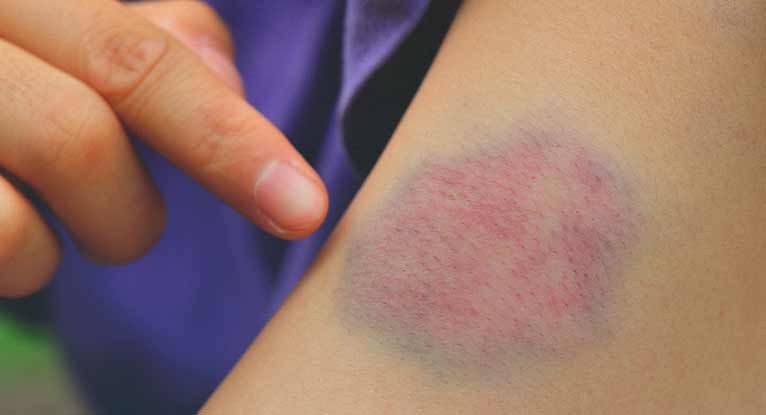
Most people have looked down at a purple patch on a shin and thought, “Well, that’s new.” Maybe you remember bumping into a coffee table. Maybe you do not. Either way, it is natural to wonder whether the mark is a simple bruise or something more serious, such as a blood clot.
Here is the important plot twist: bruises and blood clots are related, but they are not the same medical problem. A bruise usually means blood has leaked out of tiny damaged vessels and collected beneath the skin. A dangerous blood clot usually means blood has formed a solid mass inside a vein or artery, where it can interfere with normal circulation.
That difference matters. A typical bruise is annoying, tender, and occasionally embarrassing in shorts. A deep vein blood clot can require urgent medical evaluation, especially if it causes one-sided swelling, warmth, redness or discoloration, and pain. The goal is not to panic over every mysterious purple smudge. It is to know which signs deserve a closer look.
Note: This article is for general education and cannot diagnose a bruise, deep vein thrombosis, pulmonary embolism, bleeding disorder, or other condition. Seek urgent medical care for sudden trouble breathing, chest pain, fainting, coughing up blood, or sudden one-sided limb swelling with pain or warmth.
The Quick Answer: A Bruise Is Usually Outside the Blood Vessel; a Dangerous Clot Is Inside It
Blood is supposed to clot when you are injured. It is one of the body’s best emergency systems. Platelets and clotting proteins rush to a damaged blood vessel, help seal the leak, and prevent you from continuing to bleed. That helpful process is called hemostasis.
A bruise happens when an impact damages small vessels near the skin or within soft tissue. Blood escapes into the surrounding tissue, where it becomes trapped. The skin stays unbroken, but the pooled blood creates a red, purple, blue, brown, green, or yellow mark as the body gradually clears it away.
A harmful blood clot, often called a thrombus, forms within a blood vessel. The most commonly discussed type is deep vein thrombosis, or DVT, which develops in a deep vein, often in the leg. If part of that clot travels to the lungs, it can cause a pulmonary embolism, or PE. That is an emergency.
So, technically, a bruise can involve local clotting in the injured tissue. But when people ask, “Is this a blood clot or a bruise?” they usually mean: “Is this an ordinary injury mark, or could there be a clot blocking blood flow inside a vein?”
What Is a Bruise?
A bruise, also called a contusion, develops when trauma damages capillaries or other small blood vessels. The blood leaks into tissue under the skin instead of escaping through a cut. You may get one after a fall, a sports collision, a hard workout, a bump against furniture, a medical procedure, or an encounter with the world’s most determined cabinet door.
Typical Bruise Symptoms
A straightforward bruise often has a familiar pattern:
- You can usually identify a bump, pressure point, fall, injection, workout, or injury that happened shortly before it appeared.
- The painful spot is usually near the area that was hit.
- The skin may become red, purple, blue, or dark brown before gradually changing shades as healing continues.
- There may be mild local swelling and tenderness.
- The bruise generally becomes less painful over several days and fades over one to two weeks, although larger bruises may last longer.
Bruises look different across skin tones. On lighter skin, the color shifts can be easier to notice. On darker skin, a bruise may look dark brown, purple, grayish, or simply appear as a tender area with less obvious color change. The key point is that color alone cannot reliably tell you how serious a problem is.
What Is a Hematoma?
A hematoma is a larger collection of blood outside a blood vessel. It can happen under the skin, inside a muscle, or after surgery or a significant injury. A hematoma may create a firm, raised, swollen, or tender lump. Think of it as a bruise with more enthusiasm and more volume.
Most small bruises and minor hematomas improve with time. However, a rapidly enlarging bruise, severe pain, numbness, inability to move a nearby joint, or bruising after a significant injury deserves medical attention. The same is true for a large bruise in someone taking a blood thinner.
What Is a Blood Clot?
Blood clots are not automatically bad. Clotting helps stop bleeding after a cut. The concern begins when a clot forms where it should not, such as in a deep vein, an artery, or another blood vessel where it can block circulation.
The term venous thromboembolism, or VTE, includes two major conditions:
- Deep vein thrombosis (DVT): A clot in a deep vein, commonly in the calf, thigh, pelvis, or sometimes an arm.
- Pulmonary embolism (PE): A clot that travels to the lungs and blocks blood flow there.
A blood clot can also form in a superficial vein near the skin. This is called superficial thrombophlebitis or superficial vein thrombosis. It may cause localized redness, tenderness, warmth, and a firm, cord-like vein. It is not the same as a simple bruise, and it should still be evaluated by a clinician.
Common Deep Vein Thrombosis Symptoms
DVT symptoms can vary, and some people have few or no obvious signs. When symptoms occur, they often involve one arm or one leg and may include:
- Swelling that affects part or all of one limb.
- Pain, cramping, soreness, or tenderness without a clear injury.
- Warmth in the swollen or painful area.
- Redness, bluish discoloration, or a darker appearance than surrounding skin.
- A feeling of heaviness or tightness in the affected limb.
Unlike a bruise, a DVT may not produce a classic purple-and-yellow color pattern. It can look like swelling, redness, or skin discoloration. It may feel like a muscle cramp, a pulled calf, or a sore leg after travel. That is why appearance alone cannot rule it out.
Blood Clot vs. Bruise: A Side-by-Side Comparison
| Feature | Typical Bruise | Possible Deep Vein Blood Clot |
|---|---|---|
| Where it happens | Blood leaks into tissue under the skin or in muscle. | A clot forms inside a deep vein or other blood vessel. |
| Common trigger | Often follows a bump, fall, sports injury, injection, or pressure. | May occur after immobility, surgery, illness, travel, pregnancy, cancer, trauma, or without a clear injury. |
| Appearance | Often blue, purple, red, brown, green, or yellow as it heals. | May cause redness, bluish or darker discoloration, or no dramatic color change. |
| Swelling | Usually limited to the injured spot. | May involve a larger area, such as much of one calf, ankle, thigh, arm, or leg. |
| Pain | Usually hurts where the impact occurred and improves over time. | May feel like cramping, soreness, tenderness, pressure, or unexplained pain. |
| Warmth | May be mildly warm right after an injury. | Persistent warmth in one swollen, painful limb can be concerning. |
| Course | Usually fades gradually over days to weeks. | May worsen, persist, or trigger more serious symptoms if untreated. |
| How it is diagnosed | Often based on history and physical examination. | Requires medical assessment and often imaging, such as ultrasound. |
Can a Blood Clot Look Like a Bruise?
Yes, sometimes. A blood clot can cause skin discoloration that resembles bruising, especially if circulation is affected. A superficial clot near the skin may also cause redness or darker color changes. On the other hand, a bruise can be swollen, tender, and alarming-looking even when it is completely harmless.
This overlap is why “purple equals bruise” is not a safe diagnostic rule. Neither is “it hurts like a cramp, so it must be a pulled muscle.” Deep vein thrombosis can mimic a strained calf, while a large hematoma can feel firm enough to make someone worry about a clot.
The better question is not, “What color is it?” Ask instead:
- Was there a clear injury at that exact location?
- Is one limb more swollen than the other?
- Is the pain unexplained or getting worse?
- Does the area feel distinctly warmer than the surrounding skin?
- Have I recently had surgery, a long period of immobility, travel, pregnancy, illness, or another clot risk factor?
Can a Bruise Turn Into a Blood Clot?
A typical everyday bruise does not transform into a DVT. They are different processes occurring in different places. A bruise is blood collecting in tissue after small vessels are damaged. A DVT is a clot forming inside a deep vein.
However, the injury that caused a bruise may sometimes be part of a larger situation that increases clot risk. Major trauma, fractures, surgery, severe muscle injury, hospitalization, and long periods of reduced movement can all increase the chance of an abnormal blood clot. In other words, the bruise itself is not usually the villain; the broader injury and recovery situation may be the important part.
Blood Clot Risk Factors That Should Raise Your Awareness
Anyone can develop a blood clot, but certain situations make it more likely. It is wise to pay extra attention to new one-sided swelling or unexplained limb pain if you have recently experienced:
- Major surgery, especially involving the abdomen, pelvis, hips, or legs.
- Hospitalization, bed rest, a cast, or long periods of reduced movement.
- Long-distance travel or extended sitting without normal movement breaks.
- A serious injury, fracture, or severe muscle trauma.
- Pregnancy or the postpartum period.
- Estrogen-containing birth control or hormone therapy.
- Cancer or cancer treatment.
- A personal or family history of blood clots or inherited clotting conditions.
- Older age, obesity, smoking, or certain chronic medical conditions.
Having one or more risk factors does not mean a clot is inevitable. It simply means new symptoms should not be brushed off as “probably nothing” without considering the full picture.
When to Seek Emergency Care
Call emergency services or seek emergency care immediately if you have possible blood clot symptoms along with:
- Sudden shortness of breath.
- Chest pain or chest discomfort, especially pain that worsens with a deep breath or cough.
- Coughing up blood.
- Fainting, severe dizziness, confusion, or collapse.
- A fast or irregular heartbeat with breathing trouble.
These can be signs of a pulmonary embolism or another serious heart or lung condition. Do not try to diagnose the cause at home, wait for the symptoms to “settle down,” or drive yourself if you feel faint or severely short of breath.
When to Contact a Clinician Promptly
Arrange same-day medical advice or urgent evaluation for new swelling, pain, warmth, tenderness, or discoloration in one leg or arm, particularly when the symptoms are unexplained or occur after surgery, travel, bed rest, a serious injury, pregnancy, or hormone treatment.
Also seek medical guidance for bruising that is frequent, large, unexplained, unusually painful, or accompanied by nosebleeds, bleeding gums, very heavy menstrual bleeding, blood in urine or stool, tiny red-purple spots on the skin, or prolonged bleeding after minor cuts. Those patterns can point to medication effects, low platelets, a bleeding disorder, liver disease, nutritional issues, or another medical concern.
How Doctors Tell the Difference
A clinician does not diagnose DVT by staring at a calf and hoping for the best. They consider your symptoms, medical history, medications, recent travel or surgery, pregnancy status, family history, and physical examination findings.
If a blood clot is suspected, an ultrasound is commonly used to look at blood flow and check for a clot in a leg or arm vein. A D-dimer blood test may sometimes help guide evaluation, but it cannot diagnose every clot by itself. For possible pulmonary embolism, clinicians may use specialized imaging and other tests based on the person’s symptoms and risk level.
This matters because a pulled muscle, cellulitis, a Baker’s cyst, lymphedema, superficial vein inflammation, and other conditions can resemble DVT. Likewise, a simple bruise can look dramatic enough to make a person fear the worst. Proper testing is what separates a good guess from a reliable answer.
What to Do for a Likely Minor Bruise
If you have a small bruise after a clear minor bump and no warning signs, basic self-care may be reasonable. Protect the area, avoid repeating the injury, and consider a cold pack wrapped in cloth for short periods during the first day or two if swelling is bothersome. Rest and gentle elevation may also help when practical.
Do not use the appearance of improvement as permission to ignore worsening pain, spreading swelling, numbness, weakness, or loss of function. And if you take anticoagulants, antiplatelet medicines, or have a bleeding disorder, ask your clinician what level of bruising or bleeding should prompt a call.
For pain medicine, the safest choice depends on your medical history and medications. A pharmacist or clinician can help, especially if you use a blood thinner, have kidney disease, stomach ulcers, liver disease, or other conditions that affect which medications are appropriate.
Experiences and Practical Scenarios: What People Often Notice
The following are composite educational scenarios, not real patient stories and not a substitute for medical care. They illustrate why context matters more than a single symptom.
The Coffee-Table Bruise
Someone walks into the edge of a low table, says a few words not suitable for a workplace meeting, and notices a tender purple patch on the thigh the next morning. The location matches the impact. The sore spot is limited to one small area. Over the next several days, it becomes less tender and gradually changes color. That pattern is consistent with the ordinary life experience known as “furniture won this round.”
The lesson is not that every bruise can be ignored. It is that a clear cause, local tenderness, no major swelling, and gradual improvement are reassuring features. A person should still seek care if pain becomes severe, the bruise expands quickly, the limb becomes very swollen, or there are symptoms beyond the injured spot.
The Long-Travel Calf Problem
Another person returns from a long trip and assumes a sore calf is caused by cramped seating or too much walking through terminals. A day later, one calf is more swollen than the other, the skin feels warmer, and the pain is not connected to a specific bump or muscle pull. That is not a situation for internet detective work or repeated leg comparisons in bathroom lighting. It deserves prompt medical assessment for possible DVT.
The useful takeaway is that pain after travel is common, but unexplained one-sided swelling and warmth are not symptoms to casually file under “vacation recovery.” A blood clot can resemble a muscle cramp, and the absence of an obvious bruise does not make it less important.
The Big Bruise While Taking a Blood Thinner
People who take anticoagulants may notice that small bumps create bruises that seem larger or darker than expected. That does not necessarily mean the medicine is wrong or that a new blood clot has formed. Blood thinners lower the blood’s ability to clot, so bleeding under the skin can happen more easily after minor trauma.
Still, a person on an anticoagulant should not dismiss significant bruising automatically. A rapidly enlarging bruise, persistent bleeding, a fall with a head injury, blood in urine or stool, vomiting blood, unusual weakness, severe headache, or dizziness calls for prompt medical guidance. The experience teaches an important rule: treating clots and preventing excess bleeding requires balance, not guesswork.
The Unexplained Bruising Pattern
Sometimes the concern is not one bruise but several. A person may notice large marks without remembering injuries, frequent nosebleeds, unusually heavy periods, bleeding gums, or small clusters of red-purple spots. The instinct may be to blame stress, clumsiness, or a mysterious household ghost. In reality, recurring unexplained bruising deserves a conversation with a healthcare professional.
Possible explanations range from medication effects and fragile skin to platelet problems, nutritional deficiencies, liver conditions, or inherited bleeding disorders. The point is not to self-diagnose from a search result. The point is to recognize that repeated unexplained bruises are a pattern worth checking.
The Athlete Who Assumes Everything Is a Strain
Active people often become experts at minimizing aches. A calf feels tight after training, so it must be a strain. An ankle looks puffy, so it must be the workout. Usually, that confidence is harmless. But one-sided swelling, warmth, and worsening pain without a clear sports injury should not be automatically blamed on exercise, especially after a recent surgery, immobilization, or long trip.
The practical lesson is simple: experience with normal soreness does not guarantee that every new symptom is normal soreness. Paying attention to changes in size, warmth, symmetry, and breathing symptoms can be more useful than trying to decode every shade of purple.
Conclusion: Know the Difference, Respect the Red Flags
A bruise is usually a visible reminder that tiny vessels were damaged and blood collected in nearby tissue. It is typically local, linked to an injury, and gradually improves. A dangerous blood clot is different: it forms inside a blood vessel, may disrupt circulation, and can lead to serious complications if it travels to the lungs.
You cannot reliably distinguish a blood clot from a bruise by color, pain level, or online photos alone. What matters most is the full pattern: unexplained symptoms, one-sided limb swelling, warmth, redness or discoloration, risk factors, and any breathing or chest symptoms.
When the story is “I bumped my shin and now it is purple,” a bruise is often the likely answer. When the story is “one leg is swollen, hot, painful, and I recently had surgery, traveled, or was inactive,” it is time to contact a medical professional promptly. Your body is not trying to be dramatic. It is trying to give you information.