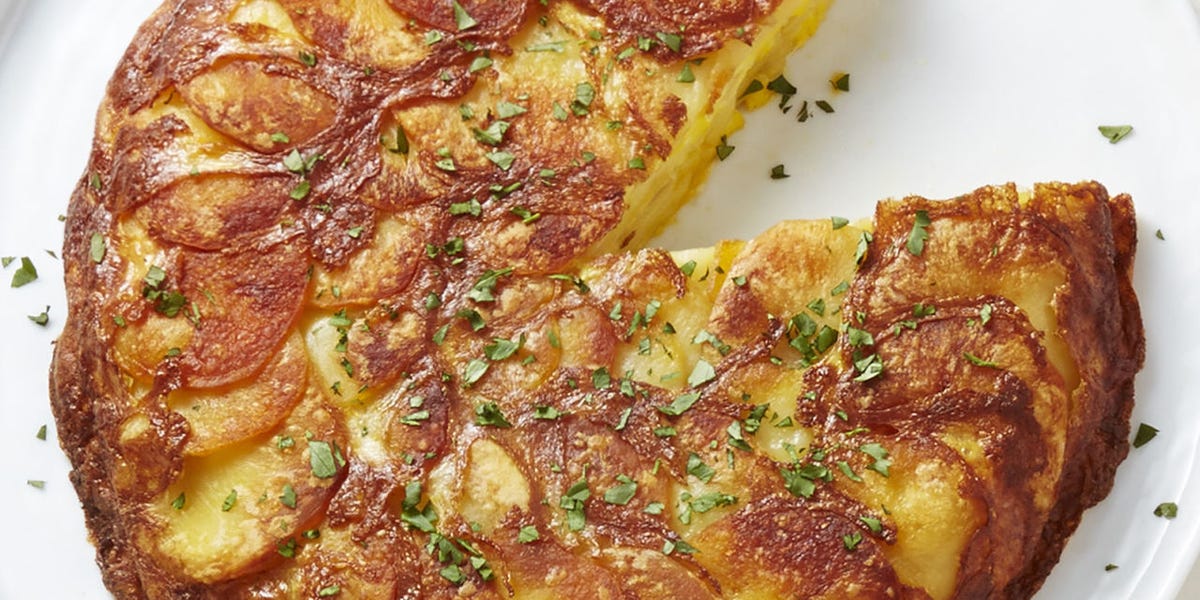
Spanish potato omelet, also called Spanish tortilla, tortilla Española, or tortilla de patatas, is one of those recipes that proves a kitchen miracle does not need a mile-long ingredient list. Eggs, potatoes, onion, olive oil, and salt walk into a skilletand somehow come out looking like they attended culinary school in Madrid.
This classic Spanish potato omelet recipe is thick, tender, golden, sliceable, and deeply comforting. It is not a folded American diner omelet, and it is not a Mexican flour or corn tortilla. In Spain, “tortilla” often means a round egg dish, and this one is built with thinly sliced potatoes gently cooked in olive oil, mixed with beaten eggs, and finished in a skillet until the edges are set and the center is soft but safe to eat.
The best part? It works for breakfast, brunch, lunch, dinner, tapas night, lunchboxes, picnics, midnight snacking, and those mysterious 4 p.m. “I need something real but not dramatic” hunger emergencies. Serve it warm, at room temperature, or chilled with a salad, crusty bread, olives, roasted peppers, or a dollop of garlicky aioli.
What Is a Spanish Potato Omelet?
A Spanish potato omelet is a thick egg-and-potato dish traditionally made by slowly cooking sliced potatoes, and often onions, in olive oil until tender. The potatoes are then folded into beaten eggs, rested briefly so the eggs can mingle with the warm potatoes, and cooked in a skillet until the omelet forms a sturdy round cake.
Unlike a French omelet, which is usually soft, folded, and cooked quickly, Spanish tortilla is more structured. Unlike a frittata, which is often finished in the oven and may include cream, cheese, vegetables, or meat, a classic tortilla Española keeps things simple. The focus is on the texture of the potatoes, the richness of the eggs, and the flavor of good olive oil.
Why This Is the Best Spanish Potato Omelet Recipe
This version respects tradition while making the method realistic for a home kitchen. You do not need chef-level wrist confidence, a restaurant stove, or a dramatic soundtrack. The key is patience. Cook the potatoes gently rather than frying them aggressively. Let the egg and potato mixture rest before cooking. Use a nonstick skillet. Flip with confidence, not fear. The omelet can smell hesitation.
The finished tortilla should be golden on the outside, tender inside, and easy to cut into wedges. The potatoes should not be crunchy. The eggs should hold everything together without turning rubbery. The onion is optional, but highly recommended if you enjoy subtle sweetness. In Spain, onion in tortilla can start passionate debates. At home, the best answer is simple: make the version you want to eat.
Ingredients for Spanish Potato Omelet
- 1 1/2 pounds Yukon Gold potatoes, peeled or unpeeled, sliced 1/8 inch thick
- 1 medium yellow onion, thinly sliced
- 6 large eggs
- 3/4 cup extra-virgin olive oil, plus more if needed
- 1 1/2 teaspoons kosher salt, divided
- 1/4 teaspoon black pepper, optional
- 1 tablespoon chopped parsley or chives, optional for serving
Best Potatoes to Use
Yukon Gold potatoes are excellent because they become creamy without falling apart completely. Russet potatoes can work too, but they are starchier and may break down more. Waxy potatoes hold their shape beautifully, though they can be slightly less creamy. For the best Spanish potato omelet, slice the potatoes evenly so they cook at the same pace. A sharp knife works fine; a mandoline works faster, as long as you respect your fingertips.
Should You Add Onion?
Yes, if you like sweetness and depth. No, if you want the most minimalist version. Onion adds flavor without making the dish taste like onion soup. Cooked slowly with the potatoes, it melts into the omelet and gives the tortilla a warmer, rounder flavor. If you are cooking for strict traditionalists, prepare yourself: someone may have an opinion. Smile, serve another wedge, and let the potatoes do the diplomacy.
Equipment You Need
- 10-inch nonstick skillet
- Large mixing bowl
- Heatproof spatula
- Slotted spoon
- Large flat plate for flipping
- Sharp knife or mandoline
A nonstick skillet makes the process much easier, especially during the flip. A well-seasoned cast iron skillet can also work, but it requires more oil and confidence. If this is your first tortilla Española, use nonstick. There is no medal for making dinner harder.
How to Make Spanish Potato Omelet
Step 1: Slice the Potatoes and Onion
Slice the potatoes about 1/8 inch thick. Thin slices cook evenly and help create that layered, tender interior. Slice the onion thinly as well. If the potato slices are too thick, the omelet may brown before the center becomes tender. If they are too thin, they may collapse into mashed potato confetti. Delicious? Maybe. Ideal? Not quite.
Step 2: Cook the Potatoes in Olive Oil
Heat the olive oil in a 10-inch nonstick skillet over medium-low heat. Add the potatoes, onion, and 1 teaspoon of kosher salt. Stir gently to coat everything in oil. Cook for 18 to 25 minutes, stirring occasionally, until the potatoes are tender but not crisp. Lower the heat if the potatoes start browning too fast.
This is the heart of the recipe. You are not making hash browns. The potatoes should softly poach in olive oil, turning silky and flavorful. The onion should become sweet and relaxed, like it just returned from vacation.
Step 3: Drain and Save the Oil
Use a slotted spoon to transfer the potato-onion mixture to a large bowl. Reserve the leftover olive oil. It will be full of potato and onion flavor, and you can use a tablespoon or two to cook the omelet. Any extra can be strained and used for eggs, vegetables, or roasted potatoes later.
Step 4: Beat the Eggs
In another bowl, beat the eggs with the remaining 1/2 teaspoon salt and the black pepper, if using. Beat until the yolks and whites are fully combined, but do not whip them into foam. You want a smooth mixture, not an egg cappuccino.
Step 5: Combine and Rest
Pour the beaten eggs over the warm potatoes and onions. Fold gently until the potatoes are coated. Let the mixture rest for 10 minutes. This small pause makes a big difference. The warm potatoes absorb some of the egg, and the final omelet becomes more cohesive, tender, and flavorful.
Step 6: Cook the First Side
Wipe out the skillet if needed. Add 1 to 2 tablespoons of the reserved olive oil and warm it over medium-low heat. Pour in the egg and potato mixture, spreading it evenly. Cook for 5 to 7 minutes, gently shaping the edges with a spatula. The edges should look set while the top remains slightly glossy.
Do not blast the heat. High heat gives you a browned outside and a sulky, undercooked center. Medium-low heat gives the omelet time to set without becoming tough.
Step 7: Flip the Tortilla
Loosen the edges with a spatula. Place a large flat plate over the skillet. Wearing oven mitts if needed, hold the plate firmly against the pan and invert the skillet in one confident motion. The omelet should land on the plate cooked-side up. Slide it back into the skillet so the uncooked side is now on the bottom.
If the flip is not perfect, do not panic. Tuck the edges in with a spatula. Spanish potato omelet is rustic, not a beauty pageant contestant.
Step 8: Finish Cooking
Cook the second side for 3 to 5 minutes, depending on how set you like the center. For food safety, egg dishes should be cooked thoroughly. If serving children, pregnant people, older adults, or anyone with a weakened immune system, cook until the center is fully set and reaches 160°F.
Step 9: Rest and Serve
Transfer the omelet to a cutting board or serving plate. Let it rest for at least 10 minutes before slicing. This helps the tortilla firm up and makes cleaner wedges. Sprinkle with parsley or chives if desired. Serve warm, at room temperature, or chilled.
Recipe Timing and Yield
- Prep time: 15 minutes
- Cook time: 30 minutes
- Rest time: 10 minutes
- Total time: 55 minutes
- Yield: 6 servings as a main dish or 8 servings as tapas
Expert Tips for the Best Spanish Potato Omelet
Use More Olive Oil Than Feels Reasonable
A proper Spanish tortilla uses enough olive oil to gently cook the potatoes. The potatoes should soften, not fry into chips. The good news is that most of the oil is drained and reused, so you are not actually eating the full amount.
Salt in Layers
Add salt to the potatoes while they cook and to the eggs before mixing. Potatoes are famously good at hiding blandness until it is too late. Season early and evenly.
Let the Mixture Rest Before Cooking
The 10-minute rest gives the eggs and potatoes time to become friends. Skip it and the tortilla may still work, but it will not have the same custardy, unified texture.
Flip Over the Sink if You Are Nervous
If flipping the tortilla feels dramatic, do it over the sink or a large baking sheet. That way, if anything slides, your countertop will not look like a breakfast crime scene.
Common Mistakes to Avoid
Cooking the Potatoes Too Fast
Brown, crispy potatoes are wonderful in many recipes, but they are not the goal here. Spanish potato omelet needs soft, tender potatoes that bind with the eggs.
Using Too Large a Pan
A 12-inch pan may spread the mixture too thin. A 10-inch skillet gives the omelet height and a classic wedge shape.
Skipping the Rest After Cooking
Fresh from the pan, the tortilla is delicate. Give it time to settle. Those 10 minutes are not waiting; they are structure-building.
Spanish Potato Omelet Variations
Once you master the classic version, you can experiment. Add roasted red peppers for sweetness, baby spinach for color, smoked paprika for depth, or a small amount of chopped cooked chorizo for a smoky bite. You can also try a potato chip tortilla when time is short, a modern shortcut inspired by Spanish chefs who know that dinner sometimes needs to happen before everyone starts chewing on the furniture.
For a no-flip version, cook the tortilla on the stovetop until the edges are set, then finish it under the broiler for a few minutes. This method is less traditional but helpful for beginners. Watch it closely because eggs go from golden to “why does my kitchen smell like regret?” very quickly.
What to Serve with Spanish Potato Omelet
- Simple green salad with lemon vinaigrette
- Crusty bread or toasted baguette
- Marinated olives
- Roasted red peppers
- Garlic aioli
- Tomato salad with olive oil and sea salt
- Gazpacho for a Spanish-inspired meal
Spanish tortilla is also excellent tucked into bread as a sandwich. Add roasted peppers or a swipe of aioli, and you have a simple lunch that travels well.
How to Store and Reheat
Let the omelet cool, then store it in an airtight container in the refrigerator for up to 3 days. Serve leftovers cold, room temperature, or gently reheated. To reheat, warm slices in a covered skillet over low heat or microwave briefly at reduced power. Avoid overheating, or the eggs may become rubbery.
For food safety, refrigerate leftovers promptly and do not leave egg dishes sitting out for more than 2 hours. If the room is very hot, refrigerate sooner.
Frequently Asked Questions
Is Spanish tortilla the same as a Mexican tortilla?
No. A Mexican tortilla is a flatbread made from corn or wheat. A Spanish tortilla is a thick omelet made with eggs and potatoes.
Can I make Spanish potato omelet without onion?
Absolutely. Potato, egg, olive oil, and salt are enough for a classic version. Onion adds sweetness, but the recipe still works without it.
Can I bake Spanish potato omelet?
Yes. Cook the potatoes and onions first, mix them with eggs, pour everything into an ovenproof skillet, and bake at 350°F until set. The texture will be slightly different, but the method is convenient and avoids flipping.
Can I make it ahead?
Yes. Spanish potato omelet is one of the rare egg dishes that tastes great after resting. Make it a few hours ahead, refrigerate it, and bring it to room temperature before serving.
Personal Experience: Lessons from Making Spanish Potato Omelet at Home
The first time I made a Spanish potato omelet, I treated it like a regular omelet with ambition. I sliced the potatoes too thick, cooked them too quickly, and flipped the whole thing with the confidence of a person who had watched exactly one cooking video and learned absolutely nothing about gravity. The result tasted fine, but it looked like a potato landslide. Delicious, yes. Photogenic, no.
After making it several more times, I learned that Spanish tortilla rewards calm cooking. This is not a recipe to rush while answering emails, unloading the dishwasher, and arguing with a stubborn jar lid. The potatoes need time. When they cook slowly in olive oil, they become tender and almost creamy. The onion softens into sweetness. The eggs wrap everything together like a warm blanket. It is simple food, but the simplicity only shines when each step gets a little respect.
One of the best tricks I learned is to stop worrying about a perfect flip. Use a plate larger than the skillet, hold it tightly, and move decisively. Hesitation is what causes slipping. If the tortilla cracks, reshape it. If an edge folds, tuck it back in. Nobody at the table will complain unless you invite a professional omelet inspector, and frankly, that person sounds exhausting.
I also discovered that Spanish potato omelet is better after it rests. Straight from the pan, it can taste good but feel loose. After 10 to 20 minutes, the texture settles, the flavors deepen, and the slices become cleaner. This makes it ideal for hosting because you do not need to serve it at the exact second it finishes cooking. In fact, room-temperature tortilla may be the most relaxed party food ever invented. It sits politely on a plate while you finish the salad, pour drinks, or pretend you meant to leave the kitchen slightly messy for “rustic charm.”
For weeknight meals, I like serving it with a sharp green salad and a spoonful of aioli. For brunch, I cut it into small squares and serve it with olives, roasted peppers, and toasted bread. Leftovers are excellent cold from the refrigerator, especially when eaten quietly while standing in the kitchen and pretending you are “just evening out the edges.”
The biggest lesson is that the best Spanish potato omelet is not the fanciest version. It is the one with tender potatoes, well-seasoned eggs, enough olive oil, and a little patience. Once you master the basic method, you can make it your own. Add herbs, skip onion, include peppers, finish it under the broiler, or keep it beautifully plain. Either way, Spanish tortilla has a way of turning humble ingredients into something that feels generous, homey, and quietly impressive.
Conclusion
The best Spanish potato omelet recipe is built on a few essential moves: slice the potatoes thinly, cook them gently in olive oil, season well, let the potato-egg mixture rest, and cook the tortilla slowly until tender and golden. Whether you call it Spanish tortilla, tortilla Española, or tortilla de patatas, this dish proves that simple ingredients can deliver big comfort. It is affordable, versatile, make-ahead friendly, and suitable for almost any meal of the day. Master the flip, and you will feel like a kitchen champion. Skip the perfect flip and finish it under the broiler, and you will still have dinner. Either way, the potatoes win.