You’re halfway through a recipe, your pan is sizzling like it has opinions, and then the instructions hit you with:
“Add 1/4 cup sherry.” You check your kitchen. You find… a half-empty bottle of ketchup, three lonely capers, and a
spice blend called “Taco Tuesday (Mildly Aggressive).” No sherry.
Good news: you can still make dinner that tastes like you planned it. Sherry brings brightness, depth, and a
nutty-salty complexity to sauces, soups, and braisesbut plenty of pantry-friendly stand-ins can do the job
if you pick the right one for the recipe.
What Sherry Actually Does in a Recipe
In cooking, sherry is usually there for one (or more) of these roles:
deglazing (lifting browned bits), balancing richness (creamy soups and sauces),
adding gentle sweetness, and boosting savory “roundness” without making a dish taste
“wine-y.”
Dry vs. Sweet Sherry: Why This Matters
Most savory recipes want dry sherrythe kind with crisp, nutty, slightly yeasty notes. Some dishes
(desserts, glazes, certain sauces) use sweet sherry for caramel-like richness.
The substitution game changes depending on which one you need:
- If the recipe is savory: default to dry, not sweet.
- If the recipe is sweet: you need a substitute with some sugar or raisiny depth.
“Cooking Sherry” vs. Regular Sherry (The Grocery-Aisle Plot Twist)
You’ll often see “cooking sherry” near vinegar or cooking wines. It’s usually salted and preserved,
which can make your dish taste like it accidentally joined a salt lick. It can work in a pinch, but you may need to
reduce added salt elsewhere in the recipe and taste carefully near the end.
For the best flavor, many cooks prefer using a drinkable sherry (not the salted version) because it tastes cleaner,
more balanced, and less… cafeteria.
How to Choose the Right Sherry Substitute
Before you pour anything into the pan, answer these quick questions:
- Is the dish savory or sweet? (Dry substitutes for savory; slightly sweet for desserts and glazes.)
- Is sherry used early or late? (Early = you need volume for deglazing and simmering. Late = a small splash for brightness.)
- Do you want alcohol-free? (Use broth + acid, or juice + vinegar blends.)
- Is the recipe delicate? (Seafood/cream sauces prefer gentler substitutes like dry white wine or vermouth.)
- Is it hearty? (Beef, mushrooms, roasts can handle Madeira, Marsala, or deeper substitutes.)
The Best Sherry Substitutes (With When-to-Use Tips)
Below are the best sherry substitutes in cooking, organized for real-life usefulnessnot theoretical perfection.
Use the swap ratios as your starting point, then adjust to taste.
1) Dry Vermouth (Best “Closest Cousin” for Savory Dishes)
Dry vermouth is fortified like sherry and brings crispness with a subtle herbal edge. It’s excellent for
pan sauces, deglazing, seafood, chicken, and creamy dishes.
- Swap ratio: 1:1 (same amount as sherry).
- Flavor note: Slightly more botanical than sherryusually a win in savory food.
- Best for: Cream soups, sautéed mushrooms, chicken piccata-ish situations, quick pan sauces.
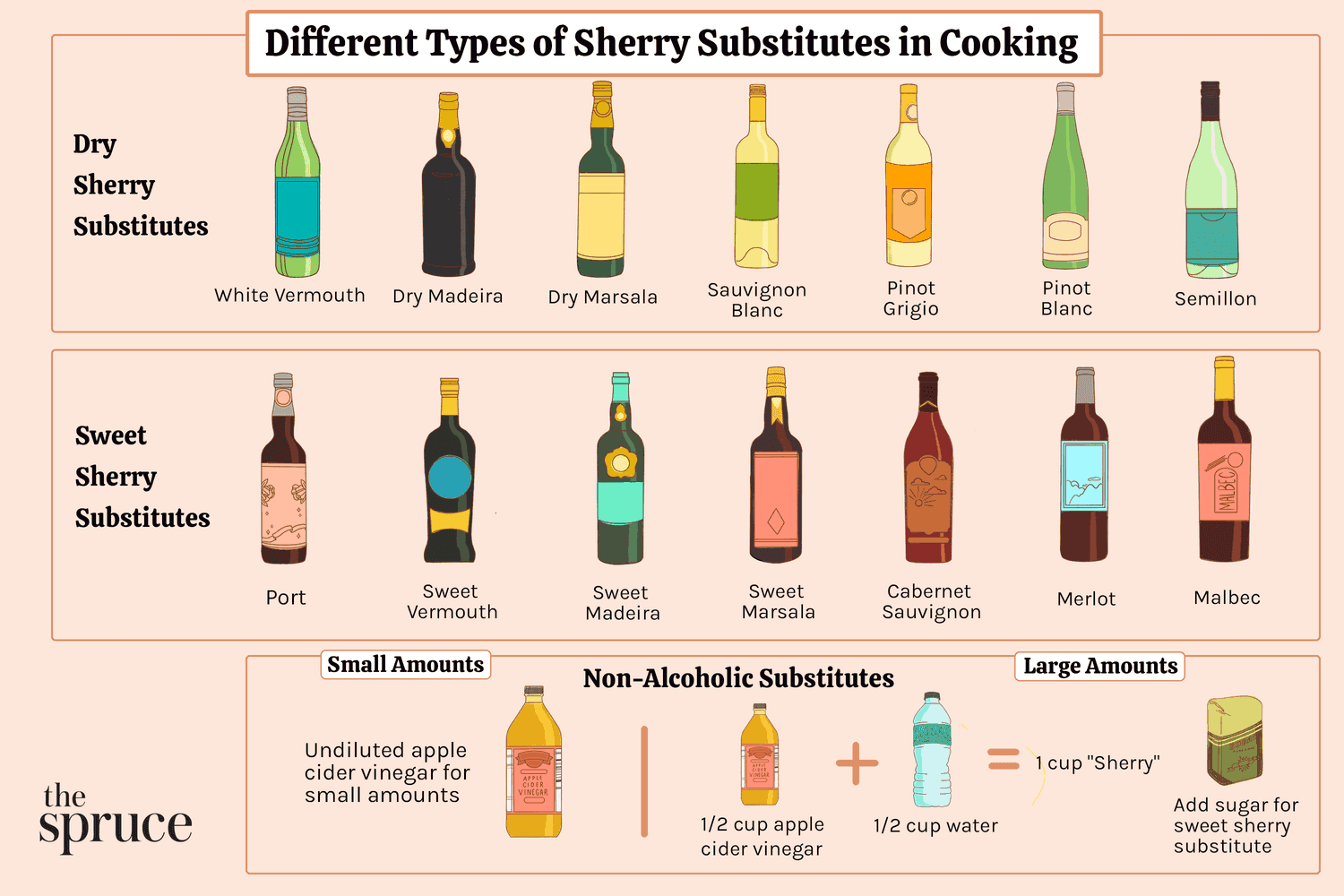
2) Dry White Wine (Best Everyday Pantry Swap)
A dry white wine gives similar acidity and gentle fruitiness. Choose something crisp and not heavily oaked
(think: Sauvignon Blanc, Pinot Grigio, Pinot Blanc). Avoid super-oaky styles for cooking; when reduced, they can
turn bitter or overly woody.
- Swap ratio: 1:1.
- Pro tip: If the dish needs more “sherry-like” nuttiness, add a tiny pat of butter at the end or a pinch of sautéed mushroom powder (optional, but delightful).
- Best for: Risotto, seafood sauces, chicken, vegetable sautés, lighter gravies.
3) Madeira (Best for Deep, Savory-Rich Dishes)
Madeira is fortified and often richer than dry sherry. Dry styles can mimic sherry’s structure, while medium/sweeter
Madeiras bring caramel notes.
- Swap ratio: 1:1 for most recipes.
- Choose this when: You want warmth and depthespecially with mushrooms, onions, and browned meats.
- Best for: Beef stews, mushroom gravies, roast sauces, French onion soup vibes.
4) Marsala (Best for Bold, Cozy Sauces)
Marsala is another fortified wine with a more pronounced personality. It can be nuttier and sometimes sweeter,
depending on the style (secco = dry, dolce = sweet).
- Swap ratio: 1:1 (pick dry for savory; sweet for desserts).
- Best for: Robust meat dishes, mushroom-heavy sauces, anything that can handle a richer note.
- Watch-out: If your recipe is delicate (like a light fish sauce), Marsala may “out-speak” the other ingredients.
5) A Splash of Brandy + Dry White Wine (Best DIY Fortified-Wine Hack)
Sherry is fortified (wine strengthened with a spirit). If you’re trying to mimic that structure, a small splash of
brandy can help a basic dry white wine feel more sherry-adjacent.
- Swap ratio: For each 1/4 cup sherry, use 3 tablespoons dry white wine + 1 tablespoon brandy.
- Best for: Pan sauces, cream sauces, gravies, mushroom dishes.
- Humor-free warning: Don’t go heavy on the brandy unless you want your sauce to taste like it owns a leather armchair.
6) Sherry Vinegar (Best for Finishing, Not for Volume)
Sherry vinegar is made from sherry, so it shares that signature tang and nuttinessbut it’s vinegar, meaning:
it’s much more acidic. It’s fantastic for adding contrast at the end of cooking (especially in cream
soups or sauces), but it usually shouldn’t replace sherry cup-for-cup.
- Swap ratio: Start with 1 to 2 teaspoons sherry vinegar + enough broth/water to match the missing volume.
- Best for: Cream soups, pan sauces, sautéed greens, mushroom dishes, quick reductions.
- Shortcut: If a recipe calls for “a splash” of sherry at the end, sherry vinegar (in tiny amounts) can nail that bright contrast.
7) Apple Cider Vinegar (Diluted) (Best Alcohol-Free Deglazing Stand-In)
If you need a non-alcoholic substitute, diluted apple cider vinegar can provide the tang and subtle sweetness that
sherry often contributesespecially for deglazing or balancing rich sauces.
- Swap ratio: For each 1/4 cup sherry, use 1 tablespoon apple cider vinegar + 3 tablespoons broth or water.
- Best for: Deglazing a pan, gravy, sauces with onions/garlic, soups.
- Watch-out: Straight vinegar can bully a dish. Dilute it and add gradually.
8) White Wine Vinegar (Diluted) (Best for Bright, Clean Acidity)
White wine vinegar is sharper and cleaner than apple cider vinegar. When diluted, it can substitute for sherry’s
“lift” in many savory recipesespecially where sherry is more about acidity than sweetness.
- Swap ratio: For each 1/4 cup sherry, use 2 teaspoons white wine vinegar + 6 tablespoons broth/water (then reduce slightly if needed).
- Best for: Light sauces, seafood, chicken, vegetable dishes.
9) Broth/Stock + A Little Acid (Best for Soups, Stews, and “I Just Need It to Taste Good”)
Broth gives you savory depth; acid gives you the brightness you lose when skipping wine. This combo is reliable,
especially in recipes where sherry is a background note.
- Swap ratio: Replace sherry with equal broth, then add 1 to 2 teaspoons vinegar or lemon juice per 1 cup broth (less for delicate dishes).
- Best for: Soups, stews, slow cooker meals, gravies.
- Pro tip: Add acid near the end so it stays bright and doesn’t fade into the background.
10) White Grape Juice + Vinegar (Best Alcohol-Free “Sweet-ish Sherry” Mimic)
Some recipes need sherry’s hint of sweetness. A grape juice + vinegar blend can approximate that balance:
fruity sweetness with enough acidity to keep things from tasting like juice-box stew.
- Swap ratio: For each 1/4 cup sherry, use 3 tablespoons white grape juice + 1 tablespoon vinegar (apple cider or white wine vinegar).
- Best for: Glazes, sauces with fruit or onions, holiday-style gravies, some marinades.
- Optional savory booster: A tiny splash of soy sauce can deepen it (use carefully).
Quick Cheat Sheet: Best Substitute by Dish
| Dish Type | Best Sherry Substitute | Why It Works |
|---|---|---|
| Pan sauce / deglazing | Dry vermouth or dry white wine | Similar acidity and reduction behavior |
| Cream soups (e.g., cream of mushroom) | Dry vermouth; or tiny sherry vinegar + broth | Balances richness without sharpness overload |
| Mushroom gravies / beef dishes | Madeira or Marsala (dry) | Deep, nutty, savory warmth |
| Seafood & light sauces | Dry white wine | Gentle lift, doesn’t dominate |
| Alcohol-free cooking | Broth + acid; or grape juice + vinegar | Rebuilds flavor structure without alcohol |
| Sweet sauces / dessert glazes | Sweet Marsala; or grape juice + vinegar | Adds sweetness and complexity |
Common Mistakes to Avoid (So Your Sauce Doesn’t Taste Like a Science Project)
Don’t Replace Sherry with Straight Vinegar
Vinegar is concentrated acid. Sherry is wine with nuance. If you pour vinegar cup-for-cup, your dinner will taste
like it’s trying to remove rust from a bicycle chain. Always dilute and add gradually.
Avoid Heavily Oaked Wines for Most Savory Cooking
Oaky wines can turn bitter when reduced. If your wine tastes like a wooden dresser drawer, your sauce might, too.
Choose crisp, unoaked, dry whites for most sherry-substitute needs.
Match the Sweetness Level
Dry sherry is common in savory recipes. If you substitute something sweet (like a dessert wine or too much grape
juice), the dish can slide into “confused teriyaki.” When in doubt: keep it dry, then add sweetness only if the
recipe truly calls for it.
FAQ: Sherry Substitutes, Answered Like a Calm Kitchen Friend
Can I just skip the sherry?
Sometimes, yesespecially if it’s a small amount and the dish has plenty of other flavor (broth, aromatics, herbs).
But if the sherry is used to deglaze or finish a cream soup, you may miss the brightness. In that case, use broth
plus a tiny splash of vinegar or lemon juice.
Is “cooking sherry” okay to use?
It can work, but it’s often salted. Reduce the salt you add elsewhere, and taste before seasoning at the end.
If you have the option, a drinkable dry sherry (or dry vermouth) usually tastes better.
What’s the closest substitute for dry sherry?
In most savory dishes, dry vermouth is a top pick. Dry white wine is the easiest everyday option.
For deeper flavors, Madeira or a dry Marsala can also be excellent.
What’s the best non-alcoholic substitute for sherry in cooking?
For savory recipes: broth + a little acid is the most reliable. If you need a hint of sweetness:
white grape juice + vinegar is a strong option. Start small and adjust.
Can I use sherry vinegar instead of sherry?
Not cup-for-cup. But for finishing a soup or sauce, a tiny amount of sherry vinegar can mimic the bright contrast
sherry often provides. Think teaspoons, not tablespoons, unless diluted.
Conclusion: Your Sauce Is Saved
Sherry is a fantastic cooking ingredient, but it’s not a make-or-break cliffhanger. If you choose a substitute that
matches what sherry is doingdryness, acidity, depth, or sweetnessyou can land a dish that tastes
intentional, balanced, and honestly kind of impressive for someone who just discovered they were out of sherry.
Keep a mental shortcut: dry vermouth for the closest savory swap, dry white wine for
everyday cooking, Madeira/Marsala for deeper dishes, and broth + acid (or
grape juice + vinegar) for alcohol-free wins. Your pan will stop judging you. Probably.
Kitchen Notes: of Sherry-Substitute “Experience” (From the Weeknight Trenches)
Let’s make this practical. Imagine it’s a Wednesday. Your kitchen lighting is doing its best, but your energy is
running on fumes and vibes. You’re cooking something creamymaybe a mushroom soup or a chicken skillet situation
and the recipe says “finish with sherry.” You don’t have sherry. You do, however, have a bottle of dry vermouth you
bought for martinis in 2020 and have been emotionally avoiding ever since. This is its moment.
You add a small splash, and suddenly the dish tastes brighter and less heavy. It’s not magic; it’s chemistry:
the acidity and aromatics cut through fat, so your tongue stops feeling like it’s wearing a winter coat. If you’ve
ever wondered why restaurant cream soups taste “cleaner” than homemade, that little lift is often the reason.
Another scene: you’re deglazing a pan after searing chicken thighs. The browned bits (a.k.a. flavor confetti) are
stuck like they pay rent. Sherry would lift them beautifullybut so will dry white wine. You pour it in, scrape,
and the pan goes from “burnt-ish” to “pan sauce potential” in about 30 seconds. If you only have an oaky Chardonnay,
though? Use broth instead. Oaky reduction can get weird fast, like your sauce is trying to cosplay as a lumberyard.
Now let’s say you’re cooking for someone avoiding alcohol. This is where broth + acid becomes your best friend.
You replace the sherry with chicken broth, simmer, and thenright near the endadd a tiny splash of apple cider
vinegar. The dish wakes up. The key is timing: add the acid late so it stays bright. Acid added too early can fade
into the background like a joke nobody laughed at.
For sweet-leaning sauces, like a glaze for pork or a holiday-ish gravy that wants a hint of richness, the grape juice
+ vinegar combo can be shockingly effective. It gives you sweetness and tang in a controlled way. The trick is to
keep it restrainedif it tastes like fruit punch, you’ve gone too far. If it tastes flat, add a few more drops of
vinegar. You’re building balance, not a beverage.
The takeaway from these “kitchen adventures” is simple: sherry substitutes aren’t one-size-fits-all. Treat your swap
like a job interview. Ask: “Are you here for acidity, depth, sweetness, or deglazing?” Pick accordingly, and your
recipe will never know you improvised. (Okay, it will know. But it will respect you.)