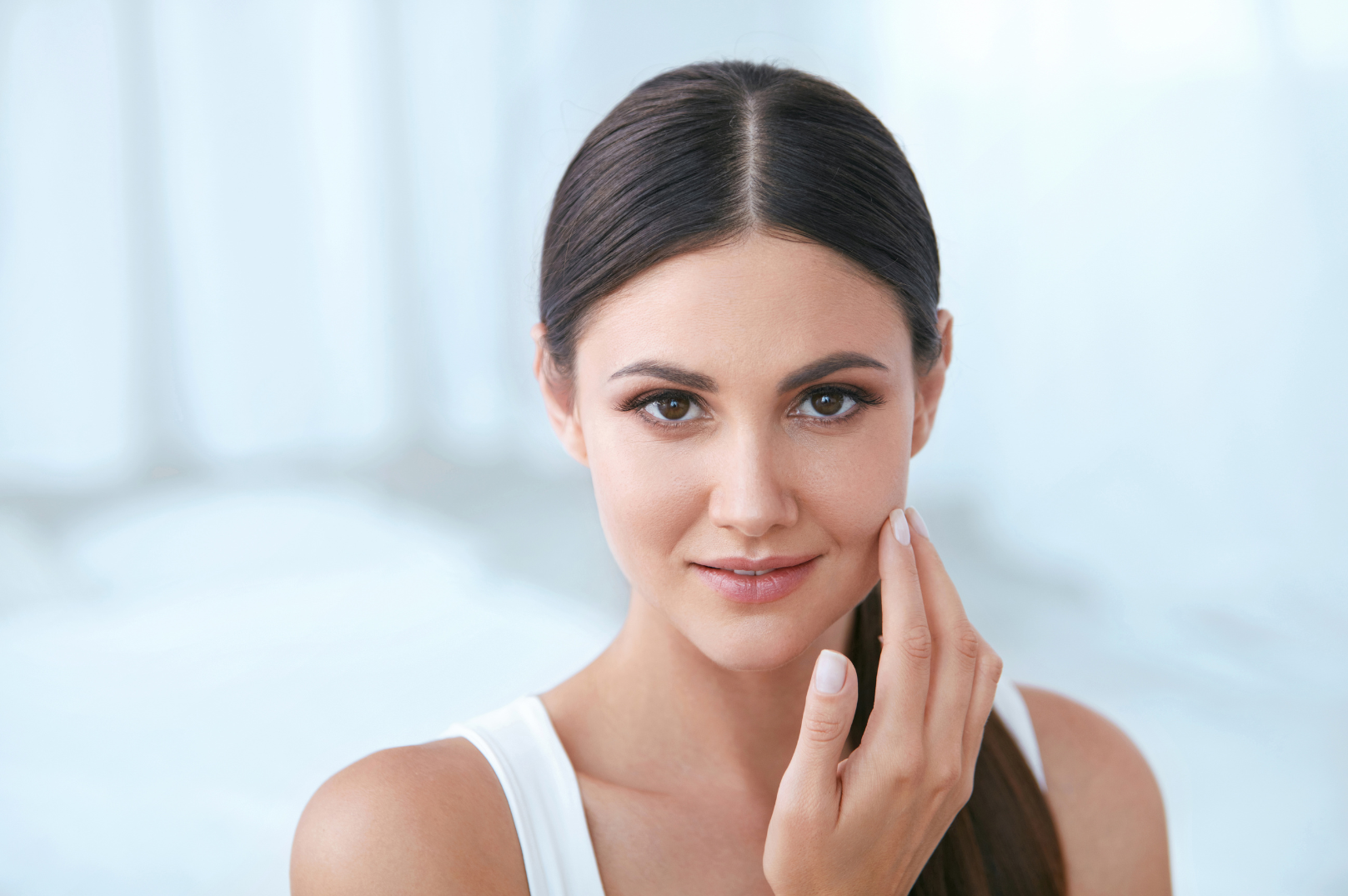
A beauty symmetry test offers an irresistible promise: upload a photo, let an algorithm inspect your face, and receive a score that explains how attractive you are. It feels scientific, efficit.
Facial symmetry can influence how people perceive attractiveness, but it is only one part of a much larger picture. Skin appearance, expression, feature balance, age, familiarity, cultural preferences, camera distance, lighting, and personal taste all matter. A symmetry score can be entertaining and occasionally informative, but it cannot calculate human beauty with the authority of a laboratory result.
What Is a Beauty Symmetry Test?
A beauty symmetry test compares the left and right sides of a face. Most tools identify facial landmarks around the pupils, eyelids, eyebrows, nose, cheeks, lips, jawline, and chin. The software creates a centerline, measures corresponding points, and converts the differences into a facial symmetry score.
Some tests also examine facial proportions, such as eye spacing, face length-to-width ratio, nose width, lip position, or the balance of the upper, middle, and lower thirds of the face. Others create two mirrored portraits: one made from the left half and another from the right.
These measurements describe geometry, not total attractiveness. Scientific reviews identify symmetry as one influence among several, including averageness, skin color and texture, sexually dimorphic features, expression, and individual preference. ial Symmetry Linked to Beauty?
The Brain Likes Visual Balance
Humans quickly notice patterns and balanced forms. A relatively symmetrical face may be easier for the visual system to process, creating an immediate sense of order. Studies often find that increased symmetry raises attractiveness ratings, although the effect is not equally strong in every experiment.
Symmetry also overlaps with “averageness,” meaning facial proportions close to the average of a population. One study found that both symmetry and averageness affected ratings of male faces, while averageness had the clearer effect for female faces. The effects were positive but not large. ay Act as a Rough Health Cue
One theory suggests that balanced development can be unconsciously associated with health or developmental stability. Genes, nutrition, illness, injury, and environmental stress can influence growth. However, symmetry does not prove health, and asymmetry does not prove illness. A face is shaped by bones, muscles, fat, teeth, nerves, habits, expressions, and agingnot by a single beauty formula.
Normal Faces Are Not Perfectly Even
Research on healthy people shows that measurable facial asymmetry is common. One brow may sit higher, one eyelid may open wider, the nose may lean slightly, or one side of the smile may rise faster. Penn Medicine likewise notes that most people have some facial asymmetry and that it is usually normal. irrored faces can even look unnatural because they erase the small differences that create identity. Your left and right halves are teammates, not identical twins.
How a Facial Symmetry Test Calculates a Score
- Landmark detection: The program locates key points around the eyes, nose, mouth, cheeks, jaw, and chin.
- Centerline placement: It estimates a vertical axis through the forehead, nose, lips, and chin.
- Side-to-side comparison: It compares eye height, brow position, cheek width, nostrils, lip corners, and jaw angles.
- Proportion analysis: Some tools add rules about facial thirds, eye spacing, or feature width.
- Score conversion: The measurements become a percentage, rating, or “beauty score.”
The number may look precise, but the formula is usually proprietary and varies by platform. An 88 on one website is not necessarily equivalent to an 88 on another. The result reflects the selected image, the software’s landmark accuracy, and the rules chosen by its developers.
How to Take a More Accurate Facial Symmetry Test
Photography can change the result dramatically. Close-range selfies can make the nose appear wider relative to the face, while focal length and camera distance alter perceived facial shape. Clinical photography therefore relies on consistent distance, lighting, positioning, and expression. he rear camera when possible.
Take three standardized photos rather than trusting one. If the score changes substantially, the test is measuring the photography setup as much as the face.
What Does Your Beauty Symmetry Score Mean?
High Score
A high score means the software found relatively similar landmark positions on both sides of that photograph. It may also mean your head was straight, your lighting was even, and the program detected the landmarks correctly. It does not guarantee that every viewer will find the image attractive.
Average Score
An average result is normal. Minor differences between eyelids, brows, cheeks, lips, and jawlines are common human anatomy. A middle score may reveal nothing more alarming than the shocking news that you are not a computer-generated face.
Low Score
A low result may reflect natural asymmetry, but it can also come from head rotation, an uneven expression, shadows, lens distortion, or a misplaced centerline. Retake the photo under controlled conditions before interpreting it.
Long-standing asymmetry is often harmless. Sudden facial drooping, new weakness, numbness, speech difficulty, or inability to close one eye is different and requires prompt medical evaluation. Those symptoms may occur with stroke, Bell’s palsy, or other facial nerve conditions. Ratio Is Not a Universal Beauty Formula
Many online calculators combine symmetry with the golden ratio, approximately 1.618. They may claim that ideal eye spacing, lip width, or face length must follow this proportion. The idea sounds impressively mathematical, but evidence does not support one golden template for every attractive face.
A scholarly review published in 2024 found no convincing evidence that the golden ratio determines ideal human proportions or facial beauty. It also found no basis for treating the ratio as a universal standard in facial surgical planning. ortions vary with age, sex, ancestry, and individual development. Beauty standards also change across communities and decades. Mathematics can describe distances between features; it cannot order everyone to admire the same face.
What a Symmetry Test Cannot Measure
Expression: A slightly crooked smile may look warmer than a perfectly balanced neutral face. Movement, eye contact, and emotional responsiveness strongly affect real-world impressions.
Skin and contrast: Healthy-looking texture, even coloration, and contrast around the eyes and lips influence attractiveness but may be ignored by basic symmetry tools.
Distinctiveness: A strong nose, uneven dimples, a beauty mark, a tooth gap, or a dramatic brow can become a memorable signature rather than a flaw.
Cultural and personal taste: People share some preferences, but attraction also reflects familiarity, trends, identity, social experience, and private associations.
Personality: No facial grid can measure humor, confidence, kindness, voice, style, or the way someone makes other people feel.
Can Facial Symmetry Be Improved?
First decide whether anything actually needs changing. Minor asymmetry is normal and often invisible until an app decorates it with red lines like evidence in a low-budget detective show.
Styling can create visual balance through eyebrow grooming, makeup, facial hair, glasses, or a different haircut. Temporary unevenness may come from swelling, dental treatment, muscle tension, or inflammation. When asymmetry affects chewing, jaw comfort, speech, breathing, vision, eyelid closure, or facial movement, a dentist or medical professional can evaluate the cause.
Be cautious with exercises that promise to permanently reshape facial bones. Harvard Health notes that evidence for dramatic benefits from facial exercise is limited. Cosmetic or reconstructive treatment should be discussed with qualified clinicians who assess function, anatomy, risks, and the whole facenot merely an app-generated percentage. Tests Without Damaging Your Self-Image
Treat the result as an experiment, not a ranking. Test a few standardized photos and observe how the number changes. That variation is proof that the score depends partly on the image and algorithm.
Avoid repeatedly testing selfies in search of perfection. Appearance-focused comparison and retouched images can intensify dissatisfaction. The American Psychological Association reports that reducing social media use improved appearance-related feelings in one study of young people and advises limiting beauty-focused social comparison. estion is not “Is my face symmetrical enough?” but “Does this photograph look like me?” That question is less mathematical and usually more useful.
Frequently Asked Questions
Are Symmetrical Faces Always More Attractive?
No. Symmetry can improve ratings in some studies, but perfect mirroring may look artificial. Small asymmetries often add character and identity.
Why Do I Look More Uneven in Photos Than in a Mirror?
You are accustomed to your reversed mirror image. A non-reversed photograph feels unfamiliar, and camera angle, lighting, distance, and lens distortion can exaggerate differences.
What Is a Good Facial Symmetry Score?
There is no universal scale. Each tool uses its own formula, so scores should not be compared across platforms or treated as medical or scientific grades.
A Real-World Beauty Symmetry Test Experience
The following composite experience shows what commonly happens when someone tests several photographs instead of trusting a single upload.
The first image was a casual front-camera selfie taken at arm’s length beside a window. The program marked one eye as lower, the nose as off-center, and the jaw as uneven. The score landed in the low 70s. For a few minutes, the red guide lines looked less like measurements and more like accusations.
Then the setup changed. The phone was placed at eye level about six feet away, the rear camera was used, and the photograph was cropped afterward. Light came from directly in front. The head was straight, the expression neutral, and the hair was pulled away from the cheeks. The score rose by more than ten points.
Nothing about the face had changed. No jaw exercise had been performed. No eyebrow had received emergency engineering. Camera distance, angle, lighting, and landmark placement created the difference.
A third test used a smiling photograph. The score dropped because one corner of the mouth rose higher and one eye narrowed during the smile. Yet when several people compared the images informally, they preferred the smiling photo. The supposedly “less symmetrical” image looked friendlier and more attractive.
Next came the mirror experiment. One portrait duplicated the left half of the face, while another duplicated the right. The results looked like two relatives who shared a password but not a personality. One version appeared sharper and more serious; the other looked softer. Neither looked fully authentic because the real face depended on both sides.
The test exposed a major weakness of beauty calculators: they invite users to confuse measurement with meaning. The software could detect that the brows differed by a few pixels, but it could not know whether the difference made the expression lively. It could measure eye spacing, but not humor, confidence, warmth, or the effect of a face during conversation.
There was an emotional lesson, too. Viewing a face through grids and percentages made ordinary variation feel like a defect. After several rounds, it became easy to search for flaws that had never mattered before. Stepping away restored perspective. Friends did not see a collection of ratios; they saw a familiar person.
The most useful result was not a final beauty rating. It was learning how photographs work. Greater camera distance looked more natural. Even lighting reduced false differences. A relaxed expression represented the face better than a tense attempt to “pass” the test. The favorite image was not the highest-scoring one but the one that looked most human.
That is the healthiest way to approach a beauty symmetry test. Use it as a curiosity or photography lesson. Laugh when the algorithm places your jaw somewhere in your hair. Then close the page and return to the three-dimensional world, where people move, speak, smile unevenly, and remain attractive without displaying a percentage above their heads.
Conclusion
A beauty symmetry test can show how evenly facial landmarks appear in one photograph, but it cannot deliver an objective verdict on attractiveness. Research supports a relationship between symmetry and beauty judgments, yet facial appeal also depends on averageness, skin appearance, expression, movement, distinctiveness, culture, and individual preference.
Use the test for entertainment and insight into photographynot as a diagnosis, personal ranking, or blueprint for changing your face. Natural asymmetry is common, and the features an algorithm calls imperfect may be the ones that make you recognizable.
Note: A beauty symmetry test is not a medical assessment. Seek urgent medical care for sudden facial drooping, weakness, numbness, speech difficulty, or other new neurological symptoms.