An above-ground swimming pool can turn a plain backyard into the neighborhood’s favorite summer destination without the excavation, construction schedule, or price tag of most in-ground pools. But “above ground” does not mean “drop it anywhere and add water.” A pool is a large structure holding thousands of gallons, and water has a very strict relationship with gravity.
Good planning determines whether the pool becomes an easy backyard retreat or a recurring weekend repair project. The important decisions include location, permits, leveling, drainage, safety barriers, electrical service, filtration, water chemistry, decking, and winter care. This guide brings those decisions together in one practical plan.
Why an Above-Ground Pool Makes Sense
Above-ground pools offer several advantages: lower initial cost, quicker installation, flexible sizing, and the possibility of removing or replacing the pool later. Choices range from inexpensive seasonal soft-sided models to steel, resin, hybrid, and semi-inground systems that can feel much more permanent.
However, the pool kit is only part of the budget. Site preparation, permits, fencing, electrical work, a ladder or stairs, a cover, upgraded filtration, cleaning equipment, chemicals, landscaping, and perhaps a deck can raise the final cost significantly. Recent U.S. cost guides place many basic projects in the low-thousands of dollars, while larger permanent systems with professional site work and accessories can cost much more.
1. Choose the Location Before Choosing the Pool
Start with local rules. Building codes, zoning ordinances, utility easements, and homeowner association requirements may control setbacks, permits, barriers, gates, alarms, electrical work, and pool placement. Never assume an above-ground model is exempt simply because it is removable.
Then study the yard. The best location is reasonably flat, well drained, easy to supervise from the house, and far from overhead electrical lines. Before digging, identify underground utilities and buried irrigation or drainage systems. Large tree roots can interfere with the base, while branches above the pool can supply a steady diet of leaves, pollen, seeds, and bird-related surprises.
Think About Drainage
Watch where water travels during heavy rain. Avoid low spots where runoff collects. Persistent moisture around the pool can soften soil, undermine supports, and accelerate corrosion on metal components. Correct drainage problems before installation rather than after several thousand gallons are sitting in the middle of them.
2. Make the Base Truly Level
Leveling is the foundation of a safe installation. “It looks flat from the patio” is not a measurement. Use proper leveling tools and follow the manufacturer’s tolerance requirements. Many installations are prepared by removing high soil rather than building low areas up with loose fill that can settle later.
Remove grass, roots, rocks, sticks, and sharp debris where required by the installation instructions. Some pool systems use prepared native soil, pads, pavers beneath support legs, or other engineered bases. The correct method varies by product, so the manufacturer’s manual should control the final base design.
Why so much fuss? Water weighs about 8.34 pounds per gallon. A 10,000-gallon pool contains more than 83,000 pounds of water before counting swimmers or the pool structure. Uneven support can place stress where the frame and wall were not designed to carry it.
3. Pick the Right Size and Shape
Choose size according to how the pool will actually be used. A compact round pool can be ideal for cooling off and younger swimmers. Larger round pools create more open play space, while oval and rectangular models may fit narrow yards or work better beside a deck.
Do not measure only the pool footprint. Leave space for code-required barriers, the pump and filter, plumbing, stairs or ladders, cleaning access, and future repairs. A filter squeezed into a twelve-inch gap may technically fit, but whoever has to open it in July will not celebrate the clever design.
Most above-ground pools are not designed for diving. Never dive unless the specific pool is designed, marked, and equipped for that purpose.
4. Build Safety Into the Layout
Pool safety should be part of the original design, not an accessory purchased after the first pool party. U.S. safety guidance emphasizes layers of protection, including a four-sided isolation barrier with a self-closing, self-latching gate, close adult supervision, and controlled access.
In some jurisdictions, the wall of an above-ground pool may satisfy part of a barrier requirement, but do not assume that it does. Verify local code. Secure, lock, or remove ladders and steps when required and when the pool is not being supervised. Keep chairs, storage boxes, toys, and other climbable objects away from the exterior wall.
Make sure family members understand basic water safety and emergency procedures. Barriers and alarms reduce risk, but they do not replace active supervision.
5. Plan Electrical Service Before Filling
Pumps, lights, heaters, and other equipment bring electricity close to water. Pool electrical systems must comply with local code and manufacturer requirements for grounding, bonding, receptacles, circuit protection, and ground-fault circuit-interrupter protection.
If the project needs a new circuit, permanent wiring, bonding, or a relocated receptacle, hire a licensed electrician with pool experience. Do not solve a short power cord with an ordinary household extension cord. Electrical planning is much easier while the pool area is still dry.
6. Match the Pump and Filter to the Pool
The pump circulates water and the filter removes suspended debris. Both should be sized for the pool’s water volume, plumbing, and equipment limits. Bigger horsepower is not automatically better; an oversized pump can waste energy or exceed the filter’s recommended flow.
Common Filter Choices
- Sand filters: Straightforward to operate and cleaned by backwashing, which uses additional water.
- Cartridge filters: Use removable filter elements and generally avoid backwashing.
- DE filters: Provide very fine filtration but usually require more involved maintenance.
If the included pump-and-filter package seems marginal for a large pool, heavy use, or a debris-filled yard, budget for a properly matched upgrade rather than waiting for cloudy water to make the decision for you.
7. Plan a Water-Care Routine
Clear water is not necessarily sanitary water. The CDC recommends keeping pool pH between 7.0 and 7.8. For chlorine pools, it recommends at least 1 ppm free chlorine, or at least 2 ppm when cyanuric acid or stabilized chlorine is used. Home pool owners are advised to check disinfectant and pH at least twice per day and more often during heavy use.
A simple routine prevents most problems: skim debris, brush and vacuum with liner-safe tools, empty pump and skimmer baskets, inspect hoses and fittings, and clean the filter according to its pressure readings and manufacturer guidance. Store pool chemicals securely, follow label directions, and never mix different chemicals together.
8. Use a Pool Cover for More Than Leaves
A cover can reduce debris, heat loss, and water consumption. The U.S. Environmental Protection Agency reports that properly used pool covers can prevent up to 95 percent of evaporation. That means less refill water and, in many situations, lower chemical and heating demand.
Choose the cover for its intended job. A debris or solar cover should not be treated as a certified safety barrier unless it is specifically designed and rated for that purpose.
9. Add Decking and Landscaping Carefully
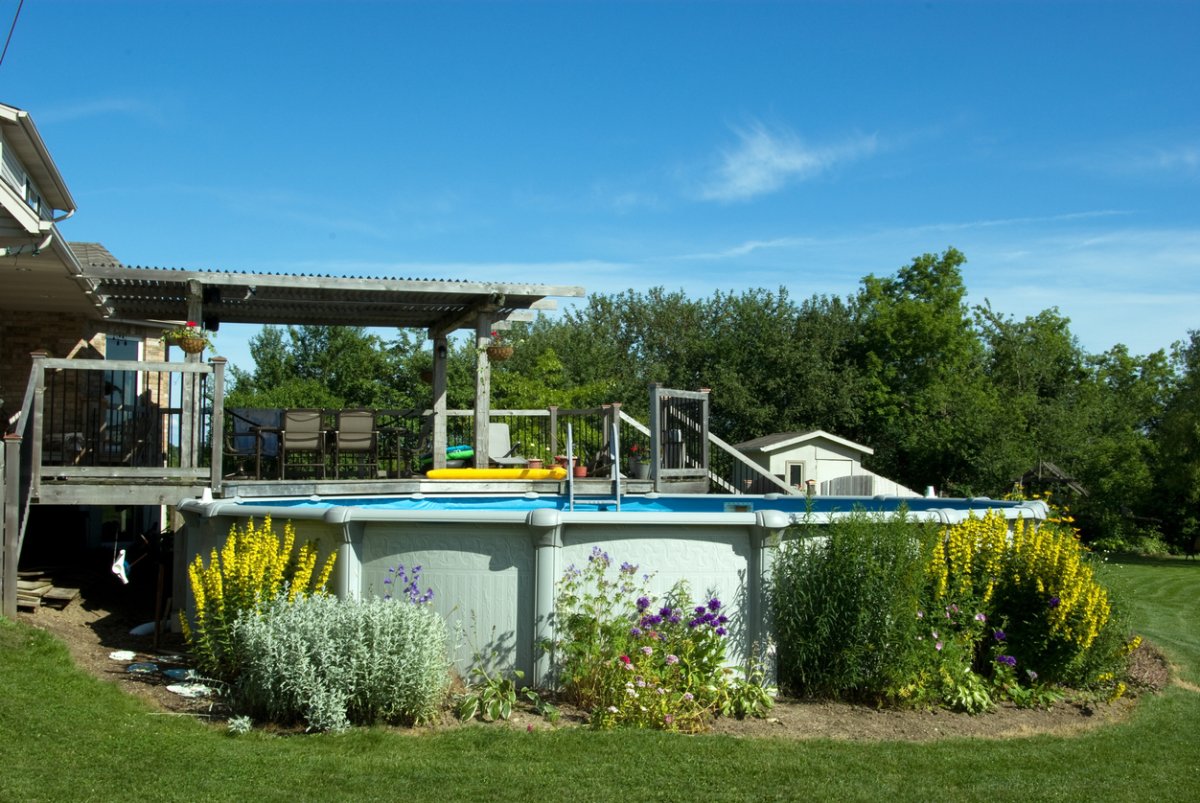
Decks can make an above-ground pool look more integrated and improve entry, seating, and maintenance access. Use slip-resistant walking surfaces and design the structure around local building rules and the pool manufacturer’s clearance requirements. Keep service access to the skimmer, wall, pump, filter, and plumbing.
For landscaping, favor plants that do not drop large amounts of leaves, thorns, fruit, or aggressive roots. Position grills and glassware away from the pool. Attractive design matters, but the best poolscape is one that does not create three extra cleaning chores every day.
10. Prepare for Winter Before Winter Arrives
In freezing climates, winterization protects the liner, plumbing, pump, filter, and other equipment. The exact procedure depends on the pool, but it commonly includes cleaning and balancing the water, protecting or disconnecting equipment, draining vulnerable plumbing as directed, and installing the proper cover.
Do not casually drain a permanent above-ground pool completely. Removing the water can damage some liners and structural systems. If significant draining is needed for repairs or severe water problems, follow manufacturer instructions or consult a qualified pool professional.
Quick Above-Ground Pool Planning Checklist
- Check permits, setbacks, barriers, HOA rules, and electrical requirements.
- Locate utilities and avoid overhead power lines.
- Choose a visible, well-drained site with maintenance clearance.
- Prepare and level the base exactly as the manufacturer requires.
- Arrange safe electrical service before filling.
- Install required fencing, gates, alarms, and controlled access.
- Match the pump and filter to the pool volume.
- Buy a reliable test kit, cleaning tools, and a practical cover.
- Plan decks and landscaping around service access.
- Create maintenance and winterization checklists.
Experience-Based Lessons From Real-World Pool Ownership
The most valuable above-ground pool lessons usually appear after installation. Homeowner and installer guidance repeatedly shows that the pool itself is rarely the most troublesome part; weak site preparation, awkward access, undersized equipment, and inconsistent maintenance are more likely to create frustration.
Spend More Time on the Base Than You Think You Need
An empty frame can make a slightly uneven site look harmless. A full pool exposes every shortcut. One of the costliest mistakes is trying to correct a low side with loose material instead of properly preparing the whole base. Measure repeatedly, compact where required, and stop assembly if the foundation is not right. Taking apart an empty pool is irritating. Taking apart a full pool is a small civil-engineering event.
Expect the Equipment Package to Affect Your Routine
Some entry-level kits include a pump and filter that can operate the pool but require long run times or frequent cleaning. In hot weather, heavy use, or yards with lots of airborne debris, owners often discover that filtration capacity determines how forgiving the pool is. A well-matched upgrade can reduce frustration, but the goal is not maximum horsepower; it is balanced circulation and filtration.
Design Entry and Maintenance Access for Daily Life
Stairs, ladders, handrails, and equipment locations feel different after hundreds of uses. Stable entry is especially valuable for children, older adults, and guests, but it must remain compatible with the pool’s safety barrier. Likewise, leave enough space to clean a filter, disconnect a hose, inspect the wall, and reach the skimmer without crawling behind a shrub.
Landscaping Can Either Help or Hurt
Poolside plants look wonderful, but a flowering tree that drops petals for six weeks can turn a skimmer into a full-time employee. Thorny plants threaten inflatables, loose mulch migrates during storms, and aggressive roots can complicate the pool base. Low-debris plants, clean walking surfaces, and sensible drainage usually create a better long-term experience than a highly decorative but high-maintenance design.
Consistency Beats “Rescue Chemistry”
First-time owners sometimes wait until the water looks cloudy or green before testing it. By then, the problem usually requires more time and chemicals. Regular testing, circulation, brushing, and debris removal are much easier. Fifteen minutes of attention at the right time can prevent a Saturday afternoon spent staring suspiciously at a bottle labeled “shock.”
Make the Cover Easy to Use
A pool cover can save water, retain heat, and keep out debris, but only if it is convenient enough to use regularly. A theoretically perfect cover that requires a wrestling match every evening will eventually live folded beside the fence. Think about how one person will put it on and remove it before buying.
Plan the Off-Season During Summer
Winter preparation is simpler when plugs, hoses, covers, storage space, and instructions are organized before cold weather. Make a closing checklist while everything is working. Future-you, standing outside in November with wet hands and one missing fitting, will appreciate the effort.
Ultimately, the best above-ground pool is not necessarily the biggest or most expensive. It is the one with a stable foundation, safe access, sensible electrical service, correctly sized equipment, manageable landscaping, and a maintenance routine the household will actually follow. When those pieces are right, the pool can quietly do its job: provide exercise, cooling, family time, and an excellent excuse to own an inflatable flamingo.
Conclusion
An above-ground swimming pool can be an excellent backyard investment when planning comes before filling. Begin with local rules, choose a safe and well-drained location, prepare a truly level base, and treat fencing and electrical work as essential infrastructure. Match the pump and filter to the pool, maintain water chemistry consistently, use a cover to reduce evaporation, and design decks and landscaping around safe access and easy service.
Note: This article synthesizes current U.S. guidance and practical information from the CPSC, CDC, EPA WaterSense, American Red Cross, Bob Vila, Lowe’s, The Home Depot, This Old House, Forbes Home, Angi, Better Homes & Gardens, Leslie’s Pool Supplies, and Pool Research. Local codes and the specific pool manufacturer’s installation instructions always take priority.
Research support:
Siting and installation:
Safety and access:
Water chemistry and chemical handling:
Water efficiency and covers:
Electrical and equipment:
Costs, maintenance, and design: