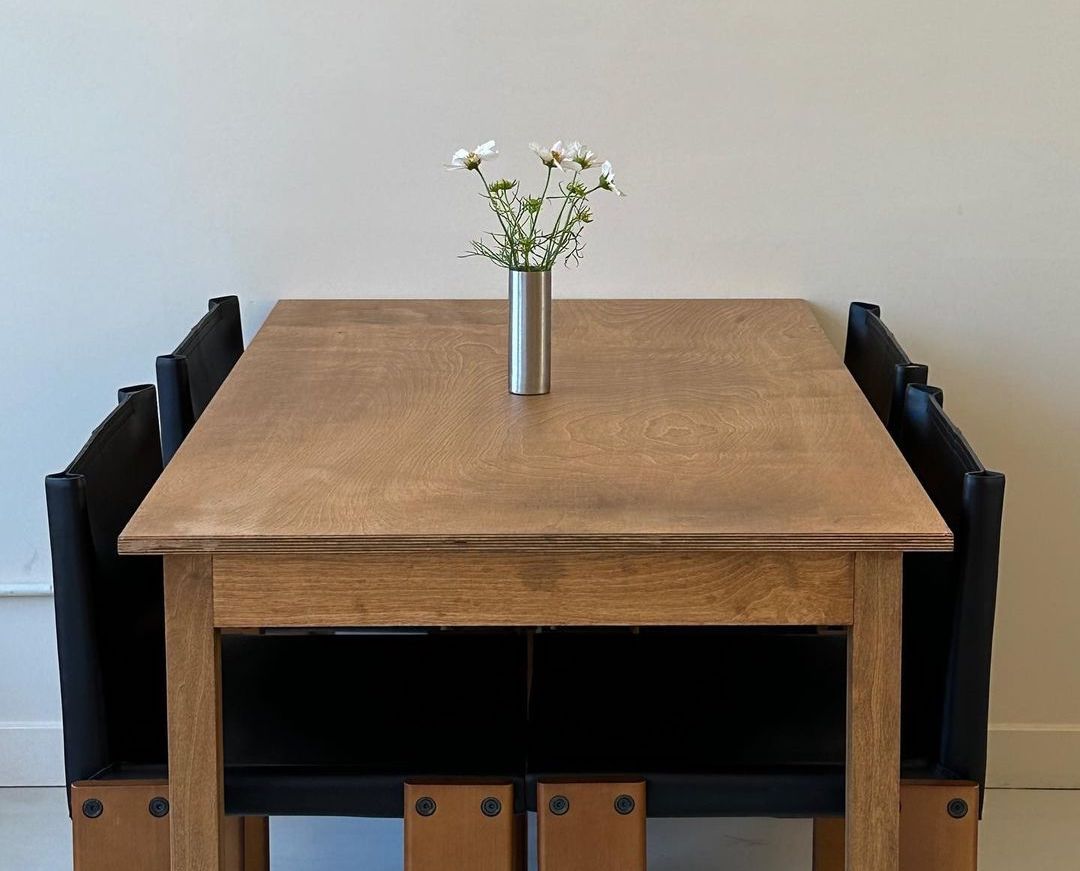
Some people follow trends. Carol Song appears to interrogate them, rearrange them, and occasionally ask them to leave the room.
After years of spotting what was next in fashion, Song brought her sharply edited point of view into hospitality and interiors with DAE, the Brooklyn concept that combined a Korean-inspired café, wine bar, homeware shop, and gathering space. It was the kind of place where a cup, chair, butter mold, and stainless-steel counter all seemed to be participating in the same very stylish conversation.
Yet Song’s approach is more substantial than “make everything photogenic.” Her design philosophy favors usefulness, honest materials, thoughtful restraint, and objects that deserve the space they occupy. In other words, she is interested in good designnot a room full of decorative overachievers begging for compliments.
Who Is Carol Song?
Carol Song is a Korean American fashion and design professional who built much of her career at Opening Ceremony. She held senior fashion and buying roles at the influential New York retailer, where searching for new ideas, emerging designers, and unexpected cultural references was part of the job. Opening Ceremony itself became known for mixing retail with art, performance, film, music, food, and community rather than behaving like a conventional clothing store.
That experience helps explain why DAE never fit neatly into one category. Founded in 2023, the business described itself as a homeware and design shop, café, wine bar, and private event space. Its original Carroll Gardens location was developed by Song with longtime friend Suea Cho, whom she had met while they were both working as buyers at Opening Ceremony.
The transition from fashion director to hospitality entrepreneur may sound like a dramatic career pivot, but the underlying skill is surprisingly similar. In both fields, success depends on editing. You decide which pieces belong together, which details create tension, and which item is trying so hard that it needs to be returned to the stockroom.
From Fashion Trend-Spotter to Spatial Storyteller
At Opening Ceremony, Song had to consider what was coming next each season. At DAE, she could slow that cycle down and create a complete physical environment. Instead of forecasting what people might wear, she could shape how they would sit, eat, drink, shop, and interact.
DAE occupied a former real estate office on Smith Street, but little about the finished space felt ordinary. Its dramatic stainless-steel bar became a visual anchor, while wood, reflective metal, sculptural objects, and carefully arranged merchandise created a balance between warmth and industrial precision. The result was minimalist without feeling like a waiting room for extremely fashionable dentists.
Song has connected DAE’s aesthetic to Korean cafés and Korean minimalism. Natural materials, restrained compositions, and meaningful negative space played important roles. The influence was not expressed through predictable symbols or themed decoration; it appeared in the atmosphere, the material choices, the presentation of food, and the careful relationship between old and new.
DAE Was More Than a Beautiful Brooklyn Café
During the day, visitors could order distinctive drinks and pastries while browsing a selection of household objects. At night, the space shifted toward wine, cocktails, dinner, and events. Korean ingredients and references appeared throughout the menu, including misugaru, mugwort, sweet potato, matcha, and sculpturally presented butter.
The retail selection was equally varied. DAE carried glassware, textiles, incense burners, trays, mirrors, candles, ceramics, stainless-steel accessories, and small objects that could change the mood of an ordinary table. The assortment did not seem organized around one trend. It was organized around compatibility: things from different makers that looked as though they might enjoy living together.
This model reflected Song’s larger creative idea: a modern lifestyle space does not need to separate food, retail, design, and social activity into different boxes. A customer might discover a new flavor, sit in a carefully composed room, notice an unfamiliar material, and leave with a candleholder. That is not merely shopping. It is storytelling with receipts.
The Famous Photography Banand What It Revealed
DAE’s highly composed interior and distinctive food presentations quickly attracted visitors who treated the café as a content studio. Photography sessions became disruptive enough that the business restricted indoor photos and videos. DAE also maintained laptop limitations at certain times, emphasizing conversation and presence over screen-based occupation.
The decision generated attention because it challenged a familiar assumption: when a business creates an attractive environment, does the public automatically gain the right to turn it into a personal production set?
Song’s answer was essentially no. A beautiful room can still have boundaries. Design is not only about how a place appears in a vertical video; it is about how the space functions for staff members, diners, neighbors, and people who would prefer not to appear in the background of somebody else’s “quiet luxury latte” montage.
The policy also exposed a modern design paradox. Social media can help an independent business become visible, but excessive content creation can damage the experience that made the business interesting. DAE’s response prioritized the room itself over its digital afterlife.
Carol Song’s Design Philosophy, One Quick Take at a Time
Clutter Should Have to Defend Itself
Song has described reorganizing and clearing clutter as a signature design move. Her goal is to make sure each piece exists for a reason. That is more disciplined than simply buying attractive storage baskets and hiding forty-seven mystery charging cables inside them.
Her approach treats editing as an active part of interior design. Removing an object can improve a room as much as adding one. When fewer pieces compete for attention, materials become easier to appreciate, useful objects become easier to reach, and the room gains visual breathing space.
White Walls Do Not Have to Feel Cold
For a bedroom, Song selected Benjamin Moore’s White Dove, a popular warm white rather than a harsh, blue-toned shade. The choice supports her preference for calm foundations that allow wood, art, textiles, and sculptural lighting to carry more visual weight.
A restrained wall color can also make a room easier to change. Instead of repainting every time the internet declares a new “color of the year,” you can adjust the atmosphere through bedding, lamps, objects, and natural materials. This is useful because walls are large, paint is messy, and trend cycles have no sympathy for your weekend plans.
Beautiful Wood Should Remain Wood
One of Song’s design pet peeves is painting over attractive wood, especially original molding and trim. Her objection reflects a broader respect for material integrity. Wood has grain, variation, age, and warmth. Covering it automatically with white paint can erase the features that made it valuable in the first place.
This does not mean that painted wood is always wrong. Damaged, mismatched, or low-quality surfaces may benefit from paint. The lesson is to inspect before reaching for the brush. Old woodwork deserves at least a fair trial.
Function Is Part of the Beauty
Song identified a MAC Professional chef’s knife as her go-to kitchen tool. That choice fits her overall design language: a useful object should perform well, feel good in the hand, and avoid unnecessary theatrics. MAC describes its Professional Series as a workhorse range, with chef’s knives designed for frequent, multipurpose cutting.
The same principle applies beyond knives. A chair should support the body. A carafe should pour properly. A lamp should produce flattering light rather than merely looking impressive while everyone squints.
Small Daily Objects Deserve Attention
Song’s bedside arrangement included playful Hello Kitty tissues, a textured tissue cover, and a Carron carafe. The Carron Paris bedside design combines a hand-blown borosilicate glass decanter with a nesting drinking glass, proving that even the 2 a.m. search for water can have respectable art direction.
The combination is revealing. It mixes humor, craft, texture, and function rather than forcing every object to share the same design pedigree. A mature interior can contain a collectible carafe and a cartoon character without requiring either one to apologize.
Bauhaus, Nakashima, and Noguchi: The Design Icons Behind the Taste
Bauhaus as a First Design Love
Song has named Bauhaus as her first design love. Founded in Germany in 1919, the Bauhaus brought artists, architects, and designers together through an experimental approach centered on materials, function, production, and modern life. Its most recognizable objects often use clear geometry and efficient forms rather than applied ornament.
That influence is easy to recognize in Song’s work. Stainless steel is allowed to look like stainless steel. Storage is part of the visual order. Decoration is controlled. Objects are selected because they serve a purpose and create a relationship with the surrounding space.
George Nakashima and the Emotional Power of Wood
Among the objects Song has coveted are George Nakashima’s Conoid lounge chairs. Nakashima’s work is celebrated for its sensitive use of wood, expressive joinery, and respect for the natural character of each board. His Conoid furniture is closely connected to the experimental buildings and workshops he developed in New Hope, Pennsylvania.
A Nakashima chair brings warmth and irregularity into a controlled interior. It is not rustic in the themed-restaurant sense, nor is it sterile modernism. It sits between sculpture and utility, which is exactly where many of Song’s favorite objects seem happiest.
Why One Noguchi Lamp Becomes Another
Song also revealed that a recent home purchase was another Noguchi lamp. Isamu Noguchi began designing his Akari light sculptures in 1951 after visiting Gifu, Japan, where artisans made lanterns with paper and bamboo. The lamps combine traditional craft with modern sculptural form, producing warm, diffused light through handmade washi paper.
The word “another” is important. Akari lamps are collectible, but they are also adaptable enough to coexist in different rooms. They make a visual statement without shouting across the furniture. Once one enters the house, resistance may be futile.
What Carol Song’s Taste Teaches Us About Modern Minimalism
Minimalism is often misunderstood as an obligation to own twelve objects, wear only beige, and experience guilt whenever someone gives you a decorative pillow. Song’s version is more flexible.
Her spaces contain personality, cultural references, unusual food, handmade objects, reflective metal, warm wood, playful accessories, and strong opinions. What makes the result minimalist is not emptiness. It is control.
- Edit before buying: Rearranging and removing objects may solve the problem without adding more furniture.
- Respect materials: Preserve good wood, allow metal to look industrial, and notice the texture of handmade pieces.
- Choose useful beauty: Everyday tools deserve as much thought as display objects.
- Mix seriousness with humor: A sophisticated room can still contain Hello Kitty tissues.
- Protect the experience: A space should serve the people inside it, not merely the audience viewing it online.
DAE’s Next Chapter
DAE’s original Smith Street location closed at the end of April 2026 after nearly three years in Carroll Gardens. Current information from the company states that it is seeking a new location, while its online design shop continues to feature homeware and decorative objects. The timing and address of the next physical chapter have not yet been announced.
The closure does not diminish the impact of the original space. DAE demonstrated that a neighborhood café could operate simultaneously as a design laboratory, cultural reference point, retail platform, and refuge from the pace of the city.
Its future location also presents an intriguing question: how do you recreate tranquility without simply copying the room that first produced it? Song’s career suggests that the answer will not involve repetition. Trend-spotters are rarely enthusiastic about performing their own greatest hits forever.
Conclusion: A Point of View That Extends Beyond Trends
Carol Song’s creative identity cannot be reduced to a list of favorite products. The knife, paint color, lamp, chair, and carafe matter because they reveal a consistent way of thinking.
She values objects that perform, materials that retain their character, rooms that support human behavior, and environments that balance cultural memory with contemporary life. Her work at Opening Ceremony trained her to recognize what was emerging. DAE gave her an opportunity to decide what was worth keeping.
The strongest takeaway from “Quick Takes With: Carol Song” is therefore not that everyone needs a Noguchi lamp or a stainless-steel counter. It is that every space benefits from a clear editor. Keep what works. Preserve what is beautiful. Question what is merely fashionable. And before painting original wood trim white, perhaps sleep on it.
Experience Addendum: Living With Carol Song’s Design Ideas
Start With a Twenty-Minute Visual Edit
The easiest way to experience Song’s philosophy is to begin without shopping. Choose one room, set a timer for twenty minutes, and remove anything that appears accidental. Clear expired mail, abandoned cups, duplicate candles, packaging, and decorative objects you no longer notice.
Do not throw everything away. Place uncertain items in a temporary box and live without them for a week. The immediate experience may feel strangely bare, especially when your eyes are accustomed to constant visual information. After a day or two, however, the remaining materials become more noticeable. You see the grain of a table, the silhouette of a lamp, and the pattern created by books on a shelf.
This is the practical difference between minimalism and tidiness. Tidiness organizes everything you own. Editing asks whether everything deserves to stay.
Perform the Bedside-Table Test
A bedside table is an excellent design experiment because it combines routine, comfort, and limited space. Remove everything, clean the surface, and return only what improves the evening or morning experience.
You might keep a small lamp, drinking water, tissues, a book, and one personal object. Each item should be easy to use in low light. A beautiful carafe that drips across the table is not useful. A sculptural lamp with an exposed bulb that illuminates the bedroom like an interrogation chamber is also not useful.
The goal is not to reproduce Song’s exact arrangement. It is to create the same balance of function and personality. Your version could include an inexpensive ceramic cup, a family photograph, and a ridiculous novelty tissue box. Thoughtfulness is not the same as luxury.
Let One Material Lead the Room
Song’s appreciation for wood, metal, paper, and natural textures suggests another useful exercise: identify the room’s strongest existing material and support it instead of covering it.
If the room has old wood trim, clean and repair it before deciding to paint. If it contains a stainless-steel worktable, allow that industrial surface to remain visible rather than surrounding it with five competing metallic finishes. If a paper lantern provides soft light, avoid adding several bright fixtures that flatten the atmosphere.
This process often makes the room feel calmer because the materials stop arguing. They do not need to match perfectly; they need a hierarchy. One leads, a few support, and the rest resist the urge to launch solo careers.
Create a Phone-Light Gathering
DAE’s restrictions on disruptive photography provide an experience worth testing at home. Host a meal or coffee gathering and invite guests to keep phones away from the table for one hour.
At first, someone may reach automatically for a device when the food arrives. After that reflex passes, the meal changes. People notice the serving pieces. They ask what is in the drink. Conversation develops without the repeated interruption of taking, reviewing, editing, and posting photographs.
This does not require a strict anti-technology manifesto. A quick group photo can still happen. The point is to prevent documentation from becoming the main event. A table setting should help people remember the evening, not force everyone to spend it manufacturing evidence that they enjoyed themselves.
Buy One Object With a Clear Job
Finally, choose one household object slowly. It might be a chef’s knife, reading lamp, chair, glass, tray, or storage container. Define the job before considering the appearance.
For a knife, consider the foods you prepare and the handle that feels comfortable. For a lamp, identify where the light must fall. For a chair, sit long enough to discover whether its sculptural profile has declared war on your lower back.
Then consider material, maintenance, repairability, and visual character. A carefully chosen object often eliminates the desire to buy several temporary substitutes. It may cost more initially, but the experience of using something well designed every day can be more satisfying than owning a crowded collection of almost-right alternatives.
That may be Carol Song’s most practical lesson: good taste is not the ability to acquire everything attractive. It is the discipline to recognize which attractive things genuinely belong in your life.
Editor’s note: DAE’s original Brooklyn café closed in April 2026. Its official website states that the company is currently seeking a new physical location, with further details still to be announced. The online homeware store remains active.