Becoming a journeyman electrician in the United States is not a “watch three videos and buy a tool belt” kind of career move. It is a structured path built on supervised fieldwork, classroom training, safety rules, electrical code knowledge, and a licensing exam that politely asks your brain to remember more than where you left your voltage tester.
The good news? It is one of the clearest skilled-trade career paths in the country. You can earn while you learn, build real jobsite experience, and work toward a credential that can open doors in residential, commercial, industrial, maintenance, renewable energy, and specialty electrical work. The exact rules vary by state and sometimes by city or county, but the overall journey is similar: start as an apprentice, complete required hours, pass the exam, and become licensed or certified as a journeyman electrician.
This guide explains how to become a journeyman electrician in the US, what requirements to expect, how long the process takes, and how to avoid common mistakes that slow down new electricians.
What Is a Journeyman Electrician?
A journeyman electrician is a trained electrical professional who has completed the required apprenticeship or field experience, passed the appropriate licensing or certification exam, and is allowed to perform electrical work with more independence than an apprentice. In many states, a journeyman can install, maintain, repair, and troubleshoot electrical systems, often under the authority of a master electrician or electrical contractor.
Journeyman electricians work on wiring, panels, lighting, motors, controls, raceways, grounding systems, circuit protection, fire alarm components, and other electrical installations. Some focus on homes and small businesses. Others spend their days inside factories, hospitals, data centers, schools, warehouses, solar sites, or commercial construction projects. In short, if electricity is involved, a journeyman electrician is probably nearby making sure it behaves itself.
How Long Does It Take to Become a Journeyman Electrician?
Most people spend about four to five years becoming a journeyman electrician. A common apprenticeship model includes about 8,000 hours of paid on-the-job training and at least 576 hours of classroom or related technical instruction. Some programs require more classroom hours, and certain states set their own specific rules.
For example, Texas requires 8,000 hours of on-the-job training under proper supervision for journeyman licensure, though candidates may be allowed to take the exam before reaching the full hour total. California’s general electrician certification route requires 8,000 hours of qualifying work, with experience spread across approved work categories. Washington’s general journey-level electrician pathway also uses an 8,000-hour experience requirement, with limits on how specialty hours count toward the total.
The lesson is simple: the “8,000-hour rule” is common, but it is not a universal magic wand. Always check your state electrical board, labor department, or local licensing authority before choosing a program.
Step 1: Finish High School or Earn a GED
Most apprenticeship programs require a high school diploma or GED. You do not need to have been the kid who solved algebra problems for fun, but math matters. Electricians use fractions, measurements, basic algebra, geometry, load calculations, and electrical formulas on a regular basis.
Helpful Classes Before You Apply
If you are still in school or planning to brush up before applying, focus on algebra, physics, blueprint reading, technical drawing, construction technology, and computer basics. Communication skills help too. Electricians do not just bend conduit and pull wire; they read plans, document work, talk with supervisors, explain issues to customers, and coordinate with other trades.
A clean driving record can also help because many electrical jobs require travel between jobsites. Some employers may require a valid driver’s license, drug screening, background checks, or physical ability testing.
Step 2: Understand Your State’s Licensing Rules
Electrical licensing in the US is not controlled by one national license. Each state decides how electricians are licensed, and some cities or counties have their own rules. That means the path in Texas may not look exactly like the path in California, Washington, Florida, New Jersey, or Colorado.
Some states issue a formal journeyman electrician license. Others use terms such as “journey-level electrician,” “certified general electrician,” or “licensed electrical worker.” A few areas rely more heavily on local licensing. The title may change, but the purpose is the same: proving that you have enough training, experience, and code knowledge to work safely and legally.
What to Check Before Enrolling
Before you sign up for a school, apprenticeship, or training program, confirm three things. First, make sure the program is recognized by your state or apprenticeship agency. Second, verify how many work hours and classroom hours count toward licensure. Third, ask whether you must register as an apprentice or electrical trainee before your hours begin counting.
This last point is important. Nothing ruins a career plan faster than finding out that two years of work did not count because the paperwork was not filed correctly. Paperwork is not glamorous, but neither is repeating 2,000 hours because someone forgot a form.
Step 3: Choose Your Training Path
There are several ways to start your electrical career. The best choice depends on your location, schedule, finances, and long-term goals.
Registered Apprenticeship
A registered apprenticeship is one of the strongest routes. These programs combine paid on-the-job training with classroom instruction and structured mentorship. Apprentices usually receive wage increases as their skills improve. Many programs are sponsored by unions, contractor associations, independent electrical contractors, or individual employers.
Union Apprenticeship
Union programs, often connected with IBEW and NECA training centers, are well-known in the electrical industry. They can be competitive, but they typically offer a clear wage progression, formal classroom training, benefits, and job placement through participating contractors. Inside wireman apprenticeships commonly run five years in many areas.
Nonunion or Merit Shop Apprenticeship
Nonunion programs, including those sponsored by Independent Electrical Contractors and other contractor groups, also provide paid training and classroom instruction. Many are four-year programs that meet state or federal apprenticeship standards. These programs can be a good fit for people who want structured training but prefer a different employment model.
Trade School or Community College
Electrical technology programs can teach wiring basics, safety, code, motors, blueprints, and electrical theory. However, school alone usually does not make you a journeyman electrician. In many states, you still need supervised work hours and must pass the licensing exam. Trade school can help you become a stronger apprenticeship applicant, and some states or programs may grant partial credit for approved coursework.
Step 4: Apply for an Apprenticeship or Trainee Position
Apprenticeship applications vary, but most require proof of age, high school completion or GED, transcripts, a driver’s license, and sometimes an aptitude test. You may also complete an interview. The interview is not just about electrical knowledge; programs want reliable people who can show up on time, follow directions, work safely, and learn from mistakes.
To improve your chances, prepare a simple resume that highlights construction experience, mechanical ability, customer service, military experience, shop classes, math skills, volunteer work, or any job that proves you can work hard. Even restaurant, warehouse, landscaping, or delivery experience can help if you frame it correctly. Reliability is a trade skill.
Step 5: Complete On-the-Job Training
On-the-job training is where the trade becomes real. You will work under licensed electricians and learn how electrical systems are installed, tested, repaired, and inspected. Early tasks may include organizing materials, digging trenches, pulling wire, mounting boxes, cleaning up, drilling holes, and learning tool names. Yes, there will be sweeping. No, you are not too talented to sweep.
Over time, your responsibilities grow. You may bend conduit, install panels, wire devices, terminate circuits, troubleshoot faults, read blueprints, set equipment, work with motor controls, and coordinate with other trades. A good apprentice learns not only how to do the work, but why it must be done a certain way.
Common Skills You Will Build
Journeyman candidates need a blend of technical and practical skills. These include understanding electrical theory, using the National Electrical Code, reading construction drawings, installing raceways, calculating loads, identifying wire sizes, grounding and bonding systems, working safely around energized equipment, and using meters properly. You will also learn jobsite communication, time management, material planning, and how to ask a question before creating a problem that costs three people their lunch break.
Step 6: Complete Classroom Instruction
Classroom instruction supports what you learn in the field. Depending on the program, classes may be held at night, online, at a training center, or through a community college. Common topics include electrical theory, AC and DC circuits, code requirements, blueprint reading, conduit bending, motor controls, transformers, grounding and bonding, first aid, OSHA safety, fire alarm basics, and renewable energy systems.
The National Electrical Code is a major part of your education. The NEC is not a federal law by itself, but states and local jurisdictions commonly adopt it into law. It is updated on a three-year cycle, and licensing exams are often based on the edition adopted by the state or testing agency. Do not assume your exam uses the newest edition; verify the edition before studying.
Step 7: Track Every Hour Carefully
Your work hours are your ticket to the exam. Keep personal records of your employers, supervisors, dates worked, job types, and approximate hours. Some states require official experience verification forms signed by supervising electricians or contractors. Others require apprenticeship records, affidavits, or sponsor reports.
Do not wait until year four to reconstruct your entire work history from old pay stubs and memory. Future-you will not appreciate that little mystery novel. Track everything as you go, save copies of forms, and confirm that your hours are being reported correctly.
Step 8: Apply for the Journeyman Electrician Exam
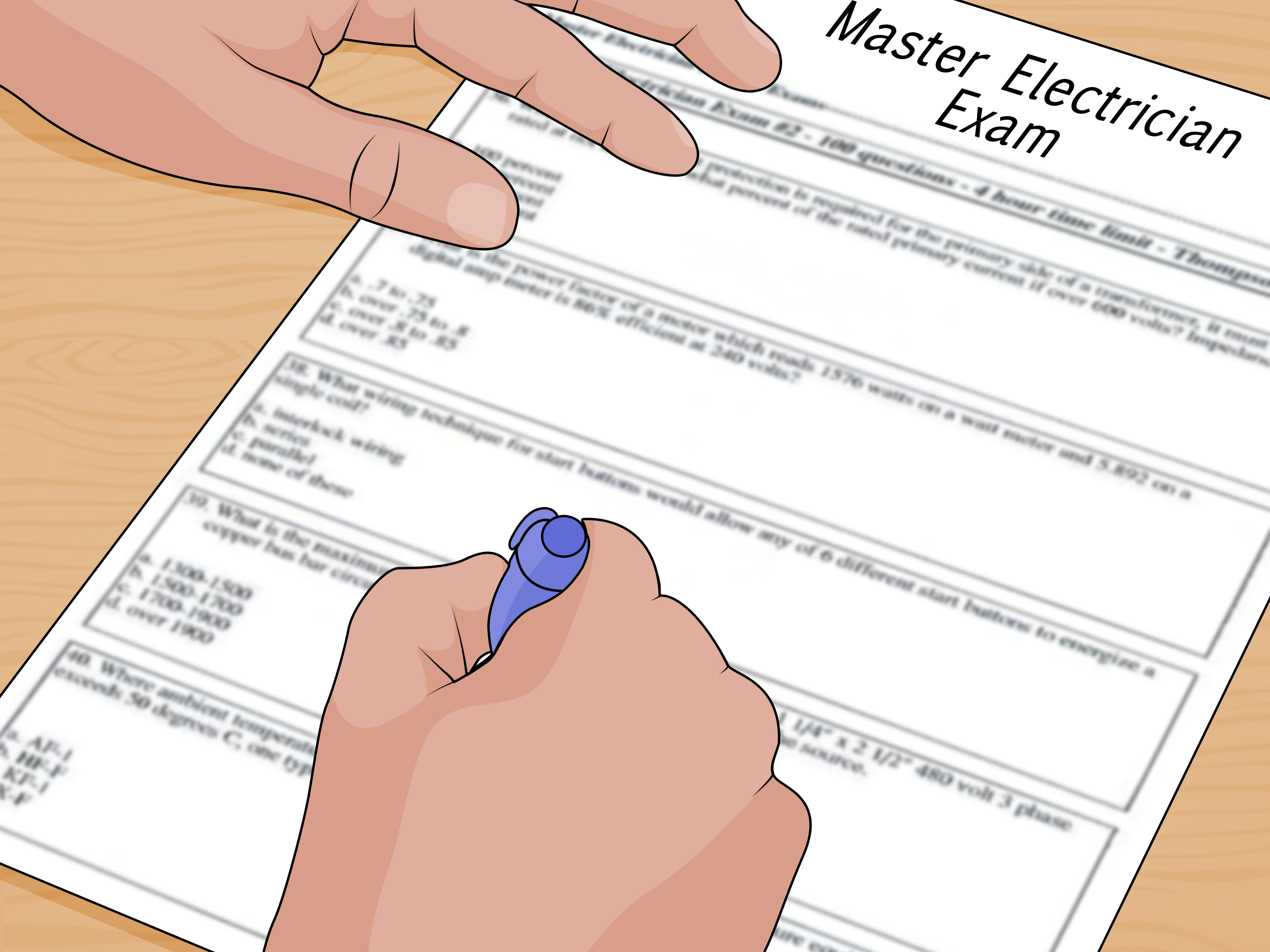
Once you meet the required experience and education rules, you can apply for the journeyman electrician exam or equivalent state certification test. Most exams are multiple choice and heavily based on electrical code, calculations, safety, theory, wiring methods, equipment, services, motors, grounding, overcurrent protection, and practical installation rules.
Some exams are open book, but that does not mean easy. Open book simply means the answer is somewhere in a large code book that may appear to have been organized by a committee of very serious owls. You need to know how to navigate the index, tables, chapters, definitions, and calculations quickly.
How to Study for the Exam
Start with the candidate bulletin from your testing provider or state board. It usually explains the number of questions, time limit, code edition, allowed references, fees, retake rules, and subject areas. Then practice code lookup daily. Use timed practice exams, learn common calculations, tab your code book if allowed, and review weak areas instead of rereading what you already know.
Good study topics include conductor sizing, box fill, conduit fill, voltage drop, services, feeders, branch circuits, motors, transformers, grounding electrodes, GFCI and AFCI protection, hazardous locations, and special occupancies. If calculations make you sweat, practice them until they become boring. Boring is good. Boring means you are ready.
Step 9: Get Licensed and Start Working as a Journeyman
After you pass the exam and meet all administrative requirements, you can receive your journeyman license, certificate, or journey-level credential. At that point, you may qualify for better pay, greater responsibility, and more job options. You may lead apprentices, run portions of jobs, troubleshoot systems, coordinate with inspectors, and work more independently.
Many electricians continue toward a master electrician license or electrical contractor license after gaining more experience. Others specialize in industrial controls, instrumentation, solar, EV charging, building automation, data centers, fire alarm systems, marine electrical work, or maintenance. The journeyman credential is not the end of the road; it is the point where the road finally gets more interesting.
How Much Can a Journeyman Electrician Earn?
Electrician pay varies by state, union status, industry, overtime, licensing level, and specialty. National labor data has shown electrician wages above the median for many occupations, and demand is expected to remain strong as the country adds new construction, upgrades aging infrastructure, expands renewable energy, and installs more electric vehicle charging equipment.
Apprentices usually start at a percentage of journeyman pay and receive scheduled raises as they complete hours and school years. Once licensed, many journeymen earn significantly more, especially in high-cost metro areas, industrial settings, government projects, and specialized sectors. Overtime can also make a large difference, though your knees may file a complaint after enough twelve-hour days.
Common Mistakes to Avoid
Choosing an Unrecognized Program
Before paying tuition or accepting a trainee role, confirm that the hours will count toward your state’s licensing requirements. A program can sound impressive and still fail to meet local rules.
Ignoring Safety
Electricity is unforgiving. Learn lockout/tagout procedures, PPE requirements, fall protection, ladder safety, and how to verify absence of voltage. The best electricians are not reckless heroes; they are professionals who go home with the same number of eyebrows they arrived with.
Failing to Learn the Code Early
Do not wait until exam season to open the NEC. Use it throughout your apprenticeship. Ask journeymen why a certain box size, conductor type, grounding method, or overcurrent device is required.
Not Building a Professional Reputation
Show up early, bring your tools, stay off your phone, ask smart questions, clean your work area, and take correction without drama. The electrical trade is smaller than it looks. Your reputation travels faster than a service call on Friday afternoon.
Real-World Experiences: What the Journey Feels Like
The path to becoming a journeyman electrician is not just a checklist of hours and exams. It is a collection of early mornings, sore shoulders, small victories, confusing code articles, and moments when something finally clicks. Many apprentices remember their first few months as a mix of excitement and humility. You may walk onto a jobsite thinking you know how electricity works, then spend the morning learning that carrying material efficiently is its own science.
One common early experience is learning how much planning happens before a single wire is pulled. A new apprentice may think the job is simply “install the outlet.” A journeyman sees the circuit layout, box fill, cable route, support requirements, device rating, panel schedule, inspection expectations, and future maintenance access. That difference in thinking is what apprenticeship teaches. You slowly stop seeing parts and start seeing systems.
Another major experience is making mistakes under supervision. Maybe you cut a piece of conduit too short, misread a measurement, grab the wrong size connector, or spend twenty minutes looking for a tool that is already in your pouch. These moments are frustrating, but they are also part of the trade. A good apprentice owns the mistake, fixes it, and remembers the lesson. A good journeyman corrects the mistake without turning the jobsite into a courtroom drama.
There is also the physical side. Electrical work can mean climbing ladders, crawling through attics, working in cold parking garages, standing in mechanical rooms, or bending conduit until your forearms ask for legal representation. But the work is rarely boring. One week might involve roughing in apartments; the next might involve troubleshooting a motor starter, installing LED lighting, or helping wire a commercial panel. That variety is one reason many electricians stay in the field for decades.
The classroom experience matters more than apprentices sometimes expect. After a long workday, sitting through electrical theory can feel like punishment invented by a very organized person. But then, on the job, the formulas and code tables begin to connect with real installations. Suddenly voltage drop is not just homework; it explains why a long run needs careful planning. Grounding and bonding stop being abstract terms and become safety systems that protect people and equipment.
The journeyman exam is often the final mental hurdle. Many candidates discover that knowing how to do the work is not exactly the same as knowing how to pass the test. The exam rewards code navigation, time management, and calm thinking. People who pass usually study consistently, practice with the correct code edition, and learn how to find answers instead of trying to memorize the entire book.
When the license finally arrives, the feeling is hard to beat. It represents thousands of hours of work, nights in class, early alarms, jobsite lessons, and the discipline to keep going. More importantly, it marks the beginning of a new level of responsibility. As a journeyman electrician, your work affects safety, productivity, comfort, and daily life. When the lights turn on, the equipment runs, and the inspector signs off, you get the quiet satisfaction of knowing you built something that works.
Conclusion
Becoming a journeyman electrician in the US takes time, discipline, and respect for the trade. The typical route includes a high school diploma or GED, an approved apprenticeship or trainee pathway, thousands of supervised work hours, classroom instruction, careful documentation, and a licensing exam. The exact requirements vary by state and locality, so always confirm the current rules where you plan to work.
If you enjoy hands-on problem-solving, steady learning, and work that combines brainpower with practical skill, the electrical trade can be a strong career choice. You will not become a journeyman overnight, but every hour on the job moves you closer to a credential that can support a lifetime of opportunity.
Note: Electrical licensing requirements change and may differ by state, county, or city. Always verify current rules with your state electrical board, labor department, apprenticeship agency, or local authority having jurisdiction before applying.