Some documentaries politely knock on the door of your brain. The best foreign documentaries of all time kick it open, rearrange the furniture, and leave you staring at the wall in the most meaningful way possible. From Soviet city symphonies and French essay films to Indonesian reckoning, Iranian resistance, Brazilian humanism, Cambodian memory, and Japanese observation, international documentary cinema has repeatedly proven that reality is not only stranger than fictionit often has better editing.
For this list, “foreign documentaries” refers mainly to non-U.S. documentaries or internationally produced nonfiction films that became essential viewing beyond their home countries. These are not ranked only by popularity. They were chosen for artistic influence, historical importance, emotional power, innovation, critical reputation, and that hard-to-measure quality known as “I need to text someone about this immediately.”
Whether you are building a serious film education, planning a documentary marathon, or pretending your weekend binge is “research,” these international documentaries deserve a permanent place on your watchlist.
Why Foreign Documentaries Matter
Great foreign documentaries give viewers access to lives, histories, languages, landscapes, and political realities that mainstream entertainment often simplifies or ignores. They also expand what a documentary can be. A documentary does not have to be a talking-head lecture with serious music and one man sadly staring through a window. It can be poetry, memory, animation, testimony, investigation, travel diary, protest, confession, or even a playful cinematic experiment.
The best international documentaries remind us that nonfiction filmmaking is not just about presenting facts. It is about shaping attention. What does the camera choose to notice? Who gets to speak? What is left unsaid? And why does a quiet shot of someone walking down a street sometimes hit harder than a blockbuster explosion?
The 25+ Best Foreign Documentaries of All Time
1. Man with a Movie Camera (Soviet Union, 1929)
Dziga Vertov’s Man with a Movie Camera is the grandparent of modern experimental documentary, and somehow it still feels younger than half the movies released last Friday. Without actors or a traditional plot, it captures urban life through dazzling editing, double exposure, slow motion, fast motion, and visual tricks that still make film students whisper, “Wait, they did that in 1929?” It is both a city portrait and a celebration of cinema itself.
2. Night and Fog (France, 1955)
Alain Resnais’ Night and Fog remains one of the most important documentaries about memory, history, and moral responsibility. Short but devastating, the film examines the aftermath of the Holocaust with a restrained voice that makes its impact even stronger. It is not easy viewing, but it is essential viewing, especially because it asks how societies rememberand how they sometimes try not to.
3. Chronicle of a Summer (France, 1961)
Directed by Jean Rouch and Edgar Morin, Chronicle of a Summer helped define cinéma vérité. Its famous opening questionwhether people are happysounds simple, almost suspiciously simple, like a friend texting “Can we talk?” But the answers reveal class, politics, work, alienation, race, and everyday anxiety in early 1960s Paris. It is a documentary about people, but also about the act of filming people.
4. Tokyo Olympiad (Japan, 1965)
Kon Ichikawa’s Tokyo Olympiad is not just a sports documentary; it is a meditation on bodies, effort, defeat, national pride, and tiny human gestures. Instead of treating the Olympics as a scoreboard, it finds poetry in preparation, exhaustion, and discipline. Even viewers who cannot tell a discus from a dinner plate can appreciate its visual elegance.
5. The Sorrow and the Pity (France, 1969)
Marcel Ophüls’ monumental documentary about France under Nazi occupation challenged comforting national myths and showed how memory can become politically convenient. Through interviews and historical material, the film examines collaboration, resistance, fear, and moral compromise. It remains a landmark in historical documentary because it refuses to let easy answers sit comfortably in the chair.
6. F for Fake (France/Iran, 1973)
Orson Welles’ F for Fake is technically a documentary, but it behaves like a magic trick wearing a tuxedo. It explores art forgery, authorship, fraud, celebrity, and the pleasure of being fooled. Welles gleefully blurs truth and performance, reminding viewers that documentaries are constructed worksnot raw reality delivered in a lunchbox.
7. Sans Soleil (France, 1983)
Chris Marker’s Sans Soleil is one of the greatest essay films ever made. Moving through Japan, Guinea-Bissau, Iceland, and other locations, it mixes travel, memory, technology, politics, and philosophical reflection. Explaining it too neatly almost feels rude. It is less a documentary you “understand” in the usual way and more one you absorb, revisit, and think about during random grocery-store moments years later.
8. Shoah (France, 1985)
Claude Lanzmann’s Shoah is one of cinema’s most significant works of testimony. Built from interviews with survivors, witnesses, and others connected to the Holocaust, it rejects easy summary and forces viewers to confront memory through spoken experience and present-day landscapes. Its length is part of its moral weight. It does not rush because history should not be rushed.
9. Hôtel Terminus: The Life and Times of Klaus Barbie (France, 1988)
Another major work by Marcel Ophüls, Hôtel Terminus investigates the life of Nazi official Klaus Barbie and the systems that protected him after World War II. The film is an example of documentary as historical excavation. It digs through politics, bureaucracy, denial, and accountability with the patience of someone who knows the truth rarely labels itself clearly.
10. Lessons of Darkness (Germany, 1992)
Werner Herzog’s Lessons of Darkness turns burning Kuwaiti oil fields after the Gulf War into an eerie, almost science-fiction vision of environmental destruction. Herzog’s style is controversial because he often favors existential mood over conventional reporting, but that is exactly why the film endures. It makes Earth look like a planet being explained to aliensand frankly, the aliens would have questions.
11. Microcosmos (France/Switzerland/Italy, 1996)
Microcosmos transforms insects and small creatures into epic screen presences. A beetle becomes a hero. A snail becomes strangely romantic. A raindrop becomes a disaster movie. The film’s close-up photography reveals a hidden world beneath our feet and proves that nature documentaries do not always need lions, sharks, or a narrator whispering like the forest has library rules.
12. Buena Vista Social Club (Germany/Cuba, 1999)
Wim Wenders’ Buena Vista Social Club helped bring a group of veteran Cuban musicians to global attention. Warm, musical, and deeply human, the film is about performance, memory, aging, friendship, and artistic rediscovery. It is the rare documentary that feels like opening a window and having music stroll in wearing a linen shirt.
13. The Gleaners and I (France, 2000)
Agnès Varda’s The Gleaners and I is a small miracle of curiosity. Starting with people who collect leftover food and discarded objects, Varda expands the topic into a reflection on waste, survival, art, aging, and her own creative process. It is playful, compassionate, and quietly radical. Varda could point a camera at a potato and make it philosophical.
14. Lost in La Mancha (United Kingdom, 2002)
Lost in La Mancha documents Terry Gilliam’s famously troubled attempt to make a Don Quixote film. What begins as a behind-the-scenes chronicle becomes a tragicomic study of ambition meeting weather, illness, budget problems, and the universe’s apparent sense of humor. It is one of the great documentaries about filmmaking because it proves movies are miracles held together with tape, caffeine, and denial.
15. Darwin’s Nightmare (Austria/France/Belgium, 2004)
Hubert Sauper’s Darwin’s Nightmare examines globalization, environmental disruption, and economic exploitation around Lake Victoria and the Nile perch industry. It is unsettling because it connects food, trade, poverty, and politics in ways that are difficult to unsee. The film’s power lies in showing how one industry can reveal an entire web of consequences.
16. Grizzly Man (Germany/United States, 2005)
Werner Herzog’s Grizzly Man is partly American in subject but deeply Herzogian in worldview. Using footage shot by Timothy Treadwell, who lived among Alaskan bears, Herzog reflects on nature, obsession, self-invention, and the dangerous human urge to narrate the wild as if it shares our emotional script. It is fascinating, disturbing, and occasionally darkly funny in the way only Herzog can manage.
17. Into Great Silence (Germany/France/Switzerland, 2005)
Philip Gröning’s Into Great Silence observes life inside the Grande Chartreuse monastery with almost no narration or music. It is slow cinema in the best sense: patient, attentive, and deeply immersive. If your phone has destroyed your attention span, this documentary may feel like a spiritual boot camp. Stay with it, and its quiet becomes powerful.
18. Waltz with Bashir (Israel, 2008)
Ari Folman’s animated documentary Waltz with Bashir explores memory, trauma, and war through striking visual storytelling. Its use of animation is not a gimmick; it becomes the film’s language for fragmented recollection. The result is one of the most inventive documentaries of the 21st century and a reminder that nonfiction does not always need live-action images to pursue truth.
19. Nostalgia for the Light (Chile/France/Germany, 2010)
Patricio Guzmán’s Nostalgia for the Light links astronomy in Chile’s Atacama Desert with the search for people disappeared under dictatorship. That sounds like an impossible pairing until the film makes it feel inevitable. It is about the cosmos, memory, grief, science, and the human need to searchwhether through telescopes or through sand.
20. Pina (Germany, 2011)
Wim Wenders’ Pina is a tribute to choreographer Pina Bausch and one of the most visually thrilling dance documentaries ever made. It captures movement not as decoration but as thought, emotion, and biography. Even if modern dance usually makes you panic and whisper, “Am I supposed to understand this?” Pina makes the body feel like a full vocabulary.
21. The Act of Killing (Denmark/Norway/United Kingdom, 2012)
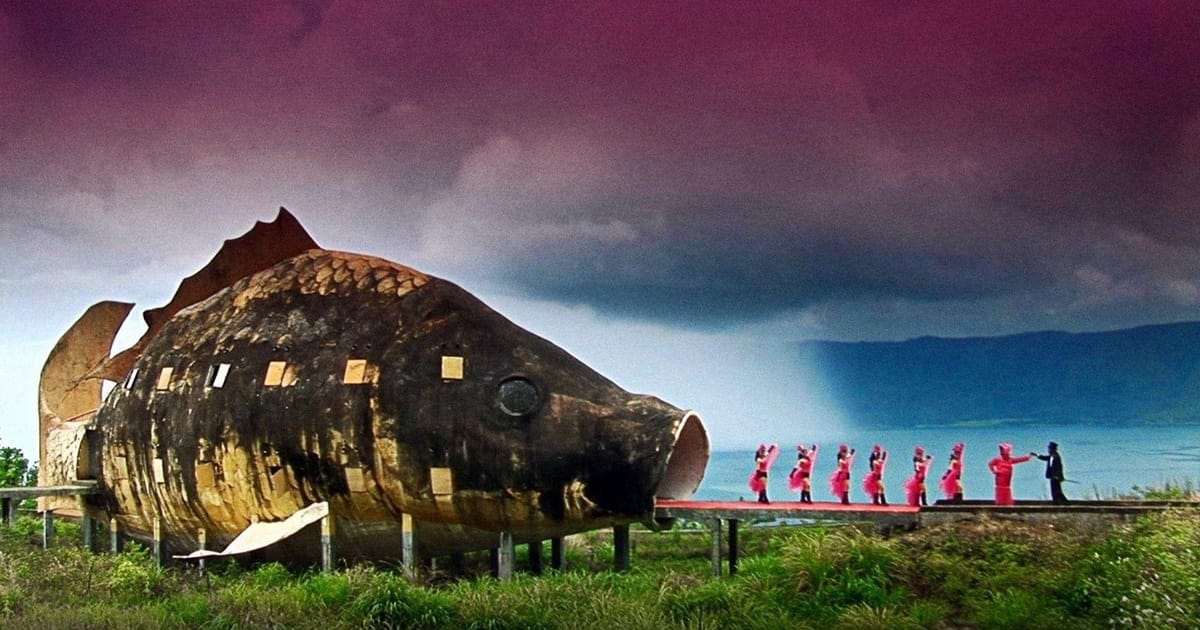
Joshua Oppenheimer’s The Act of Killing is one of the most disturbing and important documentaries of modern cinema. It asks former Indonesian death-squad figures to restage their past actions in the style of movie genres they admire. The result is a chilling study of power, denial, performance, and the stories people tell to live with themselves. It is not comfortable, but comfort was never the assignment.
22. Leviathan (France/United Kingdom/United States, 2012)
Leviathan, directed by Lucien Castaing-Taylor and Véréna Paravel, places viewers inside the sensory chaos of commercial fishing. Cameras are mounted in unexpected places, creating a storm of water, machinery, labor, and animal life. It is less a conventional documentary than an experienceone that may make you respect seafood and also sit very still for a while.
23. The Missing Picture (Cambodia/France, 2013)
Rithy Panh’s The Missing Picture uses clay figures, archival material, and narration to examine Cambodia under the Khmer Rouge. Its central idea is unforgettable: when historical images are missing, art can help represent what official records cannot. The film is intimate, inventive, and deeply moving without relying on spectacle.
24. The Look of Silence (Denmark/Indonesia/Norway/Finland/United Kingdom, 2014)
A companion to The Act of Killing, The Look of Silence follows an Indonesian optician as he confronts men connected to his family’s painful past. Where the earlier film is theatrical and nightmarish, this one is quiet, direct, and almost unbearably tense. Its power comes from faces, pauses, and questions that cannot be easily escaped.
25. Fire at Sea (Italy, 2016)
Gianfranco Rosi’s Fire at Sea observes life on the Italian island of Lampedusa during the Mediterranean migration crisis. Rather than turning the issue into a lecture, the film contrasts daily local life with the urgent human reality of migration. It is a patient, observational documentary that trusts viewers to make connections without being shouted at.
26. I Am Not Your Negro (France/United States, 2016)
Raoul Peck’s I Am Not Your Negro is an international production built around the words and unfinished work of James Baldwin. While its subject is American history, Peck’s perspective gives the film a sharp, global resonance. It is literary, political, cinematic, and painfully relevant, showing how documentary can turn archival material into living argument.
27. Faces Places (France, 2017)
Agnès Varda and artist JR travel through France creating large-scale portraits of everyday people in Faces Places. The film is charming, funny, and sneakily profound. It celebrates workers, villages, memory, friendship, and the joy of making art in public. It also proves that Varda remained cooler in her eighties than most people manage at any age.
28. Honeyland (North Macedonia, 2019)
Honeyland follows Hatidze Muratova, a beekeeper living in rural North Macedonia, and turns her life into a powerful story about balance, tradition, ecology, and greed. Beautifully shot and emotionally rich, the film became a rare documentary recognized across international and documentary award categories. Its lesson is simple but enormous: take half, leave half.
29. Collective (Romania, 2019)
Alexander Nanau’s Collective is a gripping Romanian documentary about journalism, corruption, public health, and accountability after a nightclub fire exposed wider institutional failures. It plays with the urgency of a political thriller, except the stakes are painfully real. It is one of the strongest recent examples of investigative documentary filmmaking.
30. All That Breathes (India/United Kingdom/United States, 2022)
Shaunak Sen’s All That Breathes follows two brothers in Delhi who care for injured black kites. On paper, that may sound like a quiet wildlife-rescue film. In practice, it becomes a layered portrait of pollution, urban life, family, politics, and compassion under pressure. It is beautifully observed and quietly astonishing.
What Makes These International Documentaries So Powerful?
They Expand the Definition of Truth
The greatest foreign documentaries do not simply dump information into your lap and leave. They shape reality through form. Sans Soleil uses the essay structure. Waltz with Bashir uses animation. The Missing Picture uses clay figures. Leviathan uses sensory immersion. Each film asks: what style can best approach this truth?
They Challenge National Myths
Many of these films examine how countries remember themselves. The Sorrow and the Pity, Shoah, The Act of Killing, The Look of Silence, and Collective all confront public narratives that are incomplete, convenient, or deliberately distorted. Their importance lies not only in what they reveal, but in their refusal to let silence do the talking.
They Make the Local Feel Universal
A beekeeper in North Macedonia, musicians in Cuba, monks in the French Alps, fishermen at sea, journalists in Romania, and bird rescuers in Delhi may seem worlds apart. Yet these documentaries connect through universal questions: How do people survive? What do we owe each other? What does memory demand? How do ordinary lives carry extraordinary meaning?
How to Watch Foreign Documentaries Like a Film Lover
First, do not treat subtitles like homework. Subtitles are not an obstacle; they are a passport. Second, give slower documentaries room to breathe. Some of the best international nonfiction films are not designed for distracted viewing while you scroll on your phone and argue with a delivery app. Third, read a little context before or after watching. You do not need a PhD, but knowing the historical background can transform a good viewing into a great one.
Finally, watch across styles. Pair an experimental classic like Man with a Movie Camera with an emotional modern film like Honeyland. Follow The Act of Killing with The Look of Silence. Watch The Gleaners and I when you need warmth, and Collective when you want to see journalism act like a flashlight in a very dark room.
Personal Viewing Experiences: What These Films Teach Us
Watching the best foreign documentaries of all time is not like checking titles off a prestige list. It is more like traveling without the airport security line, the lost luggage, or the tiny bag of pretzels that somehow counts as a meal. These films put you inside unfamiliar places and ask you to listen before judging. That alone is a valuable experience in a world where everyone seems to have an opinion before the opening credits finish.
One of the most powerful experiences comes from noticing how different cultures tell nonfiction stories. American documentaries often favor momentum, clear argument, and character-driven arcs. Many international documentaries are comfortable with ambiguity, silence, and poetic structure. A film like Into Great Silence may feel strange at first because it does not rush to explain itself. But after a while, the quiet becomes the point. You begin to notice footsteps, light, repeated rituals, and the discipline of attention. It is less like being told something and more like being invited to sit still long enough to discover it.
Another rewarding experience is realizing that documentaries can change your sense of scale. Microcosmos makes a meadow feel like an entire civilization. Nostalgia for the Light moves from stars to human loss without making either subject feel smaller. All That Breathes turns injured birds into symbols of urban survival without reducing them to symbols only. These films train the viewer to see connections: between ecology and politics, between personal memory and national history, between the smallest gesture and the largest question.
There is also a special kind of humility that comes from watching documentaries made outside your own cultural bubble. A film like Honeyland does not need to announce a giant environmental message every five minutes. It lets daily life reveal the message. A film like Buena Vista Social Club does not treat older musicians as nostalgic museum pieces. It lets them perform, joke, remember, and command the screen. These experiences remind us that documentary subjects are not “content.” They are people, and the camera has responsibilities.
Some foreign documentaries are emotionally difficult, especially those dealing with war, genocide, corruption, or political trauma. The key is to approach them with respect, not with the mindset of collecting shocking stories. Shoah, Night and Fog, The Missing Picture, and The Look of Silence are not films to watch casually between sitcom episodes. They require patience and reflection. But they also demonstrate why documentary cinema matters: it preserves testimony, challenges denial, and asks viewers to remember what power would often prefer to bury.
On a lighter note, some of these films are simply delightful to watch. Faces Places has the energy of a road trip with your coolest art teacher. The Gleaners and I makes discarded objects feel like secret treasures. Pina makes dance feel like language. These are reminders that serious cinema does not have to be joyless. A great documentary can be playful, funny, odd, tender, and still intellectually rich. In fact, the oddness is often where the truth sneaks in.
The best way to experience these documentaries is not to race through them. Choose one, learn a little about its context, watch it without multitasking, and give yourself time afterward. Some films will impress you immediately. Others may grow in your mind slowly, like a song you did not know you loved until you caught yourself humming it days later. That lingering effect is often the sign of a great documentary. It does not end when the screen goes dark; it keeps editing your thoughts afterward.
Conclusion
The 25+ best foreign documentaries of all time prove that nonfiction cinema is one of the richest forms of storytelling in the world. These films preserve history, question power, celebrate art, observe nature, examine memory, and reveal ordinary lives with extraordinary depth. From Man with a Movie Camera to All That Breathes, international documentaries have expanded the language of film and challenged audiences to look more carefully at reality.
If you are new to foreign documentaries, start with something accessible like Faces Places, Buena Vista Social Club, or Honeyland. If you want cinematic innovation, try Sans Soleil, F for Fake, or Leviathan. If you are ready for historically essential works, approach Shoah, Night and Fog, and The Act of Killing with attention and care. However you begin, the reward is the same: a bigger, deeper, stranger, more human view of the world.