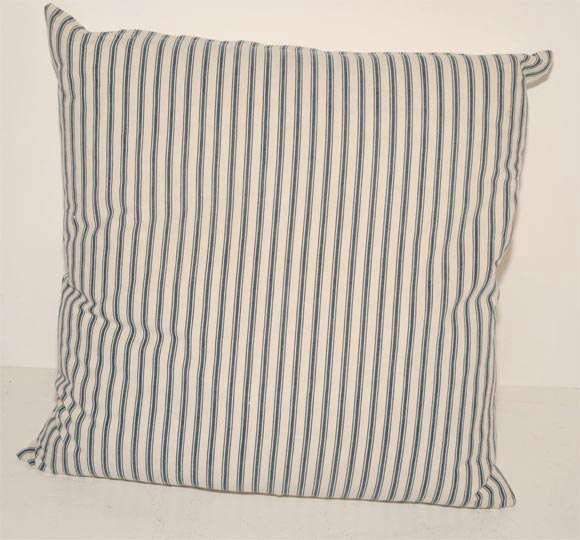
Note: This article discusses historically inspired blue and white ticking pillows as well as genuine antique textile pieces. A striped pillow may look delightfully old-fashioned withoue home accessories whisper. Others arrive wearing a tiny striped waistcoat and announce that they know how to make jam. Blue and white ticking pillows belong firmly in the second category. Their narrow stripes, sturdy-looking fabric, and unmistakable farmhouse charm can make a plain sofa feel collected, a guest bed feel welcoming, and a chair in the corner look as though it has been waiting patiently since 1894 for someone to read a novel in it.
The appeal of 19th century blue and white ticking pillows is not only visual. Ticking has real roots as a durable utility textile used for bedding and upholstery. The term traditionally refers to a strong linen or cotton fabric made for coverings such as mattresses and pillows, while early American textile records also connect bed ticking with practical household production. day, the phrase can describe three very different things: a genuine antique textile pillow, a pillow made from salvaged vintage ticking, or a newly made pillow inspired by 19th-century bedding fabrics. Knowing the difference helps you decorate with confidence, shop more intelligently, and avoid accidentally paying heirloom prices for something that met its first Tuesday last month.
Why Blue and White Ticking Has Such Staying Power
Ticking stripe is simple at first glance: slim colored lines repeat across a pale ground. Yet that little bit of structure gives a room rhythm without the visual volume of a giant floral or a loud geometric print. Blue and white is especially easy to live with because it can lean coastal, colonial, cottage, traditional, rustic, French country, or quietly tailored depending on the materials around it.
Historically, ticking was not invented to win a beauty contest. It was made to work hard. Dense woven fabric helped contain stuffing used in mattresses, bolsters, and pillows. In the 19th century, textile manufacturing and trade expanded dramatically in the United States, making household fabrics increasingly available through commercial production and dry-goods networks. at practical history is exactly why ticking still feels believable in modern interiors. It does not look overly precious. Even when used on decorative throw pillows, it carries a useful, grounded quality. A blue ticking lumbar pillow on a linen sofa says, “Yes, I am decorative, but I could also survive a small family reunion.”
The Power of a Narrow Stripe
A narrow stripe creates movement without making a room feel busy. Unlike wide cabana stripes, ticking stripe tends to read as texture from across the room. Up close, the pattern adds detail and a pleasantly tailored finish. That makes it useful in spaces where you want pattern but do not want your furniture to start behaving like a carnival tent.
Design publications regularly treat ticking stripes as flexible accents for beds, sofas, porches, and reading nooks. Blue-and-white striped pillows can support nautical, traditional, and relaxed country interiors, especially when they are mixed with solids, natural wood, woven baskets, or other soft patterns. hat “19th Century” Really Means When Shopping
The phrase 19th century ticking pillow can be wonderfully specific or frustratingly vague. Some sellers use it to describe authentic fabric from the 1800s. Others use it to describe a modern reproduction based on historic stripes. Neither option is automatically better; they simply serve different purposes.
A genuine 19th-century textile may show uneven fading, hand-sewn repairs, irregular weave, age-related discoloration, old stitch lines, or signs that it was once part of a mattress cover, bolster, grain sack, or household linen. It may also be fragile. A reproduction pillow, by contrast, offers the historic look with fewer worries about sunlight, washing, pet hair, and the mysterious force known as “someone set a coffee mug on it.”
Authentic Antique Ticking
Authentic antique ticking can be a remarkable decorative material, especially for collectors who appreciate visible history. It may have a softer hand, faded blue color, or slightly irregular stripe spacing that modern fabrics often imitate but rarely duplicate perfectly. However, antique textiles should be treated as old materials, not as indestructible props.
Museum conservation guidance emphasizes that historic fabrics can deteriorate from light exposure, dust, heat, strain, poor storage conditions, and frequent handling. Old textiles may appear sturdy while still being vulnerable at folds, seams, and weakened areas. intage and Reproduction Ticking Pillows
Vintage ticking often refers to fabric from the early-to-mid 20th century, although labels vary widely. Reproduction ticking is newly woven fabric designed to capture the look of old bedding textiles. For everyday decorating, a high-quality reproduction is often the practical winner. It gives you the charm of historic blue stripes while allowing you to fluff it, sit against it, move it to the porch, and generally let it participate in modern life.
The smartest approach is simple: buy authentic pieces when you want history, provenance, and display value. Buy vintage or reproduction pillows when you want comfort, repeat use, and a lower-stress relationship with laundry day.
How to Identify a Good Blue and White Ticking Pillow
A beautiful ticking pillow is more than a striped rectangle with confidence. Whether you are buying antique, vintage, handmade, or new, look at the details that affect both appearance and longevity.
1. Stripe Scale and Color
Traditional ticking usually has narrow stripes, often in navy, faded denim blue, slate blue, or soft indigo-like tones against white, ivory, cream, or natural cotton. A crisp navy stripe feels more formal and classic. A washed blue stripe feels relaxed and aged. Cream rather than bright white can make the pillow feel warmer and more historically inspired.
For an authentic-looking arrangement, avoid using every pillow in the exact same blue. Pair deep navy ticking with faded blue florals, pale chambray, white matelassé, or flax-colored linen. The slight variation keeps the room from looking like a striped uniform convention.
2. Fabric Weight and Texture
Good ticking should feel substantial enough to hold its shape but not so stiff that it behaves like a cardboard envelope. Cotton ticking is popular for its softness and washability. Linen-blend ticking has more texture and a relaxed, slightly rumpled quality. Heavy upholstery-grade ticking works well for lumbar pillows, bench cushions, and high-traffic rooms.
Pay attention to whether the stripe is woven into the fabric or printed on top. Yarn-dyed woven stripes usually offer more visual depth and tend to look more convincing in traditional interiors. Printed ticking can still be attractive, but it may feel flatter and more casual.
3. Construction Details
Small tailoring choices make a large difference. Self-piping, contrast piping, knife edges, envelope backs, hidden zippers, button closures, and hand-stitched seams all change the personality of a pillow. A knife-edge ticking pillow feels relaxed and classic. A piped pillow feels more polished. A simple envelope back feels informal and practical.
For decorative pillows, feather-and-down inserts create the soft, slightly slouchy look associated with layered traditional bedding. Polyester inserts are easier for allergy-sensitive households and can hold a more structured shape. The best choice depends on whether you want “English cottage weekend” or “tidy hotel pillow that refuses to wrinkle.”
How to Style 19th Century Blue and White Ticking Pillows
The greatest strength of blue and white ticking pillows is their adaptability. They can play a supporting role or become the pattern that quietly pulls a room together. The key is not to overdo them. Ticking looks effortless when it is used with intention and slightly ridiculous when every surface begins to resemble a very organized picnic blanket.
Create a Collected Cottage Look
For a cottage bedroom, layer ticking pillows with white quilts, floral pillowcases, soft linen sheets, painted wood furniture, and a vintage-inspired coverlet. Use one or two ticking shams behind smaller floral or embroidered pillows. The stripes provide structure while the softer patterns bring warmth and personality.
Try a pair of standard blue ticking shams against a white duvet, then add one long lumbar pillow in faded floral cotton. Finish with a folded quilt at the foot of the bed. The result feels old-fashioned without becoming theatrical.
Use Ticking in a Traditional Living Room
In a traditional living room, blue and white ticking pillows can soften darker furniture. Place two square ticking pillows on a leather sofa, then add one patterned lumbar pillow in a botanical, block-print, or small-scale check. The stripe adds order, while the other pattern keeps the arrangement from feeling too rehearsed.
Blue-and-white interiors work particularly well with warm wood tones, antique brass, aged oak, wicker, rattan, and cream upholstery. Better Homes & Gardens design guidance also notes that blue and white can move between traditional, coastal, modern, and hotel-inspired bedroom schemes when texture and accent colors are layered carefully. ive a Coastal Room More Character
Ticking stripe is a natural choice for coastal decorating because it suggests nautical fabric without shouting “ahoy” from the rooftops. Use it with weathered wood, white-painted furniture, natural jute, woven shades, and soft sea-glass tones. A navy ticking pillow can ground pale blue walls, while a faded blue stripe can keep a beach room from feeling overly themed.
For a more sophisticated coastal look, mix ticking with solid navy, warm sand-colored linen, and one small botanical or coral-colored accent. The room will feel fresh and collected rather than like a souvenir shop near a lighthouse.
Modern Farmhouse Without the Clichés
Blue ticking can also refresh a modern farmhouse room, especially when the surrounding palette is restrained. Use it with matte black accents, warm white walls, natural oak, and a few handmade ceramics. Skip the avalanche of signs telling everyone to “Gather,” “Breathe,” or “Eat.” The pillows are doing enough emotional labor already.
Where to Use Blue and White Ticking Beyond the Bed
Ticking pillows are not limited to bedrooms. In fact, their best work often happens in the spaces where people actually gather.
- Entry bench: Add a small lumbar pillow to make a hard bench feel more welcoming.
- Reading chair: Use a ticking lumbar pillow with a wool throw and a small side table.
- Window seat: Mix striped pillows with solids and one floral accent for a cozy built-in nook.
- Covered porch: Choose washable ticking fabric for a relaxed, tailored outdoor-inspired look.
- Guest room: Use ticking shams to create a polished bed without relying on overly formal bedding.
- Kitchen banquette: Add a durable ticking cushion or bolster for a touch of old-house character.
Because ticking stripes mix easily with solids and other patterns, they are especially useful for homeowners who want seasonal flexibility. You can pair blue ticking with yellow in spring, red in summer, rust in fall, or evergreen and cream in winter without replacing the entire room. That is the decorative equivalent of owning one excellent coat.
Caring for Antique, Vintage, and Reproduction Ticking
Care depends on the age and condition of the fabric. For a genuine antique pillow or antique ticking cover, avoid tossing it into a washing machine simply because it looks tough. Historic cotton and linen can weaken with age, and old dyes may bleed or fade. Vacuum lightly through a screen, keep the textile away from strong sunlight, and consider professional textile conservation advice for valuable pieces.
If a historic fabric has a stain, resist aggressive home chemistry. Smithsonian conservation guidance warns that stain removal can harm fabric and that old stains become more difficult to treat as they age. r modern reproduction ticking pillows, check the care label first. Many cotton covers can be machine-washed on a gentle cycle in cold water, then air-dried or tumble-dried on low. Wash dark blue stripes separately the first few times to reduce the risk of dye transfer. Use mild detergent, avoid bleach, and do not iron directly over piping or decorative trim unless you enjoy turning a pillow into a minor engineering project.
How to Shop Without Getting Fooled by “Antique” Labels
When a listing says “19th century blue and white ticking pillow,” ask a few practical questions before buying:
- Is the fabric truly from the 1800s, or is it a reproduction inspired by that period?
- Was the pillow made recently from antique fabric?
- Are both sides made from the same textile?
- Are there repairs, fading, stains, weak seams, or fabric thinning?
- Is the insert included, and can the cover be removed?
- Does the seller provide provenance, approximate age, or close-up photos?
Provenance matters most when you are paying collector prices. A pillow made from a fragment of old ticking may be charming and valuable, but it is not the same as an untouched 19th-century household pillow. There is nothing wrong with either one; they simply belong in different categories.
DIY Ideas for a Historically Inspired Ticking Pillow
Making your own blue and white ticking pillow is one of the easiest ways to bring this look home. Choose a medium-weight cotton or linen-blend fabric, cut two panels slightly larger than your insert, and sew a hidden zipper or envelope closure. Keep the stripe direction consistent across the front and back. Horizontal stripes make a pillow appear wider, while vertical stripes can look more tailored and elongate a lumbar shape.
For a more historic-inspired finish, use self-piping in the same ticking fabric or add a narrow natural linen flange. Pair the finished pillow with a down insert one size larger than the cover for a fuller shape. The result will look intentionally cozy rather than like it was rescued from a clearance bin at 9:47 p.m.
The Experience of Living With 19th Century Blue and White Ticking Pillows
Living with blue and white ticking pillows is less about owning a piece of décor and more about creating a mood. They make a room feel settled. Not perfect, not precious, not arranged with military precision, but comfortably lived in. A striped ticking pillow has a way of making a sofa look like it belongs to people who read books, bake occasionally, and own at least one basket for blankets that is never actually empty.
The first thing most people notice is the calm. Blue and white does not demand attention in the way bright colors can. It creates contrast, but the contrast is gentle. In the morning, when sunlight comes through a window, the white ground of the fabric catches the light while the blue stripes provide just enough definition to keep the pillow from disappearing into pale bedding. At night, under a lamp, the pattern feels softer and more intimate.
On a bed, ticking pillows create an inviting sense of order. They look especially good when the rest of the bedding is slightly rumpled. Crisp stripes beside relaxed linen sheets create a balance that feels both neat and human. The bed looks styled, but not as though it has been waiting for a real-estate photographer to arrive. This is an important distinction. A home should be beautiful, but it should also allow someone to sit down without filling out a permission slip.
In a living room, the experience is a little different. Ticking pillows make upholstered furniture feel friendlier. A velvet sofa can become less formal with one striped lumbar pillow. A neutral slipcovered sofa can gain personality without becoming busy. Even a plain armchair can look more intentional when dressed with a small blue ticking cushion and a soft throw. The pillow does not need to dominate the room; it simply gives the room a pulse.
There is also something emotionally satisfying about the historic suggestion behind ticking fabric. Even a modern reproduction hints at practical household textiles, old beds, handmade repairs, and rooms that were designed for real daily life. It brings a sense of continuity to newer homes. In a recently built house, blue and white ticking can soften sharp finishes, add visual age, and make a blank room feel as though it has a story already underway.
The best part is that ticking pillows are forgiving. They do not demand a matching suite of furniture. They look good with antique wood, painted furniture, rattan, iron beds, leather chairs, white sofas, floral quilts, and simple cotton blankets. They can be paired with polished brass or chipped pottery. They can lean elegant or humble. Few fabrics are so willing to mingle without becoming the center of attention.
Of course, they are not magic. A blue ticking pillow cannot organize your entryway, fold the laundry, or explain why there are three mysterious charging cables on the kitchen counter. But it can make the chair beside that clutter look much better. And sometimes, that is how a room begins to feel like home: one useful, beautiful, slightly old-fashioned detail at a time.
Final Thoughts
19th century blue and white ticking pillows bring together utility, history, and easygoing beauty. Whether you invest in antique fabric, choose a vintage-inspired cover, or sew your own reproduction, the appeal lies in their quiet confidence. These striped pillows work because they do not try too hard. They add pattern, texture, and a sense of lived-in character while leaving plenty of room for your home to tell its own story.