If your patio turns into a frying pan by noon, you are not alone. A beautiful outdoor space is only useful when people can actually sit in it without squinting, sweating, and sprinting back indoors for mercy. The good news? You do not need a full backyard renovation to create cooler, more comfortable shade. Sometimes the fix is as simple as a better umbrella. Other times, it is a clever combination of pergola, fabric, plants, and movable screens.
This guide covers 30 patio shade ideas for different budgets, layouts, and stylesfrom quick weekend upgrades to more permanent structures. You will also find practical planning tips, common mistakes to avoid, and real-world outdoor living experiences at the end so your shade plan looks good and works in everyday life.
How to Choose the Right Patio Shade Solution First
Before you buy anything, think like a sun detective. Watch your patio for a day and note when the sunlight becomes uncomfortable. Is the problem a blazing west-facing afternoon? Morning glare? Windy conditions that make lightweight canopies flap like a dramatic movie cape?
Use these questions to narrow your options:
- Temporary or permanent? Umbrellas and pop-up canopies are flexible. Pergolas, pavilions, and roof extensions are longer-term.
- Sun only, or sun + rain? Slatted structures filter light, while solid roofs and some awnings offer better rain coverage.
- Wind exposure? Breezy patios often need heavier bases, stronger anchors, and vented designs.
- Small patio or large backyard zone? A compact bistro corner needs different coverage than a full dining-and-lounge setup.
- Style goals? Modern, coastal, farmhouse, boho, resort, and minimalist looks all influence material choices.
Pro tip: the best outdoor shade solutions are often layered. One structure handles broad coverage, and a second element (curtain, umbrella, screen, vine, or side shade) fine-tunes comfort when the sun shifts.
30 Patio Shade Ideas to Maximize Your Outdoor Space
-
1. Classic Market Umbrella for Fast, Flexible Shade
A market umbrella is the easiest way to add shade to a patio table or conversation set. Choose one with tilt functionality so you can block changing sun angles instead of moving your chair every 20 minutes like a confused sunflower.
-
2. Cantilever Umbrella for Lounge Areas
Cantilever umbrellas keep the pole off to the side, which gives you more usable space underneath. They work especially well over sectional seating, chaise lounges, and conversation pits where a center pole would be in the way.
-
3. Double-Sided Umbrella for Long Dining Setups
If you have a long rectangular table, a double-sided umbrella can cover more width than a standard round canopy. It is a smart solution for larger families or patios that host regular weekend dinners.
-
4. Vented Umbrella for Breezier Patios
Vented canopies help air move through the umbrella and can improve stability in light wind. This style is practical and comfortable because it shades the area without feeling stuffy underneath.
-
5. Wall-Mounted Retractable Awning
A retractable awning gives you shade when you want it and sunlight when you do not. It is great for patios connected to the house, and it can instantly make outdoor dining feel like an extension of the kitchen or family room.
-
6. Motorized Awning with Wind Sensor
For convenience and extra peace of mind, upgrade to a motorized awning and add a wind sensor. If weather changes while you are inside refilling lemonade, the system can automatically retract the awning to reduce storm risk.
-
7. Fixed Awning Over a Small Patio Door Zone
A fixed awning is ideal if you want consistent coverage over a compact patio, grill station, or back entry. It also helps shade doors and windows, which can make adjacent indoor spaces more comfortable.
-
8. Shade Sail Between House and Posts
A shade sail patio setup creates a modern, airy look with strong visual impact. Use it to cover a seating area, dining zone, or even a hot corner that gets brutal afternoon sun.
-
9. Layered Shade Sails for Large Coverage
Instead of one oversized sail, use two or three overlapping sails at different heights. This adds dimension, improves coverage, and creates a designer look that feels intentional rather than improvised.
-
10. Triangular Sail for Awkward Corners
Triangular sails are excellent for odd-shaped patios, side yards, or narrow lounge spots. They can soften hard lines and provide targeted coverage without visually overwhelming a small outdoor space.
-
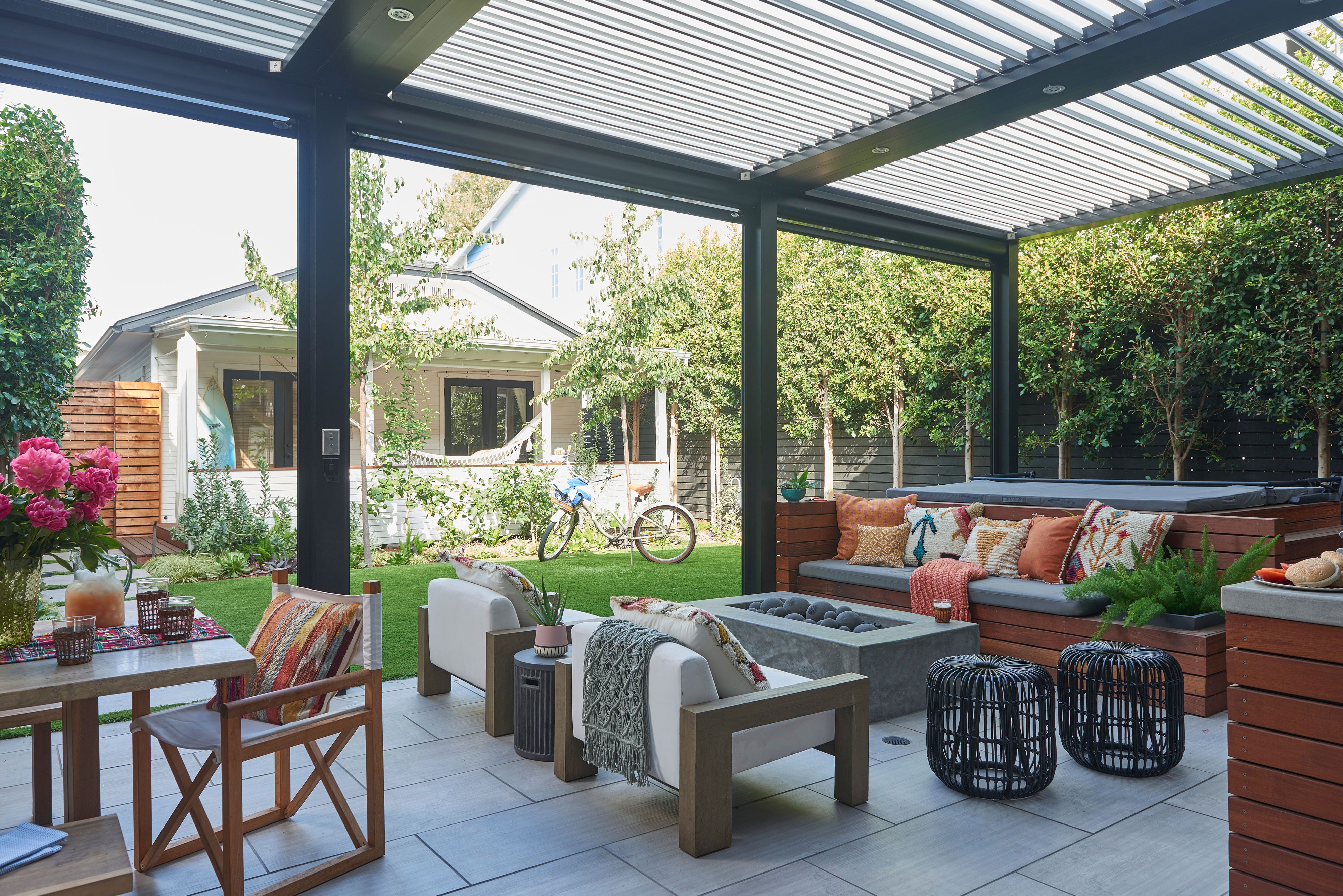
11. Pergola with Open Slat Roof
A pergola provides structure, style, and partial shade. Slats filter sunlight beautifully, which makes it a favorite for people who want a bright, breezy pationot a fully dark space.
-
12. Pergola with Retractable Fabric Canopy
If you love the look of a pergola but need adjustable coverage, add a retractable canopy beneath the beams. This setup lets you switch between sun and shade depending on weather and mood.
-
13. Pergola + Outdoor Curtains
Outdoor curtains create side shade for low-angle sun and add privacy at the same time. They are especially helpful on west-facing patios where overhead shade alone does not solve the late-afternoon glare problem.
-
14. Pergola with Climbing Vines
Train vines like grapevine, wisteria, or other suitable climbers over a pergola for living shade. It takes patience, but the result feels lush, cool, and a little bit like a vacation rental you accidentally fall in love with.
-
15. Pergola with Reed or Bamboo Mats
Add reed mats or bamboo panels on top of a pergola for a casual, resort-inspired look. This is a good middle ground when you want more shade than open slats but a softer look than a solid roof.
-
16. Freestanding Gazebo for Full-Coverage Shade
A gazebo works well when your patio is farther from the house or when you want a defined “outdoor room.” It can cover dining, lounging, or hot tub areas and usually offers stronger rain protection than a pergola.
-
17. Pavilion-Style Roof for a Permanent Backyard Hub
If you want a long-term investment, a pavilion creates reliable shade and strong architectural presence. It is ideal for outdoor kitchens, large seating areas, or patios used often throughout spring, summer, and fall.
-
18. Covered Patio Roof Extension
Extending the roofline from your home creates seamless coverage and a polished look. This option often boosts comfort and usability the most because it shades a wide area consistently and feels integrated with the house.
-
19. Polycarbonate Patio Cover for Light + Protection
Polycarbonate panels can block harsh sun while still allowing filtered daylight. This works well if you want to brighten the patio without fully darkening it, especially near doors or windows.
-
20. Slatted Wood Roof for Partial Shade and Style
A slatted wood roof creates striped light patterns and a warm architectural feel. It is a strong choice for modern, rustic, or Mediterranean-inspired patios and pairs beautifully with outdoor kitchens.
-
21. Outdoor Canopy Daybed or Cabana Corner
Create a resort-style retreat with a daybed, canopy lounger, or small cabana structure. This is more about comfort zoning than whole-patio coverage, but it can completely change how often you use the space.
-
22. Pop-Up Canopy for Seasonal or Event Shade
Pop-up canopies are not the prettiest option, but they are incredibly useful for parties, kids’ activities, and temporary summer shade. Dress one up with string lights, side panels, or outdoor rugs for a quick transformation.
-
23. Shade Screen Panels on One Side
Vertical shade screens help block low sun, heat, and neighbor sightlines. Use them on the side that gets the strongest afternoon sun, then pair with an umbrella or pergola overhead for layered comfort.
-
24. Roll-Down Exterior Shades on a Covered Patio
If you already have a roof or pergola, add roll-down shades to control glare and heat. They are especially useful for patios that face the sunset or get reflected light from nearby walls or windows.
-
25. Privacy Trellis with Climbing Plants
A trellis does double duty: visual privacy and filtered shade once plants fill in. It works best as a side shade strategy and is a smart way to soften hardscaping without taking up much floor space.
-
26. Shade Trees Near the Patio
Planting trees is the long game, but it pays off. Deciduous shade trees can cool the patio in summer while allowing more sunlight in cooler months, depending on placement and species.
-
27. Pergola + Umbrella Combo for Shiftable Coverage
One structure does not have to do all the work. Pair a pergola for baseline shade with an umbrella for targeted protection over a favorite chair, dining spot, or play area when the sun moves.
-
28. Outdoor Curtains Around a Covered Porch Patio
Soft curtains on a porch or covered patio make the space feel finished and cozy while reducing side glare. Choose weather-friendly fabrics and tiebacks so you can open everything up on breezy mornings.
-
29. Woven or Textile Roof Inserts for a Designer Look
Woven panels, outdoor fabric inserts, or decorative textile shade treatments add texture and a custom feel. This is a great design-forward option when you want your patio shade to look intentional, not purely functional.
-
30. Multi-Zone Shade Plan for the Entire Outdoor Space
The best answer for many homes is not one productit is a plan. Use a permanent cover over dining, a movable umbrella in the lounge, and landscaping or screens for edge protection to maximize the entire patio.
Smart Patio Shade Planning Tips (So You Do It Once, Not Three Times)
- Follow the sun path: West-facing patios usually need stronger late-day protection than north-facing areas.
- Prioritize anchor strength: Shade sails and mounted covers need solid attachment points, not wishful thinking and two screws.
- Plan for drainage: Some covers shed water; others can pool if installed incorrectly.
- Respect wind: Use heavy bases, vented canopies, and manufacturer guidance for installation and operation.
- Check local rules: Permanent patio covers, pergolas, and roof extensions may require permits or HOA approval.
- Think maintenance: Fabric, wood, and plant-based shade all look amazingif you are willing to clean, trim, and maintain them.
Common Mistakes to Avoid
Buying shade before measuring. This is how people end up with a gorgeous umbrella that shades exactly one coaster. Measure the furniture footprint and the area you want protected.
Ignoring side sun. Overhead coverage helps, but low-angle sun can still roast your patio from the side. Curtains, screens, or a second layer often solve the real problem.
Choosing looks over function. Yes, that fringe umbrella is cute. But if your patio is windy, a sturdier model with tilt and a proper base may save your sanity.
Patio Shade Experiences and Real-Life Lessons (Extra Practical Notes)
One of the biggest surprises homeowners mention after adding shade is how dramatically it changes when they use the patio. Before shade, the space may look great in photos but sit empty from late morning through early evening. After installing even a simple umbrella or sail, the patio suddenly becomes the default place for coffee, lunch, homework, or winding down after work. In other words, shade does not just improve comfortit increases the actual return on your outdoor furniture investment.
A common first experience is the “umbrella honeymoon.” People buy a standard umbrella, love the instant relief, and then realize the sun keeps moving while the shade does not. That is usually when tilt features, cantilever designs, or a second shade element become important. The lesson: a good patio shade setup is often a system, not a single object. If your patio is used across several hours of the day, expect to combine overhead and side protection.
Another real-world lesson comes from patios in windy neighborhoods. A lightweight umbrella or loosely installed canopy may work beautifully on calm mornings but become a problem in the afternoon. Homeowners often report that once they upgraded to a heavier base, vented canopy, or sturdier mounting hardware, the space became much more usable and less stressful. Nobody wants to eat dinner while keeping one eye on a wobbling umbrella like it is about to audition for a disaster movie.
For families, shade also changes how long kids will play outside. A small covered zone near the patiousing a pergola corner, umbrella, or sailcan create a cooler spot for crafts, snacks, and breaks. Parents often end up spending more time outdoors too, because they are not forced to rotate everyone indoors every time the sun gets intense. Even a modest shade upgrade can make summer routines feel smoother.
Gardeners and design lovers tend to discover that shade creates better “rooms” in the yard. A pergola or gazebo naturally defines a destination, and adding curtains, plants, or lighting makes it feel intentional. What starts as a heat-control solution often becomes a design anchor for the entire backyard. Many people say their patio finally feels finished only after shade is added, because the overhead element visually ties furniture, planters, and flooring together.
The long-term experience with living shade (trees and vines) is especially rewarding, but it requires patience. Early on, the structure may provide most of the protection while plants are still filling in. Over time, the space becomes cooler, greener, and softer-looking. The tradeoff is maintenancetrimming, cleaning leaves, and sometimes adjusting furniture placement as growth changes the light pattern. Still, for many homeowners, this is the shade solution that feels the most personal and beautiful once established.
Finally, the most successful patio shade projects usually happen when homeowners accept that comfort is seasonal and adjustable. The ideal setup in July may not be the ideal setup in October. Retractable canopies, movable umbrellas, tie-back curtains, and layered shade let you adapt instead of committing to one fixed condition year-round. That flexibility is often what turns an outdoor space from “nice to look at” into “where we actually spend time.”
Conclusion
The best patio shade ideas do more than block sunlightthey make your outdoor space more livable, more attractive, and far more useful. Whether you choose a simple umbrella, a sleek shade sail, a vine-covered pergola, or a fully covered patio roof, the key is matching the solution to your sun exposure, wind conditions, and how you actually use the space. Start with the hottest zone first, layer where needed, and build a setup that keeps your patio comfortable from coffee hour to dinner.