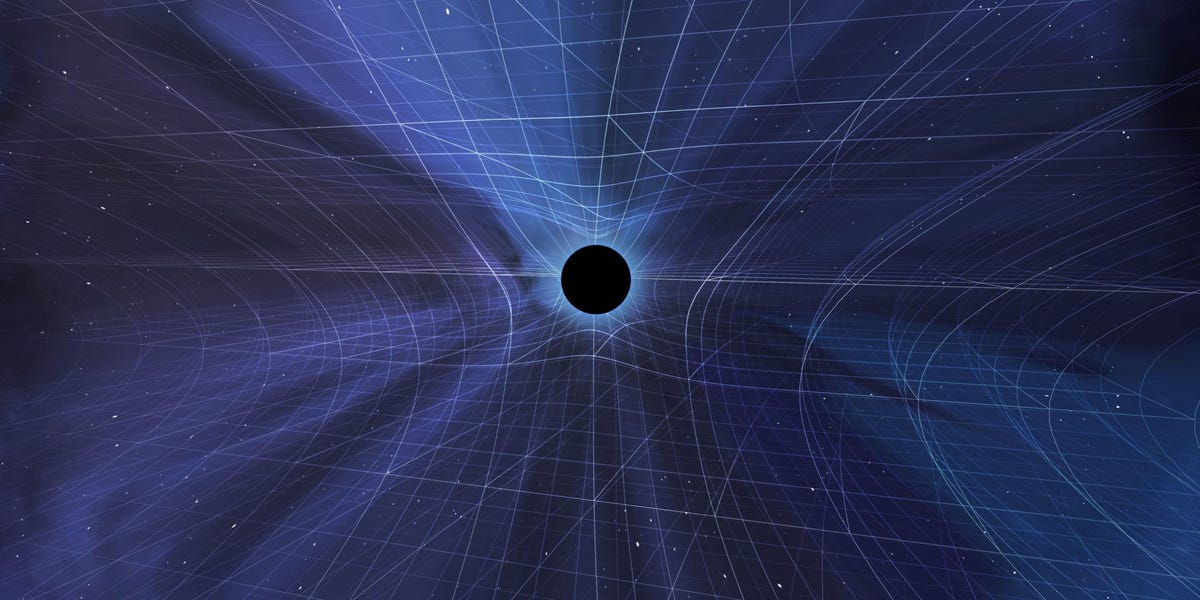
Nothing sounds simple. It is the empty chair, the blank page, the awkward pause after someone says, “Let’s all go around the room and introduce ourselves.” But the moment we ask what nothing really means, the word begins misbehaving like a cat in a physics lab. Is nothing empty space? Is it the absence of matter? Is it the absence of space itself? Can nothing have energy? Can it change? Can it be measured? And, most suspiciously, can it somehow be the birthplace of everything?
The short answer is that “nothing” is not one thing. In philosophy, nothingness is a logical and metaphysical puzzle. In physics, a vacuum is not simply empty; it is a state with fields, laws, structure, and measurable effects. In cosmology, the question “Why is there something rather than nothing?” becomes even stranger, because the universe includes space and time themselves. Asking what came “before” the universe may be like asking what is north of the North Pole: grammatically tidy, but physically slippery.
So let’s unpack the cosmic empty box. Bring a flashlight. Not because there is anything in there, of course. Except, as it turns out, possibly everything.
What Do We Mean by “Nothing”?
In everyday life, “nothing” usually means “nothing useful to me right now.” A refrigerator with only mustard and one suspicious lemon is “empty.” A room with air, light, Wi-Fi signals, dust, and your neighbor’s bass line is “empty.” A bank account with three dollars is not technically nothing, but emotionally it may qualify.
Science has to be pickier. A physicist may call a container “empty” if it contains no ordinary matter. But even a near-perfect vacuum still has space, time, quantum fields, radiation, gravity, and physical laws. That is not absolute nothingness. It is more like a stage after the actors have left, while the lights, floorboards, insurance policy, and fire code remain.
Three Common Versions of Nothing
To avoid turning the word into cosmic soup, it helps to separate three meanings:
- Everyday nothing: no visible object, no obvious substance, no practical content.
- Physical vacuum: space with no particles of matter, but still containing fields, energy, and laws.
- Absolute nothingness: no matter, no energy, no space, no time, no laws, no possibilities, no “place” for anything to happen.
Most scientific discussions of “nothing” are really about the second kind: the physical vacuum. That vacuum is fascinating, but it is not absolute nothing. It is the universe wearing minimalist clothing.
The Vacuum Is Not Empty
Modern physics replaced the old picture of empty space with something far more interesting. In quantum field theory, the universe is filled with fields. Electrons are excitations of an electron field. Photons are excitations of the electromagnetic field. Other particles belong to other fields. Remove the particles, and the fields remain.
This means the “empty” vacuum is not a dead blank. It is the lowest-energy state of these fields. Lowest does not mean zero in the ordinary sense. Quantum mechanics does not allow nature to sit perfectly still like a disciplined statue. Fields fluctuate. Energy jitters. The vacuum has structure.
That sounds like science trying to sneak something into nothing through the back door. Fair accusation. But this is not wordplay. Vacuum effects can show up in real experiments, such as the Casimir effect, where two very close conducting plates experience a tiny force related to the quantum behavior of empty space. Empty space, apparently, can push. That is rude, but impressive.
Quantum Fluctuations: The Universe Fidgets
Quantum fluctuations are often described as particles popping in and out of existence. This image is popular because it is vivid. It is also a little dangerous, because it can make the vacuum sound like a popcorn machine. A more careful explanation is that quantum fields have unavoidable fluctuations even in their lowest-energy state.
These fluctuations do not mean you can get free energy from nothing, build a cosmic vending machine, and retire early. Physics remains annoyingly strict about conservation laws. Still, the quantum vacuum is not passive. It is a restless foundation beneath what we call matter.
In this sense, “nothing” is less like an empty warehouse and more like a quiet ocean. Stand far away, and it looks flat. Look closely, and it is moving everywhere.
Does Nothing Have Energy?
One of the most mind-bending ideas in physics is vacuum energy. If quantum fields exist throughout space, and if their lowest-energy states are not simply zero, then empty space may carry energy of its own. This idea connects to one of the biggest mysteries in cosmology: dark energy.
Dark energy is the name given to whatever is causing the expansion of the universe to accelerate. One possible explanation is that space itself has a tiny, persistent energy density. Einstein’s cosmological constant is one mathematical way to describe such an effect. The basic idea is simple enough to fit in a sentence and strange enough to keep physicists awake: empty space may help drive the universe apart.
But there is a famous problem. When physicists estimate vacuum energy using quantum theory, the expected value can be wildly larger than the observed dark energy. Not slightly off, like forgetting to carry the one. More like ordering one cup of coffee and receiving the Pacific Ocean. This mismatch is known as the cosmological constant problem, and it remains one of the great unsolved puzzles in modern physics.
Nothing Before the Big Bang?
Many people ask: If the universe began with the Big Bang, what existed before it? The question feels natural because our brains live inside time. We expect every event to have an earlier event, like episodes in a streaming series that refuses to end.
But the Big Bang is not best understood as an explosion in pre-existing empty space. It is the expansion of space itself from an extremely hot, dense early state. Space, time, matter, and energy are all part of the story. If time itself is tied to the universe, then asking what happened “before” time may not make sense in the usual way.
This does not mean scientists know everything about the beginning. They do not. The earliest moments of the universe push against the limits of current theories, especially where general relativity and quantum mechanics must both matter. The honest answer is not “nothing exploded.” It is: our best-tested models describe the universe evolving from an early hot, dense state, while the ultimate origin remains an open question.
Why Is There Something Rather Than Nothing?
This is the heavyweight champion of strange questions. Philosophers, theologians, physicists, and late-night dorm-room snack philosophers have all wrestled with it. Why is there a universe at all? Why not absolute nothingness?
Some physicists argue that quantum cosmology may explain how a universe could arise from a vacuum-like state. Others point out that a quantum vacuum is already something: it has laws, fields, mathematical structure, and possibility. Philosophers often press the question further: why those laws? Why that structure? Why any possibility at all?
There may not be a final answer that satisfies everyone. Science is extremely powerful at explaining how one physical state evolves into another. It is less clear that science can explain absolute non-being, because absolute non-being offers no space, time, laws, data, or experimental handle. You cannot put pure nothingness in a lab, although some meetings come close.
Nothing in Philosophy: A Very Crowded Empty Room
Philosophers have long noticed that “nothing” is a tricky word. When we say “nothing is in the box,” we do not mean there is a mysterious object called Nothing sitting inside the box with excellent camouflage. We mean there is not anything in the box.
That sounds obvious until we start treating nothingness like a thing. Can nothing exist? If it exists, is it still nothing? If nothing does not exist, why do we keep talking about it? Language lets us turn absence into a noun, and then the noun starts causing trouble.
One classic philosophical challenge is that absolute nothingness may be impossible to describe without smuggling in something. The moment we imagine nothing, we often imagine darkness, emptiness, silence, or space. But darkness is not nothing; it is a visual condition. Silence is not nothing; it is the absence of sound in a context where sound could exist. Empty space is not nothing; it is space.
Nothing in Mathematics: Zero Is Powerful, Not Empty
Zero is one of humanity’s greatest intellectual inventions. It allows place-value notation, algebra, calculus, computing, accounting, and the emotional devastation of checking a phone battery at 0%. But zero is not the same as philosophical nothingness.
In mathematics, zero is a number with defined relationships. It can be added, subtracted, multiplied, represented, and used in equations. It is a symbol inside a system. That makes it incredibly useful, but it is not absolute nothing. Zero is something our minds and mathematical systems use to describe absence, balance, or quantity.
This distinction matters because people sometimes slide from “zero” to “nothing” to “vacuum” as if they are identical. They are cousins, not clones. Zero belongs to mathematics. Vacuum belongs to physics. Nothingness belongs to metaphysics. Family reunions are awkward.
The Cosmic Recipe: From Almost Nothing to Everything
Even if absolute nothingness remains beyond science, physics does show how enormous complexity can emerge from very simple starting conditions. The early universe was hot, dense, and relatively uniform. Tiny fluctuations helped seed later structure. Gravity amplified differences over cosmic time. Matter gathered into stars, stars forged heavier elements, supernovae scattered those elements, and eventually planets formed. On at least one planet, atoms arranged themselves into oceans, trees, coffee, and people arguing online.
That story is astonishing. The universe did not need to begin with galaxies, planets, or jazz. Given physical laws and initial conditions, structure could grow. The “nothing” of empty-looking space becomes the arena in which everything evolves.
Is Nothing Possibly Everything?
The title “What Is ‘Nothing,’ Really? Possibly Everything” is not a claim that absolute nothingness secretly contains furniture, puppies, and tax documents. It means that what we casually call nothing may be far richer than expected.
Empty space contains fields. The vacuum has measurable effects. Space may carry energy. The early universe may have grown from conditions that look shockingly minimal compared with today’s cosmic architecture. And philosophically, the idea of nothing forces us to clarify what we mean by existence, reality, possibility, and explanation.
Nothing, in other words, is not a boring topic. It is the trapdoor under physics, the mirror in philosophy, and the blank canvas behind cosmology. It is where our assumptions go to be politely mugged.
Common Misconceptions About Nothing
Misconception 1: Empty Space Means Absolutely Nothing
Empty space is not absolute nothing. It is a physical condition within the universe. It can contain fields, curvature, radiation, and vacuum energy. True nothingness would not even have space.
Misconception 2: Quantum Fluctuations Prove Something Comes From Nothing
Quantum fluctuations occur within a framework of quantum fields and physical laws. That framework is already something. So quantum physics may explain how particles or universes emerge from vacuum-like states, but it does not automatically solve the philosophical question of why there is anything at all.
Misconception 3: The Big Bang Was an Explosion Into Empty Space
The Big Bang was not a bomb going off in a cosmic room. It was the expansion of space itself from an early hot, dense condition. There may not have been an outside room for the universe to expand into.
Misconception 4: Nothing Is Simple
Absolute nothingness sounds simple, but it may be impossible to define without contradiction. Physical “nothing” is not simple either; the vacuum is packed with subtle structure. Nothing is complicated. It has one job and still overachieves.
Experiences Related to “Nothing”: Why Empty Moments Matter
We do not only encounter nothing in physics books or philosophy seminars. We meet it in ordinary life. A quiet room after a long day. A blank document waiting for the first sentence. A pause in conversation. A weekend with no plans. A phone screen with no notifications. At first, these moments can feel empty, even uncomfortable. We are trained to fill silence quickly, as if stillness were a technical error.
But many people discover that empty moments are not truly empty. A walk without headphones may begin as “nothing to do” and become the first time all week the mind can breathe. A blank page may look like failure until it becomes an essay, a sketch, a business idea, or a surprisingly dramatic grocery list. Silence between friends can feel awkward at first, then become proof that not every second needs performance. Nothing, experienced well, can become space for attention.
Creative work depends on this kind of nothing. Writers stare at blank pages. Musicians listen for the gap before the next note. Designers use negative space so the important elements can speak. In art, emptiness is not wasted; it gives shape to what is present. A painting packed edge to edge with detail may exhaust the eye, while a single object surrounded by open space can feel powerful. The absence becomes part of the message.
The same is true emotionally. After a major changea breakup, a move, a job ending, a losslife can feel like a room after the furniture has been removed. The emptiness may be painful. Yet it can also reveal what was hidden by noise. What do you miss? What do you not miss at all? What values remain when the old routine disappears? Nothing becomes a diagnostic tool. It shows the outline of what matters.
There is also a practical lesson here. We often fear empty time because we confuse it with wasted time. But rest, reflection, and boredom are not enemies of productivity. They are part of the mental ecosystem that allows insight to grow. The brain is not a machine that improves by being stuffed endlessly with input. Sometimes it needs an empty field so ideas can wander in and look around.
That is why the science of nothing feels oddly personal. The quantum vacuum is not empty; it vibrates with possibility. The blank page is not empty; it waits for language. A quiet life chapter is not empty; it may be rearranging the furniture backstage. Of course, not every silence is profound. Sometimes an empty fridge is just an empty fridge, and dinner is becoming a problem. But even then, nothing has delivered information: buy food.
To experience nothing deeply is not to disappear from the world. It is to notice the background that makes the world visible. Space allows objects. Silence allows sound. Rest allows action. The pause allows meaning. In that sense, nothing is not the opposite of everything. It is the room everything needs in order to appear.
Conclusion: Nothing Is Not What It Seems
So, what is nothing, really? It depends on which door you open. Everyday nothing is practical absence. Mathematical zero is a powerful symbol. The physical vacuum is a low-energy state filled with fields and fluctuations. Philosophical nothingness is the idea of absolute non-being, so difficult to define that it may be less a place and more a limit of thought.
The biggest lesson is humility. When we say “nothing,” we often think we have reached the bottom of reality. But modern physics suggests that what looks empty may be active. Cosmology suggests that simple beginnings can unfold into vast structure. Philosophy reminds us that absence is harder to understand than it first appears.
Nothing may not be everything in a literal sense. But the study of nothing touches almost everything: space, time, matter, energy, existence, consciousness, creativity, and the human need to make meaning from silence. Not bad for a word that claims to have nothing going on.
Note: This article is written from a synthesis of reputable scientific and philosophical material on quantum vacuum theory, dark energy, cosmology, the Big Bang, metaphysics, and the philosophy of nothingness. It is intended for general educational reading and SEO publication, not as a technical physics paper.