A waterproof camera is the rare travel companion that does not panic when it sees a swimming pool. It can survive splashes, sandy beaches, snowy trails, kayaking trips, and, depending on the model, genuine scuba-diving depths. Better still, you can keep your smartphone safely zipped inside a dry bag instead of nervously waving it above the ocean like an expensive electronic offering to Poseidon.
This guide looks back at nine of the best waterproof cameras available in 2022. The selections include traditional rugged compact cameras, action cameras, and a permanently sealed underwater model for divers. Because each category serves a different purpose, the best option depends on whether you want detailed still photos, stabilized action footage, optical zoom, macro capability, or maximum depth protection.
Important: This is a 2022-focused buying guide. Several models have since been discontinued or replaced, so current availability may be limited to remaining inventory, refurbished units, or the used-camera market.
The Best Waterproof Cameras of 2022 at a Glance
| Camera | Best For | Waterproof Depth | Video |
|---|---|---|---|
| Olympus Tough TG-6 | Best overall waterproof camera | 50 feet | 4K at 30 fps |
| Nikon COOLPIX W300 | Deep-water compact photography | 100 feet | 4K at 30 fps |
| Fujifilm FinePix XP140 | Affordable family adventures | 82 feet | 4K at 15 fps |
| Ricoh WG-80 | Close-ups and job-site use | 46 feet | 1080p at 30 fps |
| Panasonic Lumix TS7 | Built-in viewfinder and rugged travel | 102 feet | 4K at 30 fps |
| Kodak PIXPRO WPZ2 | Budget-conscious beginners | 49 feet | 1080p at 30 fps |
| GoPro HERO10 Black | Best waterproof action video | 33 feet | 5.3K at 60 fps |
| DJI Action 2 | Smallest wearable option | 33 feet | 4K at 120 fps |
| SeaLife Micro 3.0 | Scuba diving and low-maintenance use | 200 feet | 4K at 30 fps |
How These Waterproof Camera Recommendations Were Chosen
A camera did not earn a place here merely because it could survive a dramatic splash in a commercial. The selection considered waterproof depth, drop resistance, freeze resistance, handling with wet hands, still-image quality, video resolution, lens versatility, battery design, underwater controls, and overall value during 2022.
Traditional waterproof compact cameras were favored for optical zoom, dedicated photo controls, and natural-looking still images. Action cameras were included for their stabilization, wide-angle video, and extensive mounting systems. A purpose-built diving camera also made the list because descending to 100 or 200 feet requires something more convincing than a cheerful “water-resistant” sticker.
1. Olympus Tough TG-6: Best Waterproof Camera Overall
The Olympus Tough TG-6 was the most complete rugged compact camera available to most buyers in 2022. Its 12-megapixel sensor may sound modest, but the lower resolution was paired with a bright 25–100mm-equivalent f/2.0–4.9 zoom lens. That combination helped the TG-6 perform better in dim underwater environments than many inexpensive competitors stuffed with more megapixels.
The body is waterproof to 50 feet, freezeproof to 14 degrees Fahrenheit, crushproof to 220 pounds-force, and designed to survive drops of about seven feet. It also records 4K video, captures RAW files, and offers several underwater shooting modes.
Why It Stood Out
The real attraction is its Variable Macro System. The camera can focus extremely close to tiny subjects, making it excellent for coral details, insects, flowers, coins, circuit boards, and whatever mysterious object your child found beneath the couch. Optional lens accessories, flash diffusers, and an underwater housing also gave the TG-6 room to grow with a photographer’s skills.
Potential drawback: The screen is fixed rather than articulated, and image quality still falls behind cameras with larger one-inch or interchangeable-lens sensors. Within the rugged compact category, however, the TG-6 was the model to beat.
2. Nikon COOLPIX W300: Best for Deep-Water Compact Photography
The Nikon COOLPIX W300 combined a remarkably deep 100-foot waterproof rating with a practical 5x optical zoom lens. Its 24–120mm-equivalent range was wider than several rivals at the short end, which was useful for landscapes, group photos, narrow boat decks, and underwater scenes where backing up is sometimes interrupted by an inconvenient reef.
The W300 used a 16-megapixel sensor and could record 4K UHD video at 30 frames per second. It also included lens-shift vibration reduction, Wi-Fi, Bluetooth, and built-in GPS. The rugged body was freezeproof to 14 degrees Fahrenheit and designed to withstand drops from approximately eight feet.
Who Should Choose It?
This was a strong choice for snorkelers, recreational divers, hikers, boaters, and travelers who wanted a conventional zoom camera without buying a separate housing. Large controls and a bright three-inch monitor also made it easier to operate outdoors.
Potential drawback: The W300 did not shoot RAW files, limiting post-processing flexibility. It was also discontinued, which eventually made finding new units more difficult. Even so, its 100-foot depth rating remained exceptional for a pocketable compact camera.
3. Fujifilm FinePix XP140: Best Affordable Family Camera
The Fujifilm FinePix XP140 delivered an appealing combination of portability, optical zoom, and serious waterproofing. It could descend to 82 feet, survive a drop from 5.9 feet, operate in temperatures as low as 14 degrees Fahrenheit, and resist dust. In other words, it was prepared for both a tropical vacation and the moment somebody dropped the beach bag down a flight of hotel stairs.
Its 16.4-megapixel sensor was paired with a 5x optical zoom covering an equivalent 28–140mm range. That made the XP140 more versatile for portraits and distant subjects than a fixed-lens action camera. Bluetooth connectivity simplified image transfers, while subject recognition and scene modes helped casual users obtain decent results without manually adjusting every setting.
Where It Made the Most Sense
The XP140 suited families, cruise passengers, snorkelers, campers, and occasional outdoor photographers who wanted a reasonably priced camera with physical buttons. It also weighed only about 7.3 ounces with its battery and memory card.
Potential drawback: Although the camera advertised 4K recording, it was limited to 15 frames per second at that resolution. Full HD was the more practical choice for smooth everyday video.
4. Ricoh WG-80: Best for Macro Lighting and Tough Jobs
Released in 2022, the Ricoh WG-80 emphasized durability and close-up photography. It was waterproof to 46 feet for up to two hours, shockproof from 5.2 feet, freezeproof to 14 degrees Fahrenheit, dustproof, and crushproof against 220 pounds-force.
The camera featured a 16-megapixel sensor and a 5x optical zoom lens with a 28–140mm-equivalent range. Its most distinctive feature was a ring of six LED lights surrounding the lens. These lights helped illuminate close subjects evenly, reducing the awkward shadows created when a conventional flash sits several inches away from the lens.
More Than a Vacation Camera
The WG-80 was useful for documenting plants, insects, mechanical parts, property inspections, construction details, and other subjects encountered in wet or dirty environments. Its digital microscope mode made it especially entertaining for curious children and adults who enjoy discovering that ordinary household surfaces become mildly terrifying when magnified.
Potential drawback: Video topped out at Full HD rather than 4K, and the small sensor struggled in low light. Its strength was dependable documentation and macro convenience, not cinematic night diving.
5. Panasonic Lumix TS7: Best Waterproof Camera with a Viewfinder
The Panasonic Lumix TS7, also known as the FT7 in some markets, was unusual because it included an electronic viewfinder. That feature mattered on bright beaches, snowy slopes, and reflective water, where rear LCD screens can become expensive little mirrors showing nothing but your own confused face.
The TS7 offered a 20.4-megapixel sensor, a 4.6x optical zoom, 4K video, Wi-Fi, and Panasonic’s useful 4K Photo functions. Its rugged credentials were equally impressive: waterproofing to 102 feet, drop protection from 6.6 feet, freeze resistance to 14 degrees Fahrenheit, and pressure resistance to 220 pounds-force.
Best Uses
This model suited divers, hikers, skiers, and travelers who valued a viewfinder and wanted a deep-rated compact camera without purchasing a housing. The handgrip was also more substantial than the grips on many slim waterproof models.
Potential drawback: The TS7 was relatively bulky, and its high-resolution small sensor could produce noticeable noise in dim conditions. Buyers primarily interested in macro work or RAW photography generally found the Olympus TG-6 more flexible.
6. Kodak PIXPRO WPZ2: Best Budget Waterproof Camera
The Kodak PIXPRO WPZ2 was aimed at buyers who wanted an inexpensive waterproof camera without shopping for a used flagship model. It included a 16-megapixel backside-illuminated sensor, a 4x optical zoom covering approximately 27–108mm, Wi-Fi connectivity, and Full HD video recording.
Its body was waterproof to 49 feet, shockproof from about six feet, and sealed against dust. Those ratings made it suitable for swimming pools, snorkeling, kayaking, fishing trips, muddy campsites, and family vacations.
What to Expect at This Price
The WPZ2 worked best outdoors in good light. Its image quality, display resolution, autofocus, and digital stabilization were fairly basic, but that simplicity could be an advantage when handing the camera to a child or an enthusiastic relative who believes every button should be pressed at least once.
Potential drawback: Video was limited to 1080p at 30 frames per second, and the camera used digital rather than optical stabilization. It was a practical low-cost tool, not a miniature underwater cinema rig.
7. GoPro HERO10 Black: Best for Waterproof Action Video
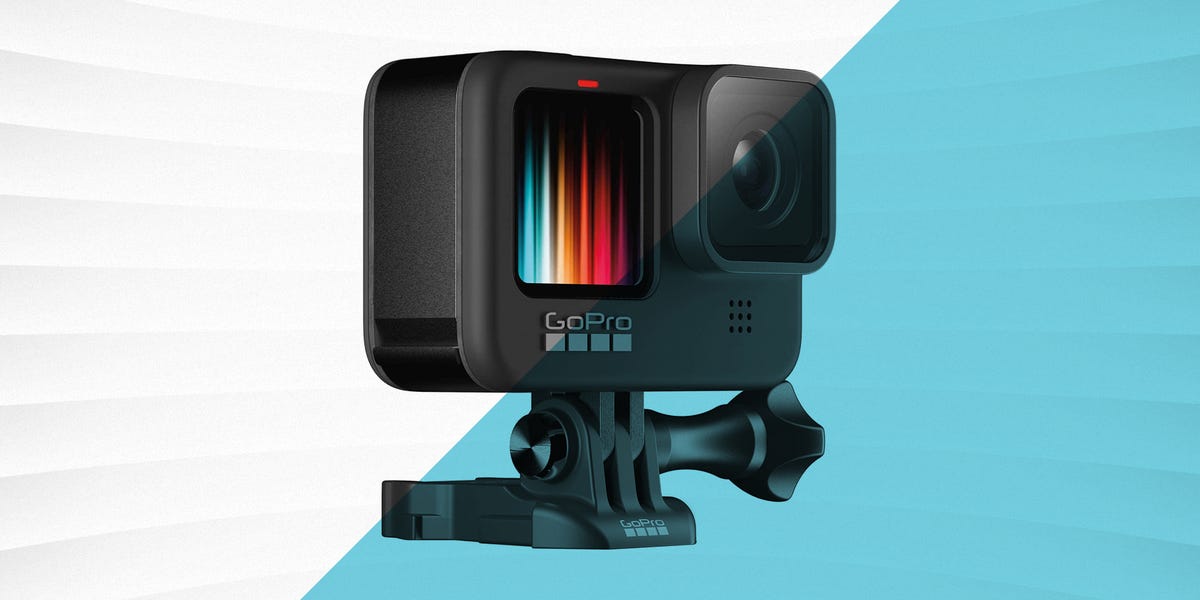
The GoPro HERO10 Black was the strongest choice for fast, stabilized action footage in 2022. Its GP2 processor enabled recording at up to 5.3K resolution and 60 frames per second, while 4K footage could be captured at up to 120 frames per second. HyperSmooth 4.0 stabilization reduced shaking during biking, surfing, skiing, rafting, and other activities during which calmly holding a camera is rarely on the schedule.
The HERO10 Black was waterproof to 33 feet without a housing. It also offered 23-megapixel still photos, horizon leveling, RAW capture, a front-facing color screen, a responsive rear touchscreen, and a huge selection of mounts and accessories.
Video First, Photography Second
GoPro’s ultra-wide perspective was excellent for immersive footage, point-of-view recording, and selfies that included plenty of scenery. A protective housing could extend its usefulness for deeper diving.
Potential drawback: The fixed wide-angle lens could distort faces near the frame edges, and it lacked true optical zoom. Battery life also dropped during demanding high-resolution recording. For still-photo enthusiasts, the TG-6 was more camera-like; for action video, the HERO10 was far ahead.
8. DJI Action 2: Best Tiny Wearable Waterproof Camera
The DJI Action 2 took a different approach to action-camera design. Its main camera unit was a tiny 2-ounce square that could attach magnetically to mounts, a lanyard, a battery module, or a front-screen module. The small size reduced drag and made it easier to wear on clothing or helmets.
The camera used a relatively large 1/1.7-inch sensor, captured 12-megapixel photos, and recorded 4K video at up to 120 frames per second. The camera unit alone was waterproof to 33 feet, while DJI’s optional case extended the maximum depth to 197 feet.
Understand the Modular Design
The main camera block was waterproof, but the battery and touchscreen modules were not. Using those accessories underwater required the dedicated housing. The camera unit also relied on built-in storage unless connected to a module containing a microSD card slot.
Potential drawback: Recording times could be short at demanding settings, and the sealed internal battery was not replaceable. Nevertheless, the Action 2 was compelling when minimum size mattered more than maximum endurance.
9. SeaLife Micro 3.0: Best for Scuba Diving
The SeaLife Micro 3.0 was designed specifically for underwater use rather than merely being a land camera with extra seals. Its permanently closed body had no battery door, memory-card door, or O-ring compartment for the owner to maintain. That design significantly reduced one of the most common causes of flooded underwater cameras: a tiny strand of hair, sand, or debris sitting across a seal.
The Micro 3.0 was waterproof to 200 feet and featured a 16-megapixel sensor, RAW capture, 4K video at 30 frames per second, electronic stabilization, 64GB of internal memory, and dedicated shallow- and deep-water white-balance settings. Its large piano-style controls were easy to press while wearing gloves.
Built for Divers, Not Zoom Enthusiasts
The fixed wide-angle lens worked well for reefs, wrecks, divers, and larger marine life. SeaLife’s compatible trays, video lights, and close-up lenses allowed users to build a more capable underwater system over time.
Potential drawback: There was no optical zoom, removable battery, or memory-card slot. Once the internal battery was depleted or the storage was full, the dive-day photography session was effectively over. For divers who prioritized simplicity and flood resistance, however, the permanently sealed design was a major advantage.
How to Choose the Right Waterproof Camera
Check the Actual Depth Rating
A camera rated to 33 feet may be perfect for swimming and snorkeling but unsuitable for many scuba dives. Choose a depth rating comfortably beyond your planned maximum depth. Never assume that exceeding the limit “just a little” will be harmless; water pressure is impressively uninterested in optimism.
Decide Between Photos and Video
Rugged compact cameras usually provide optical zoom, flashes, macro modes, and more natural controls for still photography. Action cameras generally deliver smoother video, higher frame rates, wider views, and better mounting options.
Look Beyond Megapixels
More megapixels do not automatically produce better underwater images. Lens brightness, sensor design, stabilization, autofocus, color processing, and lighting can matter more. Water absorbs light and color rapidly, so a camera with useful underwater modes may outperform a higher-resolution model without them.
Inspect the Controls
Buttons should be large enough to operate with wet fingers or gloves. Touchscreens can become unreliable underwater, which makes physical controls especially valuable.
Consider the Entire System
Think about replacement batteries, memory cards, housings, floating straps, lights, trays, filters, and close-up lenses. The cheapest camera can become expensive after accessories, while a more costly model may be a better long-term value if it already includes the features you need.
Real-World Waterproof Camera Experiences and Lessons
Using a waterproof camera successfully involves more than charging the battery and jumping into the nearest body of water. The first lesson is that waterproof does not mean maintenance-free. Before every outing, inspect the battery and memory-card doors carefully. A single grain of sand can prevent a gasket from sealing properly. Close each latch slowly, confirm that it is fully locked, and avoid opening the camera while it is still wet.
After exposure to salt water, rinse the camera in fresh water while all doors remain securely closed. Do not blast it with a high-pressure faucet. Instead, let it soak briefly and gently press the buttons to loosen salt trapped around the controls. Dry the camera completely before opening any compartment. Salt crystals are small, stubborn, and apparently committed to making buttons crunchy.
The second lesson is that underwater photography rewards proximity. Water reduces contrast, sharpness, and color, so distant subjects often look dull and bluish. Move closer rather than relying heavily on digital zoom. A wide-angle lens lets you approach a fish, diver, or coral formation while keeping plenty of the surrounding environment in the frame.
Light also behaves differently underwater. Red and orange wavelengths disappear quickly as depth increases, leaving photographs dominated by blue or green. Dedicated underwater white-balance modes can help, but they cannot perform miracles in dark water. For deeper dives, an external light often improves color and detail more than upgrading to a camera with a few extra megapixels.
Macro photography is surprisingly rewarding. Small crabs, shells, coral textures, water droplets, and beach plants can produce more interesting photographs than another distant shot of the horizon. Cameras such as the Olympus TG-6 and Ricoh WG-80 make close-up experimentation simple, although subjects should never be touched or disturbed for the sake of a photograph.
Video shooters should use a short floating grip or secure wrist strap. A grip improves stability and keeps fingers away from the lens, while flotation prevents a dropped camera from beginning an unscheduled expedition to the seafloor. Brightly colored accessories are easier to spot in moving water.
Condensation can also be a problem when moving between air-conditioned rooms and humid outdoor conditions. Allow the camera to adjust gradually to the temperature change. When using a separate housing, anti-fog inserts can help, but they should not interfere with the seal.
Finally, test the camera before an important trip. Learn where the video button is, practice switching modes without staring at the screen, and confirm that the date, resolution, stabilization, and white balance are correct. Discovering that an entire snorkeling tour was recorded in low-resolution time-lapse mode may create a memorable story, but it will not create the vacation footage you expected.
Final Verdict
The Olympus Tough TG-6 was the best all-around waterproof camera of 2022 because it balanced rugged construction, a bright zoom lens, RAW photography, 4K video, and outstanding macro capabilities. The Nikon COOLPIX W300 and Panasonic Lumix TS7 were better options for users needing deeper waterproof ratings, while the Fujifilm XP140 and Kodak WPZ2 offered simpler, more affordable ways to photograph family adventures.
Video creators were better served by the GoPro HERO10 Black or the remarkably small DJI Action 2. Serious divers who wanted a permanently sealed, low-maintenance design could justify the SeaLife Micro 3.0.
No single camera is perfect for every wet situation. Match the depth rating, lens type, controls, and video features to what you actually plan to photograph. The correct waterproof camera is not necessarily the one with the longest specification sheet; it is the one you can operate confidently while waves, gloves, cold fingers, or an unexpectedly curious fish are competing for your attention.